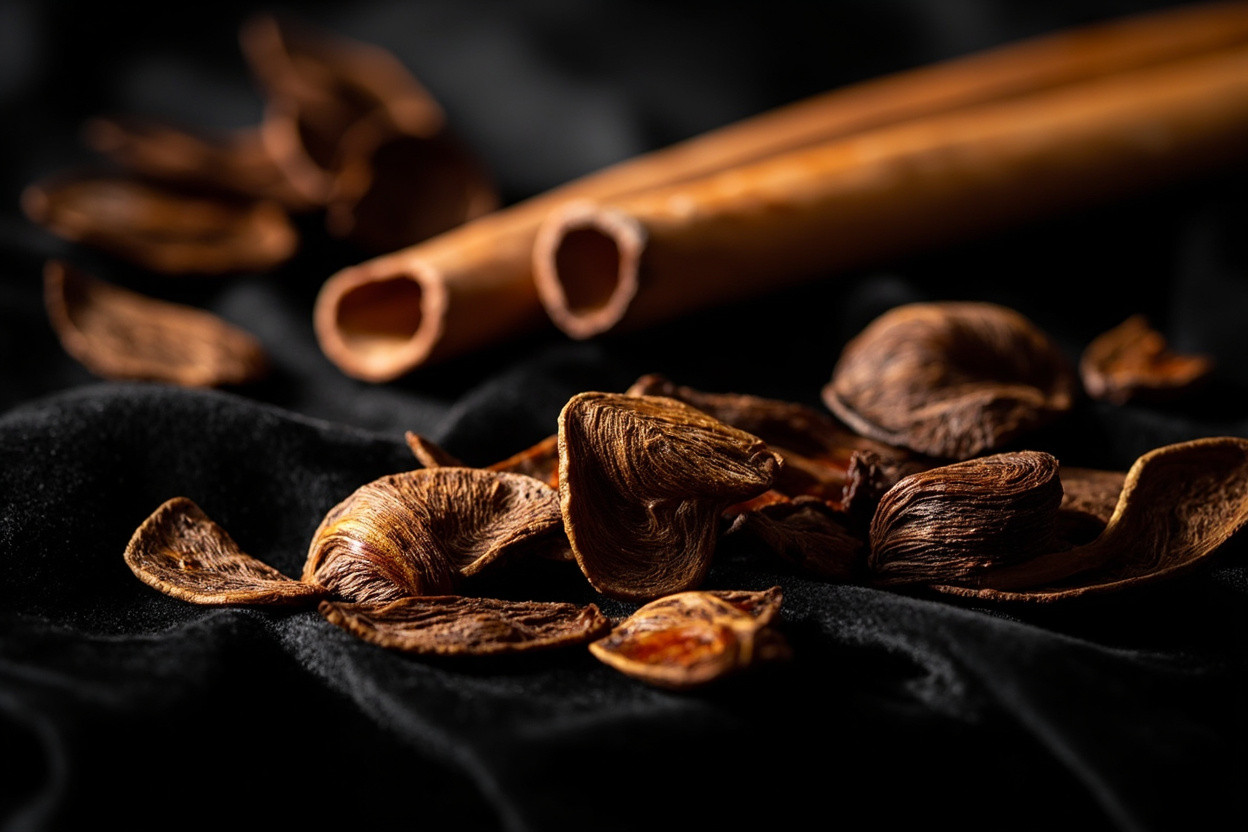
Walk into any Chinese incense shop and you will face a wall of options. Two names rise above the rest: agarwood (沉香) and sandalwood (檀香). These are not just fragrances. They are the foundation of Xiangdao—the Chinese art of incense.
The question is: which one belongs in your space?
The answer depends on your goal. Are you seeking deep meditation and spiritual grounding? Or do you want uplifting clarity for daily focus? The difference matters.
What is Agarwood (沉香)?
Agarwood forms when the Aquilaria tree undergoes fungal infection, producing dark resinous wood. This process takes decades—sometimes centuries. The result is one of the most expensive natural materials on Earth.
In Chinese medicine, agarwood appears in texts from the Tang Dynasty (618-907 CE). The Xiangdao Jing (香道经, Classic of Incense Way) describes it as “the king of all fragrances”—众香之首. Its scent changes as it burns: first sweet honey, then deep resin, finally a cool meditative finish.
Key characteristics:
- Scent profile: deep, rich, multi-layered with woody sweetness and cooling notes
- Primary benefits: calming the mind, aiding meditation, grounding scattered thoughts
- Best for: night meditation, spiritual practice, prayer, deep relaxation
- Price range: premium—high-quality agarwood costs significantly more than sandalwood
- Uses in Xiangdao: highest grade for Buddhist and Taoist ceremonies
What is Sandalwood (檀香)?
Sandalwood comes from the Santalum tree, slower-growing but more accessible than agarwood. Indian sandalwood has been used for 4,000+ years in Ayurvedic medicine and religious ceremonies across Asia.
Unlike agarwood’s complex evolution, sandalwood offers consistent warmth. Its creamy, sweet aroma fills spaces quickly—which is why it became the popular choice for daily incense across Chinese temples and Japanese shrines alike.
TCM (Traditional Chinese Medicine) recognizes sandalwood for “行气温中、止痛醒脾”—promoting qi flow, warming the middle burner, relieving pain and invigorating the spleen. Modern aromatherapy studies confirm its anxiolytic properties.
Key characteristics:
- Scent profile: sweet, creamy, warm with milky undertones
- Primary benefits: reducing anxiety, improving focus, aiding sleep
- Best for: morning meditation, studying, living rooms, offices
- Price range: moderate—accessible for beginners
- Uses in Xiangdao: everyday practice, accessible entry point for newcomers
Agarwood vs Sandalwood: Direct Comparison
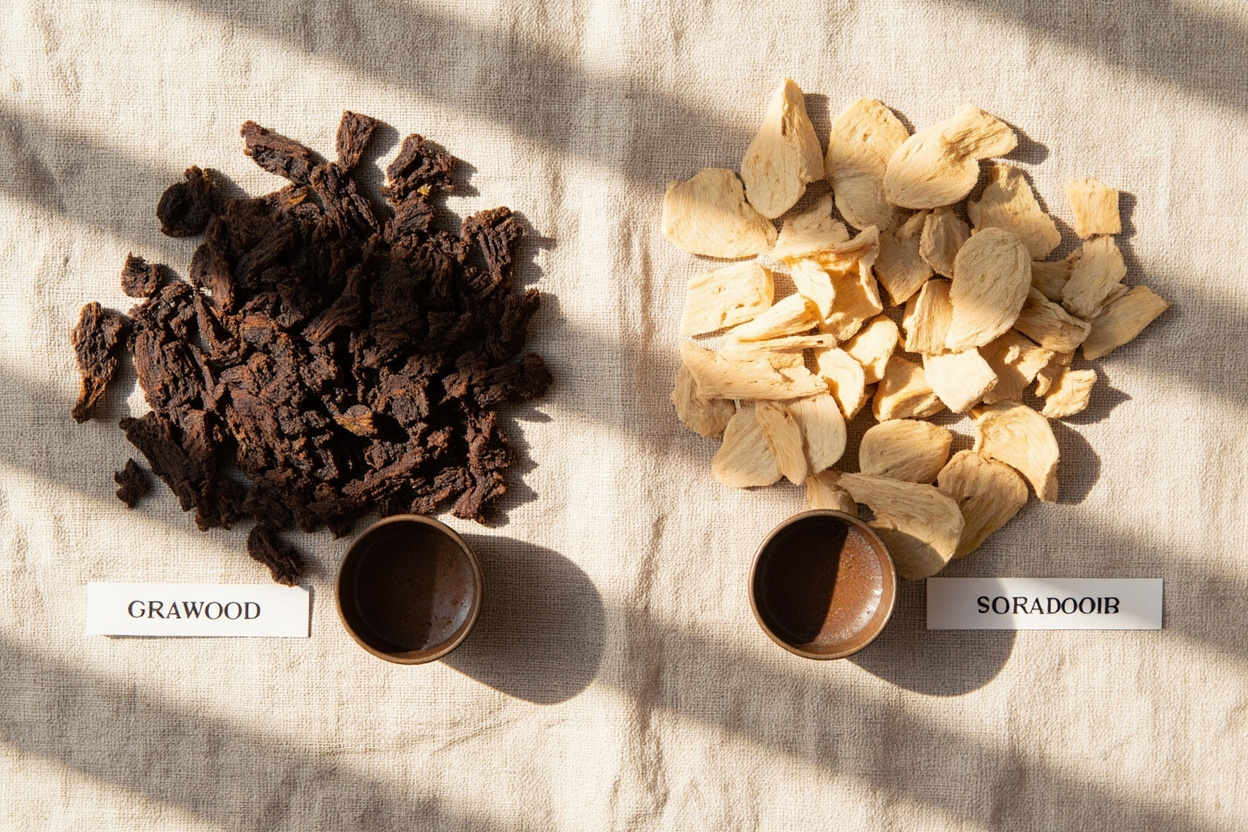
Scent and Atmosphere
Agarwood reveals itself slowly. Light a piece and wait. The aroma develops in layers—first a gentle sweetness, then deeper resinous notes, finally a cooling stillness that settles the mind. It rewards patience.
Sandalwood announces itself immediately. Its sweet warmth fills a room within minutes, creating an inviting atmosphere. Perfect for spaces where you want fragrance without waiting.
Purpose and Practice
Choose agarwood when you want deep work. Night meditation, calligraphy practice, reading philosophy—agarwood supports focused stillness. The Jing says it “settles the spirit and calms the mind”—镇静安神.
Choose sandalwood when you need gentle support. Morning routines, yoga practice, working from home—sandalwood creates a bubble of calm without heavy sedation. It sharpens attention without strain.
Space and Room Size
Agarwood works best in smaller, intimate spaces: your meditation corner, a home shrine, a quiet study. Its subtle depth gets lost in large open rooms.
Sandalwood handles larger spaces easily. Living rooms, kitchens, meditation halls—it projects well and adapts to airier environments.
Price and Value
This is where beginners notice the biggest difference. Quality agarwood starts at $30-50 per small pack. Premium grades? Much more. You are paying for rarity and complexity.
Sandalwood offers immediate accessibility. Solid starter bundles run $10-20, making it the practical entry point into Xiangdao practice.
How to Use Incense for Maximum Benefit
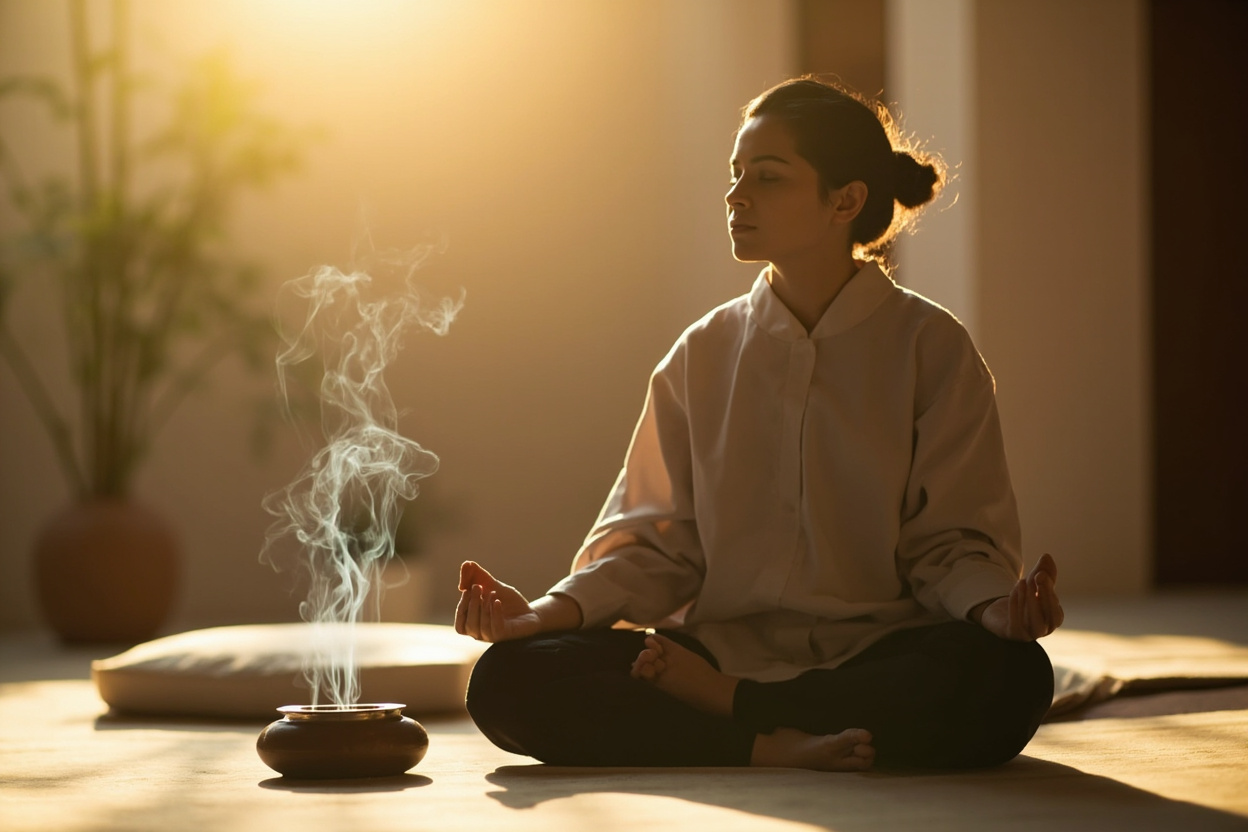
Place your burner on a stable surface away from drafts. Light the tip of your incense stick, let it catch flame for 3-5 seconds, then gently blow it out. You want embers, not fire. Place it in the holder and let smoke begin.
For agarwood: use less. A little goes far. Three to five minutes of burn time is sufficient for a small room. More creates heaviness rather than depth.
For sandalwood: you have more flexibility. Larger spaces benefit from multiple sticks. Morning sessions can run 20-30 minutes.
Health Precautions
Research shows burning incense releases fine particulate matter (PM2.5), formaldehyde, and benzene compounds. This is true for ALL incense types. Practical steps reduce exposure:
- Maintain ventilation—open a window slightly during burning
- Limit sessions to 30-45 minutes maximum
- Avoid burning in fully enclosed small rooms
- Pregnant women and those with respiratory conditions should use extreme caution
- Choose natural incense without synthetic fragrances or chemical binders
The Xiangdao Jing instructs practitioners to “let flame serve heat, not create smoke”—使火为热,不为烟. Proper technique matters.
Which Should You Choose?
Start with sandalwood if:
- You are new to Xiangdao and want to explore
- You need something for daily stress relief
- Your budget is under $20
- You prefer warmer, sweeter scents
- You want something for larger spaces
Choose agarwood if:
- You already practice meditation and want to deepen sessions
- You value complexity and layered scents
- You seek spiritual or religious applications
- Budget is not a primary concern
- You prefer subtle, grounding fragrances
Frequently Asked Questions
Can I use both agarwood and sandalwood together?
Yes. Many Xiangdao practitioners blend them. Traditional “hexiang” (和香) formulations combine multiple materials. Start with sandalwood as your base and add small amounts of agarwood for depth. A common ratio: 80% sandalwood to 20% agarwood.
How do I store incense properly?
Keep sticks in sealed containers away from humidity and direct sunlight. Agarwood especially degrades in moist environments—the resin compounds evaporate. Sandalwood is more forgiving but still benefits from airtight storage. Never refrigerate incense.
Is synthetic agarwood/sandalwood worth using?
No. Artificial versions lack the volatile compounds that give both materials their therapeutic properties. They may smell similar initially but do not produce the same calming or focusing effects. The aromatherapy benefits documented in TCM require natural materials.
How can I tell if my incense is natural?
Natural incense burns cleanly with minimal smoke and produces ash that crumbles easily. Synthetic varieties often generate excessive smoke, have a sharp chemical smell when burning, and leave behind hard, clumped ash. Price is also an indicator—genuine agarwood never costs $5 for a bundle.
Related Articles
- What Is Xiangdao? The Complete Guide to Chinese Incense Culture
- Incense for Meditation: A Complete Practice Guide
- The Big Four: China’s Most Precious Incense Materials
Start Your Xiangdao Journey
The difference between agarwood and sandalwood is not just about scent. It is about intention.
Sandalwood opens the door. It invites you into a practice of presence with something gentle and forgiving. Agarwood rewards commitment. It asks for patience and delivers profound depth in return.
Most practitioners own both. They reach for sandalwood on ordinary mornings and save agarwood for moments that call for stillness.
Wherever you begin, remember: in Xiangdao, the fragrance is not the goal. The goal is what happens inside you when the smoke rises and the mind quiets.