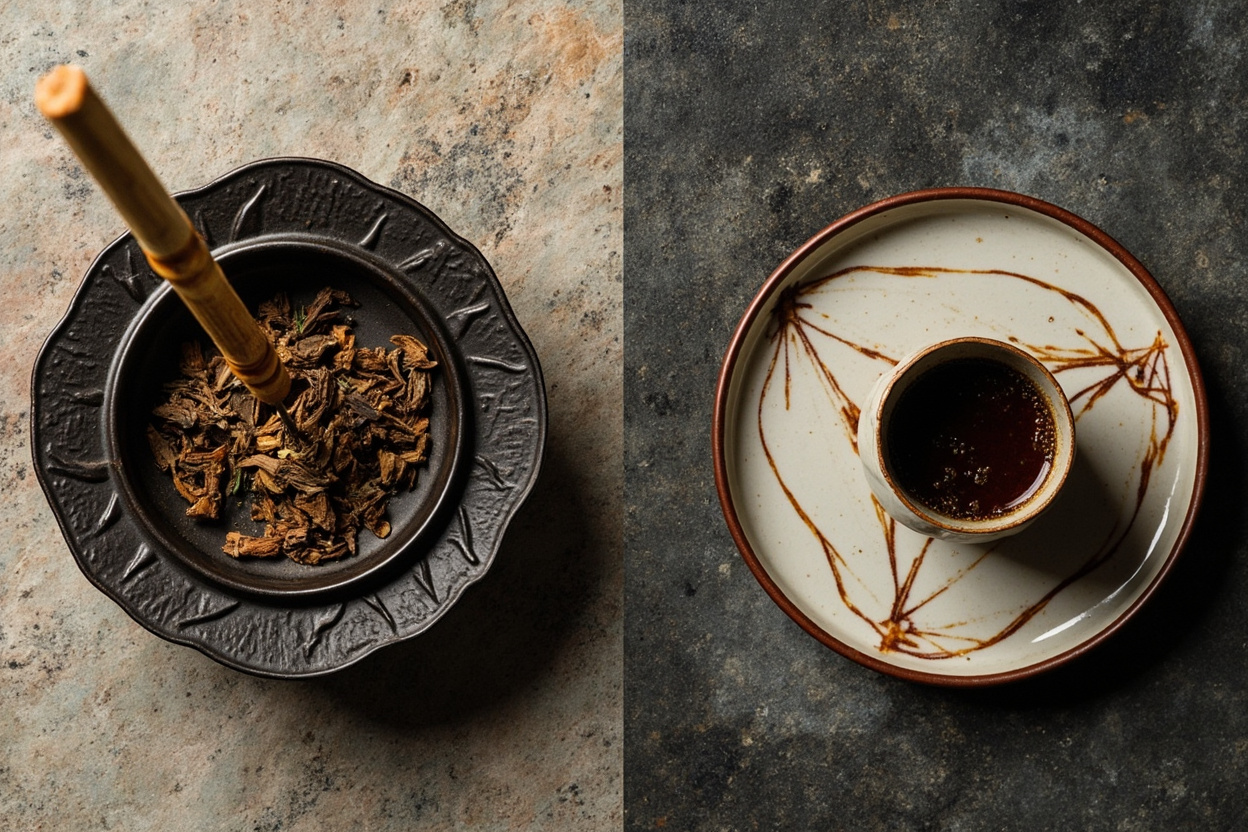
Two traditions. One ancient art. When incense traveled from China to Japan centuries ago, it transformed into something distinctly different.
Today, Chinese and Japanese incense cultures represent two approaches to the same sensory experience. Understanding their differences deepens your appreciation for both—and helps you find which tradition speaks to you.
Chinese Incense: The Source
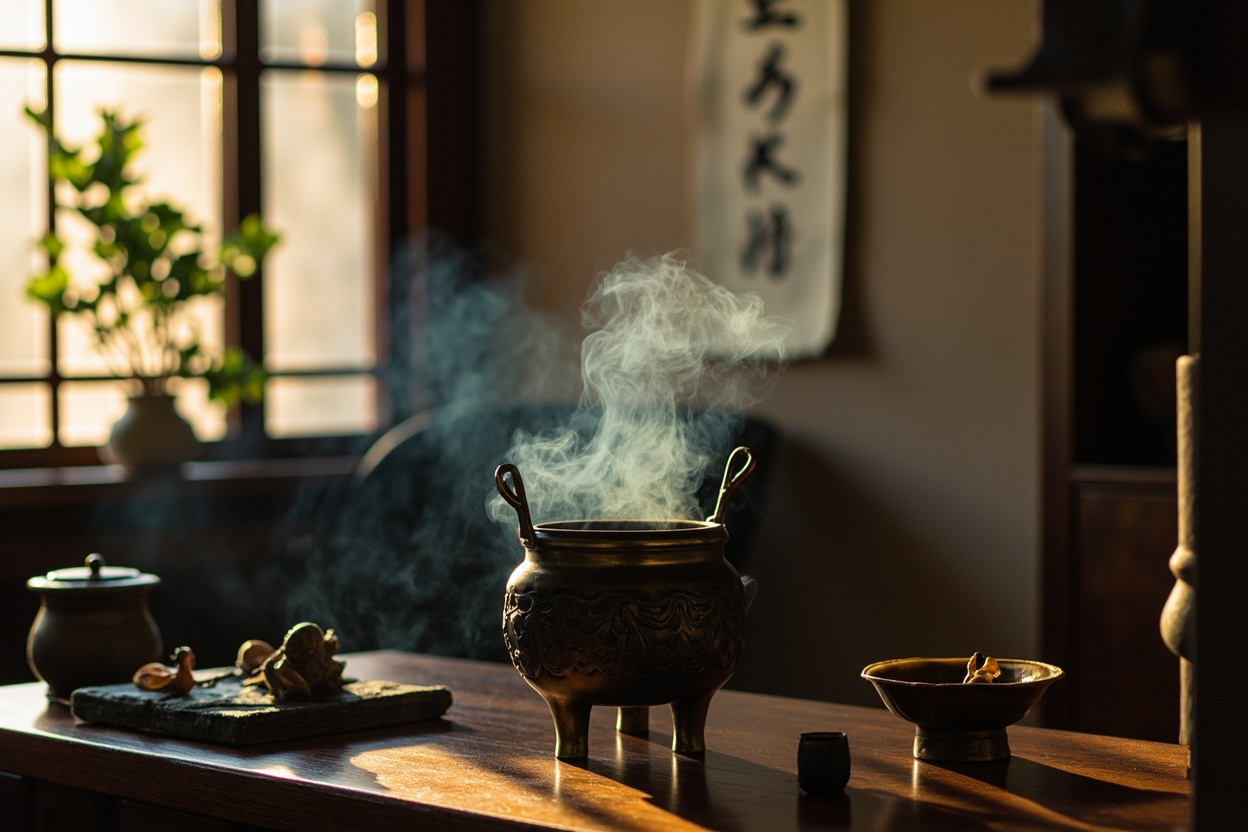
China created the art of incense. Archaeological evidence dates incense use to 4000+ years ago. By the Tang Dynasty (618-907 CE), Chinese incense culture had reached its golden age.
In China, incense developed as a holistic cultural expression. It was never just about fragrance. Incense became a tool for self-cultivation, integrated with Daoist and Buddhist practices, scholarly pursuits, and daily life.
The Four Great Materials
Chinese incense culture centers on four prestigious materials:
- Agarwood (沉香): The king. Formed over decades from infected Aquilaria trees. Complex, layered aroma.
- Sandalwood (檀香): Warm, creamy, approachable. The everyday essential.
- Musk (麝香): Animal-derived, used sparingly for depth.
- Frankincense (乳香): Biblical associations, ceremonial resin.
Chinese Philosophy: Therapeutic and Expansive
Chinese incense emphasizes complexity and therapeutic benefit. Blends combine multiple materials for layered effects. A single incense might address both physical and spiritual needs.
The Xiangdao Jing (香道经) describes incense as “入心”—entering the heart. The goal is transformation: incense changes your state, purifies space, guides meditation, supports health.
Chinese incense culture asks: How does this serve my practice? How does it balance my qi? What material fits this season and situation?
Usage Patterns
Chinese incense appears throughout daily life:
- Temple rituals and ancestor worship
- Scholar studio for focus and creativity
- Tea ceremony for atmosphere
- Home purification and fragrance
- Medical applications in TCM
Japanese Incense: The Refinement
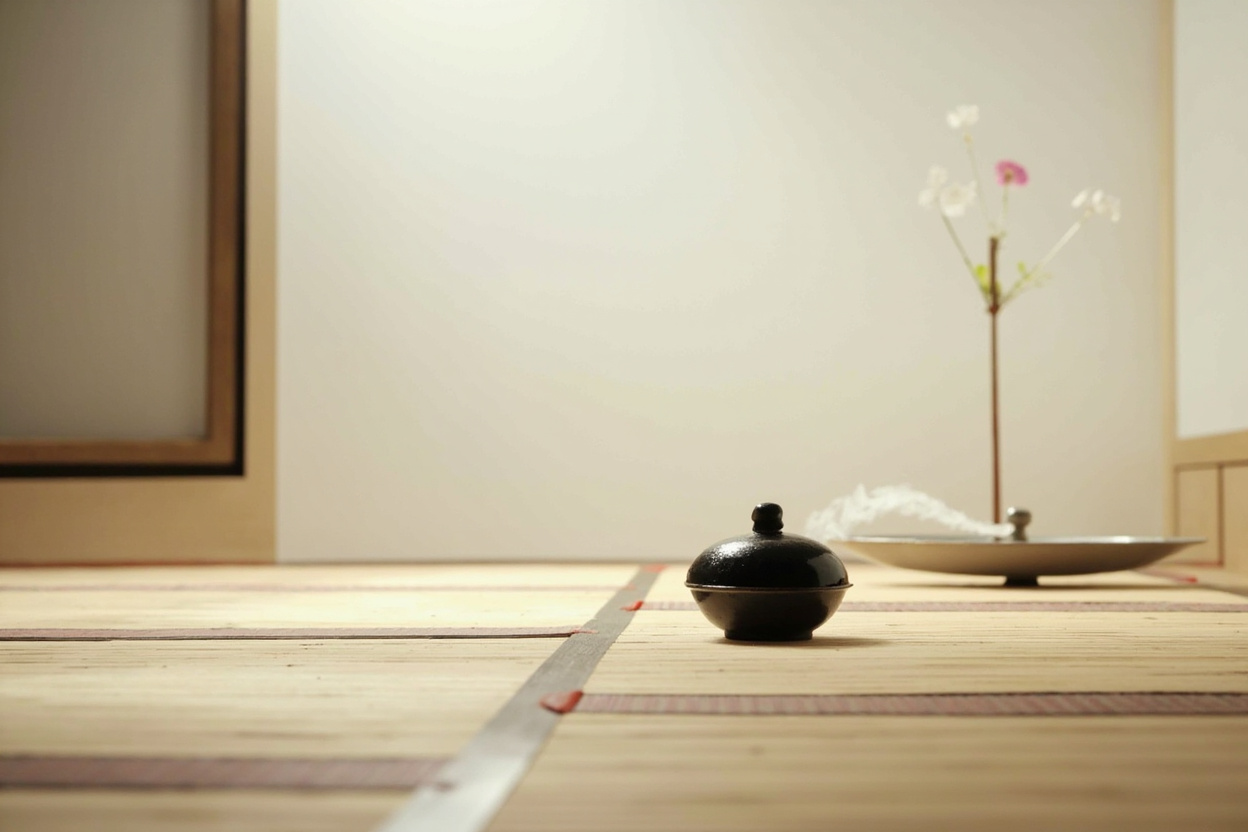
Japan received incense from China via Buddhist monks in the 6th century. Over centuries, Japan developed its own distinct tradition called Kōdō (香道)—The Way of Incense.
Kōdō became one of three refined arts alongside Kado (flower arrangement) and Chadō (tea ceremony). Incense appreciation was codified into formal practice with strict protocols, seasonal awareness, and philosophical depth.
Core Materials in Japanese Incense
Japanese incense focuses on fewer, higher-quality materials:
- Kyara (伽羅): Premium grade of agarwood. The most prized.
- Byakudan (白檀): White sandalwood from India.
- Aloeswood (沈香): Similar to agarwood, regional varieties.
Japanese Philosophy: Minimal and Contemplative
Where Chinese incense is expansive and therapeutic, Japanese incense is minimal and contemplative. The goal is not transformation but appreciation.
Kōdō practice involves carefully listening to incense—identifying subtle notes, tracing how aroma changes over time, appreciating the moment. Unlike Chinese blends, Japanese incense often uses single materials to express pure character.
The Japanese approach asks: What is the essential nature of this scent? How does it exist in this moment?
Coreless Design
One practical difference: Japanese incense sticks are typically coreless. A bamboo core runs through Chinese sticks, providing structure but slightly affecting burn characteristics.
Japanese coreless sticks burn more evenly, releasing purer aroma. The trade-off: greater fragility and higher cost.
Seasonal Consciousness
Japanese incense practice emphasizes seasonality. Light, delicate scents for summer. Warmer, deeper tones for winter. This awareness reflects broader Japanese aesthetic principles—mono no aware (impermanence) and harmony with nature.
Direct Comparison
Scent Profile
Chinese: Rich, layered, complex. Blends create therapeutic effects. May include herbal or medicinal undertones.
Japanese: Subtle, pure, refined. Single materials express essential character. Clean burn with minimal smoke.
Purpose
Chinese: Functional and spiritual. Incense serves purposes—purifying, protecting, healing, focusing. The fragrance accomplishes something.
Japanese: Appreciative and meditative. Incense is experienced, not used. The goal is presence, not outcome.
Social Context
Chinese: Incense integrates into daily life broadly. Temples, homes, studios, tea rooms. Used collectively or individually.
Japanese: Incense developed as formal art practice. Kōdō sessions follow specific protocols. Often practiced in groups with designated roles.
Commercial Availability
Chinese: Wide range from mass-market to premium. Blends dominate. Prices vary dramatically by material quality.
Japanese: Generally higher baseline quality. Major brands like Shoyeido and Minorien well-established internationally. Less price variation within grade levels.
The Cultural Exchange
These traditions are not isolated. China gave Japan its foundational incense practices. Japan returned the favor through refinement and codification.
Today, practitioners in both countries learn from each other. Some Chinese incense enthusiasts appreciate Japanese minimalism. Some Japanese practitioners seek out Chinese herbal blends.
For Western audiences encountering incense for the first time, the choice between Chinese and Japanese approaches often comes down to temperament: Do you want incense that does something for you? Or incense you simply appreciate?
Which Should You Choose?
Choose Chinese Incense If:
- You want therapeutic or health-related benefits
- You appreciate complexity and layered scents
- You practice meditation or qi cultivation
- You want incense integrated with other wellness practices
- You prefer variety and experimentation
Choose Japanese Incense If:
- You value minimalism and simplicity
- You want to practice formal incense appreciation
- You prefer subtle, refined scents
- You are drawn to seasonal awareness and ritual
- You appreciate craftsmanship and tradition
Frequently Asked Questions
Is Chinese incense better than Japanese incense?
Neither is objectively better. They represent different philosophies and aesthetics. Chinese incense serves purposes; Japanese incense creates appreciation. The “better” choice depends on what you seek from incense practice.
Can I use both traditions together?
Absolutely. Many practitioners own materials from both traditions. A Chinese herbal blend for daily meditation, Japanese incense for occasional Kōdō-style appreciation. The traditions complement rather than compete.
Is Japanese incense more expensive?
Generally, yes. Japanese incense commands premium pricing, particularly for high-grade materials like Kyara. However, entry-level Japanese incense (under $20) provides quality experience. Chinese incense offers wider price range from very affordable to extremely expensive premium agarwood.
Why do Japanese incense sticks not have bamboo cores?
The coreless design developed for purity of scent. Bamboo can affect burn characteristics and slightly influence aroma. Japanese aesthetics prioritize authentic expression of the material’s essential nature, which the core might compromise.
What is Kōdō?
Kōdō (香道) is the Japanese Way of Incense—a formalized practice of incense appreciation. Unlike casual incense use, Kōdō involves structured protocols, competitive identification games (kōkai), and philosophical training. It developed as one of three classical arts alongside tea ceremony and flower arrangement.
Related Articles
- What Is Xiangdao? Complete Guide to Chinese Incense Culture
- Agarwood vs Sandalwood: Complete Buying Guide
- Complete Guide to Hexiang (Blended Incense)
Explore Both Traditions
Chinese and Japanese incense cultures offer two paths into the same ancient art. Neither is complete without the other.
Start with one. See how it fits your life. When curiosity calls, explore the other. The incense itself does not care which tradition you follow. It offers the same smoke, the same stillness, the same invitation to presence.
The Xiangdao Jing says: “香之為物,靜而後得”—Incense reveals itself only to the still.