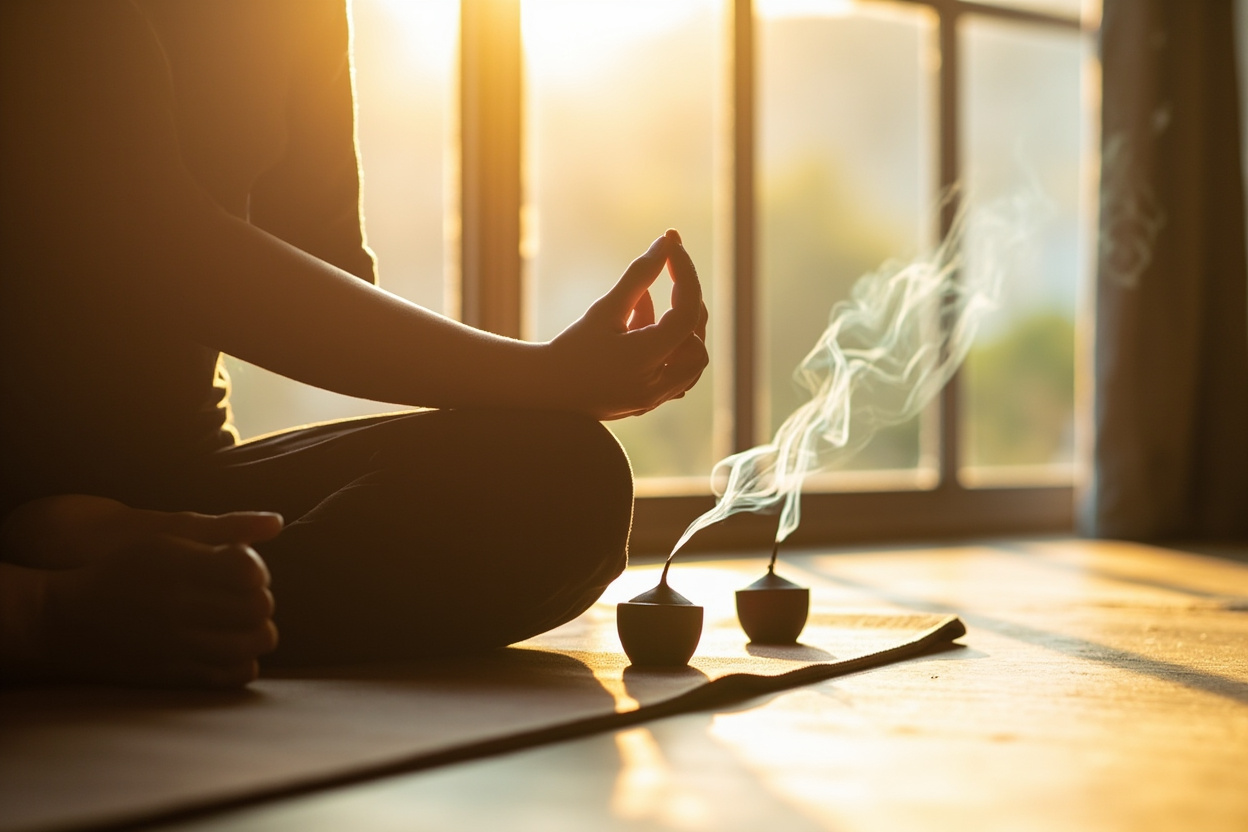
You unroll your mat. You settle into child’s pose. But your mind keeps spinning—tomorrow’s meetings, last night’s argument, the email you forgot to send. Sound familiar?
Yoga and meditation require a certain internal state. You cannot force yourself to be present. But you can create conditions that support presence. One of the oldest tools: incense.
The smoke becomes a signal. When you smell sandalwood or frankincense, something in your nervous system recognizes: it is time to slow down. This is not superstition. The olfactory system connects directly to the emotional brain. A familiar scent can shortcut months of practice.
Why Incense Works for Yoga and Meditation
The practice of burning incense during yoga and meditation comes from ancient India and China. But modern research explains why it works so effectively.
When you inhale aromatic compounds from burning incense, they travel through the olfactory nerve directly to the limbic system—the brain’s emotional control center. This happens within seconds. The effect is immediate: heart rate slows, anxiety decreases, focus sharpens.
In TCM, incense works differently but converges on the same result. Sandalwood (檀香) contains alpha-santalol, which “激活大脑放松相关区域”—activates brain regions associated with relaxation. Frankincense contains compounds that reduce inflammation and support the immune response during stress.
The ritual of lighting incense also matters. The few minutes of preparation—selecting the scent, lighting it properly, watching the first smoke rise—become a transition. The outside world fades. The practice begins.
The Four Best Incenses for Yoga and Meditation
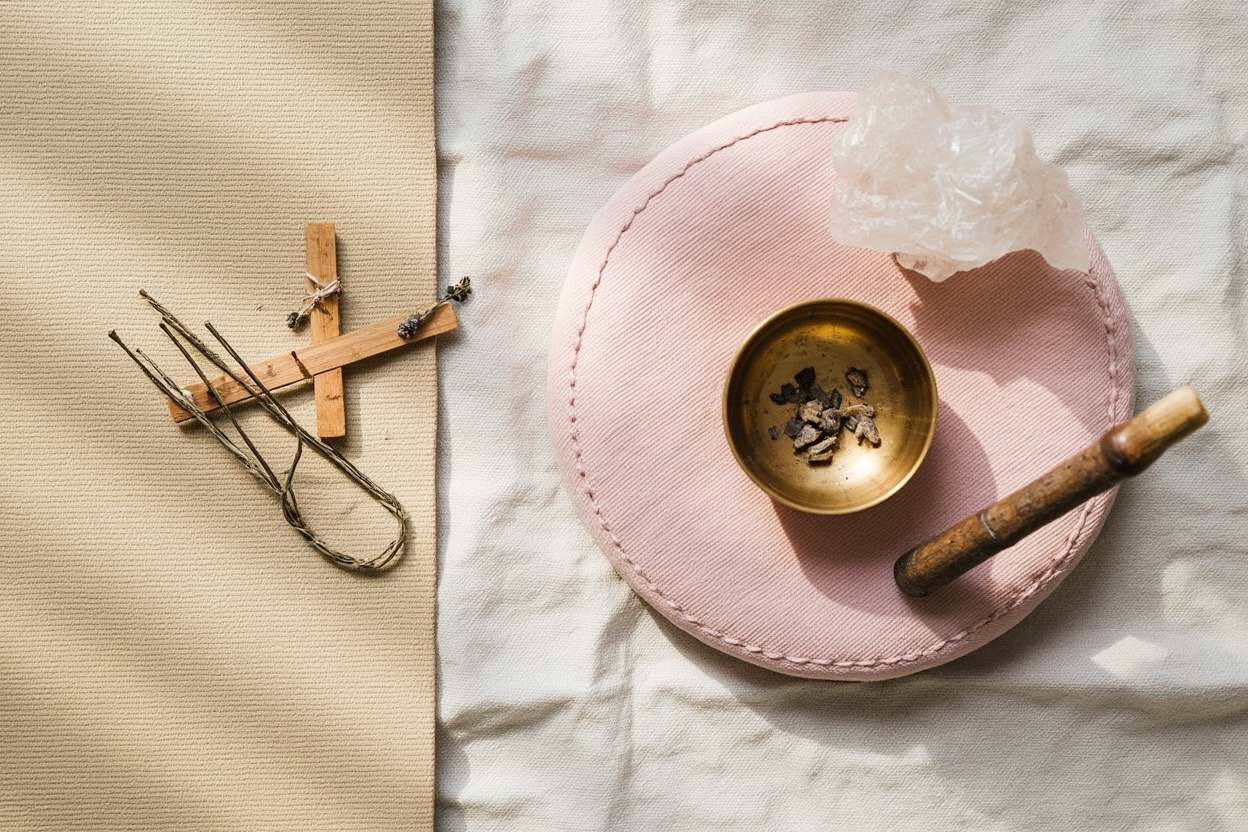
Sandalwood: The Grounding Anchor
Sandalwood is the most recommended incense for yoga practice. It creates what practitioners call “grounding”—a sense of stability and connection to the earth beneath you.
Chinese medicine texts describe sandalwood as “安神助眠、舒缓压力”—calming the spirit, aiding sleep, relieving tension. For yoga, this translates to steadiness in standing poses, better balance, and reduced performance anxiety.
Aromatherapy research confirms sandalwood’s effects. The compound alpha-santalol activates GABA receptors in the brain, producing mild sedative effects without drowsiness. You remain alert but calm. Present but not anxious.
Best for: Vinyasa flow, power yoga, any practice where you need stability
Frankincense: The Spiritual Connector
Frankincense has been used in spiritual practices for over 4,000 years. It appears in the Bible, Buddhist sutras, and ancient Egyptian rituals. The reason: frankincense creates what practitioners describe as “spiritual connection.”
From a modern perspective, frankincense works by reducing physiological stress markers. When your body is less stressed, your mind can access higher states of awareness more easily.
TCM classifies frankincense (乳香) as having “抗炎、消肿、活血化瘀”—anti-inflammatory, swelling reduction, promoting blood circulation and removing stasis. During meditation, this translates to less physical discomfort and easier sustained sitting.
Best for: Seated meditation, pranayama, any practice involving stillness
Lavender: The Relaxation Catalyst
Lavender is the most researched incense material for relaxation. Multiple studies confirm its anxiety-reducing effects. One study found lavender reduced anxiety scores by 26% in patients awaiting surgery.
For yoga, lavender works differently than sandalwood or frankincense. It does not ground or spiritualize—it simply relaxes. This makes it ideal for restorative yoga, yin yoga, or evening practice when you want to fully release the day.
In TCM, lavender (薰衣草) falls under “花草線香”—herbal incense. It “放鬆心情、改善焦慮、減少壓力”—relaxes the mood, improves anxiety, reduces stress. For those new to meditation, lavender provides the gentlest entry point.
Best for: Restorative yoga, yin yoga, evening practice, beginners
Nag Champa: The Meditation Classic
Nag Champa originates from Indian incense traditions. A blend of champa flower, sandalwood, and other materials, it has become synonymous with meditation practice worldwide.
The appeal is practical: Nag Champa creates immediate atmosphere. Within moments of burning, the room shifts. The familiar scent signals to your nervous system that it is time to practice.
For those coming from Western backgrounds, Nag Champa may feel more accessible than traditional Chinese incense. It bridges cultures while serving the same function: creating conditions for inward attention.
Best for: Daily meditation practice, those new to incense, cross-cultural practice
How to Use Incense During Your Practice
Before Practice: The Transition
Light your incense 5-10 minutes before you begin. This serves two purposes: it allows the smoke to establish itself in the space, and it creates a transition period between the outside world and your practice.
During this transition, sit or stand quietly. Notice the scent. Let it fill your awareness. When your mind starts to wander to tomorrow’s tasks, gently return attention to the aroma.
During Practice: Minimal Distraction
Some practitioners prefer to let incense burn throughout practice. Others find the smoke distracting. Find your own relationship with it.
If burning throughout: place the incense holder where smoke will not blow into your face or eyes. Avoid drafts. An enclosed burner works better than an open dish during movement.
If burning only at transitions: light incense before practice, allow it to burn during warm-up, then extinguish before main practice. The lingering scent maintains atmosphere even after the flame goes out.
After Practice: The Integration
Many traditions include incense throughout practice and allow it to burn as you rest in savasana or final meditation. The scent continues working during this integration phase, deepening the relaxation response.
Some practitioners extinguish incense after active practice. Others let it burn until it finishes naturally. Either way: the practice session has a clear end point marked by the burning or extinguishing of the incense.
Creating Your Practice Space
The space where you practice matters. Incense contributes to this space through:
- Atmosphere: The scent transforms a room from ordinary to intentional
- Acoustics: Incense smoke slightly dampens sound reflections
- Visual: Watching smoke rise provides a natural focal point for meditation
- Ritual: The act of lighting incense creates consistent practice openings
For home practice, you do not need a dedicated room. A corner of a bedroom, a spot in the living room, even a balcony works. The key is consistency. Practice in the same space when possible. Your nervous system will begin associating the space with stillness.
Safety Considerations
- Never burn incense in unventilated spaces—the same compounds that create relaxation also produce PM2.5
- Keep incense away from curtains, papers, and flammable materials
- Do not leave burning incense unattended
- Those with respiratory conditions should consult a healthcare provider before using incense
- Choose natural materials over synthetic—synthetic incense lacks therapeutic compounds and may release additional toxins
- For yoga studios: ensure adequate ventilation and consider electric burners as an alternative
Frequently Asked Questions
Can I use incense for both yoga and meditation?
Yes. Many practitioners use the same incense for both practices. Sandalwood works particularly well because it supports both the active engagement of yoga and the inward focus of meditation. Some practitioners keep separate scents for each practice, creating distinct associations: sandalwood for yoga, frankincense for meditation.
How long should I burn incense during practice?
This depends on your practice length and personal preference. A 30-minute session can use a single stick burned completely. For 90-minute sessions, one stick usually suffices. If you find the scent overwhelming by the end, choose shorter burning times or use less incense.
Is incense necessary for yoga and meditation?
No. Many practitioners achieve deep states without incense. But incense serves as a tool—another support for presence. It works particularly well for beginners who need external cues to shift mental states. As practice deepens, you may find you need less external support. Or you may continue using incense throughout your practice life.
What if I do not like strong scents?
Start with lighter scents: lavender, chamomile, or light sandalwood. Use less incense—half a stick or a single cone rather than a full stick. Ensure good ventilation. You can also try electric incense burners that warm oils without producing smoke.
Related Articles
- Incense for Anxiety: Natural Stress Relief
- Incense for Meditation: Practice Guide
- Agarwood vs Sandalwood: Buying Guide
Start Your Practice
You do not need perfect conditions. You do not need a dedicated room or expensive equipment. You need intention and attention.
Light a single stick of sandalwood. Wait for the smoke to rise. Settle into your first pose or your meditation seat.
The scent does not create your practice. But it creates conditions where practice becomes easier. The nervous system recognizes the signal. The mind follows.
The Xiangdao Jing says: “香气入心,心随香静”—when fragrance enters the heart, the heart follows the fragrance to stillness.