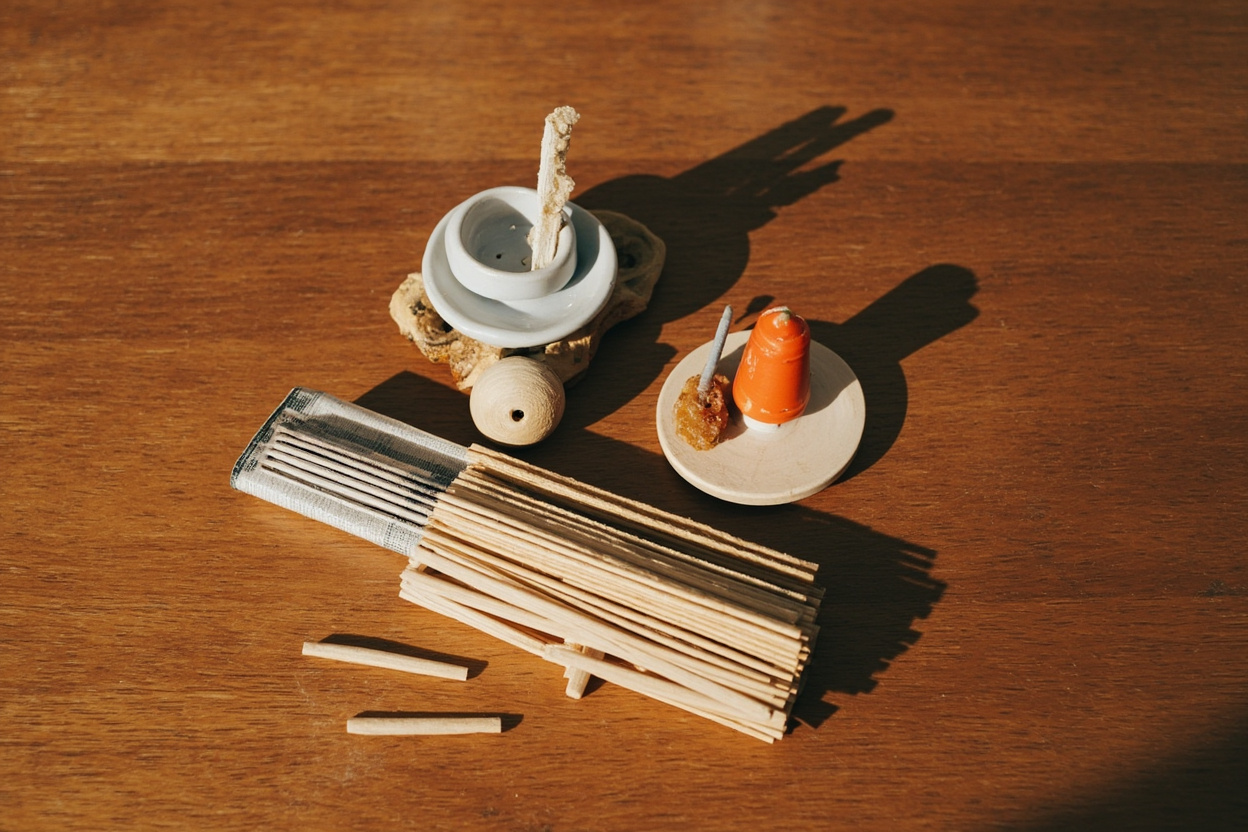
Why Choosing the Right Incense Matters
Walking into an incense shop or browsing online reveals hundreds of options. Sandalwood, agarwood, lavender, jasmine—the choices feel endless. Pick wrong and you might end up with synthetic garbage producing black smoke and headaches. Pick right and you discover an entirely new sensory world.
The Jiwik (Incense Classic) states: “Superior incense requires no flame to reveal its nature. When held in warm hands, its fragrance speaks first.” This wisdom reminds us: quality reveals itself before burning.
Incense Types: What You Are Actually Buying
Before choosing, understand what you are actually purchasing. Not all incense is created equal.
Straight Incense Sticks (Pure Wood)
Single-ingredient incense containing only powdered wood—no bamboo core, no coating. Sandalwood sticks contain nothing but sandalwood. These offer the purest, cleanest aromas. Best for meditation and aromatherapy. Cost more but smell noticeably better.
Compound Incense (Bamboo Core + Fragrance)
Bamboo stick with powdered fragrance coating. Most commercial incense falls into this category. The bamboo burns first, then the coating. Cheap options use synthetic fragrances and excessive binder. Quality bamboo incense uses natural wood powders and minimal synthetic additives.
Cone and Pyramid Incense
Self-burning shapes. Place tip-up, light, and let burn. Cones produce denser smoke and stronger fragrance compared to sticks. Good for quickly filling larger rooms. Some contain bamboo core; others are pure compressed natural powder.
Resin Incense (Charcoal Burning)
Raw resin chips burned on hot charcoal. This is the oldest documented method, used in ancient temples across China, India, and the Middle East. Resins like frankincense, myrrh, and benzoin produce rich, complex aromas impossible to replicate synthetically. Requires charcoal discs and a heat-resistant bowl. More labor-intensive but unmatched in depth and complexity.
How to Judge Incense Quality
Use these four tests before committing to a purchase:
The Visual Test
Quality sticks are uniform in color throughout. Dark spots or inconsistencies mean uneven ingredient distribution. The coating on bamboo incense should feel smooth, not chalky or crumbly. If the stick feels dusty when handled, it contains excess binder powder.
The Ash Test
Burn one stick completely. Quality incense produces white or light gray ash that holds its shape until disturbed. Black ash indicates artificial materials or poor-quality wood. Gray ash that crumbles immediately suggests excessive binder.
The Scent Test (Unlit)
Open the package. Quality natural incense smells pleasant even when unlit—the wood’s natural fragrance should be apparent. Synthetic fragrances often smell harsh,单一-dimensional, or like perfume rather than natural material. If the unlit stick makes you wrinkle your nose, avoid it.
The Burn Test
Quality incense lights easily from a single match touch. Burns evenly without flaring, sputtering, or producing excessive smoke. The flame should remain small and consistent. Large, flickering flames indicate too much flammable binder.
Choosing Incense by Purpose
Your intended use determines which incense suits you best.
For Meditation
Straight sandalwood or agarwood. These woods promote mental clarity without strong stimulation. Avoid floral scents—they can distract during seated practice. Resin incense on charcoal also works beautifully but requires more setup time.
For Relaxation and Sleep
Lavender, chamomile, or sandalwood. These calming scents reduce anxiety and prepare the body for rest. Light 30 minutes before bed. Place the holder near your pillow but out of direct airflow.
For Focus and Productivity
Citrus oils (bergamot, sweet orange) or crisp woods (hinoki, cypress). These energize without overwhelming. Avoid heavy, sedating scents during work hours. Peppermint and eucalyptus also sharpen concentration.
For Religious or Ceremonial Use
Traditional temple incense: sandalwood, agarwood, or specific regional blends. Buddhism favors sandalwood and agarwood. Hinduism uses wider varieties including frankincense, myrrh, and sacred herb blends. Choose based on your tradition’s practices.
Common Beginner Mistakes
Mistake 1: Buying the Cheapest Option
Budget incense usually means synthetic fragrances and harmful binders. A bundle of 20-30 quality natural sticks costs less than a restaurant meal and lasts weeks with daily use. Pay $8-20 for a bundle rather than $2 for synthetic garbage.
Mistake 2: Assuming Expensive Means Superior
Price alone does not guarantee quality. Some expensive incense carries brand markup rather than ingredient quality. Read ingredient lists. Look for single natural ingredients or traditional formulas you recognize.
Mistake 3: Ignoring Ventilation
Incense in a sealed room becomes overwhelming within minutes. Small rooms need one stick maximum. Open a window slightly. The goal is subtle fragrance that enhances space rather than dominating it.
Mistake 4: Not Matching Scent to Activity
Lavender for meditation might relax you into drowsiness. Energizing citrus before sleep disrupts rest. Match scent character to your intended purpose and time of day.
Recommended Starter Collection
For beginners exploring incense for the first time, we recommend sampling:
- 1 bundle pure sandalwood sticks (20-30 count)
- 1 bundle nag champa or hinoki for traditional temple experience
- 1 pack calming cone incense (jasmine or lavender)
- Small sample of frankincense resin (5-10 grams)
- 1 ceramic holder with wide catching dish
Total investment: $25-40. This gives exposure to all major incense types without overcommitting to any single style.
Frequently Asked Questions
What is the safest incense to burn?
Natural wood incense without bamboo core burns the cleanest. Always ensure adequate ventilation, never burn near flammable materials, and extinguish properly by crushing the ember rather than blowing.
Can incense trigger allergies?
Some people react to specific woods or essential oils. Start with small amounts in well-ventilated spaces. If you experience headaches, sneezing, or respiratory irritation, discontinue use and consult a physician.
How should I store incense?
Keep all incense in sealed containers away from humidity. Bathrooms are the worst storage location. Bedrooms or closets work perfectly. Heat and moisture degrade aroma quality over time.
Related Articles
- How to Burn Incense Properly: The Complete Guide
- Bo He (薄荷): Mint Incense Complete Guide
- Pei Lan (佩兰): Eupatorium Incense Complete Guide
Start Your Incense Journey Today
Choosing incense for the first time feels overwhelming. Accept that some purchases will not suit you. That process teaches your preferences. Start with small quantities from varied sources. Build your collection over time.
The right incense exists for everyone—the journey to finding it becomes part of your practice.