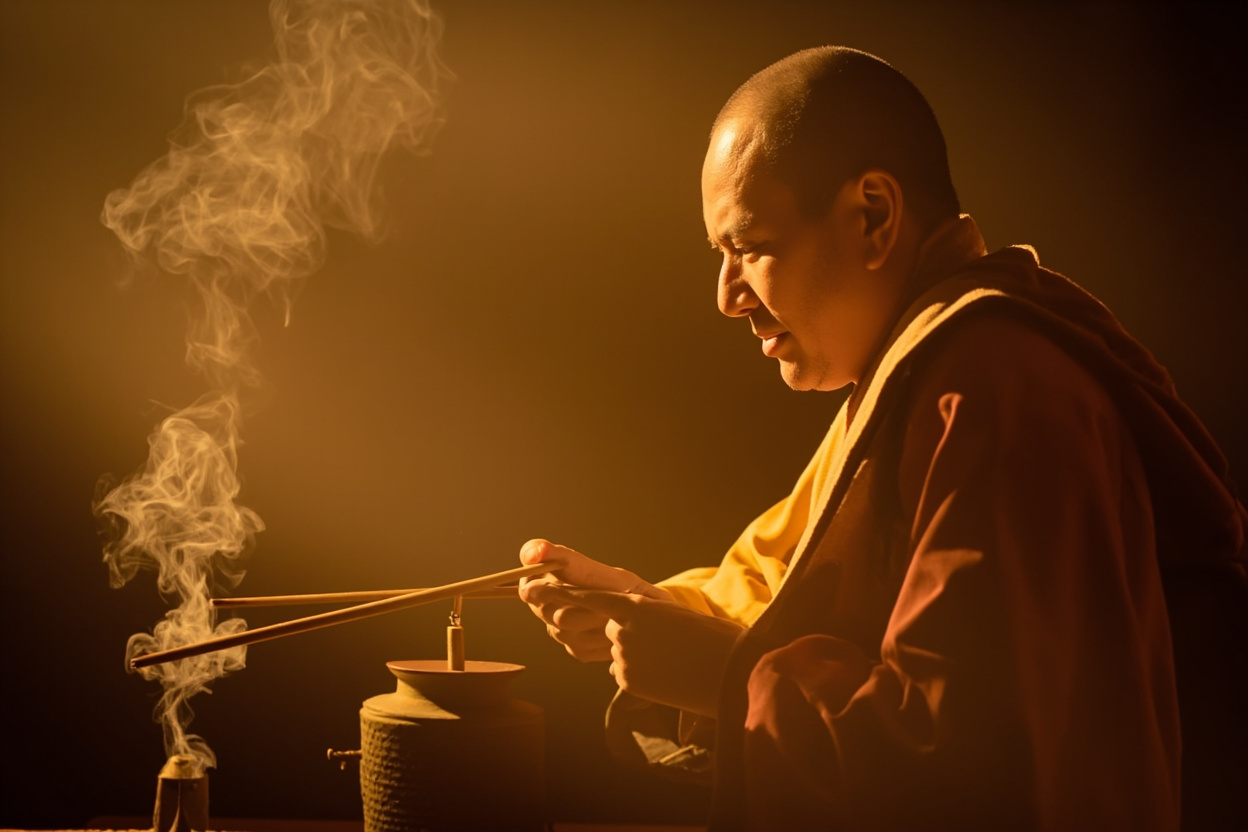
What Is Buddhist Incense Ceremony
Buddhist incense ceremony—known as xiangdian (香供) in Chinese—dates back over 2,000 years. In early Buddhist monasteries, monks burned aromatic woods as an offering to the Buddha and as a meditation aid. Today, these ceremonies continue in temples across Asia and have spread worldwide.
The Foxing Ji (佛行记) records that monks at White Horse Temple burned sandalwood daily “to purify the grounds and prepare minds for dharma study.” This dual purpose—environmental purification and mental preparation—remains central to the ceremony today.
The Meaning Behind the Smoke
In Buddhist tradition, incense smoke represents the vaporization of earthly attachments. As smoke rises and dissipates, practitioners symbolically release their grasping and suffering.
The Buddha taught that the six sense gates—eyes, ears, nose, tongue, body, and mind—are sources of suffering when we cling to pleasant experiences or reject unpleasant ones. Incense smoke provides a visual reminder: all things arise, persist briefly, and pass away. Clinging to any experience, even blissful meditation states, perpetuates the cycle.
Three sticks are often burned together, representing the Three Treasures: Buddha (the teacher), Dharma (the teaching), and Sangha (the community of practitioners).
Types of Incense Used in Buddhist Ceremonies
Not all incense suits ceremonial use. Temple masters historically favored:
- Sandalwood (tanxiang) — The most sacred. Hanshan poems mention sandalwood as the wood that “pleases the Buddha and sharpens wisdom.”
- Agarwood (chenxiang) — Expensive and rare. Used on special occasions. Its complex, layered aroma symbolizes the rarity of enlightenment itself.
- Cedar (xiangmu) — Traditional temple incense. Burns cleanly with minimal smoke.
- Sacred herbs — Temple-grown herbs sometimes blended into sticks, connecting the ceremony to local traditions and seasons.
The Correct Posture and Gestures
Buddhist incense ceremony follows specific physical forms. In traditional training, body posture matters as much as the incense itself.
Standing: Face the altar directly. Bow slightly from the waist. Hold three incense sticks between thumb and index finger of the right hand, tips pointing upward.
Kneeling: Kneel on both knees, feet flat, toes pointed. Place incense sticks in the holder with both hands, movements slow and deliberate. The body should remain upright, spine straight.
Prostrating: Full prostration involves touching forehead, both hands, and both knees to the ground simultaneously. This represents ultimate surrender before the Dharma. Traditionally repeated three times.
Step-by-Step Incense Offering Ritual
Step 1: Light the incense carefully. Use a temple candle or wooden match—never synthetic lighters. Allow the tip to catch fire fully.
Step 2: Hold the lit incense in both hands at heart level, palms upward. Silently recite a dedication: “May this incense bring peace to all beings.”
Step 3: Walk to the altar with meditative steps. Each step should be deliberate, gaze lowered.
Step 4: Place incense in the holder. Three sticks should fan outward slightly, resembling a blooming flower.
Step 5: Step back. Bow three times with hands in prayer position (anjali mudra—palms pressed together at heart center).
Offerings Beyond Incense
Incense is one part of a complete Buddhist offering. Traditional temples present seven offerings, each with symbolic meaning:
- Water (shui) — Representing purity and clarity of mind.
- Flowers (hua) — Representing the Buddha’s compassion. Fresh flowers are replaced daily.
- Incense (xiang) — Representing ethical conduct and the purification of negative actions.
- Candles (deng) — Light representing wisdom that dispels ignorance.
- Fruit (guo) — Nourishment symbolizing the fruits of practice.
- Tea (cha) — Fresh brewed, offered hot, changed several times daily.
- Music (yin) — Chanting and ritual music accompanying offerings.
Practicing Buddhist Incense Ceremony at Home
You do not need a temple to practice. A home altar with incense works perfectly for personal devotion.
Set up a clean, quiet space—ideally a corner or shelf facing east. Burn incense at consistent times: morning upon waking, evening before sleep, or before meditation sessions. Consistency matters more than elaborate ceremony. Even five minutes of mindful incense offering daily creates transformative habit.
Chants to Recite While Burning Incense
Traditional chants accompany incense burning. The most accessible for beginners is the Homage to Guanyin (Nameless Avalokiteshvara):
Budu ri xiang jia na ye
Na men guān yīn púsà
Da shì rú lái
Guān shì yīn púsà
Yīng jiē suí yuán
Zhēn yán shī zhòng
Qí xīn xiū zhāi
Duì zhùu bāo dǎo
Dà bēi dà huān
Lo, may all beings have happiness
Frequently Asked Questions
Do I need to be Buddhist to practice incense ceremony?
No. Incense ceremony is a contemplative practice open to anyone. The mindfulness, slowness, and intentionality benefit practitioners regardless of religious affiliation.
What if I cannot kneel or prostrate?
Standing or seated offerings are equally valid. Physical ability does not determine spiritual benefit. The intention and mindfulness you bring matter far more than the physical form.
How many times should I bow?
Traditional practice varies by lineage. Common patterns include three bows (representing the Three Treasures) or nine bows (representing complete dedication). At home, even one sincere bow carries meaning.
Related Articles
- How to Burn Incense Properly: The Complete Guide
- Bo He (薄荷): Mint Incense Complete Guide
- Pei Lan (佩兰): Eupatorium Incense Complete Guide
Begin Your Practice Today
Buddhist incense ceremony offers a direct path to mindfulness, regardless of your religious background. Start tonight: light one stick, take three slow breaths, and dedicate the aroma to someone you love. That simple act is the entire practice.
Explore our complete guide to incense types to choose the right fragrance for your practice.