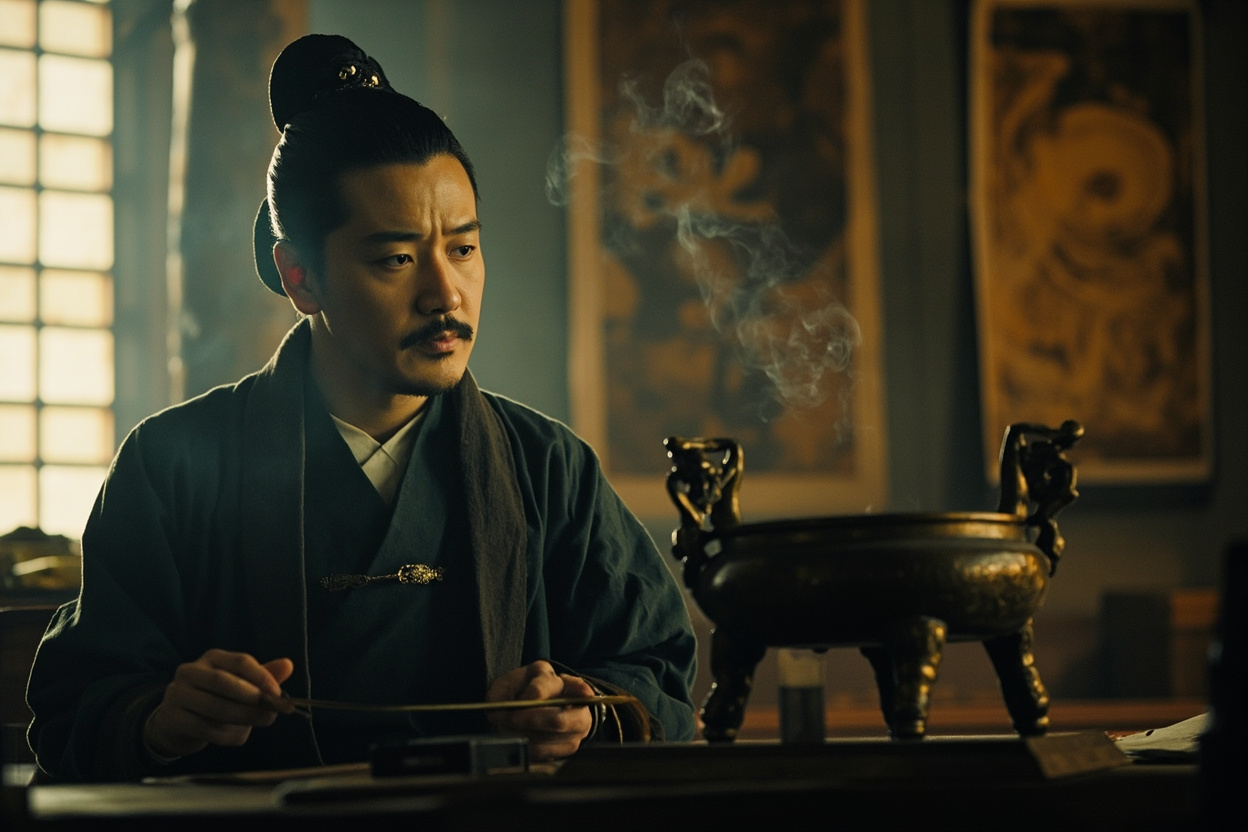
Walk into any traditional Chinese space—temple, scholar’s studio, family hall—and you will smell it. Incense. Not decoration. Not air freshener. Something deeper.
Chinese incense culture runs thousands of years deep. It shaped religion, medicine, art, philosophy, and social ritual. Understanding this history changes how you burn a stick of sandalwood.
Where It Began
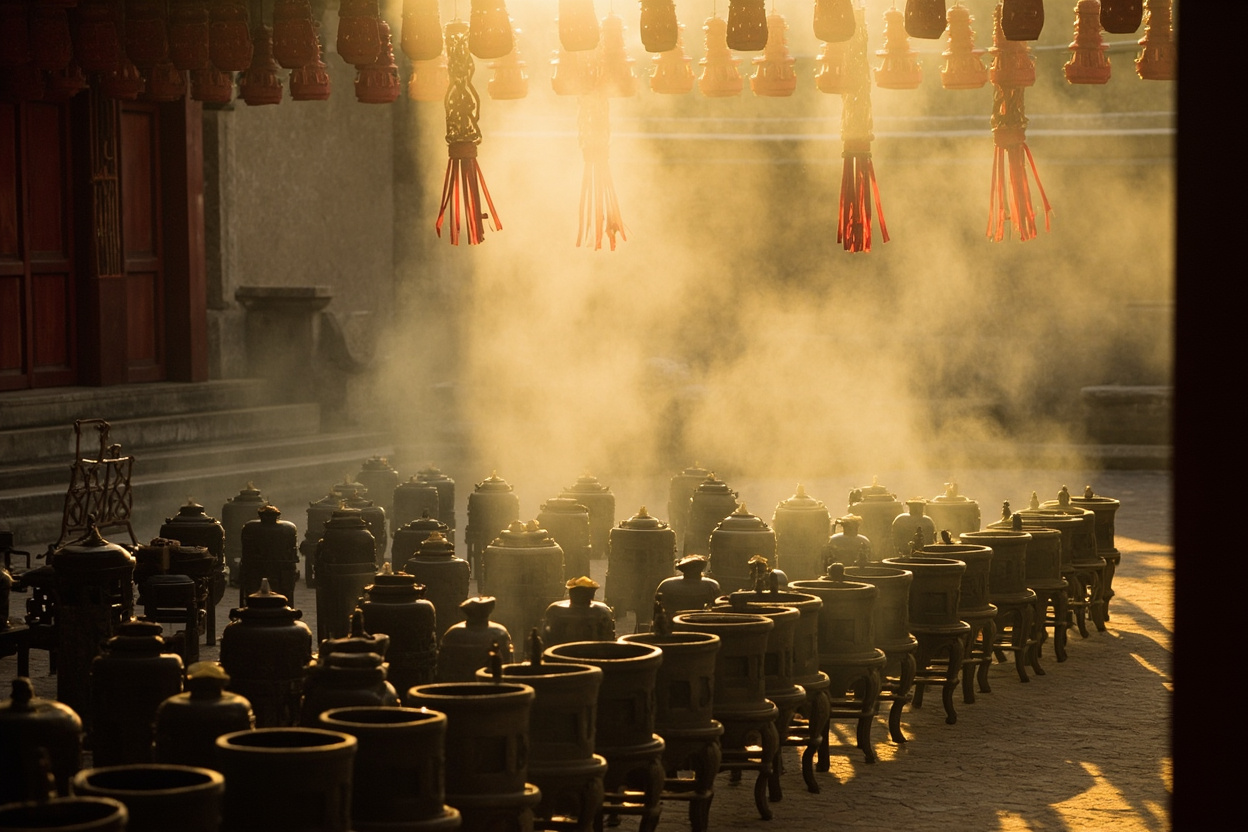
The earliest Chinese incense use appears in Neolithic burials. Charred resin fragments appear in archaeological sites dating to 5000 BCE. These were not casual offerings. They were deliberate acts of communication with ancestors and spirits.
By the Shang Dynasty (1600-1046 BCE), incense had become ritual infrastructure. Oracle bones record incense burning during divination. The emperor used specific materials for specific deities. The system had structure.
The Zhou Dynasty formalized this. Officials documented incense hierarchies—who burns what, when, why. The Zhou Li records a specialized official responsible for incense rites. Incense had become governance.
The Three Pillars
ancestor Worship
Chinese incense culture centers on the ancestor relationship. Family continuity depends on proper ritual maintenance. Incense connects the living to the dead.
The practical dimension matters here. Burning incense creates visible smoke. The ancestor receives the offering through the smoke. This is not symbolic—it is functional. The smoke carries the essence of the material to the spirit realm.
Every major festival—Qingming, Ghost Month, ancestral birthdays—requires incense. The timing, the material, the placement all follow rules. Breaking the rules disrespects the ancestor. The consequences are practical, not theological.
Religious Practice
Buddhism adopted and transformed Chinese incense culture. The word for Buddhism in Chinese—佛教—literally means the teaching of the Buddha. But the teaching arrived with Indian incense practices already integrated.
Taoism developed its own incense traditions parallel to Buddhism. The追求 immortals—cultivating transcendence through incense-enhanced meditation—became a distinct Taoist practice. Incense打开了通往精神境界的门户.
The merger happened naturally. Buddhist temples in China adopted Taoist incense materials. Taoist alchemists studied Buddhist meditation techniques. The incense burner became the common object. Today, identifying which tradition an incense practice belongs to often proves impossible—and may miss the point.
Scholar Practice
The wenren—scholar-officials—transformed incense from ritual necessity into philosophical practice. By the Tang Dynasty, burning incense had become a literacy requirement.
Wang Yangming’s neo-Confucian successors developed what we now call xiangdao. The scholar burns incense not to worship gods but to cultivate self. The aroma stills the mind. The still mind encounters its own nature.
Literati texts describe incense sessions in detail. The specific material matches the season. The time of day matters. The quality of ash indicates the practitioner’s level. This is systematic cultivation, not casual habit.
The Four Great Inventions of the scholar studio—painting, calligraphy, qin playing, weiqi—all incorporated incense practice. The scholar might burn agarwood while composing poetry, cedarwood while playing the qin, sandalwood while practicing calligraphy. Each material enhanced specific mental states.
The Medicine Connection
Chinese medicine developed sophisticated incense pharmacology. The Shennong Bencao Jing, China’s earliest medicinal text, categorizes aromatic materials by their effects on the body.
Key distinctions:
- Aromatic vs. acrid: Incense materials that enter the lung meridian for respiratory treatment
- Warming vs. cooling: Incense materials that move qi (warming) vs. those that clear heat (cooling)
- Toxic vs. non-toxic: Incense materials safe for prolonged human exposure vs. those requiring caution
The classic formula Xiang Ren (incense persons) combines multiple aromatic materials for treating respiratory illness. Modern research confirms the bronchodilating effects of many traditional incense ingredients.
TCM also recognized the psycho-spiritual applications. Lavender incense calms shen (spirit). Sandalwood relieves anxiety. Frankincense moves blood in people with trauma patterns. The medicine is comprehensive.
Materials Through History
Pre-Qin: Resins and Herbs
Early Chinese incense used local materials: pine resin, cypress, mugwort, cassia. These grow across China and have documented pharmacological properties. The materials chose themselves.
The tradition of importing exotic incense began during the Han Dynasty, when diplomatic missions returned with frankincense and myrrh from Central Asia. These became prestige materials. Using them signaled wealth and connection.
Tang Dynasty: The Golden Age
The Silk Road brought Arabian frankincense, Indian sandalwood, and African aromatics into Chinese circulation. The Tang court maintained diplomatic relationships across Asia specifically to secure incense supply.
Xuanzong’s court developed sophisticated incense protocols. Each state occasion required specific formulas. The imperial treasury maintained detailed recipes. The Tang aristocracy competed through their incense collections.
Poets like Li Bai and Du Fu wrote extensively about incense. The aroma appears in poetry as a vehicle for grief, longing, spiritual aspiration, and physical pleasure. Incense had become artistic medium.
Song Dynasty: The Scholar Peak
The Song consolidated earlier developments into systematic xiangdao practice. Scholars developed detailed protocols for incense sessions—the grinding, the blending, the temperature control, the appreciation.
The Song also saw the development of formal incense ceremony. Different from religious ritual or medical application—the scholar’s incense ceremony had its own rules, its own aesthetics, its own goals.
This is when hexiang—blended incense—became sophisticated art. Pure single-material incense was for beginners. The advanced practitioner created complex formulas combining multiple materials, each choice deliberate, each blend expressing the maker’s understanding.
Ming-Qing: From Daily to Decorative
Ming dynasty saw incense practice spread beyond the elite. Common people burned incense in household shrines, during meals, while traveling. The practice became demotic.
The Qing, being Manchu, maintained their own incense traditions while adopting Chinese practices. The court developed hybrid forms. The result was both expansion and some dilution—many earlier esoteric practices became simplified as they entered wider circulation.
The Philosophical Dimension
Beyond religion and medicine, Chinese incense culture carries specific philosophical commitments.
The Unity of Form and Essence
The aroma is the incense. There is no separation between the material and its effect. This mirrors Chinese metaphysics—in Chinese thought, apparent dualisms (form/emptiness, material/spirit) resolve at higher levels of understanding.
When you burn sandalwood and experience calm, the calm is not caused by the sandalwood. The sandalwood and the calm are one event experienced from different perspectives. The incense practice cultivates this direct perception.
Process Over Object
Chinese incense culture focuses on the incense session as process. The material burns. The aroma changes. The session ends. Impermanence is built into the practice.
Nothing is accumulated. Each session stands complete. The goal is not some future state but the quality of attention in this moment. This is distinctly Chinese—interested in process rather than object, in trajectory rather than endpoint.
Appropriate Relationship
Incense teaches appropriateness. Too much incense creates toxicity. Wrong material for the season produces imbalance. Incense used for worship differs from incense used for medicine differs from incense used for cultivation.
Chinese ethics emphasizes relational appropriateness—treating each situation according to its nature rather than applying fixed rules. Incense practice develops this sensitivity. You learn to notice what the situation requires.
What Survived
Much survived. Chinese Buddhist temples still burn incense following protocols that would be familiar to Tang dynasty monks. TCM practitioners still prescribe aromatic formulas with detailed attention to the patient’s pattern. Scholar descendants still maintain incense studios according to Song dynasty principles.
But the mainstream culture changed. Western influence, political upheaval, rapid modernization—all disrupted continuous incense practice. Many families remember incense burning at ancestors’ altars but do not continue the practice. The knowledge survives in books but not in hands.
This creates opportunity. The practice is accessible now in ways it has not been for centuries. Resources that existed only for elites are available to anyone with internet access. The barrier to entry is lower than at any previous moment in Chinese history.
Frequently Asked Questions
Is Chinese incense different from Japanese incense?
They share origins—the transmission of Buddhism from China to Japan—but developed differently. Japanese incense (kodo) developed as pure appreciation art, heavily ritualized. Chinese incense remained integrated with religion, medicine, and scholar practice. The Chinese version is more various; the Japanese version is more refined in specific dimensions.
Can anyone practice Chinese incense culture?
Yes. The tradition is not exclusive. You do not need Chinese heritage, Buddhist faith, or scholarly training. The practices are documented and available. The barrier is interest and consistency, not identity.
What is the best starting material?
Sandalwood for most people. It is accessible, effective, and widely available in quality forms. Once you understand how you respond to sandalwood, explore other materials based on what you want to cultivate.
Is burning incense safe?
Natural incense in ventilated spaces presents minimal risk for healthy adults. Those with respiratory conditions should consult practitioners. Synthetic fragrances present different concerns—the chemistry is less understood and some compounds raise legitimate health questions.
Related Articles
- What Is Xiangdao? Complete Introduction
- Complete History of Chinese Incense
- Hexiang: The Art of Chinese Blended Incense
Try It
You do not need to understand the philosophy before burning incense. But understanding changes what you experience.
Light a stick of sandalwood. Notice the aroma. You are participating in a continuous practice that extends back five thousand years.
That continuity is not historical trivia. It is presence.