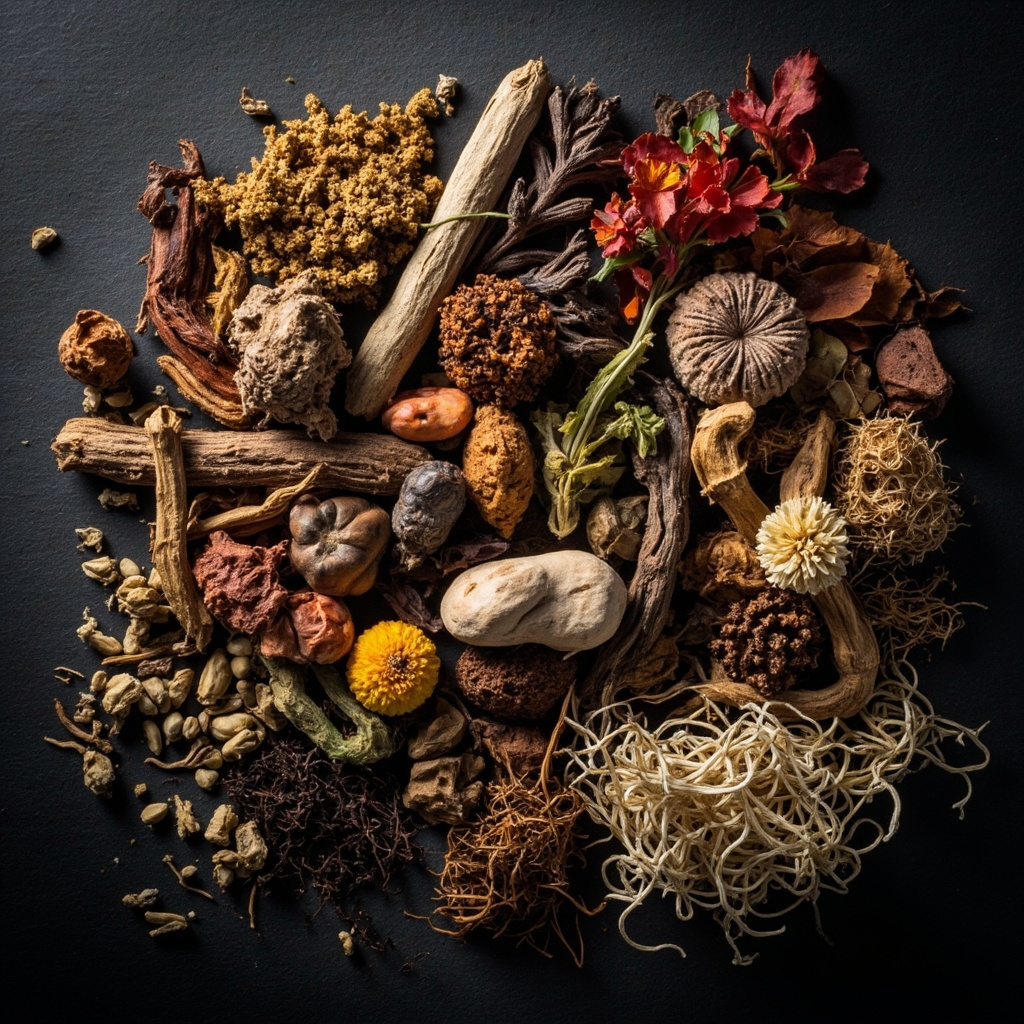
In the high meadows of Gansu and Sichuan provinces, where the air stays cool even through summer and the soil carries the mineral richness of ancient mountain ranges, grows one of the most celebrated tonic herbs in all of Chinese medicine—Dang Gui, angelica sinensis. The name itself—当归—means “should return,” reflecting the classical understanding that this herb makes the blood “return” to its proper channels, treating conditions where blood has strayed from its intended paths.
No herb in the Chinese pharmacopoeia appears more frequently in women’s health formulas. The Shennong Bencao Jing lists it among the superior medicines, capable of “supplementing the blood, promoting its movement, and alleviating pain.” For two thousand years, Dang Gui has been the primary herb for menstrual and reproductive health—a role that extends naturally into incense practice, where its warm, deeply aromatic character has made it a staple in formulations for women and for anyone whose blood needs gentle guidance home.
What Is Dang Gui
Dang Gui comes from the dried root of Angelica sinensis, a perennial plant in the Apiaceae family. Unlike its cousin Bai Zhi (Angelica dahurica), which focuses on the upper body and surface conditions, Dang Gui works deeply within the body’s blood system.
The root is harvested in late autumn when the plant’s energy has concentrated in the underground parts. The specific processing method—cleaning, drying, and often “braising” in wine or vinegar—further enhances the blood-nourishing properties and distinguishes Dang Gui from other angelica species used in different traditions.
《神农本草经》记载:「当归味甘温,主咳逆上气,温疟寒热洗洗在皮肤中,妇人漏下绝子,诸恶疮疡金疮,煮饮之。」
The Divine Farmer’s Classic of Materia Medica records: “Dang Gui—flavor sweet and warm—governs cough ascending qi, warm malaria with chills and fever, washing to and fro in the skin; women’s leaking downward and childlessness; various malignant sores and ulcers, metallic wounds; prepared as decoction for drinking.”
The “Female Ginseng” Nickname
Dang Gui’s reputation as the premier blood tonic for women earned it the nickname “female ginseng” (女贞). While ginseng works primarily on the qi (vital energy), Dang Gui works specifically on blood—the yin counterpart that qi moves and animates.
Chinese physiology understands blood as the material foundation for all bodily function—the substance that nourishes organs, lubricates joints, and houses the shen (spirit). When blood is deficient or stagnant, the entire person suffers: menstrual disorders, infertility, insomnia, anxiety, joint pain, and countless other conditions result. Dang Gui addresses these by supplementing blood and promoting its movement.
Fragrance Profile
Dang Gui has a distinctive aromatic character:
Primary notes: Warm, sweet, deeply aromatic with a characteristic earthiness. The fragrance registers as grounding and nourishing rather than bright or clearing—the opposite of herbs like Bai Zhi.
When burning: The smoke carries a rich, warm fragrance that many find comforting and settling. The overall impression is of a material that “stays” rather than disperses—grounding scattered energy and bringing things toward center.
Emotional quality:
The scent of burning Dang Gui often produces subjective reports of emotional warmth and comfort—consistent with its traditional reputation for “settling” the heart and emotions. Dang Gui’s applications follow from its understood properties: The primary action—supplementing blood—addresses: The secondary action—promoting blood movement—addresses: Perhaps Dang Gui’s most distinctive quality—its ability to both move and nourish blood—makes it unique among blood herbs. Where other blood herbs either move (and potentially deplete) or nourish (and potentially stagnate), Dang Gui does both simultaneously, regulating blood without creating either deficiency or stagnation. Dang Gui serves specific incense purposes: The traditional connection to women’s health extends to incense: Burning Dang Gui creates an aromatic atmosphere traditionally considered supportive for menstrual periods and postpartum recovery. While not a substitute for therapeutic treatment, the warm, blood-nourishing quality creates an environment aligned with the body’s needs during these times. The “settling the heart” property makes Dang Gui appropriate for: Times of emotional turmoil, anxiety, or grief—the warm, grounding fragrance supports emotional balance without sedation. The comforting quality of Dang Gui smoke often produces subjective reports of emotional comfort. The grounding quality serves certain meditation types: Where sandalwood clears and energizes, Dang Gui grounds and settles. For practitioners whose practice involves introspection, emotional processing, or working with the body’s inner states, Dang Gui’s warm presence may support these processes. Dang Gui contributes to complex formulations: Its warm, rich base provides grounding counterpoint to brighter or more energizing materials. Blends including Dang Gui gain depth and staying power—the fragrance persists and grounds the overall effect. Dang Gui root can be prepared several ways: Direct burning: Small pieces burn on charcoal, releasing the warm, rich fragrance. The root burns relatively slowly, providing extended aromatic presence. Powder form: Ground Dang Gui mixes with binding agents for incense stick production. The powder releases fragrance efficiently when burning. Wined or processed: The traditional “braised in wine” processing enhances certain properties—wined Dang Gui may be preferred for incense when the warming quality is specifically desired. Origin: Min County (岷县) in Gansu province produces the most highly valued Dang Gui—climate and soil create ideal growing conditions. The “Gansu Dang Gui” carries premium pricing based on established reputation. Root thickness: Thicker roots indicate older plants with more concentrated aromatic and therapeutic compounds. Look for thick, fleshy main roots rather than thin, fibrous ones. Color: Quality Dang Gui shows the characteristic yellowish-white interior. Dark or gray coloration suggests age or improper storage. Oil content: The cut surface should show slight oiliness—the volatile compounds that carry fragrance and therapeutic properties. Modern science has investigated Dang Gui: Hematopoietic effects: Studies show Dang Gui extracts stimulate blood cell production—the scientific basis for the traditional blood-supplementing applications. Oxytocic effects: Research confirms traditional use for menstrual and postpartum conditions—Dang Gui compounds stimulate uterine contraction and regulate menstrual bleeding. Anti-inflammatory: The anti-inflammatory properties support traditional applications for joint pain and inflammatory conditions. Immunomodulatory: Dang Gui demonstrates immunomodulatory effects—supporting and regulating immune function rather than simply stimulating it. Dang Gui has a warm, sweet, deeply aromatic fragrance with a characteristic earthiness. The overall impression is grounding and comforting rather than bright or clearing. The scent “stays” rather than dispersing quickly—a lingering, warm presence in spaces where it burns. Dang Gui’s traditional use includes postpartum recovery but typically avoids during pregnancy itself—the blood-moving property may affect pregnancy in sensitive individuals. Consult a qualified TCM practitioner for specific guidance during pregnancy. Absolutely. While nicknamed “female ginseng,” Dang Gui treats blood deficiency regardless of gender. Men experiencing blood deficiency symptoms—dizziness, pale complexion, insomnia from blood failure to nourish the spirit—can benefit from Dang Gui as much as women. Dang Gui’s unique property is its dual blood-nourishing and blood-moving action. Herbs like Shu Di Huang (熟地黄) primarily nourish blood but can create stagnation; herbs like Chuan Xiong (川芎) primarily move blood but can deplete. Dang Gui regulates blood—neither nourishing excessively nor moving excessively—making it versatile for many blood patterns. Dang Gui grows from seed in cool climates with moist, well-drained soil. The root develops over a single growing season—harvest in autumn before the second year flowering. Home cultivation provides fresh material for topical applications, though therapeutic-quality Dang Gui for internal medicine requires specific processing methods difficult to replicate at home.TCM Properties
Blood Supplementation
Blood Movement
Blood-Regulating
Incense Applications
Women’s Practice
Emotional Support
Meditation Support
Blending Component
Preparation for Incense
Quality Considerations
Modern Research
FAQ: Dang Gui
What does Dang Gui incense smell like?
Is Dang Gui safe to burn during pregnancy?
Can men use Dang Gui incense?
How does Dang Gui compare to other blood herbs?
Can I grow Dang Gui at home?
Related Articles