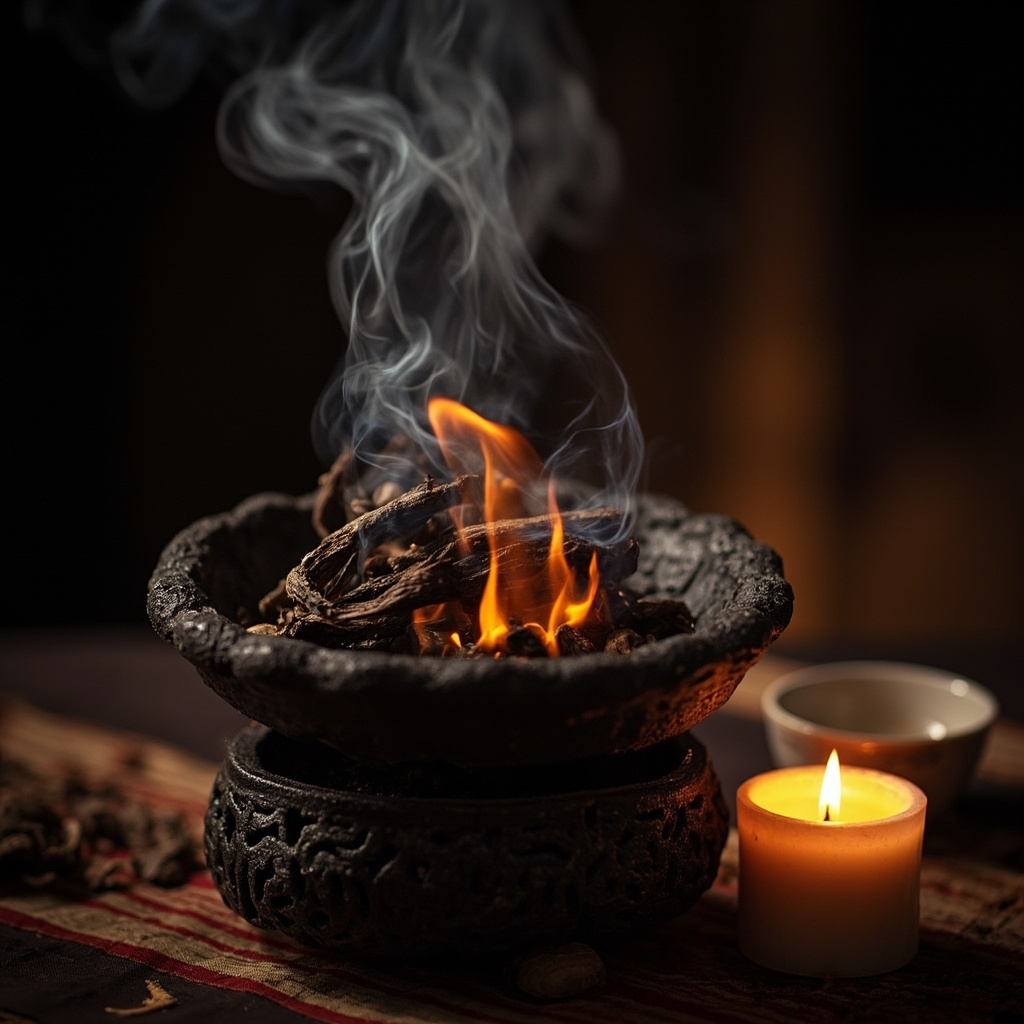
The scent of burning agarwood fills the room—that rich, complex fragrance that has captivated humans for three thousand years. But as you lift the chip to examine it closer, a nagging doubt creeps in: Is this the real thing?
You are not alone. The agarwood market sees an estimated 90% of products containing some form of adulteration or outright counterfeiting. From wood chips soaked in chemical simulators to entirely synthetic materials sold as premium oud, the market is a minefield for the unwary buyer.
What follows is the complete identification methodology used by Chinese incense masters for over a millennium—updated for the modern buyer.
Understanding Why Counterfeit Exists
Before learning to identify real agarwood, it helps to understand the economics. Aquilaria trees take 20 to 50 years to produce high-quality resin-infused heartwood. The natural infection process that creates agarwood is rare—perhaps 1 in 1,000 trees in the wild develops the resin. This scarcity makes genuine agarwood expensive, sometimes exceeding $100 per gram for the finest grades.
This price point creates enormous profit incentives for fraud. Low-grade Aquilaria wood, juvenile wood with minimal resin, or entirely different wood species can be “enhanced” through artificial inoculation, chemical treatment, or fragrance application to mimic premium agarwood at a fraction of the cost.
The Six Tests: From Simplest to Most Definitive
Test 1: Visual Inspection
The first examination requires only your eyes—and a loupe if you have one.
Natural resin veins: Genuine agarwood, when cut or broken, reveals intricate dark veins where the resin has accumulated over decades. These veins are never perfectly straight or uniform. Under magnification, you will see irregular patterns resembling cracked earth or the grain of expensive marble.
Counterfeit wood, even when expertly dyed or chemically treated, cannot replicate this organic formation. Artificial “veins” typically appear as straight lines painted or burned into the surface.
Color distribution: The finest agarwood—the legendary jiyok (伽楠香) from Vietnam and Hainan—displays alternating bands of dark brown and amber. This contrast should be visible even in raw chips. Uniform color throughout a piece is a red flag.
《本草纲目》记载:「伽傝末成器者,插地中十年,黑白相间成斑纹者为上。」
Li Shizhen writes in the Compendium of Materia Medica: “Unprocessed ganjiang [agarwood], buried in earth for ten years, develops black and white mottled patterns—this is the superior grade.”
Test 2: Weight and Buoyancy
Resin-infused agarwood is dense. Very dense. A chip the size of a matchbox should feel heavy for its dimensions—almost like holding a small stone.
Lightweight chips, particularly those that float readily in water, often indicate juvenile wood with minimal resin content, or wood from the outer sapwood rather than the heartwood.
The water test: Place a chip in a glass of room-temperature water. Premium agarwood sinks within seconds. Lower grades may take minutes to settle. Wood that floats indefinitely is almost certainly not genuine Aquilaria heartwood, or has been hollowed or compressed.
Test 3: Cold Touch
Real agarwood, due to its density and resin content, remains noticeably cool to the touch even in warm room temperatures. Run your finger across the surface—the sensation should be distinctly cool and smooth, like touching polished stone.
Most counterfeit materials, being less dense, will quickly assume ambient temperature.
Test 4: The Burning Test
This is where genuine skill develops. Heat a single chip in a fine charcoal burner until it begins to smolder. Observe carefully:
What genuine agarwood does:
- Burns slowly with visible glowing embers
- Produces a small amount of white or gray smoke—not black
- Curling inward as the resinous core burns
- Emitting oil that causes small bubbles or froth at the burning edge
- Leaving behind a hard, carbonized ash—not soft ash
What counterfeit materials do:
- Burning too quickly or producing flame rather than smoldering
- Smoke that smells acrid, chemical, or of burning plastic
- Leaves soft, fluffy ash—like paper burning
- May produce black smoke and dripping resin that smells wrong
《香谱》洪刍记载:「又好者,置之水中,沈而不浮者是也。火燃之,则无焰而有油出,香气甚烈。」
The Classical Fragrance Handbook (香谱) by Hong Chu states: “The superior grade, placed in water, sinks and does not float. When burned with fire, there is no flame but oil emerges, and the fragrance is extremely intense.”
Test 5: The Hot Needle Test
For this test, you need a metal needle (a large sewing needle or thin nail) and a source of heat—a gas stove, lighter, or candle flame.
Procedure:
- Heat the needle tip until glowing red
- Press the hot tip firmly into a hidden area of the chip (not a critical visual surface)
- Observe the response
Genuine agarwood: The needle pierces with difficulty due to the dense, resin-impregnated fibers. A small amount of sticky, dark resin adheres to the needle. The smell that rises is pure, complex fragrance—sweet, woody, sometimes with camphor or floral notes depending on origin.
Fake materials: The needle may penetrate too easily (indicating soft, low-density wood) or meet unexpected hardness (possibly stone or resin composites). The smell may be acrid, smoky, or simply “off.” If the material melts rather than resists, it is likely a plastic-based counterfeit.
Test 6: Fragrance Evolution and Longevity
This test requires the most experience but is ultimately the most reliable. Real agarwood fragrance is not static—it evolves.
On cold chip: Scratch the surface with your fingernail or a needle. Genuine agarwood releases fragrance even when cold—subtle but distinctly present. The scent should be sweet, woody, and complex, with no harsh chemical notes.
When warming: Hold the chip in your palm, or place it near (not on) a gentle heat source. As the resin warms, the fragrance should intensify and reveal layers—the initial note, then deeper notes emerging after 30-60 seconds. Premium grades may reveal different fragrance profiles over 5-10 minutes of sustained warming.
The hallmark of authenticity: Real agarwood, when removed from heat, continues to emit fragrance for several minutes as the residual resin slowly cools. Counterfeit materials typically stop producing scent almost immediately.
Regional Characteristics to Know
Hainan Agarwood (海南沉香)
Considered among the finest in Chinese tradition. Characterized by high density (most pieces sink in water), dark color with distinct resin veins, and a fragrance often described as “sweet and cooling”—reminiscent of sugar combined with fresh wood. Hainan agarwood burns with minimal smoke and leaves very little ash.
Vietnamese Agarwood (越南沉香)
The legendary “Kyara” grade from Vietnam sets the global standard for premium oud. Look for distinctive “oil veins” visible even in raw form, a fragrance that begins with sweet fruit notes and deepens into resinous wood, and physical density that makes even small chips feel substantial.
Indian Agarwood (印度沉香)
From the Assam region and Kerala, Indian agarwood often displays darker coloration and a more intense, sometimes medicinal fragrance. The resin content is typically very high, making these pieces dense and slow-burning.
Common Counterfeit Methods to Watch For
Chemical simulation: Low-grade Aquilaria wood is treated with chemicals to accelerate resin-like darkening. These pieces may look convincing visually but lack genuine resin content. The chemical smell becomes apparent when burning.
Oil injection: Some counterfeiters drill holes and inject synthetic fragrance oils into otherwise non-resinous wood. When heated, these pieces may smell like agarwood initially but the fragrance fades quickly and becomes acrid on extended burning.
Eaglewood substitutes: Other trees in the Thymelaeaceae family produce similar-looking wood that is not true Aquilaria. These “eaglewoods” lack the distinctive fragrance of genuine agarwood and are considered worthless for incense purposes.
Building Your Authentication Expertise
The most skilled agarwood authenticators develop their judgment over years of direct experience—burning hundreds of samples, developing a trained nose for the subtle differences between origins and grades, and building a reference library of known authentic pieces.
If you are serious about collecting or regularly purchasing agarwood, consider:
- Buying only from reputable sources with verifiable sourcing networks
- Requesting authentication documentation for purchases above $50
- Keeping samples of known-authentic agarwood for direct comparison
- Joining collector communities where experienced members can verify your pieces
FAQ: Real vs Fake Agarwood
Can I identify real agarwood just by smell?
With experience, yes. Trained noses can identify genuine agarwood fragrance within seconds. However, beginners should use smell in combination with other tests—visual inspection, weight, and the burning test—because synthetic fragrances have become sophisticated enough to fool novices.
Does a high price guarantee authenticity?
Unfortunately, no. Premium pricing does not ensure premium authenticity. Always verify purchases using the methods in this guide, and buy from sellers with strong reputations and return policies.
Is there a simple test I can do at a market?
The cold-scratch test is most practical for on-the-spot verification: scratch the surface with your fingernail. Genuine agarwood releases fragrance even when cold. Also examine the cut end of any chips—the resin veins should be visible.
What is the most reliable single test?
The burning test provides the most comprehensive verification—it reveals weight, fragrance evolution, burning characteristics, ash quality, and oil production. However, it is destructive. For non-destructive testing, combine the hot needle test with visual inspection of resin veins.
Does artificial cultivation mean low quality?
Not necessarily. Some cultivated Aquilaria trees produce genuine resin-infused heartwood through proper wound-induced cultivation. The key is whether the resin has actually formed, not whether the tree grew in plantation or wild conditions. However, wild-crafted agarwood from mature trees remains the premium standard.