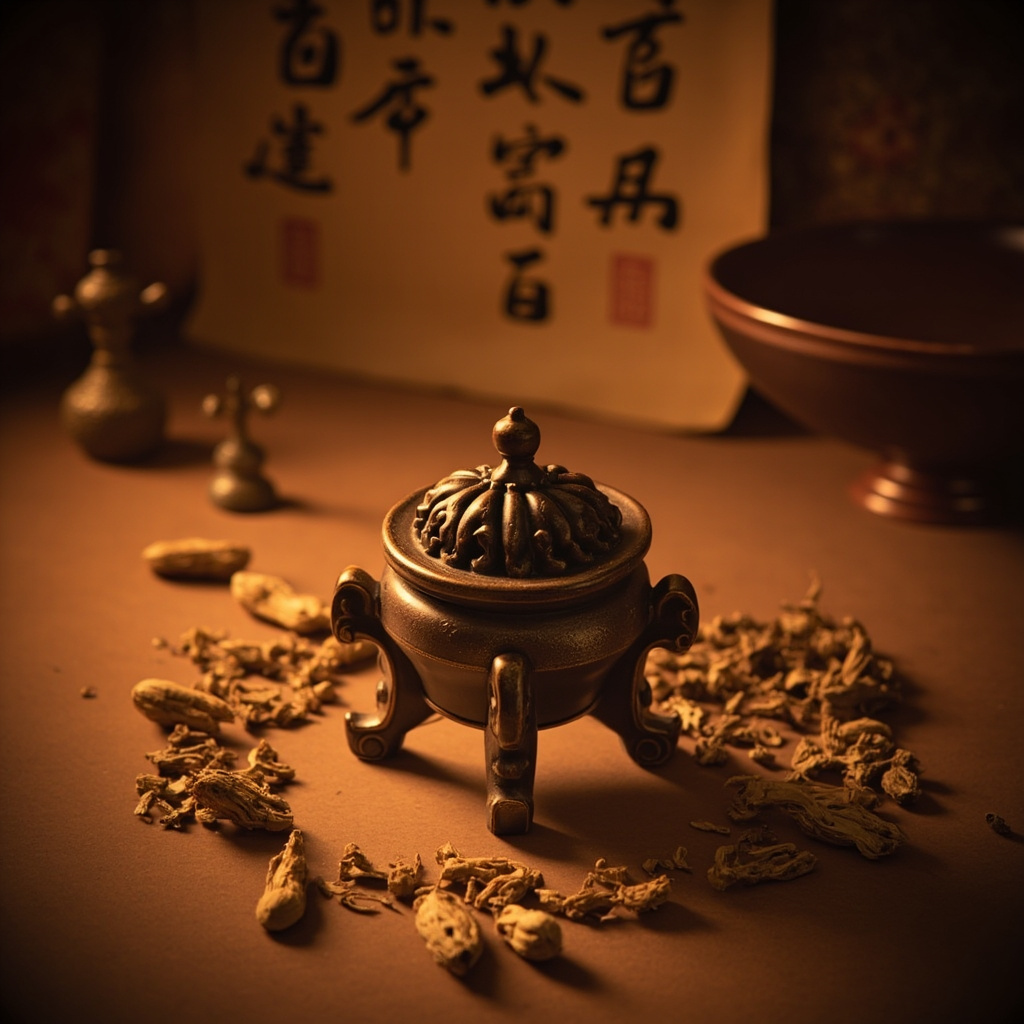
In the late Ming dynasty, when scholars increasingly retreated from political turmoil into private intellectual pursuits, there lived in Jiangnan a man who dedicated his years to the quiet arts of civilization. Wu Ji (吴继) — known respectfully as Wu Gong, Lord Wu — was a compiler of practical knowledge who found in incense a way of being present in a world that had become difficult to navigate.
His work, the Mo E Xiao Lu (墨娥小录, Minor Records), is a universal encyclopedia of domestic arts covering incense formulas, wine recipes, tea preparations, craft formulas, and beauty recipes. But Wu Ji did not merely collect. He refined classical formulas to the realities of Ming dynasty life, balancing theoretical knowledge with practical know-how. His incense section, preserved in Zhou Jiazhou’s Xiang Cheng (香乘, 1641), represents some of the most grounded classical incense knowledge from the folk tradition.
Wu Gong Xiang — Lord Wu’s Incense — is one of his signature creations. It is not an elaborate palace formula, not a Buddhist ceremonial blend. It is something more honest: a scholar’s daily incense. Something to burn at the desk while reading, in the quiet of an evening, alone with one’s thoughts. The fragrance is designed to be clean, calm, and slightly sweet — the olfactory equivalent of a well-ventilated study on a crisp autumn afternoon.
Who Was Wu Ji (吴继)?
Very little is known about Wu Ji personally. He is believed to have been active in the mid-to-late Ming dynasty, around the time of the Wanli Emperor’s reign (1573-1620). What is documented is that in 1571 (隆庆五年), Wu Ji came across a set of older manuscripts — loose records of domestic arts assembled by unknown hands over preceding generations — and decided to compile, organize, and publish them as a single work.
He wrote in his preface:
「不知辑于何许人,余得而刊之,以广其传。」
Translation: I do not know by whom these were originally compiled. I came upon them and have chosen to publish them, so that they may spread more widely.
This humility — the compiler’s disclaimer of authorship — is characteristic of the folk scholarly tradition. Knowledge was meant to circulate, not to be hoarded. Wu Ji was a conduit, not an authority.
His location — Jiangnan, the region south of the Yangtze River encompassing Jiangsu, Zhejiang, and Anhui — is important. Jiangnan in the Ming was the most economically and culturally developed region in China. Its scholars were known for refined tastes and their ability to find the extraordinary in the ordinary. This is the spirit behind Wu Gong Xiang.
The Formula: Ingredients of Wu Gong Xiang
Wu Gong Xiang is documented in the Xiang Cheng (香乘), which preserved Wu Ji’s incense section from the 墨娥小录. The formula is characteristic of Wu Ji’s approach: not a single exotic material, no rare imports, nothing that required connections to court merchants or foreign traders. Everything could be sourced from the Jiangnan market.
The classical documentation of the formula reads:
「沉香不拘多少,檀香、降真香各等分,以花露浸之,日中曝干,如此者数次,则香气自透。或不需花露,但取自然甘和者为之,亦可。」
Translation: Take agarwood (沉香) in any quantity. Take sandalwood (檀香) and dalbergia (降真香) in equal measures. Soak them in floral water (花露), and dry in the sun. Repeat this several times, and the fragrance will naturally penetrate through. Alternatively, if floral water is not available, simply use materials that are naturally sweet and harmonious — this also works well.
The classical version calls for:
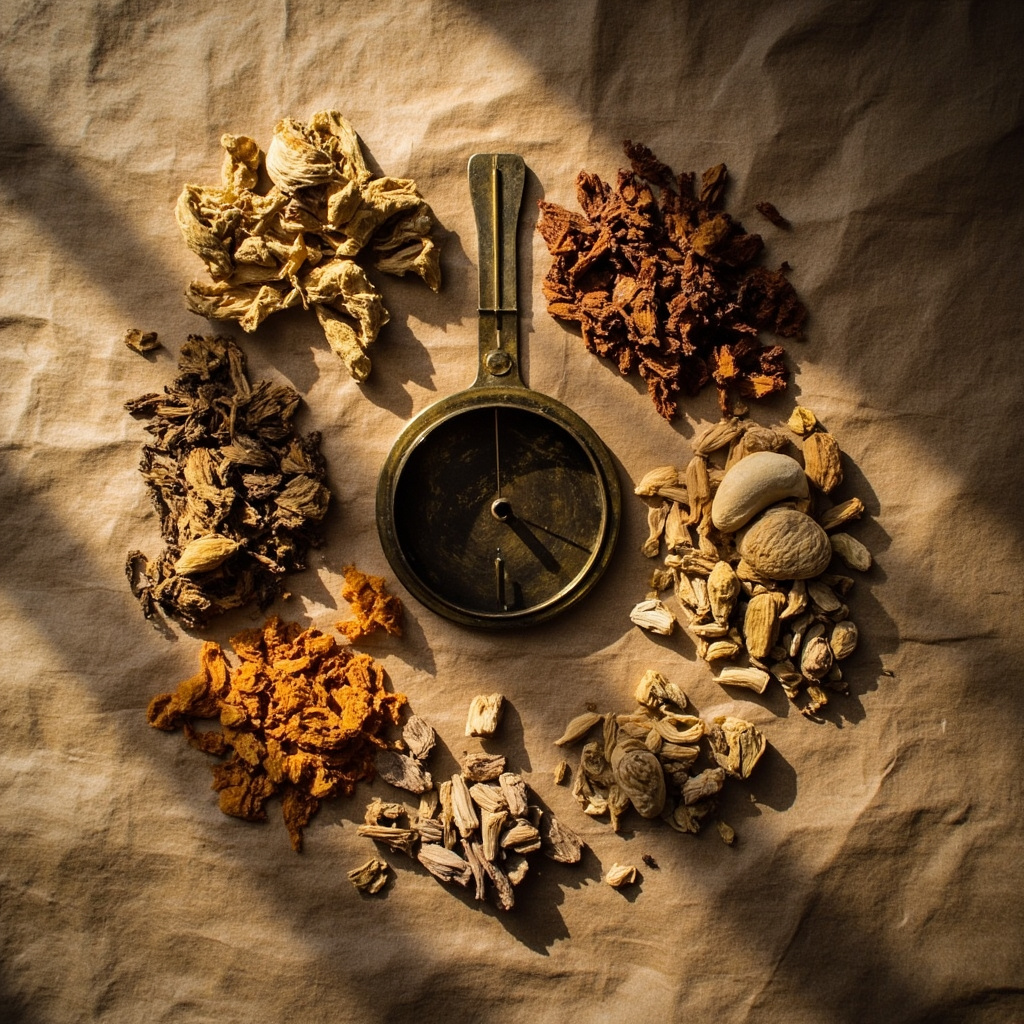
- 沉香 (Chenxiang / Eaglewood / Agarwood): The foundational material. Wu Ji specified not to be particular about quantity — the formula is flexible. Higher quality and greater quantity of eaglewood produces a deeper, more resonant fragrance. The eaglewood provides the resinous base that gives the formula its depth.
- 檀香 (Tanxiang / Sandalwood): Equal measure with dalbergia. Sandalwood provides warmth, creaminess, and natural sweetness that rounds the sharper edges of the eaglewood. The warm, woody character of sandalwood is the emotional core of this formula.
- 降真香 (Jiangzhen / Dalbergia odorifera): One of the most prized Chinese aromatic woods — it has a clean, slightly sweet character that scholars called the incense of clarity. It is the intellectual note in the blend.
- 花露 (Hualu / Floral water): The key preparation method. Classical floral waters were produced by steeping fragrant flowers (typically osmanthus, jasmine, or rose) in water and collecting the condensate. This was used to moisten and treat the wood materials during repeated sun-drying cycles.
Wu Ji was characteristically pragmatic. He acknowledged that floral water might not always be available, and gave permission to make the formula without it. The underlying principle, he said, is natural sweetness and harmony — if those can be achieved through other means, the formula still works.
The Character of the Fragrance
Wu Gong Xiang is not dramatic. It does not announce itself with a fanfare of top notes or demand your attention from across the room. It is the incense equivalent of a perfectly balanced sentence — nothing extraneous, nothing missing.
Top notes: The initial impression is clean and slightly woody, with a hint of the floral water if used. The dalbergia leads, giving a bright, clean impression that opens the nasal passages.
Middle notes: As the materials begin to heat more deeply, the sandalwood emerges — warm, creamy, with the characteristic sweet-resinous quality that makes it the most universally beloved of all aromatic woods. This is the stage that rewards patience: 20 to 40 minutes into the burn.
Base notes: The eaglewood comes forward last, with its deep, complex, slightly medicinal character. This is the intellectual phase of the burn — the time for serious reading, for deep conversation, for the kind of thought that requires solitude.
Modern Preparation: How to Make Wu Gong Xiang Today
Wu Ji’s formula translates remarkably well to modern conditions. The key steps are:
- Material selection: Source good quality eaglewood chips (沉香), Indian or Hawaiian sandalwood powder (檀香), and dalbergia pieces (降真香). The quality of each will determine the quality of the final result — but Wu Ji would remind us not to be too fussy.
- Floral water treatment (recommended): If using floral water (available from specialty incense suppliers), soak the wood materials in it for 30 minutes to an hour.
- Sun-drying cycles: Spread the moistened materials in a single layer on a flat surface. Place in direct sunlight and allow to dry completely. Repeat the soaking and drying cycle 3-5 times.
- Grinding: Once the cycling is complete and the materials are thoroughly dry, grind them together into a coarse powder. Fine powder burns too quickly and produces heat rather than fragrance.
- Aging: Allowing the blended powder to rest in a sealed container for 2-4 weeks improves the integration of the materials significantly.
Alternative (no floral water): Simply blend the three wood materials in equal measure, grind to coarse powder, and age for one month. The result will be less complex but still genuinely pleasant — warm, woody, and contemplative.
Burning method: Place a small amount (0.5-1 gram) on a traditional charcoal burner at low to medium heat. Alternatively, use an electric incense heater at 60-70 degrees Celsius. Wu Gong Xiang responds well to gradual, even heating.
When to Burn Wu Gong Xiang
Wu Gong Xiang is at its best in the following contexts:
- Morning study (8-10am): The clean, clarifying quality of the dalbergia makes this an excellent choice for the morning mind — before the day’s noise has accumulated. Burn it while reading, while writing, while thinking.
- Autumn afternoons: The warm character of the sandalwood suits the transitional seasons, especially autumn. There is something about the way Wu Gong Xiang captures the quality of late afternoon autumn light — warm but not heavy — that makes it perfect for these hours.
- Contemplative practices: Excellent for contemplative reading, calligraphy practice, or quiet conversation. It is an incense for the space between sleeping and waking, between concentration and daydreaming.
Wu Ji himself, as far as we can tell, burned incense at his desk as he compiled his encyclopedia — not as a ritual, not as a ceremony, but as a companion to intellectual work. This is the spirit of Wu Gong Xiang. It is not trying to prove anything. It is simply there, doing quietly what it was designed to do: making the air better, making the mind clearer, making the hours pass more pleasantly.
In that sense, Wu Gong Xiang is not just an incense. It is a philosophy of use — a reminder that the finest things in life are often the ones that ask nothing of you except your presence.