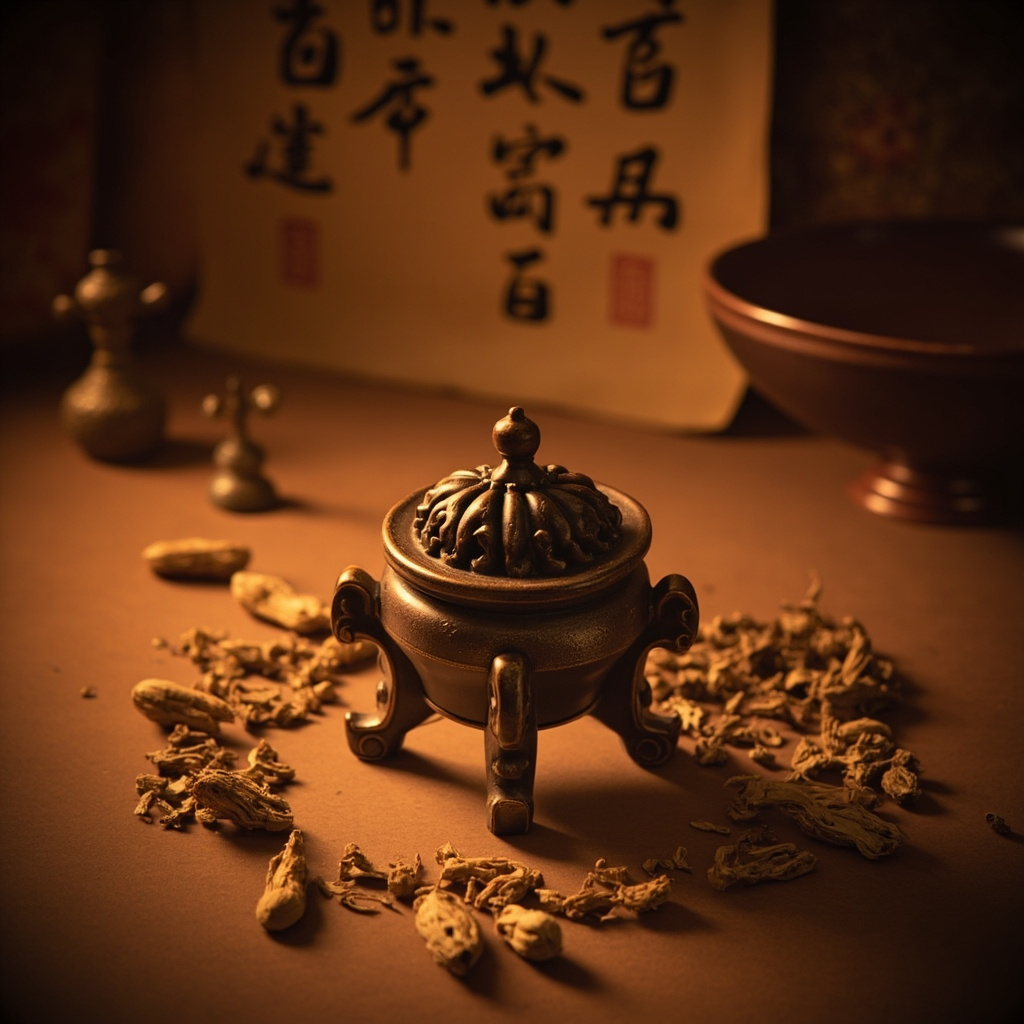
Wu Gong Xiang (蜈蚣香) — one of the most intriguing formulas in the classical Chinese incense canon. Named for the centipede-like precision of its aroma threading through space, this formula has been prized since the Song dynasty for its bold, penetrating fragrance and therapeutic depth.
What Is Wu Gong Xiang?
Wu Gong Xiang is a traditional Chinese blended incense (合香) formula originating from the classical era of Chinese perfume-making. The name literally means “Centipede Incense,” referring to the way its aroma moves swiftly and multi-directionally — like the many legs of a centipede, reaching every corner of a room.
This is not a beginner-friendly incense. It is bold, resinous, and complex — designed for those who want something with real character. The formula typically combines warm, pungent aromatics with a rich base of wood resins, creating a scent that is both grounding and energizing.
History & Origins
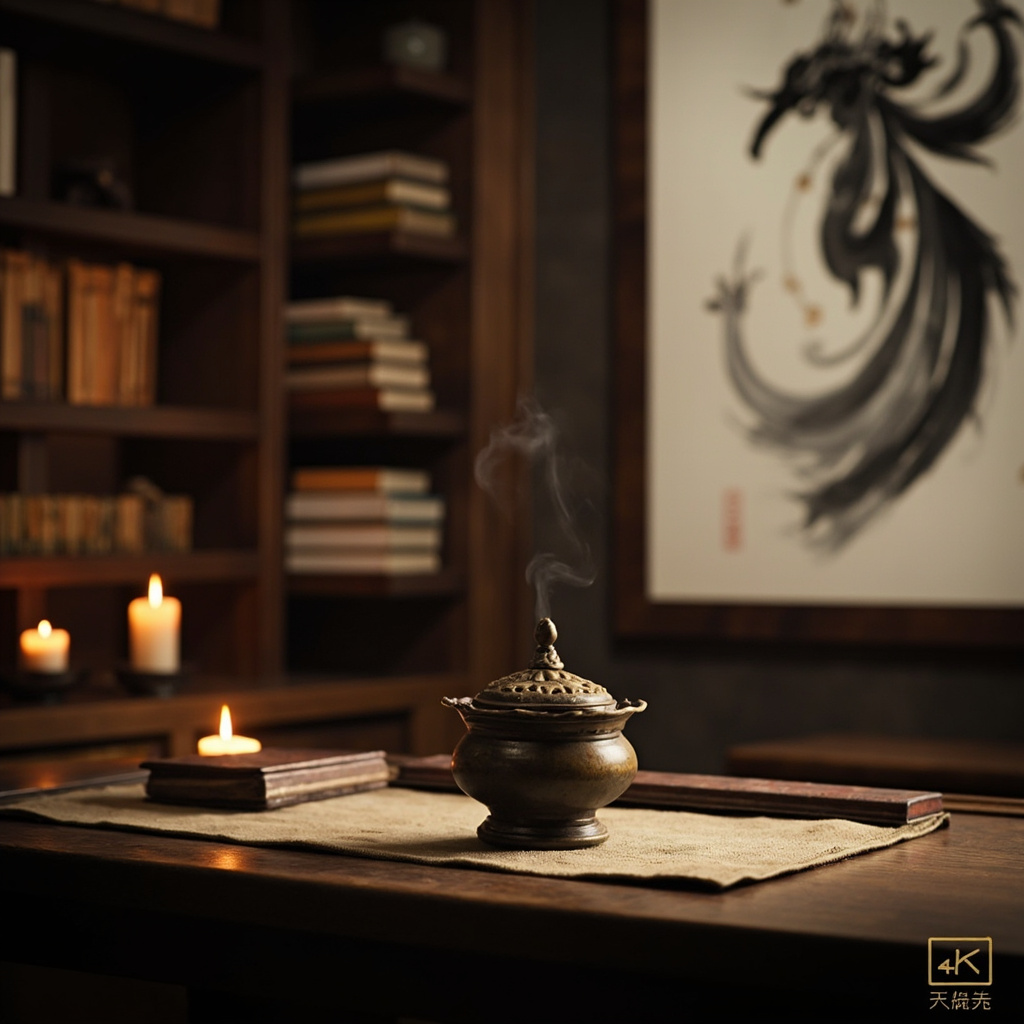
Wu Gong Xiang traces back to the Song dynasty (960–1279), China’s golden age of incense culture. During this period, blended incense formulas proliferated among scholars, monks, and aristocrats. The formula appears in classical texts including Hong Chu’s Xiang Pu (《香谱》) and Zhou Jiazhou’s Xiang Sheng (《香乘》).
According to historical records, Wu Gong Xiang was originally developed for scholars and practitioners of Daoist meditation. Its strong, moving aroma was believed to sharpen mental clarity and open the sensory channels — making it ideal for extended study or contemplative practice.
The formula was later adopted by imperial courts and remained in continuous use through the Ming and Qing dynasties, primarily in northern China where colder climates favored its warmer, more robust fragrance profile.
Formula & Ingredients
The classic Wu Gong Xiang formula uses the jun-chen-zuo-shi (君臣佐使) framework of TCM-style blending:
| Role | Ingredient | Quantity |
|---|---|---|
| Jun (Sovereign) | Chenxiang (沉香, Aquilaria) | 30g |
| Chen (Minister) | Ruxiang (乳香, Frankincense) | 20g |
| Chen (Minister) | Tanxiang (檀香, Sandalwood) | 15g |
| Zuo (Assistant) | Baizhi (白芷, Angelica root) | 10g |
| Zuo (Assistant) | Xiangfu (香附, Cyperus) | 10g |
| Shi (Envoy) | Gansong (甘松, Nardostachys) | 8g |
| Binder | Honey (炼蜜) | Appropriate amount |
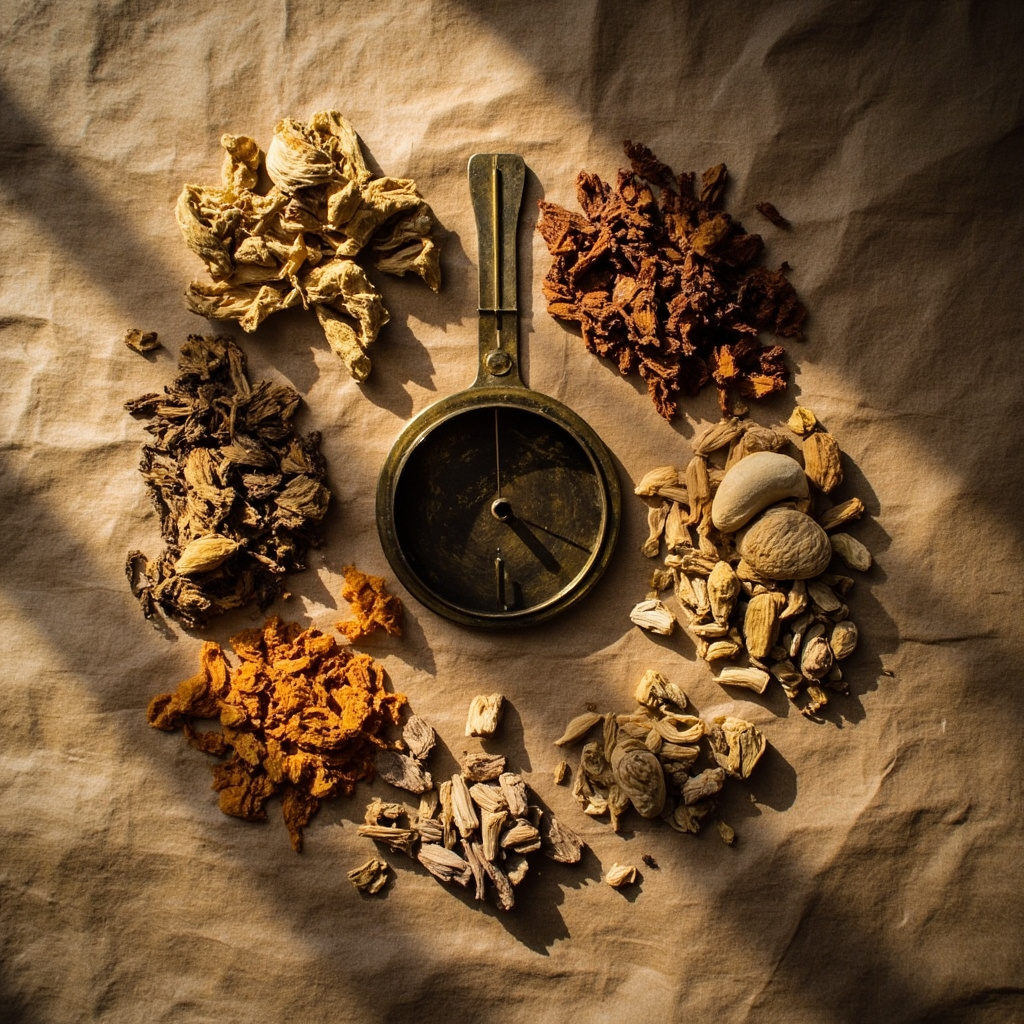
Key characteristics of each material:
- Chenxiang: The heart of the formula — deep, sweet, woody. Provides the foundational aroma that lingers.
- Ruxiang: Adds a balsamic, slightly citrus note. Also valued in TCM for promoting qi movement.
- Tanxiang: Softens the blend with creamy, milky sweetness. Balances the sharper notes.
- Baizhi & Xiangfu: Traditional TCM herbs that “guide the qi” — they help the aroma circulate and add a fresh, earthy depth.
- Gansong: Adds a distinctive earthy-musky note and helps “anchor” the lighter top notes.
How to Make Wu Gong Xiang
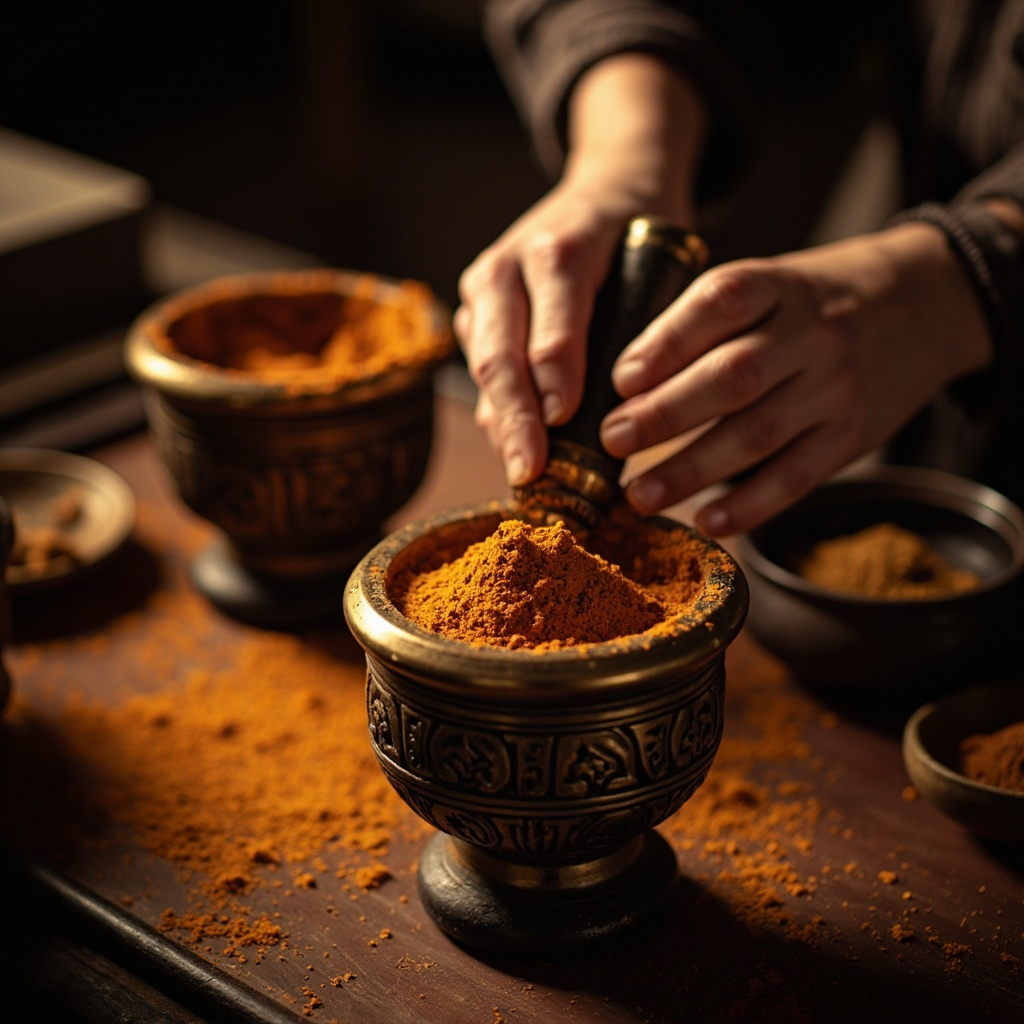
Traditional method (香丸 — incense pills):
- Prepare each herb: Slice chenxiang thinly. Pound ruxiang and tanxiang into coarse powder. Slice baizhi and xiangfu, then dry-fry lightly until fragrant.
- Grind: Grind each material individually to appropriate fineness. The chenxiang should be the finest — this ensures it blends evenly.
- Mix: Combine all powders in a clean bowl, mixing thoroughly to ensure even distribution.
- Add binder: Slowly add warm, refined honey while stirring. The mixture should hold together when pressed but not be wet or sticky.
- Knead: Transfer to a clean board and knead for 10–15 minutes until the dough is smooth and uniform.
- Form pills: Roll into small pills, about the size of an adzuki bean (5–8mm diameter).
- Cure: Place in a sealed ceramic container lined with paper. Store in a cool, dry place for 2–4 weeks to allow flavors to meld.
How to Use
- Electric incense burner (recommended for beginners): Place 0.5–1g of broken pills or powder in the burner at 150–180°C. This gives clean, controlled aroma without smoke.
- Charcoal brazier (traditional): Place on a mica sheet over glowing charcoal. The indirect heat method preserves the nuanced aroma notes.
- Dosage: Start with a small amount. Wu Gong Xiang is potent — a little goes a long way.
Wu Gong Xiang vs. Other Classical Formulas
| Feature | Wu Gong Xiang | Er Su Jiu Ju | Xue Zhong Chun Xin |
|---|---|---|---|
| Aroma Profile | Bold, moving, resinous | Soft, floral, gentle | Cool, fresh, ethereal |
| Best Season | Autumn / Winter | Year-round | Spring / Summer |
| Difficulty | Intermediate | Beginner-friendly | Beginner-friendly |
| Price Level | $$–$$$ | $$ | $$–$$$ |
| Main Effect | Mental clarity, qi movement | Relaxation, sleep aid | Refreshing, mood lift |
Pitfalls to Avoid
- Don’t use low-quality chenxiang: The formula relies heavily on quality沉香. Synthetic or heavily adulterated沉香 will ruin the blend and produce harsh, chemical smoke.
- Don’t rush the curing process: Freshly made Wu Gong Xiang pills will smell one-dimensional. Proper curing (2–4 weeks minimum) develops the full aromatic complexity.
- Don’t burn at too high a temperature: High heat burns off the delicate top notes. Keep it under 200°C for best results.
- Don’t mix with other incenses: Wu Gong Xiang is a complete formula designed to stand alone. Mixing it dilutes its character.
Frequently Asked Questions
Q: Is Wu Gong Xiang suitable for beginners?
A: Not really. The formula is bold and complex, best suited for those who already have some experience with traditional Chinese incense. If you’re a beginner, start with gentler formulas like Er Su Jiu Ju or Goose Pear before trying Wu Gong Xiang.
Q: Can I buy pre-made Wu Gong Xiang?
A: Yes — but quality varies dramatically. Look for specialist traditional incense sellers. Avoid mass-market brands that list “fragrance oil” or “synthetic incense” as ingredients. Expect to pay at least ¥80–150 per 50g for something worthwhile.
Q: How long does a batch last?
A: Properly cured Wu Gong Xiang pills will keep for 1–2 years stored in a sealed container away from light and humidity. The aroma often improves with age (like wine).
Q: Is Wu Gong Xiang only for burning, or can it be used in other ways?
A: Primarily burned as incense. Some practitioners also use the powdered form in sachets or place small amounts near their meditation cushion for subtle aromatherapy during practice.
Q: What does “蜈蚣” (centipede) actually refer to in the name?
A: The name describes the effect of the incense — the aroma “moves” quickly and multi-directionally, similar to how a centipede scatters. It does not refer to the ingredients. No actual centipede is used in this formula.
Wu Gong Xiang is a rewarding formula for the committed incense enthusiast. Its bold, moving aroma is unlike the softer, sweeter classics — and that’s exactly why it endures. If you’re ready to go beyond beginner incenses and explore something with real depth, this is a formula worth knowing.
🌿 Ready to explore more classical formulas? Browse our complete collection of Ancient Recipes or check out our curated Incense Burner Guide to find the right burner for your Wu Gong Xiang sessions.