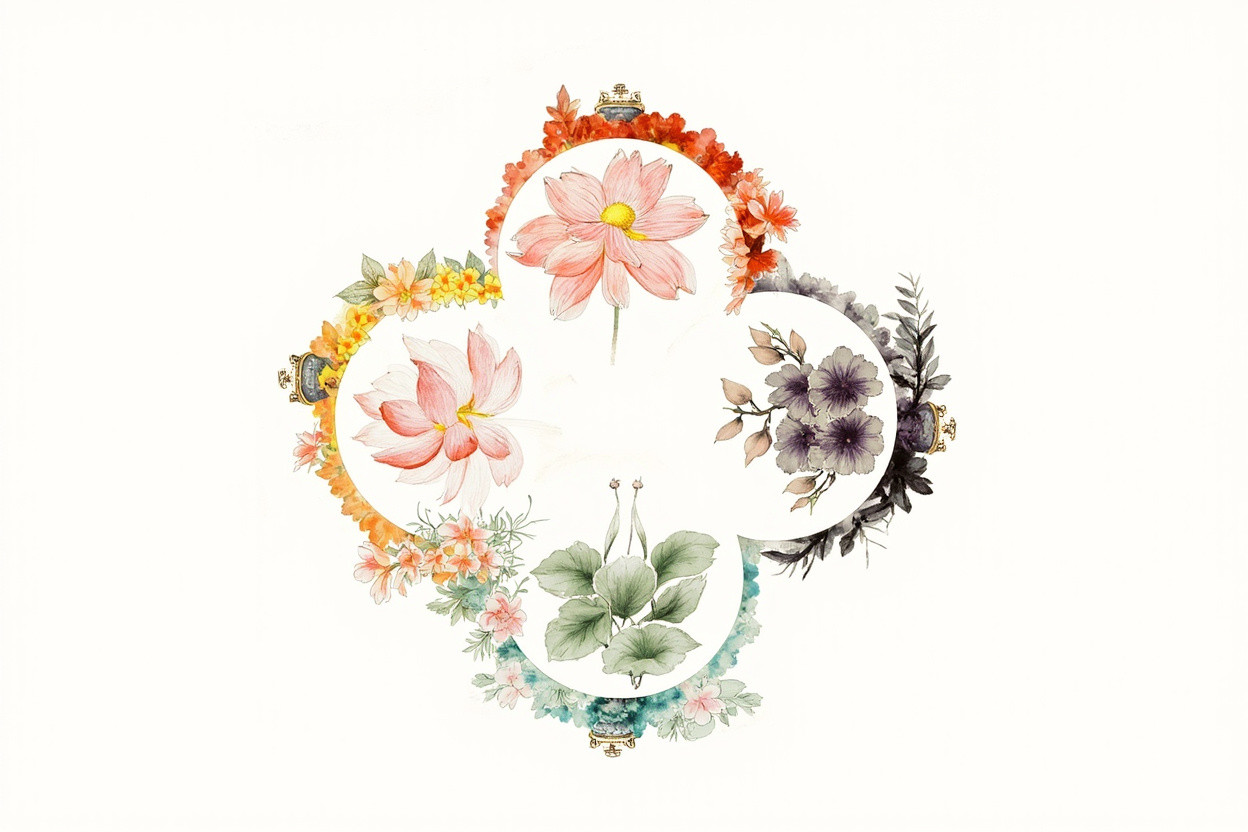
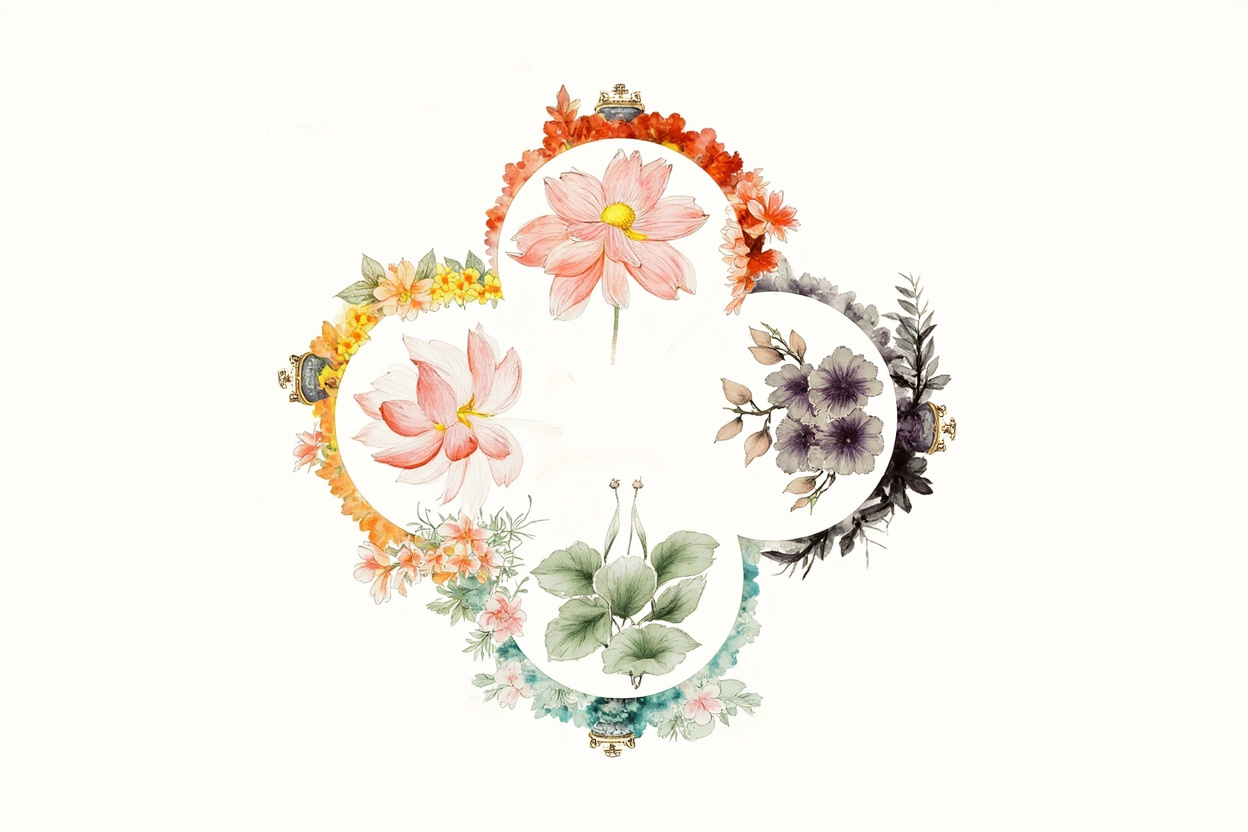
The woman adjusts her incense burner with the calendar. In spring, she burns something light and floral — cherry blossom or white sandalwood to match the renewing energy of the season. By midsummer, she has switched to something cooler, more aquatic. When autumn arrives, her collection shifts again. Winter demands depth and warmth.
This is not aesthetic decoration. In traditional Chinese wellness, the practice of incense changes with the seasons the same way diet, clothing, and exercise change with the weather. Each season carries a distinct energetic character, and the right fragrance supports that character rather than fighting against it.
The Ancient Chinese Seasonal System
Classical Chinese medicine operates on the principle that human beings are inseparable from their environment. The Huangdi Neijing, the foundational text of TCM, describes each season as having distinct energetic properties that directly affect the body and mind. 「夫四时阴阳者,万物之根本也。」 — “The four seasons and yin-yang are the root of all things.”
Incense, as a therapeutic aromatic practice, was woven into this seasonal system. The Bencao Gangmu records aromatic substances used differently in each season: lighter substances for spring and summer, deeper and warmer substances for autumn and winter. The goal was always alignment — using fragrance to support the body’s natural transition through the year’s cycle.
Spring Incense: Renewal and Growth
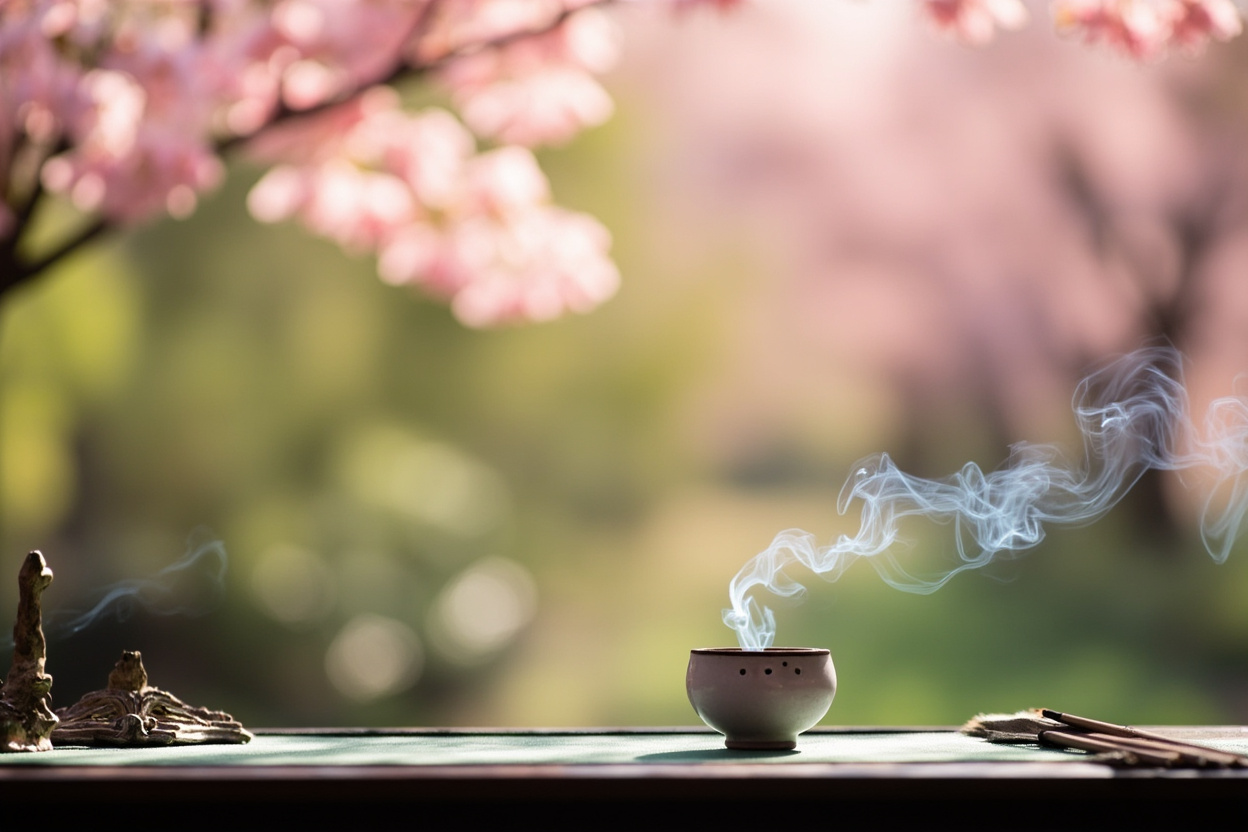
Spring is governed by the wood element — rising energy, growth, renewal. The liver, which TCM associates with spring and wood, benefits from light, dispersing aromas that move qi upward and outward. stagnation. Cold, fatty foods and sedentary habits dominate. A warming, circulatory incense — cinnamon, certain types of sandalwood, or light benzoin — helps support digestion and movement.
Light aromatics support liver qi: peppermint, rose, chrysanthemum. Avoid heavy, sedating scents that further dampen the system. Burning time: short sessions, typically 20-30 minutes.
Summer Incense: Expansion and Joy
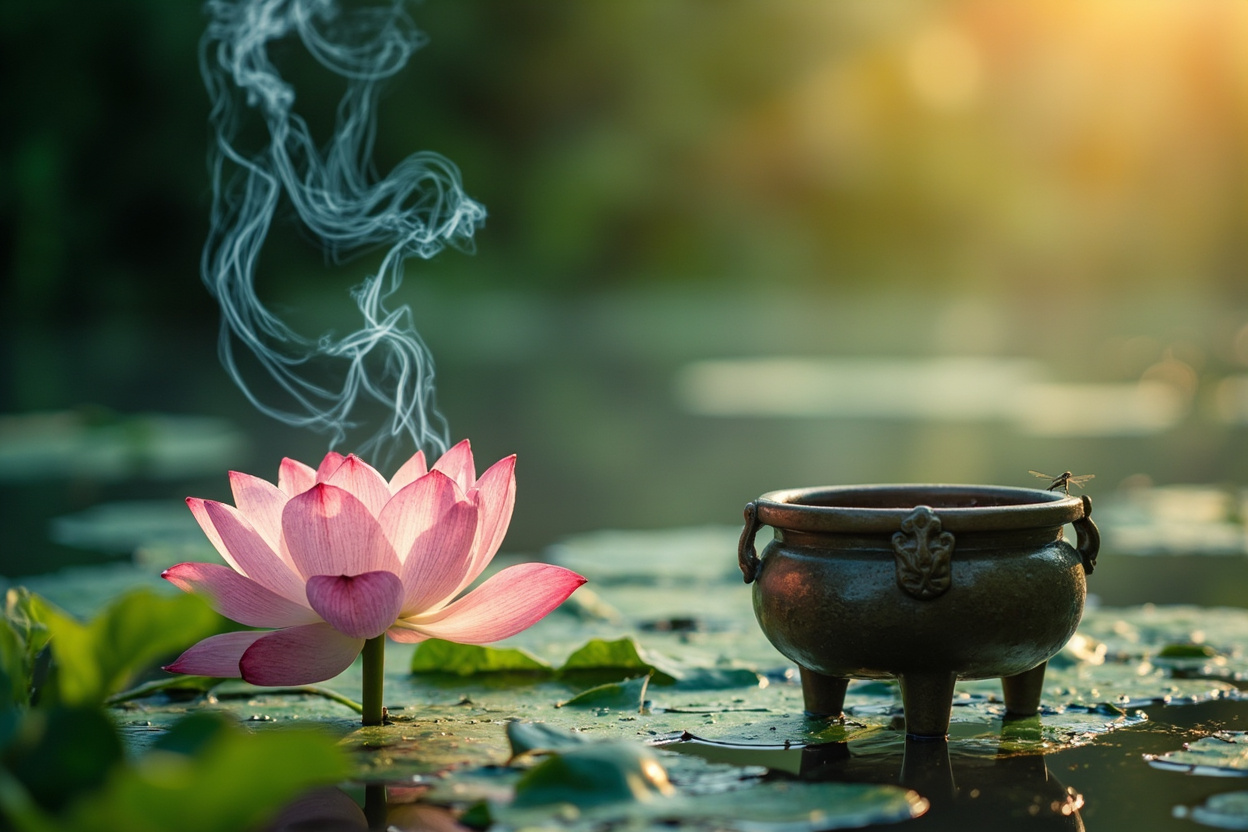
Summer is fire — maximum yang energy, expansion, outward movement. The heart, which governs consciousness and spirit, is particularly active in summer. Aromatics that cool and calm support heart energy without suppressing it: lotus, jasmine, light aquilaria (agarwood), white peony.
「夏三月,此谓蕃秀,天地气交,万物华实。」The Huainanzi, written in the 2nd century BC, describes summer as the season of flowering and fruiting, when the qi of heaven and earth intermingles. Fragrances that harmonize this exchange — light, harmonizing, slightly cooling — support the natural flowering of energy without creating excess heat.
Late Summer Incense: Transformation and Centering
Late summer — the earth element, transformation, the spleen’s domain. Dampness becomes the primary concern. Aromatic herbs that transform dampness — patchouli, cooper root, saussurea costus root — are particularly appropriate. Short, focused sessions of 15-20 minutes during this transitional period.
Autumn Incense: Gathering and Letting Go
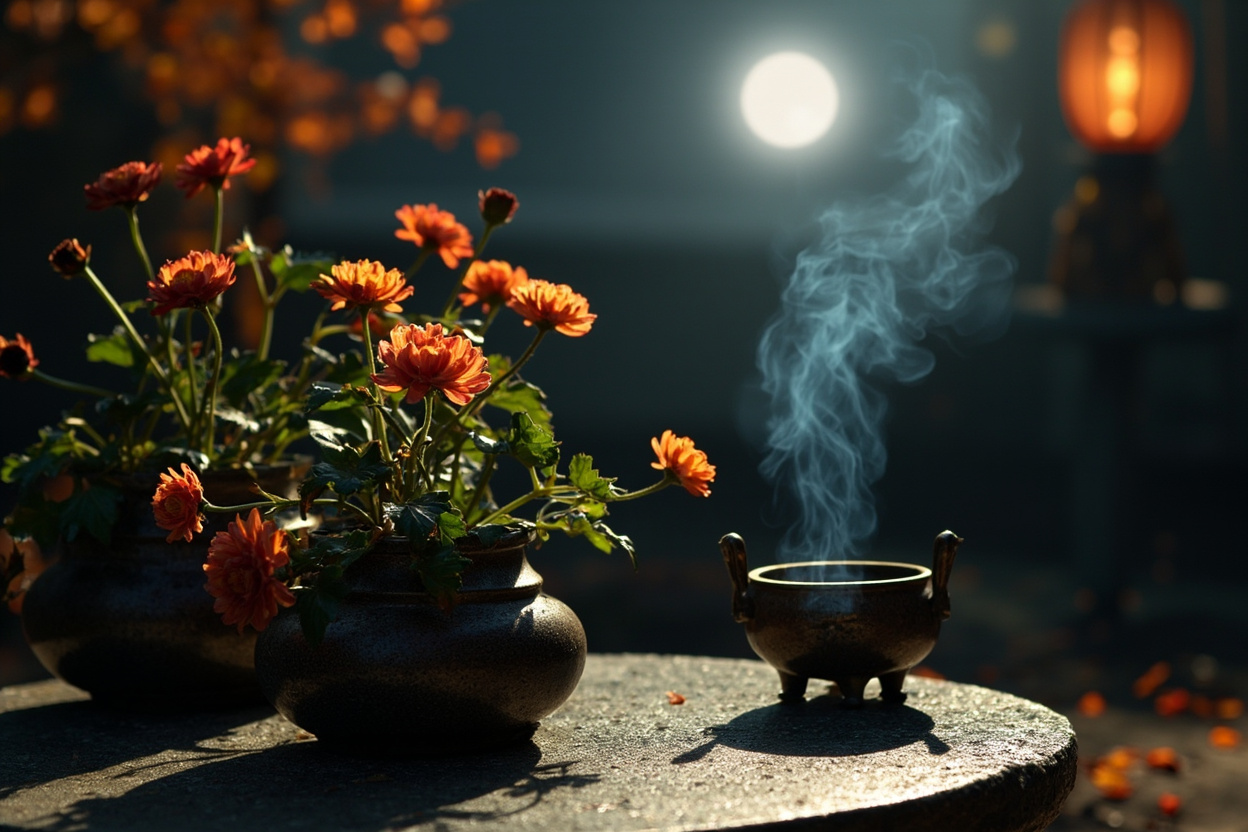
Autumn is metal — contraction, gathering, preparing for dormancy. The lung, associated with metal and autumn, governs the Wei Qi (defensive energy) and the skin. Aromatics that clear and descend — white peony, marigold, certain cooler agarwoods — support the lung’s function of receiving and distributing qi while preparing the body for winter’s cold.
The Shi Jing (Classic of Poetry) contains early references to autumn incense ceremonies, when people burned fragrant herbs to honor the harvest and prepare spiritually for the coming winter. The收敛 (contraction) of autumn requires supporting the natural inward movement without forcing it.
Winter Incense: Conservation and Reflection
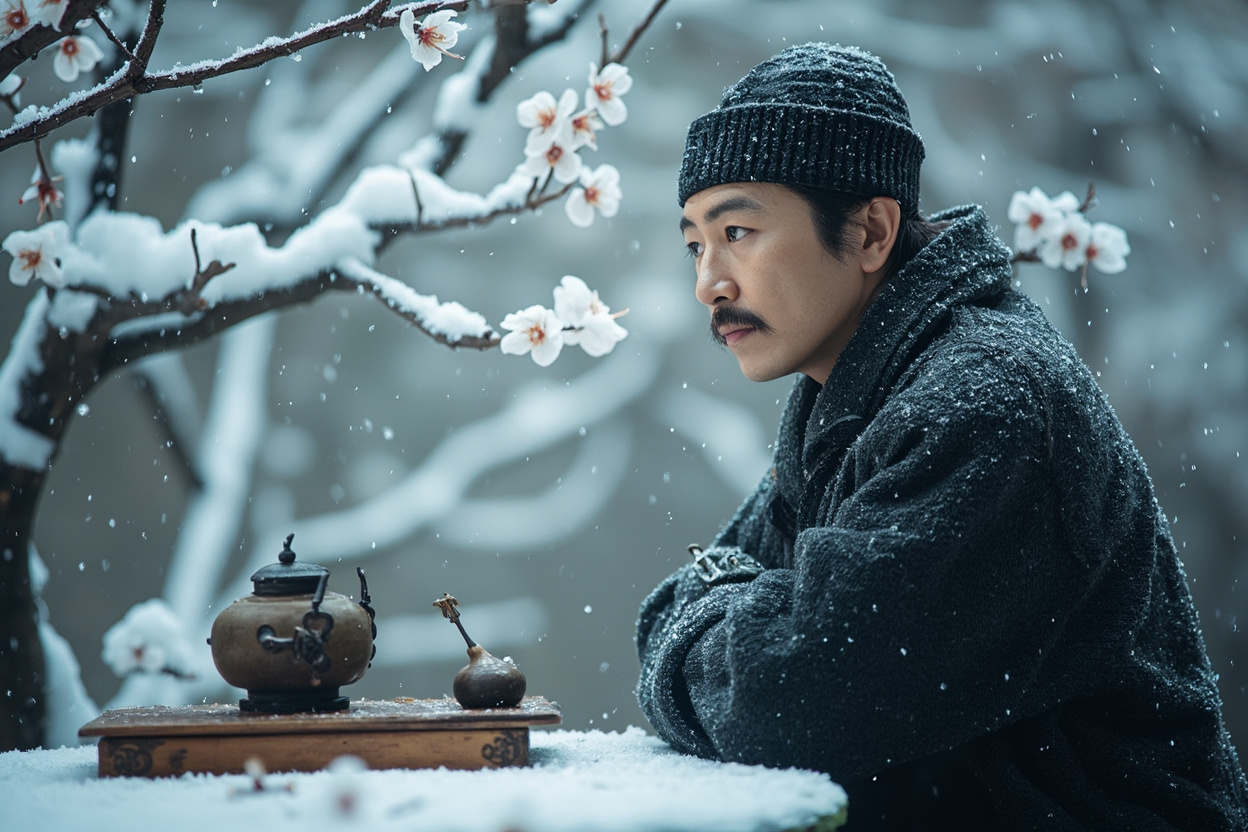
Winter is water — maximum yin, conservation, stillness. The kidneys, associated with water and winter, store essence (jing) and govern birth, growth, reproduction, and aging. Warming, deeply penetrating aromatics support kidney yang without overstimulating: aged agarwood, benzoin, dragon’s blood resin, small amounts of musk in traditional formulas.
「冬三月,此谓闭藏。」The Neijing describes winter as the season of closure and storage. Incense practice shifts to longer sessions at lower temperatures — indirect heating methods that release fragrance gradually, supporting the deep conservation that winter demands. A single 45-60 minute session in the evening, during meditation or quiet reading, suits winter’s energy better than multiple short burns.
Building Your Seasonal Collection
A practical seasonal incense collection does not require four separate sets of burners. A basic rotation might include:
- Spring: 1 light floral (jasmine or rose), 1 light herb (mint or chrysanthemum)
- Summer: 1 cooling aquatic (lotus or white peony), 1 light agarwood
- Autumn: 1 lung-supporting (white peony, marigold), 1 transitional blend
- Winter: 1 warming blend (aged agarwood, benzoin), 1 deep kidney-supporting resin
Change your incense with the solar terms, not just the calendar months. The twenty-four solar terms provide more precise seasonal guidance than Western month divisions. When the Li Dong (立冬, Start of Winter) arrives, shift immediately to winter protocols. When Li Chun (立春, Start of Spring) arrives, release winter’s depth.
How to Practice Seasonally
The shift between seasonal fragrances should be gradual — begin using autumn fragrances in late summer’s last weeks, introduce winter fragrances as autumn deepens. Similarly, spring fragrances can start appearing in late winter.
Daily practice in each season:
- Spring: 1-2 short sessions daily, morning preferred, supporting liver qi movement
- Summer: 1-2 brief sessions, early morning or late evening, cooling rather than warming
- Autumn: 1-2 sessions daily, midday preferred, supporting lung function
- Winter: 1 long session daily, evening preferred, supporting kidney yang and deep rest
Frequently Asked Questions
Can I use the same incense year-round?
Technically yes, but you will not receive the full therapeutic benefit of seasonal incense practice. The classical Chinese system specifically matches fragrance to seasonal energy. If you burn only one incense, choose one that is moderately warm and balanced — aged agarwood works reasonably across seasons. But for deeper benefit, seasonal rotation is more effective.
How do I know when to switch?
Watch the solar terms. The eight solar terms that mark season transitions — Li Chun (Start of Spring), Li Xia (Start of Summer), Li Qiu (Start of Autumn), Li Dong (Start of Winter) — are the primary transition points. Switch fragrances at these eight dates rather than at calendar month changes.
What if I live in a tropical climate without four seasons?
In tropical regions, identify your own seasonal patterns — rainy season versus dry season, for example — and match incense to those energetic shifts. The principles remain the same: identify the dominant environmental energy and choose fragrances that harmonize with rather than fight against it.
Is seasonal incense practice expensive?
Not necessarily. Quality aromatics for each season need not mean expensive rare materials. Common herbs — peppermint for spring, chamomile for summer, marigold for autumn, cinnamon for winter — are affordable and effective. The principle matters more than the price point.