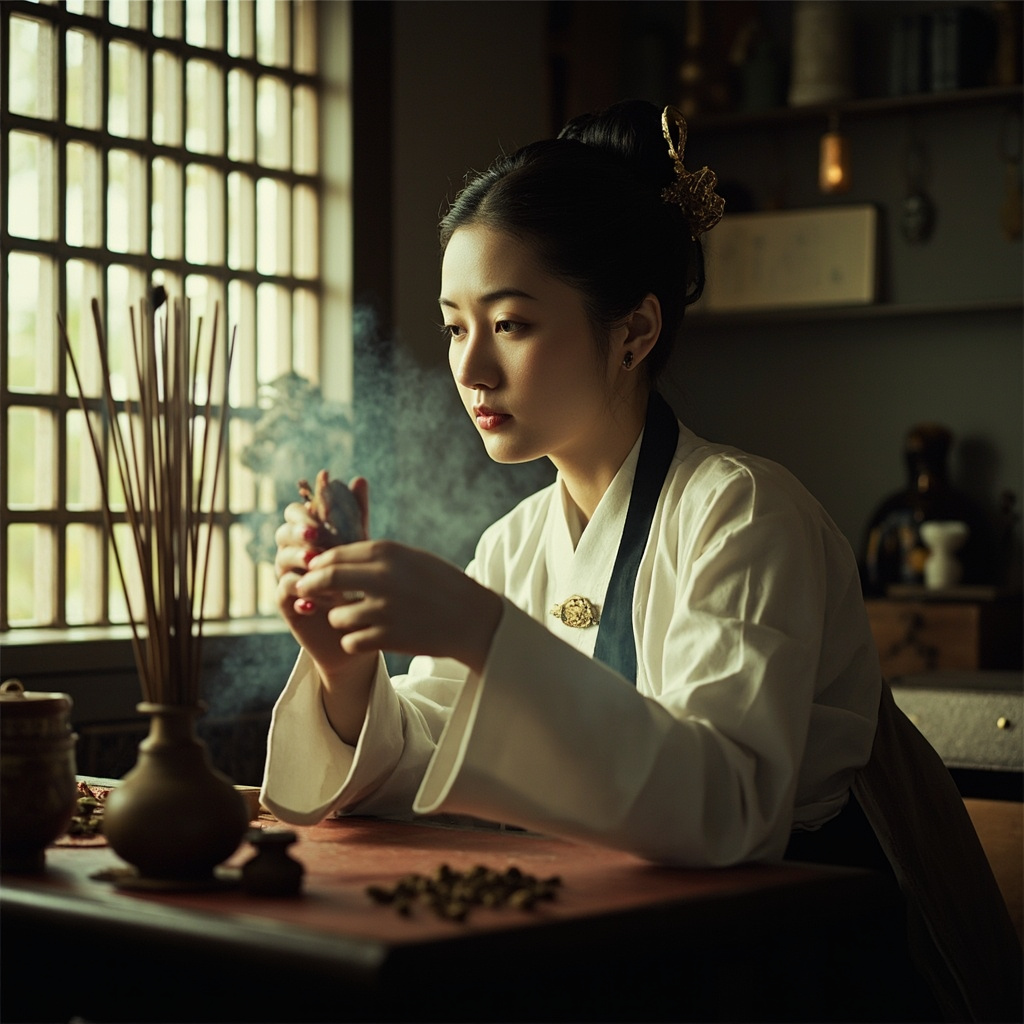
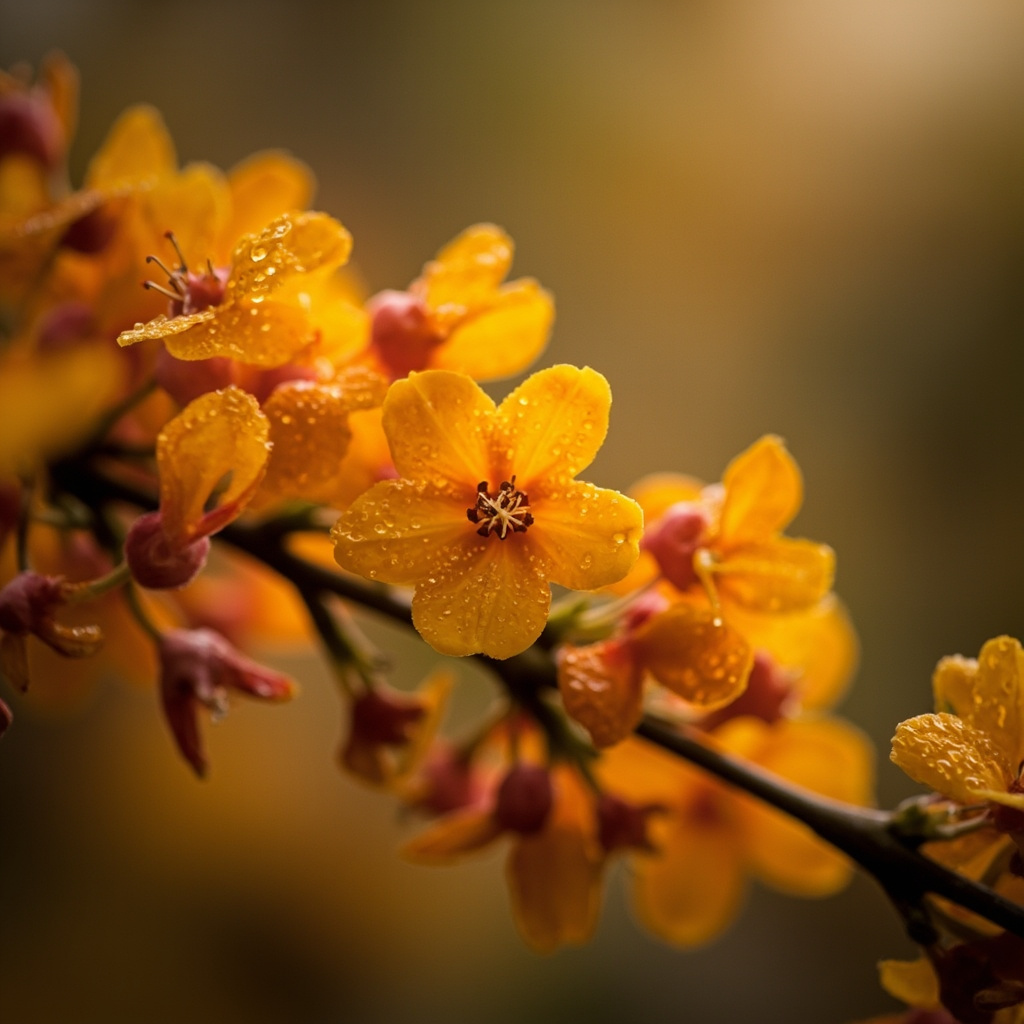
There is a smell that arrives in Chinese gardens in late autumn. It comes from a small tree with clusters of tiny orange-yellow flowers so fragrant that the scent carries across an entire courtyard. The Chinese call it 桂花 (guihua) – osmanthus. And in the world of Chinese incense, it is something special: a flower so aromatic that it does not need processing to become part of a fragrance. It simply is fragrance.
What Is Osmanthus?
Osmanthus (guihua) is a genus of flowering plants in the Oleaceae family, the same family as olive trees. The species most prized in Chinese incense and tea culture is Osmanthus fragrans – literally “fragrant osmanthus.” Despite its name, the flowers are not yellow or orange – they are so small and numerous that a single branch can fill a room with fragrance.
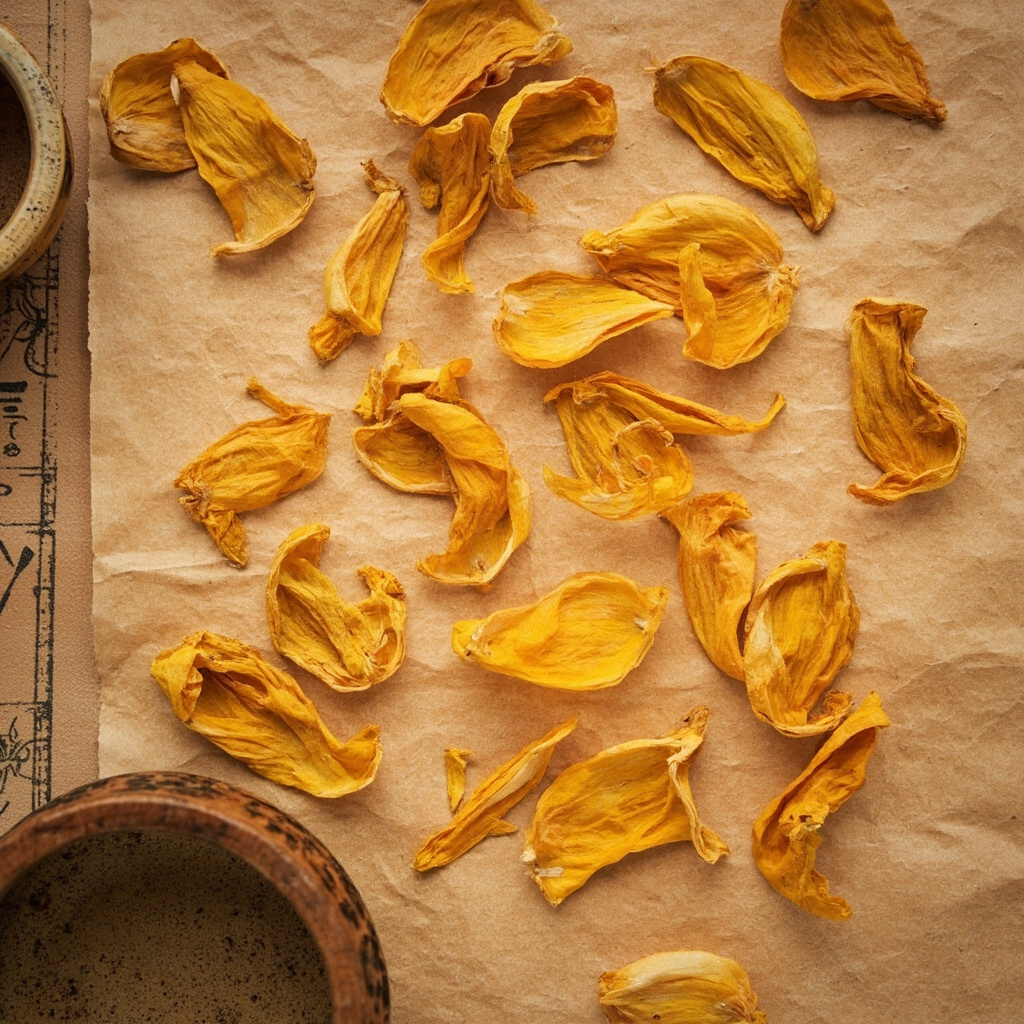
Unlike agarwood or sandalwood, which must be ground and processed before use, osmanthus can be used in its natural state. The fresh flowers are too fragile to burn directly, but dried osmanthus retains enough of its character to be incorporated into incense blends – and the fragrance while drying is considered valuable in itself.
The History of Osmanthus in Chinese Culture
Osmanthus has been cultivated in China for over 2,500 years. It appears in the earliest records of Chinese gardens – planted alongside cypress and chrysanthemum as one of the four gentlemen of the Chinese garden (花中四君子): plum, orchid, bamboo, and osmanthus.
In the context of incense, osmanthus occupies a special place: it is one of the few floral materials that appears prominently in classical Chinese fragrance traditions. Most traditional Chinese incense materials are woods, resins, and spices – not flowers. The prominence of osmanthus is therefore notable.
The most famous osmanthus-related fragrance in Chinese history is the Osmanthus Garden (桂林) in the Tang Dynasty palace. The trees were planted extensively, and the autumn fragrance when they bloomed was considered one of the great pleasures of court life. Emperor Xuanzong of Tang was said to have ordered osmanthus branches placed in his sleeping quarters during the autumn bloom season.
Osmanthus in Classical Incense Formulas
Osmanthus appears in several classical Chinese incense formulas, usually in small quantities as an accent material. Its fragrance is sweet, fruity, and unmistakable – and it has a surprising ability to make other materials in a blend smell more unified and complete.
In classical formulas, osmanthus is typically used as:
- A top note: The initial fragrance when a blend is lit – osmanthus provides immediate sweetness and brightness that gives a good first impression.
- A blending agent: Just as musk connects disparate fragrance materials, osmanthus has a unifying quality that makes different ingredients in a blend feel related to each other.
- A seasonal marker: Some practitioners specifically use osmanthus in autumn blends – matching the season of the flower bloom with the practice of burning.
One of the most documented uses of osmanthus in classical incense is in the preparation of 雪中春信 (Xue Zhong Chun Xin, “Spring in Snow” formula), attributed to Su Shi of the Song Dynasty. The formula reportedly uses osmanthus absolute – a concentrated extract – in small quantities to provide the distinctive fruity sweetness that characterizes this blend.
How to Use Osmanthus in Your Practice
There are several ways to incorporate osmanthus into a personal incense practice:
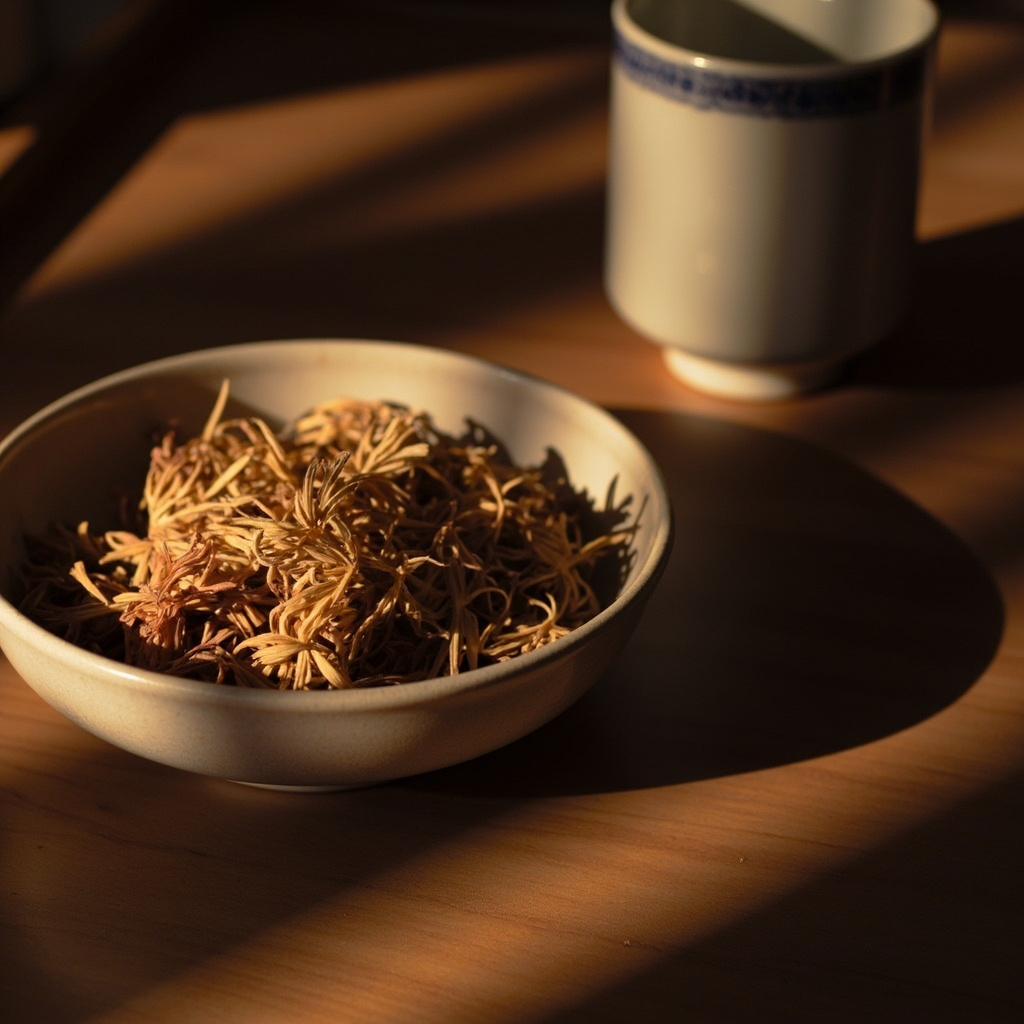
1. Dried osmanthus in a censer: Place a small amount of dried osmanthus petals in a shallow bowl censer (香碟). The fragrance when warm air passes over them is gentle and pleasant – suitable for a quiet study or meditation space.
2. Osmanthus in blended incense: Add 5-10% dried osmanthus to a wood-based blend. The osmanthus will add sweetness and brightness without overpowering the foundational fragrance of the wood.
3. Osmanthus absolute: For a more concentrated approach, osmanthus absolute (a solvent extract of the flowers) can be added to a base material before burning. This requires very small amounts – osmanthus absolute is potent.
4. Osmanthus with tea: Burning osmanthus-incense alongside a cup of osmanthus tea (a popular Chinese tea scented with the flowers) creates a layered sensory experience that is particularly pleasant in autumn.
The Four Types of Osmanthus
In Chinese horticulture, osmanthus is classified by flower color:
- 金桂 (Jin Gui / Golden Osmanthus): The most common, with bright orange-yellow flowers. The fragrance is rich and sweet.
- 银桂 (Yin Gui / Silver Osmanthus): White or pale yellow flowers. Considered more delicate and refined in fragrance.
- 丹桂 (Dan Gui / Red Osmanthus): Deep orange-red flowers. Visually striking but the fragrance is similar to golden osmanthus.
- 四季桂 (Siji Gui / Four Seasons Osmanthus): Blooms multiple times per year. Less intensely fragrant than the seasonal varieties but more convenient.
For incense purposes, golden osmanthus (Jin Gui) is most commonly used – the fragrance is considered the richest and most characteristic.
Osmanthus and Autumn Wellness
In TCM, osmanthus is associated with the lungs and the element of metal. Its fragrance is considered beneficial for respiratory health, and osmanthus tea has long been used to support lung function during autumn – the season associated with the metal element in the five-phase system.
The emotional quality of osmanthus is often described as “joyful but calm” – a fragrance that lifts the mood without over-stimulating. This makes it particularly suitable for afternoon use, when energy naturally dips but alertness is still needed.
Osmanthus FAQ
Can I burn osmanthus flowers directly?
Not effectively. Fresh osmanthus flowers contain too much moisture to burn cleanly – they will smolder without producing much fragrance. Dried petals work better in a censer with gentle heat, but the fragrance is much lighter than what you would get from properly processed incense materials. For burning purposes, osmanthus absolute or osmanthus-scented incense blends are more effective.
What does osmanthus smell like?
Sweet, fruity, and apricot-like with a distinct floral character. It is one of the few floral fragrances that reads as both sweet and refined simultaneously. Some people detect a tea-like quality. The key is that it is not heavy or cloying – unlike some floral materials, osmanthus retains a lightness even when present in significant concentration.
Is osmanthus expensive?
Dried osmanthus flowers are relatively affordable – they are widely used in Chinese tea culture. Osmanthus absolute, however, is considerably more expensive due to the large quantity of flowers required to produce a small amount of absolute. For most practitioners, starting with dried petals and a censer is the most accessible approach.