The Metaphysics of Qi: Understanding Fragrance in Chinese Philosophy
In the Western scientific framework, fragrance is a chemical phenomenon: volatile molecules from a burning material travel through the air, enter the nasal cavity, bind to olfactory receptors, and trigger electrical signals to the brain. This explanation is accurate as far as it goes, but it cannot explain why the same molecule produces different subjective effects in different people, or why the same person’s response to the same fragrance changes with their emotional state.
The Chinese philosophical framework does not have this limitation. In the Chinese understanding, fragrance is not merely a chemical phenomenon — it is a manifestation of qi (气), the vital force that animates all phenomena. The fragrance of a material is the external expression of that material’s qi — its energetic character, its thermal quality, its movement, and its relationship to the organ systems and emotional states of the human being.
Qi as the Foundation of Chinese Cosmology
In classical Chinese cosmology, the universe is made of qi: a subtle, omnipresent, animating force that is simultaneously material and immaterial. The earliest formulations of qi theory appear in the Zhou Yi (《周易》) and the early medical texts. By the time of the Yellow Emperor’s Inner Classic (《黄帝内经》), qi had become the central concept in both cosmology and medicine.
In this framework, the body is not a machine — it is a dynamic field of qi, continuously exchanging qi with the environment. When you inhale fragrance, you are introducing a specific quality of qi — warm or cool, moving or stillness, expanding or contracting — directly into the brain, where it affects the shen and, through the shen, the entire body-mind complex.
The Thermal Qualities of Incense Materials
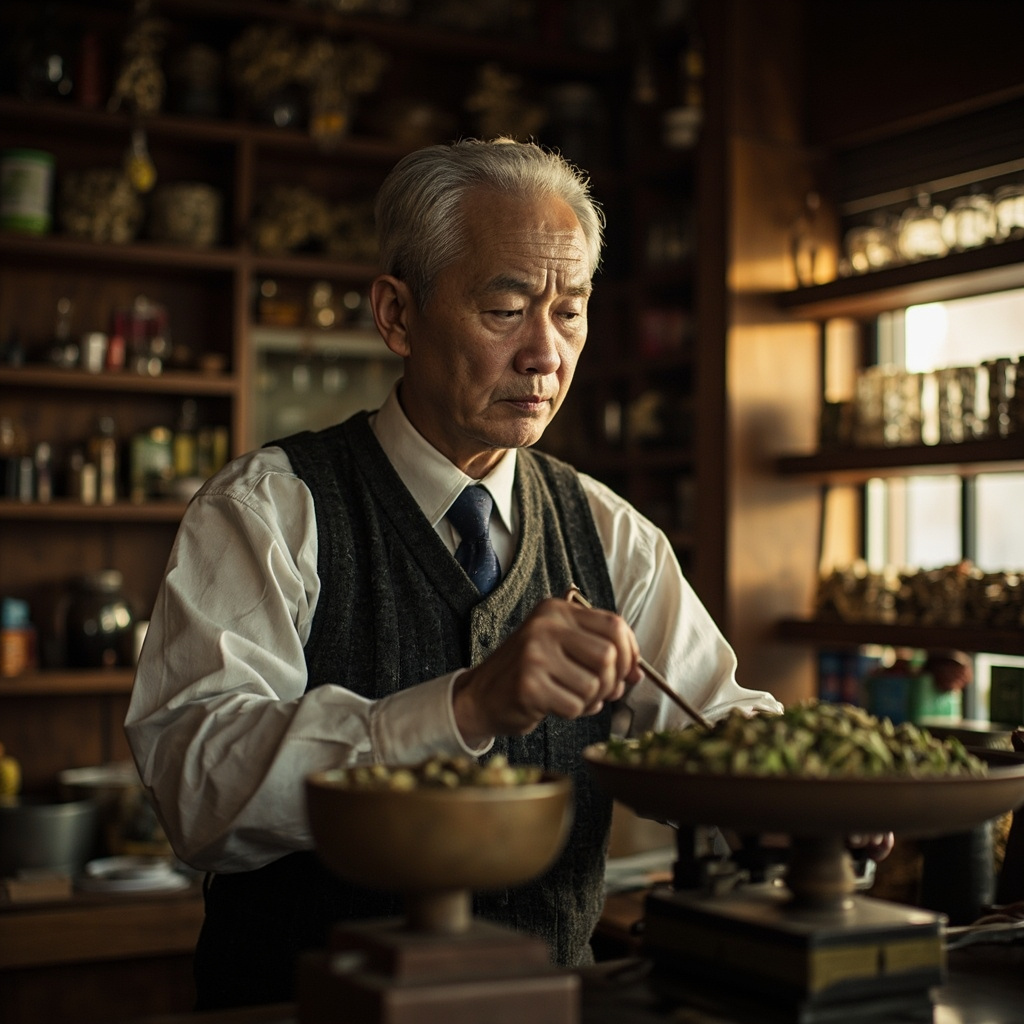
Every substance in the natural world has a thermal quality in TCM: warm, hot, cool, cold, or neutral. This describes its effect on the body when inhaled.
Warm materials (温): Sandalwood, frankincense, benzoin, cinnamon, clove. These gently warm the body, dispel cold and stagnation. Appropriate for cold, stagnant, or deficient conditions.
Hot materials (热): Strong cinnamon, strong clove. These strongly warm the body and should be used in small amounts and with caution.
Cool materials (凉): Chrysanthemum, some white sandalwood, certain green herbs. These cool the body, reduce heat, and calm the shen.
Neutral materials (平): Most materials fall into this category, which does not strongly shift thermal balance.
The Five Flavours and Their Correspondences
The five flavours correspond to the five elements and to specific organ systems:
Pungent (辛): Corresponds to the lung and the metal element. Pungent substances move qi and blood, disperse outward, and open the orifices.
Sweet (甘): Corresponds to the spleen and the earth element. Sweet substances nourish, harmonise, and moisten.
Bitter (苦): Corresponds to the heart and the fire element. Bitter substances drain heat, dry dampness, and descend qi.
Sour (酸): Corresponds to the liver and the wood element. Sour substances收敛 and contain, holding qi and fluids in the body.
Salty (咸): Corresponds to the kidney and the water element. Salty substances soften and dissolve.
Fragrance and the Emotions
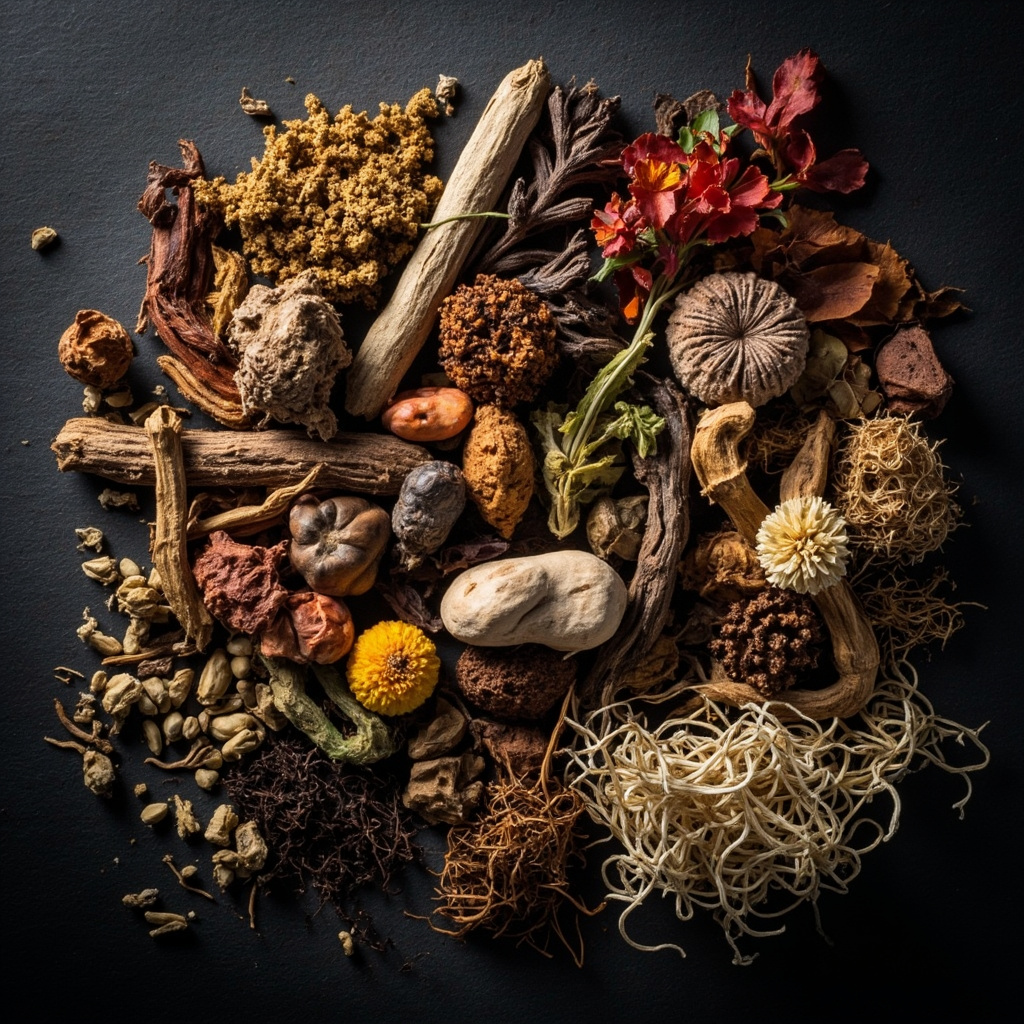
The relationship between fragrance and emotion is one of the most practically important aspects of the qi framework:
Anger (怒): Associated with the liver. Pungent, dispersing fragrances — calamus, mint — move liver qi and relieve anger.
Joy (喜): Associated with the heart. Sweet, calming fragrances — sandalwood, benzoin — soothe heart qi and quiet the shen.
Worry (思): Associated with the spleen. Sweet, harmonising fragrances — sandalwood with osmanthus — support spleen qi.
Sadness (悲): Associated with the lung.收敛, moistening fragrances — plum blossom —收敛 and protect lung qi.
Fear (恐): Associated with the kidney. Warming, grounding fragrances — agarwood, cinnamon — support kidney qi and dispel fear.
The Concept of “Opening the Orifices”
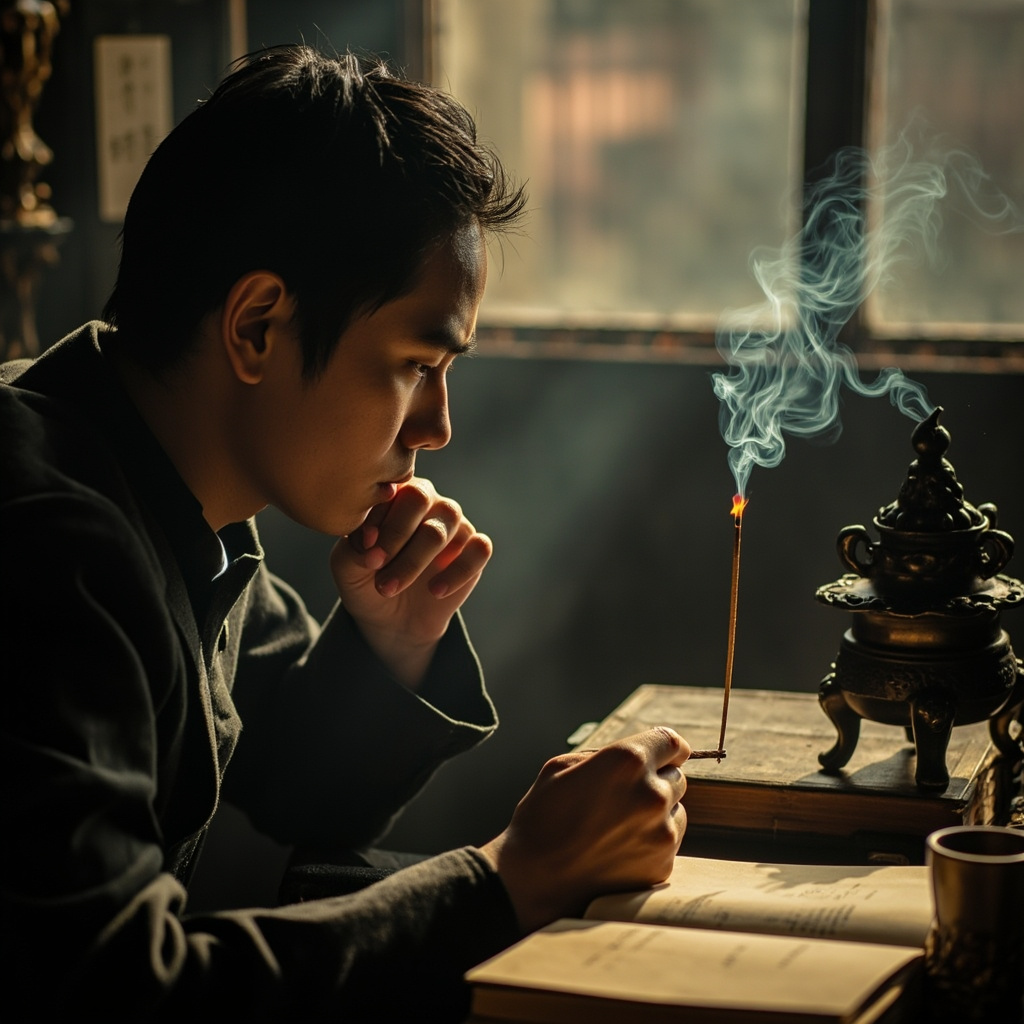
One of the most important therapeutic concepts is the idea of “opening the orifices” (开窍). The nine orifices are the channels through which the shen receives information from the external world. When the orifices are “closed,” the shen cannot perceive clearly, and the result is mental fog, confusion, and emotional turbulence.
The primary incense material for opening the orifices is calamus (石菖蒲). In the classical texts, calamus is described as having the specific action of “opening the orifices and clearing the shen.”
Frequently Asked Questions
Is the TCM framework for fragrance scientifically validated?
Some aspects are — for example, the effect of certain aromatic compounds on the limbic system through olfactory stimulation has been documented. Other aspects — such as meridian entry — are not verifiable by current scientific methods. What is clear is that the TCM framework produces practically useful results in incense practice.
Do I need to understand TCM theory to use incense?
No — you can enjoy incense without any theoretical framework. But understanding the TCM framework allows you to use incense deliberately rather than randomly.