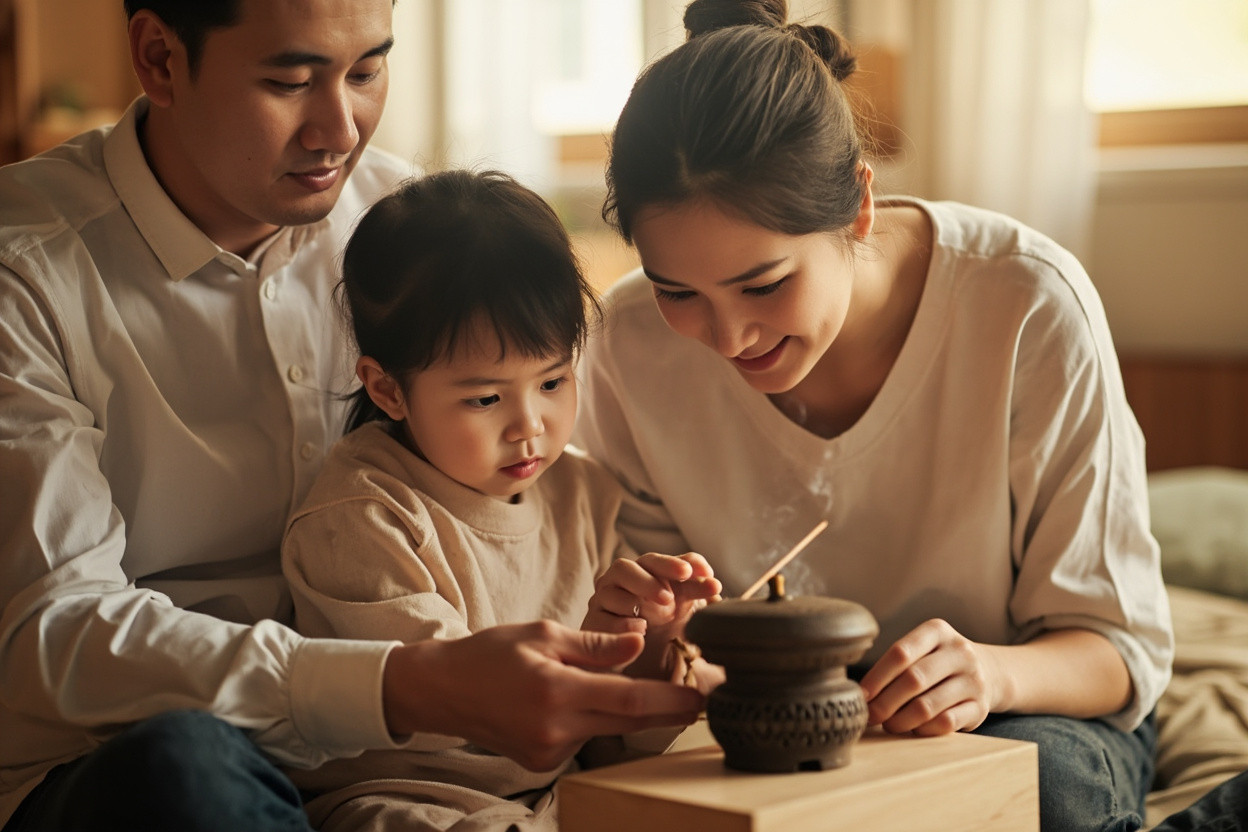
Your kid has been restless lately. Sleep is rough, anxiety spikes before school, the afternoon energy crash hits hard. You have been reading about aromatherapy. It seems safe, natural, gentle. But can you use incense around kids? And if so, what do you use?
Here is what the ancient practitioners would tell you: children are not small adults. Their qi is different, their sensitivity is higher, their bodies process aromatic compounds differently. What works for you might be too strong for them. But that does not mean aromatherapy is off limits. It means you need to be more careful, more conservative, more thoughtful about what you burn and how.
Creating a Safe Incense Environment for Children
First thing first: no child under 12 should ever burn incense unsupervised. And honestly, for kids under 8, I would not burn incense in the same room at all unless you are treating a specific issue with adult supervision and proper ventilation.
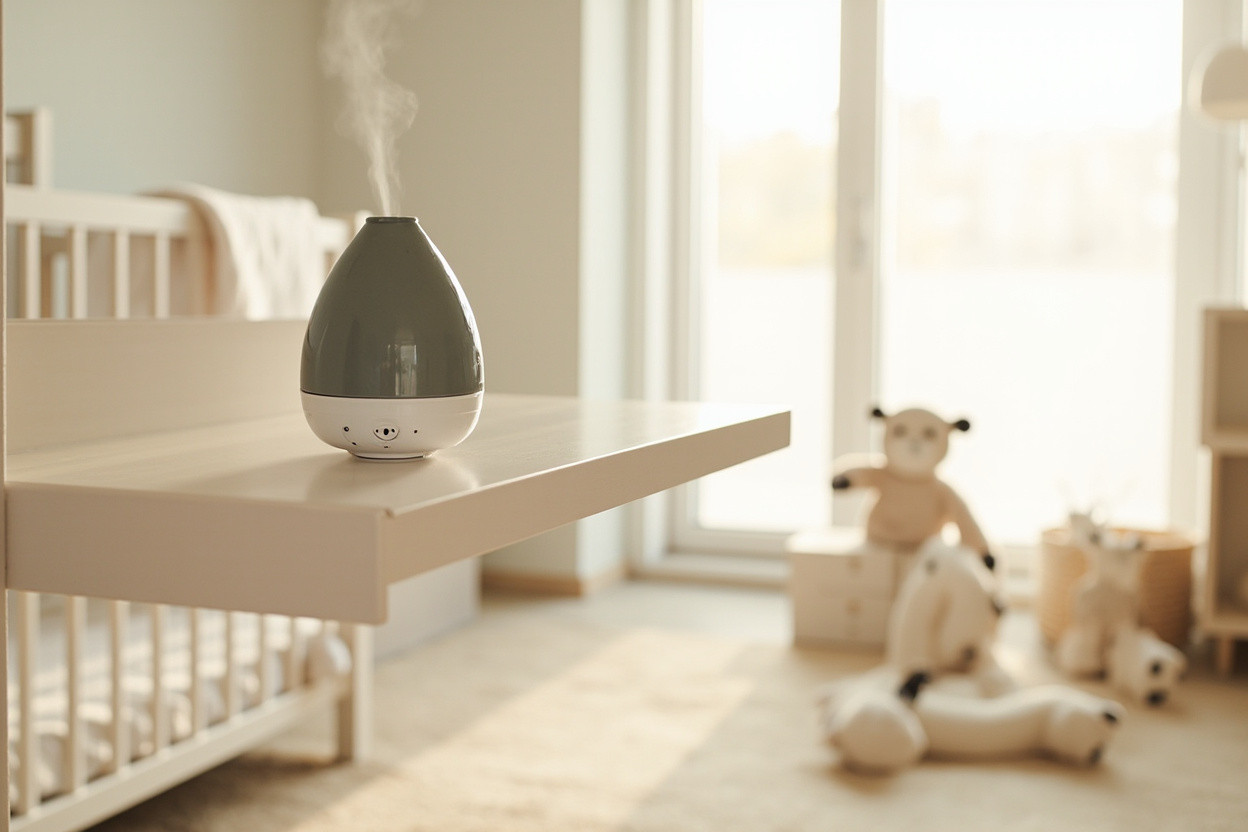
The setup matters more than anything else. An electric incense burner solves most of the safety problems at once — no open flame, no hot charcoal, temperature control. Keep it on a high shelf, out of reach. Always. Your kid should not be able to touch the burner or the cord.
Ventilation is non-negotiable. Crack a window. The smoke has to go somewhere. In a small room with a closed door, even natural incense smoke can be too much for small lungs. A gentle breeze through an open window is your friend.
Burning time for children is short — 10 to 15 minutes maximum. You are not doing a meditation session. You are creating a brief aromatic environment. Less is definitely more.
Safe Herbs for Children: What the Classics Actually Recommend
The Bencao Gangmu and other classical texts describe certain herbs as particularly gentle and suitable for children. The guiding principle is simple: you want herbs that are fragrant and calming without being sedating, warming without being stimulating.
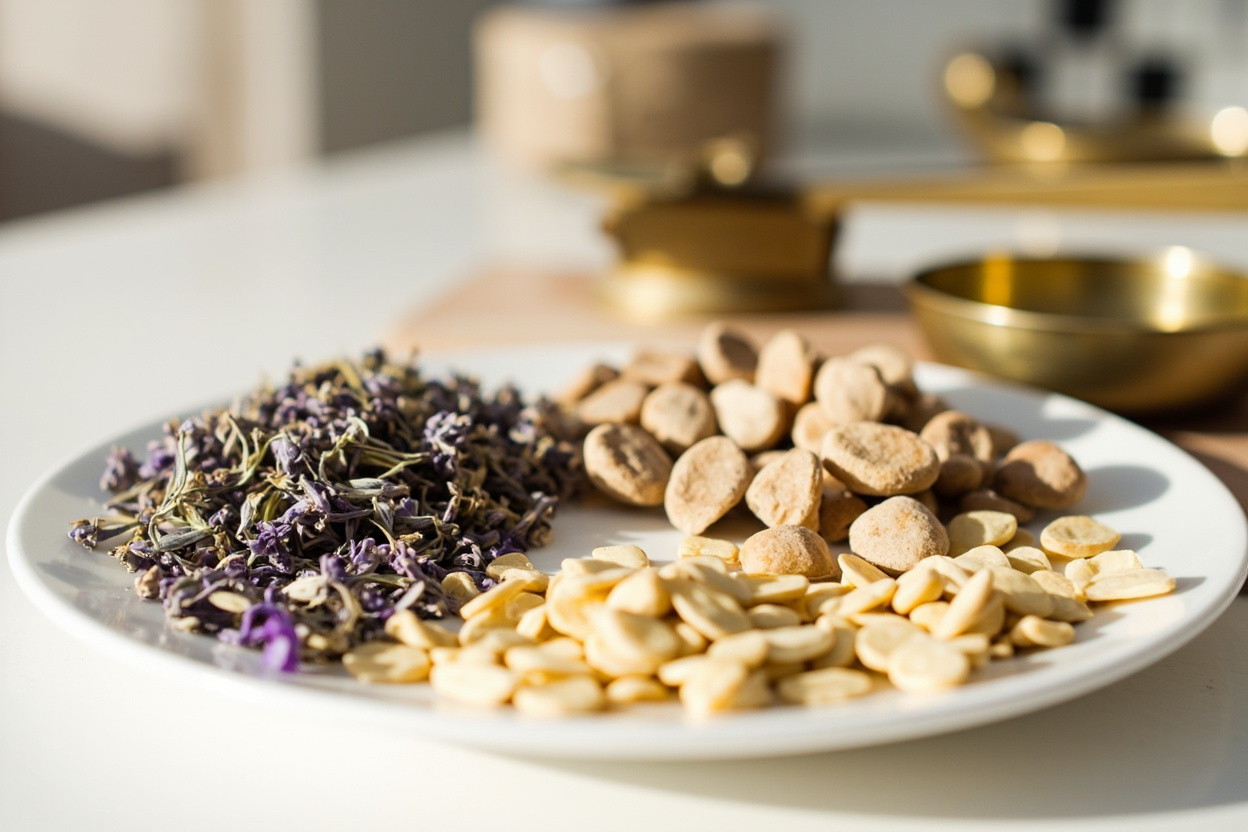
Chamomile (洋甘菊) — The classical texts describe chamomile as having a particularly gentle qi, suitable for children and the elderly. It calms the shen (spirit) without suppressing it. A small amount goes a long way. You need maybe 0.2 to 0.3 grams of dried chamomile flower in your burner for a child-sized session.
Lavender (薰衣草) — Not a traditional Chinese herb, but widely used in modern aromatherapy for children. It has documented calming properties and a gentle aroma that most children find pleasant. If you can source quality lavender, it is one of the safer options for beginners.
Mild Sandalwood (淡檀香) — Use the gentlest, most floral sandalwood you can find. The deep, heavy aged varieties are too much for kids. Look for something described as sweet and light. White sandalwood works better than the dark red varieties.
Avoid for children: strong musk, dragon blood resin, heavy ambergris, very aged agarwood. These are too concentrated, too stimulating, or too complex for developing systems. If you would not wear it as a perfume, do not burn it around your child.
What to Avoid: Common Mistakes Parents Make
Here is where people go wrong. They take their own incense practice — which might include some pretty potent materials — and try to scale it down for kids. That does not work. What is mild for an adult is not mild for a child.
「香药用于熏衣、洁身、辟秽,亦需适量,儿童尤慎。」The Mo’e Xiaolu, a Yuan-Ming dynasty text on practical crafts, notes that even everyday aromatic practices require moderation, and that extra caution is needed for children.
Mistake 1: Burning the same incense you use for yourself
Your daily blend might contain ingredients that are perfectly safe for adult lungs but too strong for children. If you want to burn incense around your child, use a separate, gentler blend formulated specifically for them.
Mistake 2: Burning too long
Twenty minutes is your maximum for kids. The aromatic environment takes about five minutes to establish. A ten-minute session gives you five minutes of benefit. Burning longer does not increase benefit — it increases exposure.
Mistake 3: No ventilation
This is the most common and most dangerous mistake. A small room with no airflow concentrates the smoke. Children have smaller airways and less developed detoxification systems. The same amount of smoke that does not bother you might bother them a lot.
Mistake 4: Direct flame incense sticks
Candle-lit incense sticks are not appropriate for children. The flame is a burn hazard. The smoke from direct flame combustion is harsher than indirect heating. Use an electric burner only.
How to Practice: A Safe Session with Your Child
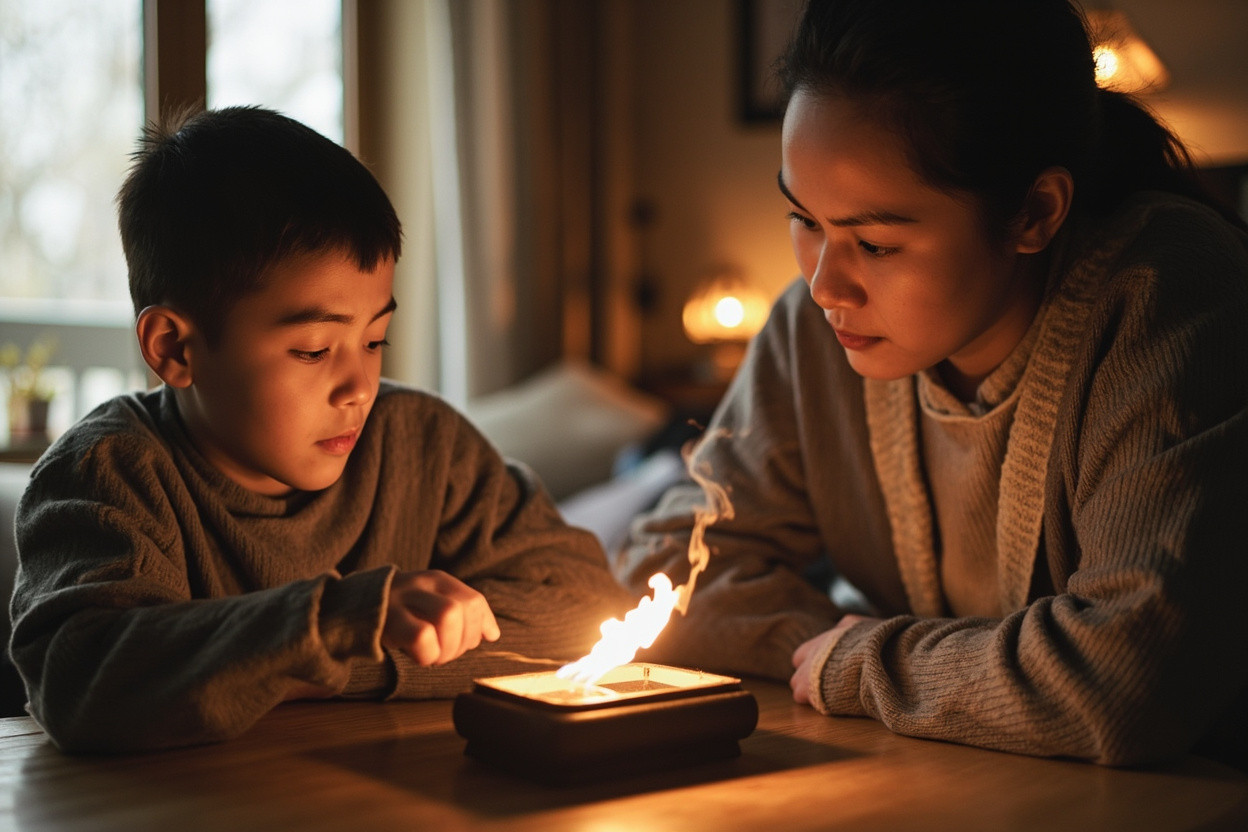
Here is what a safe session looks like. You set up the electric burner on a high shelf. You place 0.2 to 0.3 grams of your child-safe blend in the burner. You turn it on to low heat. You crack a window. The session runs for 10 to 15 minutes. Your child can be in the room, playing quietly or reading, but does not need to be directly next to the burner.
If you are using this for a specific issue — bedtime anxiety, afternoon restlessness, pre-exam stress — time it appropriately. For sleep issues, burn 30 minutes before bedtime. For anxiety, burn 20 minutes before the stressful event. For afternoon energy crashes, burn right after school.
Do not burn while your child is sleeping in the same room. The aromatic environment should be established before they enter, not while they are unconscious and cannot tell you if something feels wrong. Stay in the room. Watch how they respond.
Critical Safety Checklist for Parents

Before every session, run through this checklist:
✅ Electric burner only — no flame, no charcoal, no candle-lit sticks
✅ Burner on high shelf — completely out of reach
✅ Window cracked — active ventilation throughout
✅ Maximum 15 minutes — set a timer
✅ Adult in room — never leave a burning burner unattended
✅ Gentle herbs only — chamomile, lavender, mild sandalwood, light rose
✅ No strong resins — avoid dragon blood, heavy musk, intense ambergris
✅ Child comfortable — if they cough, sneeze, or seem agitated, stop immediately
✅ Storage locked — keep all incense materials in a locked cabinet
If your child has respiratory issues — asthma, allergies, chronic congestion — talk to your pediatrician before using any aromatic therapy. And if you are ever unsure whether a particular ingredient is appropriate, err on the side of caution. Leave it out.
Frequently Asked Questions
At what age can children start using incense?
Most practitioners recommend waiting until at least age 3 for any aromatic exposure, and even then, only indirect electric burner methods with very gentle herbs at low concentration. For children under 10, I would keep sessions to 10 minutes or less and only do it occasionally, not as a daily practice. Every child is different. Watch how your child responds and adjust accordingly.
Can incense help with my child sleep issues?
Yes, but it is not magic. A gentle calming blend before bedtime — chamomile and lavender work well — can support sleep hygiene. But if your child has persistent sleep issues, address the root cause: diet, screen time, anxiety, schedule. Aromatherapy is a tool, not a cure. It works best as part of a broader healthy sleep routine.
What if my child does not like the smell?
Then stop. Forcing aromatic exposure on an unwilling child defeats the purpose and can create aversion. Children have strong preferences. If your kid hates lavender, try chamomile. If they hate both, wait until they are older and can articulate what they find calming. Aromatherapy only works if the person finds the aroma pleasant. Consent matters, even for kids.
Related Articles
- Seasonal Incense: Scenting Each Season of Your Life
- Dampness Dispelling Incense: Ancient TCM Formula
- Incense Wellness: 1000 Years of Eastern Health Wisdom
Your Child Safety Is Not Negotiable
Incense around children is safe if you are careful. But safe requires intention. The setup, the herbs, the ventilation, the timing — none of it is optional. Get one of these wrong and you are creating problems instead of solving them. Read the checklist again. Before every session. Your child deserves the same thoughtful, informed approach you would give to anything else that goes into their body. Aromatherapy is powerful. Use it responsibly.