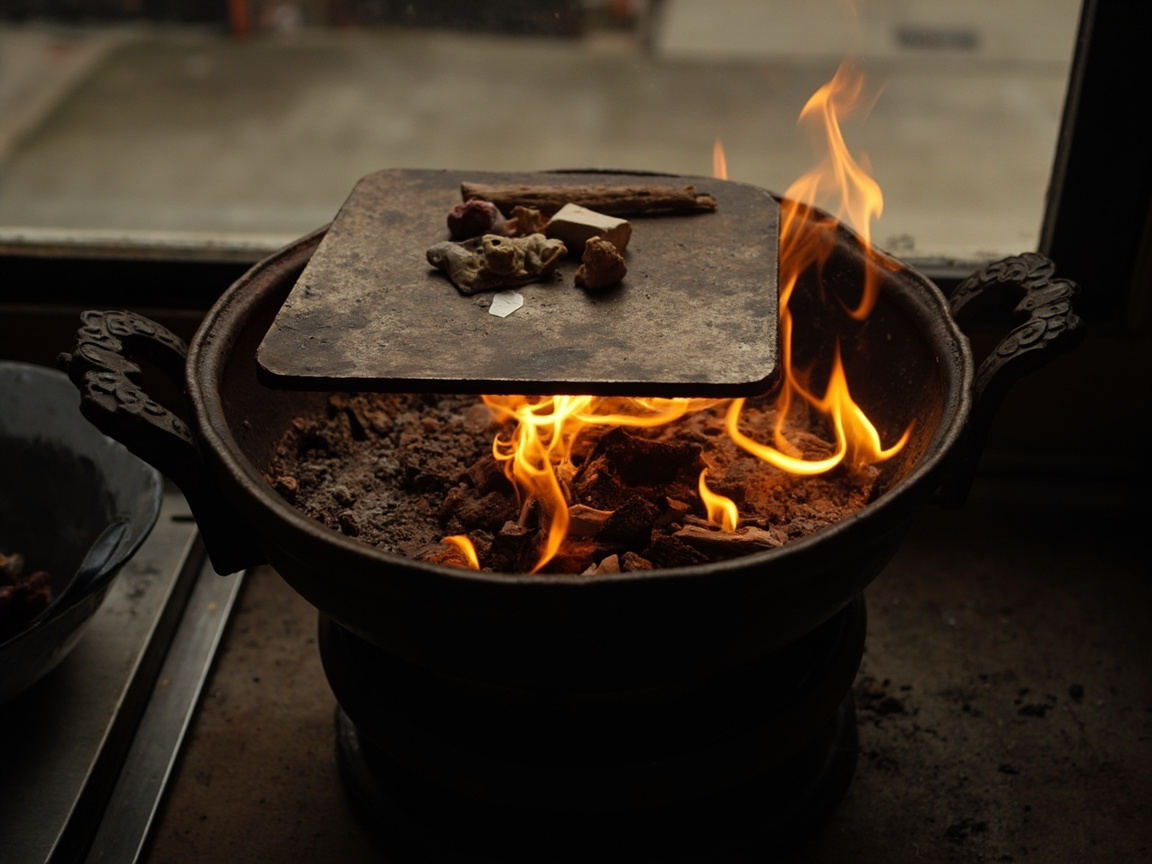
You have probably seen it in photos: a small ceramic or metal dish sitting above a flame, with fragrant material on top, and no visible smoke — just the faint shimmer of heated air and the smell of something extraordinary filling the room. This is 隔火熏香, indirect incense burning. It is the method serious incense practitioners prefer. Here is why.
What Is 隔火熏香?
Direct burning: you light the incense and let it burn. Simple. Effective. But also wasteful — flame burning destroys many of the more delicate aromatic compounds within seconds.
Indirect burning: you place the incense material on a surface that is warm but not hot enough to burn it. The heat releases the fragrance molecules slowly, over minutes or hours, without combustion. The result is a cleaner, more complex, more layered experience.
The Equipment You Need
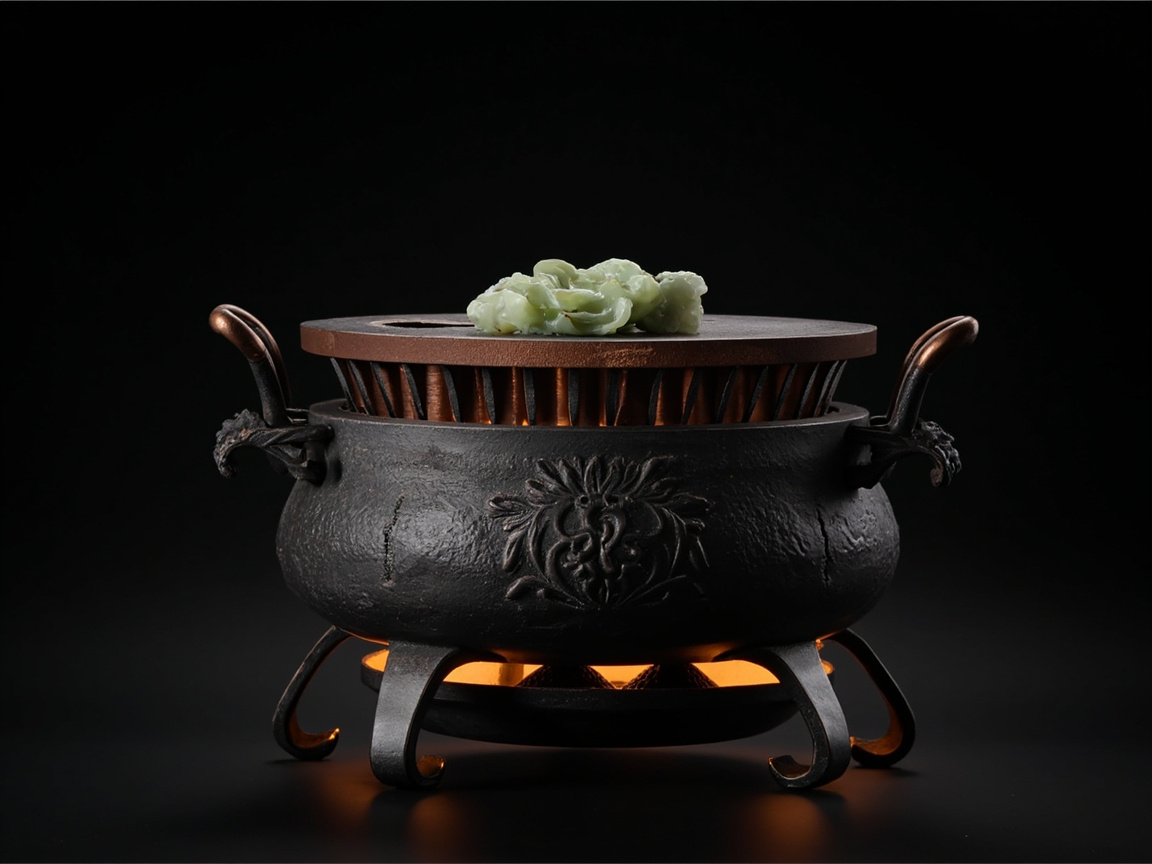
- Heat source: Charcoal (traditional) or electric incense heater (modern, more controllable)
- Heat shield: A metal or ceramic disk that sits between the heat source and the incense. Traditional materials: bronze, silver, mica (云母)
- Incense material: Powder, chips, or small pieces of natural fragrant material
- Container: A censer or incense burner to hold everything
- Tongs: For moving hot items. Non-negotiable.
How to Set Up 隔火熏香
- Light your charcoal. Let it burn until the flame dies and you have a glowing ember. This takes 5-10 minutes.
- Place the charcoal in the censer. Position the heat shield on top.
- Wait 2-3 minutes. Touch the top of the heat shield — it should be warm but not too hot to touch briefly.
- Place a small amount of incense material (0.1-0.3g is enough) on the heat shield.
- Sit back. The fragrance will begin to release within 30 seconds.
- Add more material as the scent fades. One session typically uses 0.5-1g total.
Why Bother? Three Reasons
- Fragrance complexity: Direct burning gives you the opening notes of a material. Indirect burning lets you experience the full development — opening, heart, dry-down — over 30-60 minutes.
- Material efficiency: A small amount of good agarwood burned indirect will give you more fragrance experience than burning ten times the amount directly.
- Cleaner air: No particulate matter from combustion. You are heating, not burning.
Temperature Guide
- 40-60°C: Lightest release. Good for very resinous materials like benzoin.
- 60-80°C: Standard range for most wood-based incense. This is where sandalwood and agarwood express most clearly.
- 80-100°C: High heat. Brings out animalic and deeper resinous notes. Can also burn materials if too high.