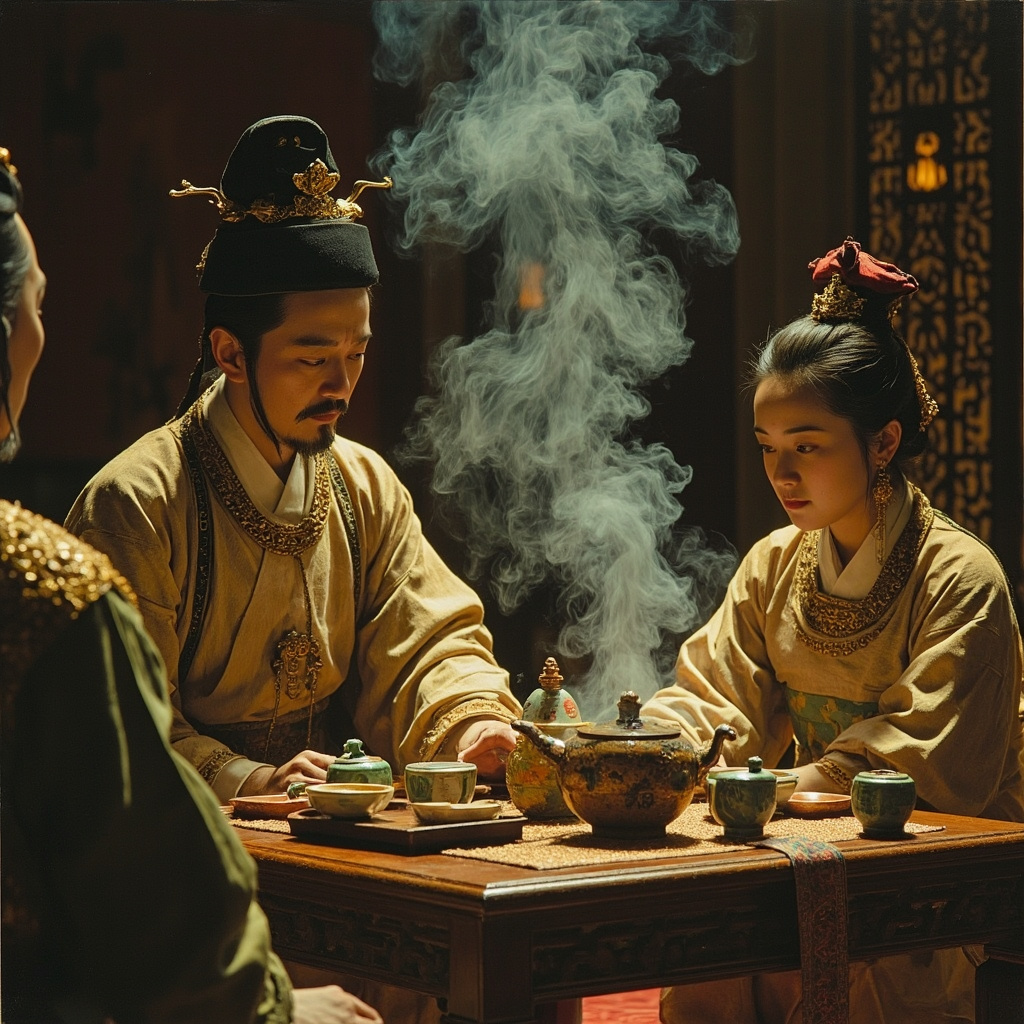
The Tang Dynasty (618-907 CE) is called China’s golden age for good reason. Poetry, printing, gunpowder, the civil examination system — the Tang created or refined things that shaped Chinese civilization for the next thousand years. Incense culture was one of them. If the Song Dynasty refined literati incense, the Tang invented it.
Why the Tang Was Different
Previous dynasties had used incense — primarily in religious and court contexts. But the Tang was the first period where incense became genuinely widespread across social classes and into daily life. Three factors drove this:
1. Silk Road wealth. The Tang controlled the central Asian trade routes that connected China to Persia, India, and the Mediterranean. Exotic materials — frankincense, myrrh, sandalwood — flowed into Chinese markets. For the first time, incense wasn’t just for the emperor and temples.
2. Religious tolerance and synthesis. The Tang initially encouraged Buddhism, which was already deeply connected to incense practice. But they also welcomed Zoroastrianism, Manichaeism, Nestorian Christianity, and Islam. Each brought their own incense traditions. The result was a rich, cross-cultural incense environment.
3. The examination system and literati class. The Tang institutionalized the civil examinations that would define the scholar-official class for centuries. These educated, politically powerful men became the patrons and practitioners who elevated incense from religious practice to cultural art.
The Emperor Who Loved Incense
The Tang emperor most associated with incense is Xuanzong (r. 712-756 CE) — the ruler under whom the dynasty reached its peak of prosperity. Xuanzong was a sophisticated patron of the arts: he was an accomplished poet, a patron of musicians, and a man who took his incense seriously.
He established a dedicated imperial workshop for producing incense — the sorts of institutional structures that signaled incense had arrived as a court priority. His court burned enormous quantities of imported aromatic materials, and the quality expectations were extreme.
What Tang Incense Was Like
Based on Tang-era texts and archaeological evidence, Tang dynasty incense practice had several distinctive characteristics:
Imported materials were prized. Domestic sandalwood from Yunnan was good, but Indian Ocean trade brought Arabian frankincense, African myrrh, and Southeast Asian agilawood (another name for agarwood/oUd). These imported materials carried status — the further the material traveled, the more valuable it was considered.
Blending was sophisticated. Tang-era records describe complex formulas with multiple ingredients — sometimes 10 or more materials combined. This was the period when hexiang (blended incense) was systematized, building on earlier Han dynasty practices but reaching new levels of complexity.
Large-scale ceremonial burning. The Tang court developed elaborate incense ceremonies for state occasions. These weren’t intimate personal practices — they were public spectacles, with massive censers burning in palace halls during receptions, religious observances, and court rituals.
The Spread Beyond the Court
The Tang’s incense culture didn’t stay in the palace. As the examination system expanded and the merchant class grew wealthy, incense moved into:
- Buddhist and Taoist temples — which had always used incense but now had resources for better materials
- Wealthy merchant households — who aped court tastes as a marker of success
- Tea houses and entertainment districts — where incense was part of the atmosphere
- Literati circles — where the scholar class began developing the sophisticated appreciation that would define Song dynasty practice
The Tang and the Silk Road
The incense trade was a two-way street. Chineseincense materials and practices traveled west along the Silk Road, influencing incense cultures in Central Asia, Persia, and eventually the Mediterranean. At the same time, materials and ideas flowed east.
The Tang period was the peak of this cultural exchange before the collapse of central Asian trade routes and the eventual isolation of later Chinese dynasties. The incense culture that developed during this period was uniquely cosmopolitan — drawing from Indian Buddhist, Persian, Arabian, and Central Asian traditions and synthesizing something distinctly Chinese.
Why This Matters for Your Practice
When you practice Xiangdao today, you’re drawing on a tradition that reached its first major flowering during the Tang. The blending practices, the social context, the connection to literary life — all of these traces back to Tang dynasty innovations.
Understanding that history changes your relationship to the practice. You’re not just burning pleasant-smelling materials. You’re participating in a tradition that was already ancient when the Tang court was burning frankincense for state ceremonies.
The Tang emperors who filled their palace halls with smoke — they would have understood exactly what you’re doing when you light a stick before reading tonight.