
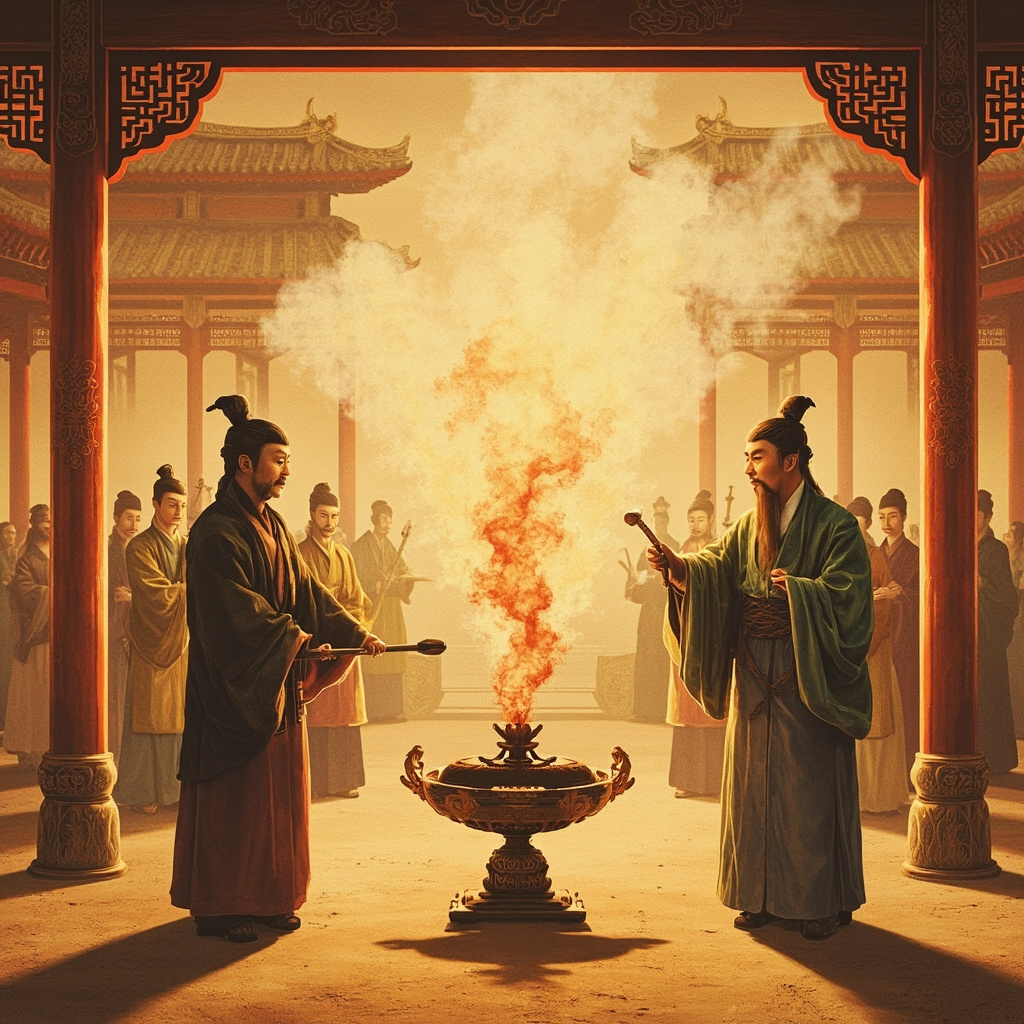
China did not adopt incense. It invented it. The earliest archaeological evidence of burned aromatic plants in ritual contexts comes from Chinese Neolithic sites predating comparable evidence from any other civilization. From those beginnings—ancient shamans communicating with spirits through smoke—Chinese incense culture evolved into a philosophical tradition, an aesthetic practice, and a sophisticated craft tradition spanning three millennia. Understanding why requires examining what incense meant to successive Chinese civilizations.
Neolithic Origins: Smoke as Bridge
Excavations at the Shandong Longshan culture site (2600-2000 BCE) uncovered burned hematite and plant remains in ritual contexts. Chemical analysis confirms the presence of aromatic compounds. The pattern repeats across early Chinese civilization: ritual use of smoke preceded any other incense application by at least a thousand years.
Early Chinese cosmology understood the universe through correspondence—similar things resonated across distance, connecting heaven, earth, and the underworld. Smoke rising from burning plants linked these realms directly. The Shijing (《诗经》), the Classic of Songs, records in multiple verses: “椒聊之实,蕃衍盈升”—The pepper-oak fruit, abundant enough to fill a measure. These lines appear in ritual contexts, reinforcing the sacred dimension of aromatic plants.
Shang and Zhou: Incense in State Ritual
The Shang Dynasty (1600-1046 BCE) formalized incense into ancestor worship. Royal tombs contain incense burners among the most important grave goods—not for the dead comfort, but as tools for ongoing communication. The dead existed in a different realm but remained accessible through smoke that traversed the boundary.
Zhou Dynasty (1046-256 BCE) ritual texts codify incense usage with precision previously absent. The Zhouli (《周礼》), Rites of Zhou, assigns specific officials to aromatic materials, establishing incense as a state affair rather than merely personal or religious practice. The bureaucracy of fragrance began here.
The Shujing (《尚书》), Book of Documents, records Duke Wen of Jin receiving tribute of premier incense wood, with the passage marking the event as politically significant. The princes proper response to superior fragrance demonstrated virtue. Incense had become a language of politics.
Han Dynasty: The Systematization
The Han Dynasty (206 BCE – 220 CE) transformed incense from ritual necessity into comprehensive culture. Emperor Wu expansion of trade routes brought new aromatic materials: tropical woods from Southeast Asia, resins from the western regions. The incense palette expanded dramatically.
Chinese intellectuals during this period began systematizing their existing knowledge. The earliest Chinese pharmaceutical texts—the Shennong Bencao Jing (《神农本草经》)—catalog incense materials by medicinal properties, establishing the fragrance-medicine unity principle that would govern Chinese aromatics for millennia.
Tang Dynasty: The Golden Age
Incense culture reached its first peak during the Tang. The cosmopolitan capital Chang’an hosted merchants from the entire known world. Buddhist practice integrated incense as essential ceremony. Poetry—the period dominant art form—constantly references fragrance as metaphor for beauty, virtue, and spiritual aspiration.
The Hanjian (《汉宫仪》) documents palace ceremonies where imperial consort and court lady competed in incense appreciation knowledge. The Rulin Waishi (《儒林外史》) records scholar-beautified competition in fragrance identification, revealing incense culture permeation of elite social life.
Song Dynasty: Philosophical Mature
The Song Dynasty (960-1279) transformed incense from aristocratic luxury into literati necessity. The scholar-official class—Confucians who found Buddhist meditation practices too foreign and Daoist immortality hopes too unrealistic—adopted incense as their spiritual technology. Burning incense while reading, writing calligraphy, or discussing philosophy became standard practice.
The Xiangpu (《香谱》) by Chen Ji-Yu, compiled in 1101, represents the period systematization impulse. This text—the oldest surviving comprehensive treatise on incense—catalogs materials, formulas, and appreciation methods with scholarly precision. The philosophical foundations laid during Song continue to structure Chinese xiangdao today.
Modern Recognition
In recent years, Chinese incense-making was inscribed on the national intangible cultural heritage list. This official recognition reflects growing awareness that incense culture represents irreplaceable traditional knowledge. The craft traditions—selecting materials, blending formulas, aging finished products—survive in attenuated form, practiced by decreasing numbers of masters whose knowledge risks disappearing without documentation.
FAQ
How is Chinese incense heritage different from Japanese?
Japanese kodo developed from Chinese precedents but specialized in specific directions—fragrance appreciation as meditation object, formal school traditions, specialized tools. Chinese incense culture remained broader: ritual, medicinal, contemplative, social, artistic applications coexisting rather than separating into distinct practices.
Why did incense become central to Chinese culture specifically?
Several factors converged. The philosophical framework of correspondence made smoke bridging function meaningful. The pharmacopoeia tradition established fragrance-medicine unity, linking incense to health. The Chinese emphasis on ritual propriety provided structure for incense integration into ceremony. And the availability of diverse aromatic materials through trade networks supplied the physical resources.
What traditional practices survive today?
Genuine traditional incense culture has contracted dramatically. Buddhist temple incense remains active but often commercial rather than craft-based. Literary incense practice survives among older scholar practitioners but faces extinction without successors. Commercial incense production continues on industrial scale, rarely connected to classical traditions. The knowledge gap between surviving fragments and historical completeness widens yearly.