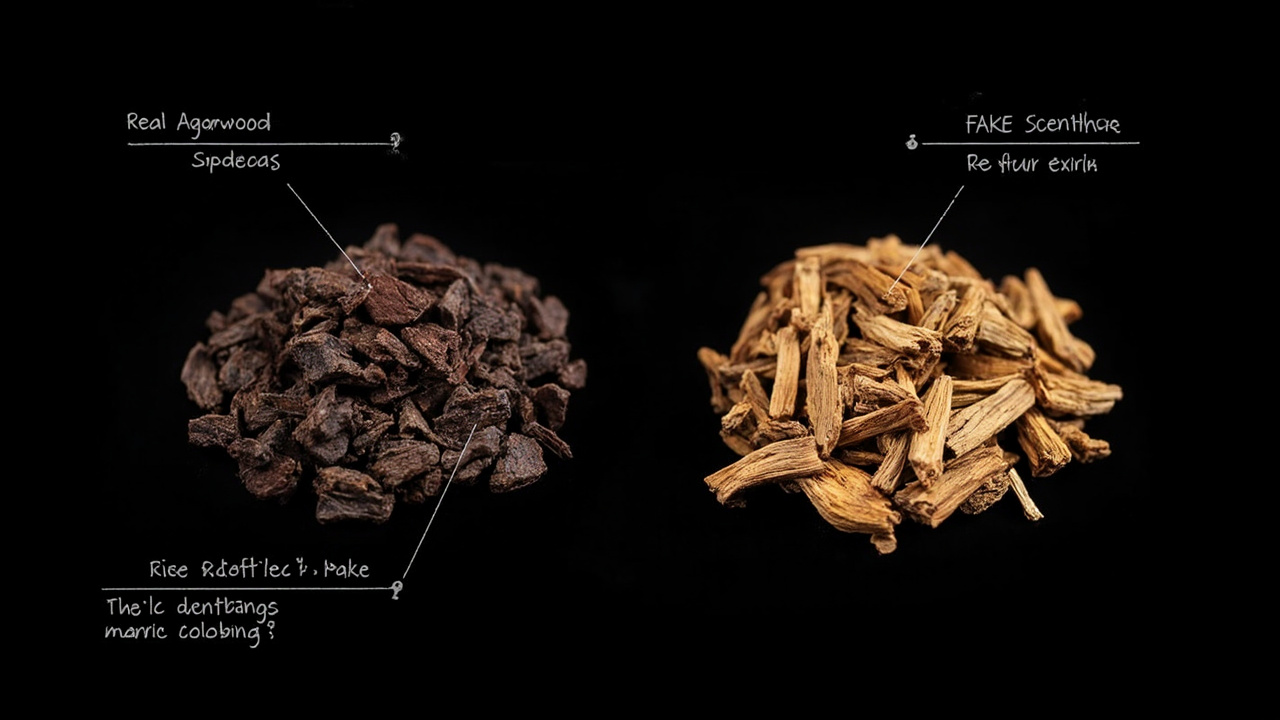
You paid $80 for a box of “沉香 chips.” The seller showed you the resin, the weight, the dark color. You brought it home, burned it, and it smelled like burning wood with a hint of chemical sweetness. You got ripped off. Here is how to not let it happen again.
The fake agarwood market is enormous. Estimates suggest 80-90% of “沉香” products on the global market are either partially or completely fake. Knowing how to identify real from fake is the most important skill in this hobby.
The Five Main Types of Fake Agarwood
- 1. Chemically treated wood: Ordinary Aquilaria wood is soaked in chemicals to mimic the resin pattern and fragrance. The chemical smell is often detectable — it has a sharp, synthetic edge that natural agarwood lacks.
- 2. Weighted wood: Metal or other substances are injected into the wood to add weight. This is the most dangerous type — burning metal-laden wood produces toxic fumes.
- 3. Imitation resin: Synthetic resins molded to look like agarwood pieces. Look for a too-perfect uniformity and a waxy texture.
- 4. Other species substitution: A different Aquilaria species with little to no resin development passed off as high-grade. The fragrance is faint or absent.
- 5. Artificial aging: New plantation agarwood artificially aged with heat and pressure to mimic old wild agarwood. Harder to detect, but the fragrance is usually simpler and less persistent.
The Water Test
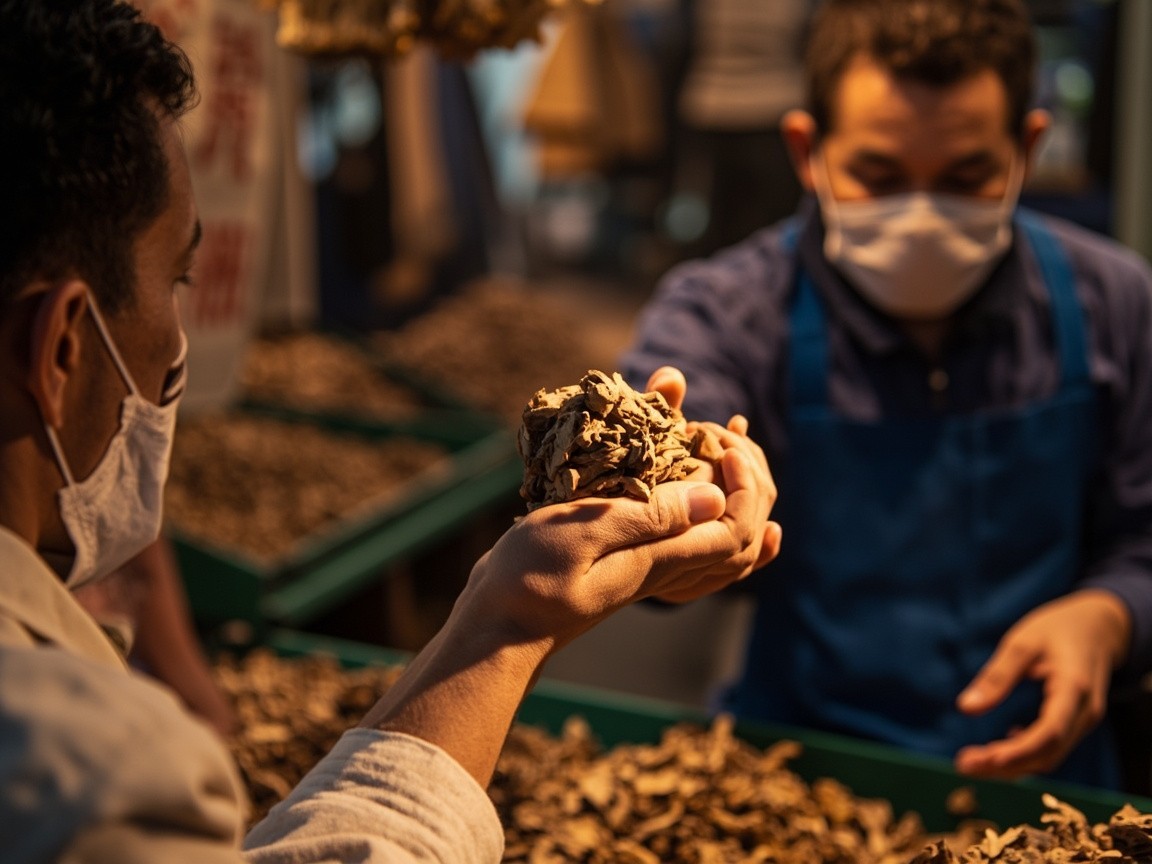
Real high-resin agarwood is lighter than water — it floats. This is actually a useful test. If a piece of supposed沉香 sinks immediately in water, it is either heavily weighted or not agarwood at all.
However: this test only works for high-resin pieces. Medium and low-grade agarwood may sink or float depending on the resin content. A floating piece is likely real. A sinking piece requires additional testing.
The Burning Test
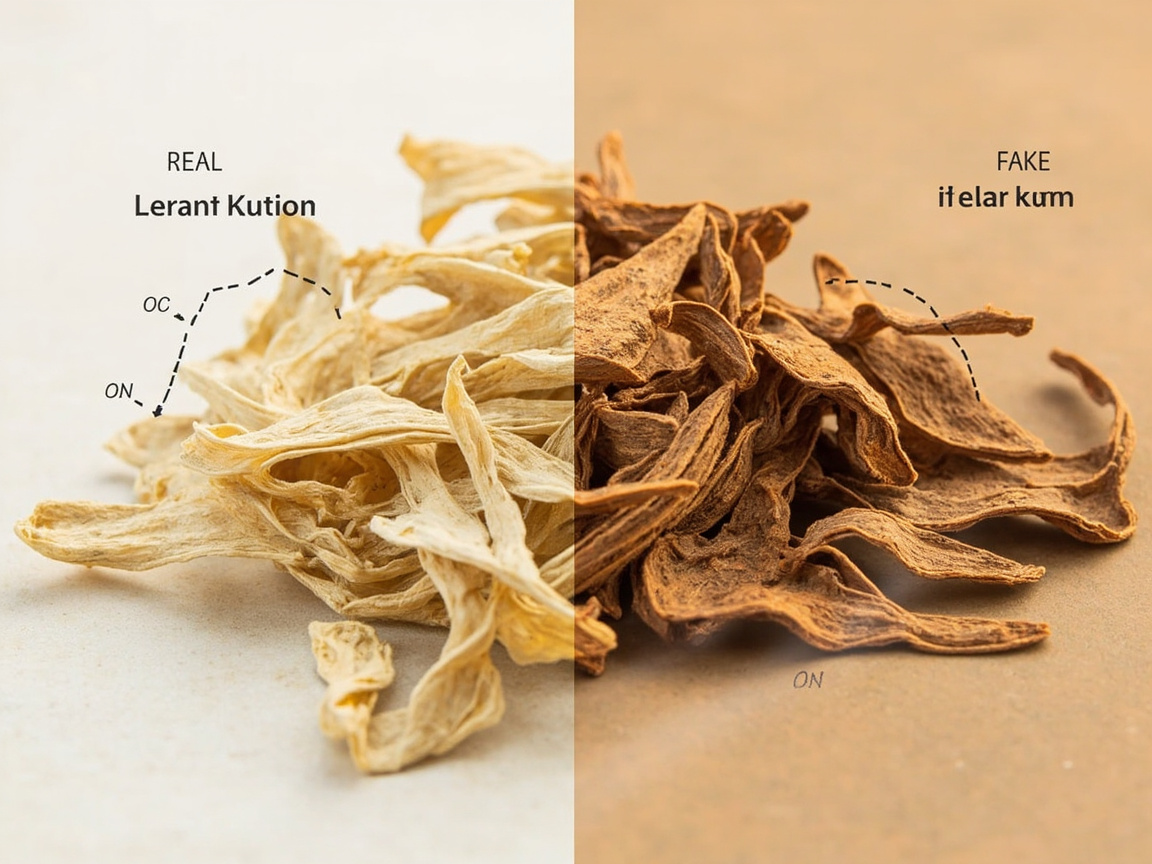
This is the most reliable test, but it destroys a small piece:
- Hold a flame to a small shaving or powder of the material.
- Real agarwood: flares briefly from the resin, then releases white fragrant smoke. The ash is white or light gray.
- Fake wood with fragrance oil: flares intensely, burns with black smoke, has an acrid chemical smell. The ash is black.
- Weighted wood: may spark or pop from the metal content. The ash is dark.
- Synthetic resin: melts rather than burns, has a plastic-like smell when heated.
Visual Inspection Guide
- Resin pattern: Real agarwood has irregular, organic resin patterns — not uniform stripes or spots. If it looks too regular, it probably is.
- Weight: Good agarwood is surprisingly light for its size. If it feels heavy, it might be weighted.
- Color: The dark color in real agarwood is the resin. It should look slightly oily or waxy. Fake black-colored wood looks matte.
- Cut surface: If you can see the cut surface: real agarwood shows a clear contrast between resin-saturated areas and wood areas. Fake or treated wood is uniform throughout.
Where to Buy Real Agarwood
Trusted sources for beginners: specialty incense shops that list origin, grade, and producer. Avoid platforms with no-questions-asked return policies on incense — these attract fakes.
Vietnamese and Cambodian sources generally have the best quality-to-price ratio for mid-grade chips. Indonesian is more widely available and affordable but can be inconsistent.
Red Flags
- Price that seems too good to be true — $10/gram for high-grade is a fantasy price
- No return policy
- Marketing focused on “spiritual power” rather than fragrance description
- Origin vague or missing
- Reviews that all say the same thing — likely fake reviews