You buy a stick of pure sandalwood. It smells nice. Then you buy a blended incense — sandalwood plus agarwood plus benzoin plus a touch of something floral — and suddenly you understand why Chinese scholars spent decades perfecting a single formula. This is 合香 (hexiang): the art of blended incense. Not mixing random materials. Creating a unified fragrance experience that evolves from first light to final ember.
What Is Hexiang?
合香 (hexiang) means “combined fragrance” or “blended incense.” The term refers specifically to the Chinese practice of combining multiple aromatic materials — woods, resins, flowers, spices — into a single, unified incense that is greater than the sum of its parts.
The practice dates back at least to the Han Dynasty (206 BCE – 220 CE), when Buddhist and Daoist rituals drove demand for complex fragrances. But hexiang reached its peak during the Song Dynasty (960-1279), when scholar-officials began treating incense blending as a serious intellectual and artistic pursuit — as refined as calligraphy or poetry.
The key word is 配 (pèi): “to blend” or “to pair.” Ancient practitioners did not simply mix materials randomly. They followed principles of harmony drawn from Chinese medicine, philosophy, and their own sensory experience.
The Five Schools of Hexiang
Traditional practitioners classify hexiang into five approaches based on the primary aromatic material:
- Wood-based (以木为主): The foundational material is a wood — typically sandalwood or agarwood — with supporting materials layered on top.
- Resin-based (以树脂为主): Frankincense, myrrh, or benzoin form the base, with woods providing depth.
- Flower-based (以花为主): Fresh or dried flowers — osmanthus, plum blossom, jasmine — are the primary material, preserved through various techniques.
- Spice-based (以香药为主): Aromatic medicinal herbs — cardamom, angelica, patchouli — dominate the formula.
- Compound (复方): A complex formula using multiple categories, designed for a specific purpose or season.
The Blending Principles
Ancient texts describe four key principles for successful hexiang:
1. Jun-Chen-Fu-Zuo (君臣佐使): The monarch-minion-guide-assistant principle. Every formula has a 君 (jun) — the primary material that defines the fragrance character. The 臣 (chen) supports and enhances. The 佐 (zuo) moderates or corrects. The 使 (shi) guides the blend to reach the intended effect. This structure comes from Chinese medicine but applies directly to incense blending.
2. Yin-Yang Balance: Materials are classified as yin (cooling, calming, introspective) or yang (warming, energizing, outward). A good blend balances these according to season, setting, and intent.
3. Evaporation Timing: Different materials release their fragrance at different rates. A skilled blender accounts for this: fast-evaporating materials should be layered so the late stages of burning still produce interesting fragrance, not flat ash.
4. Harmony Over Complexity: More materials do not make a better blend. Some of the most revered classical formulas use only three to five materials. The goal is harmony — a unified fragrance experience — not complexity for its own sake.
The Classical Formulas
Several hexiang formulas have been documented and practiced continuously for centuries. The most famous include:
- E Li Zhang Zhong (鹅梨帐中香): Goose pear and sandalwood, developed in the Southern Tang. Known for being gentle enough for bedroom use and particularly associated with evening relaxation.
- Er Su Jiu Ju (二苏旧局): The two Su brothers formula — Su Shi and Su Zhe — from the Song Dynasty. A complex blend using multiple woods and resins.
- Xue Zhong Chun Xin (雪中春信): Spring in Snow formula, attributed to Su Shi. Uses plum blossom and other floral materials to evoke early spring.
- Ling Xu Xiang (灵虚香): Daoist cultivation incense. Used in meditation practice for its purported ability to calm the mind and support concentration.
How to Make Your First Hexiang Blend
You do not need centuries of training to start blending. A beginner hexiang practice follows these steps:
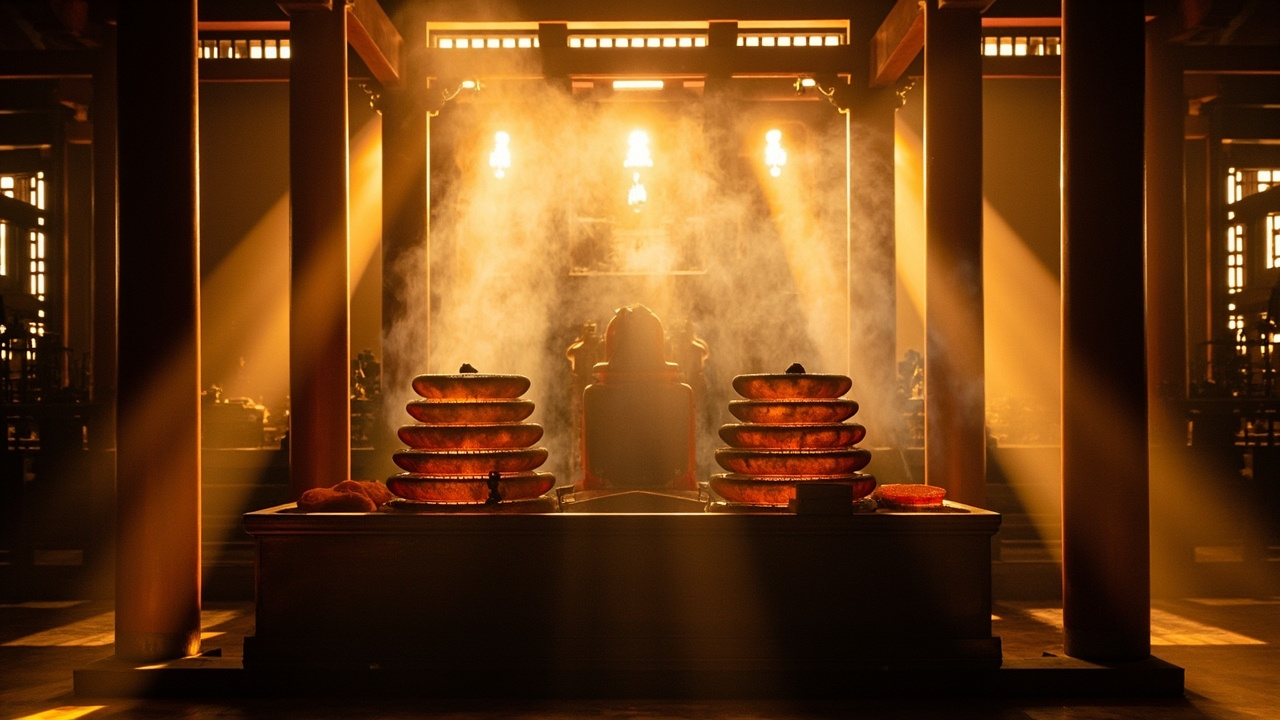
Step 1 — Choose your base: Start with a single wood you enjoy — sandalwood oragarwood chips are widely available and forgiving. Grind the wood into a coarse powder.
Step 2 — Add a supporting material: Add a small amount (10-20% of total volume) of a complementary material. Try benzoin for sweetness, or a small amount of frankincense for depth.
Step 3 — Add one accent: One additional material in small quantity (5-10%) to add character. Osmanthus for floral notes. A tiny pinch of cardamom for brightness.
Step 4 — Test and adjust: Burn a small amount. Note what you like and what you would change. Adjust the ratio in your next batch.
Keep records. The Chinese scholars documented their formulas with precise ratios and preparation notes. Your notebook is your archive.
Hexiang FAQ
Is hexiang the same as perfume?
No. Perfume is designed to project outward and make an impression within minutes. Hexiang is designed to evolve. A single burning session might last two hours, and the fragrance changes from start to finish as different materials release at different rates. The goal is a journey, not an introduction.
Do I need expensive materials to start?
No. Start with affordable materials: decent sandalwood powder, some benzoin resin, and a small amount of a third material you find interesting. You can refine your formulas as you develop your palate. Some of the classical formulas were created with relatively common materials — the expertise was in the blending, not the price.
How long does a blended incense take to prepare?
Basic blending — grinding, mixing, and testing — takes an afternoon. But many practitioners age their blends for months or years, just as winemakers age wine. The aging process allows the materials to marry and mellow. Some classical formulas are designed to be aged for a year before first burning.