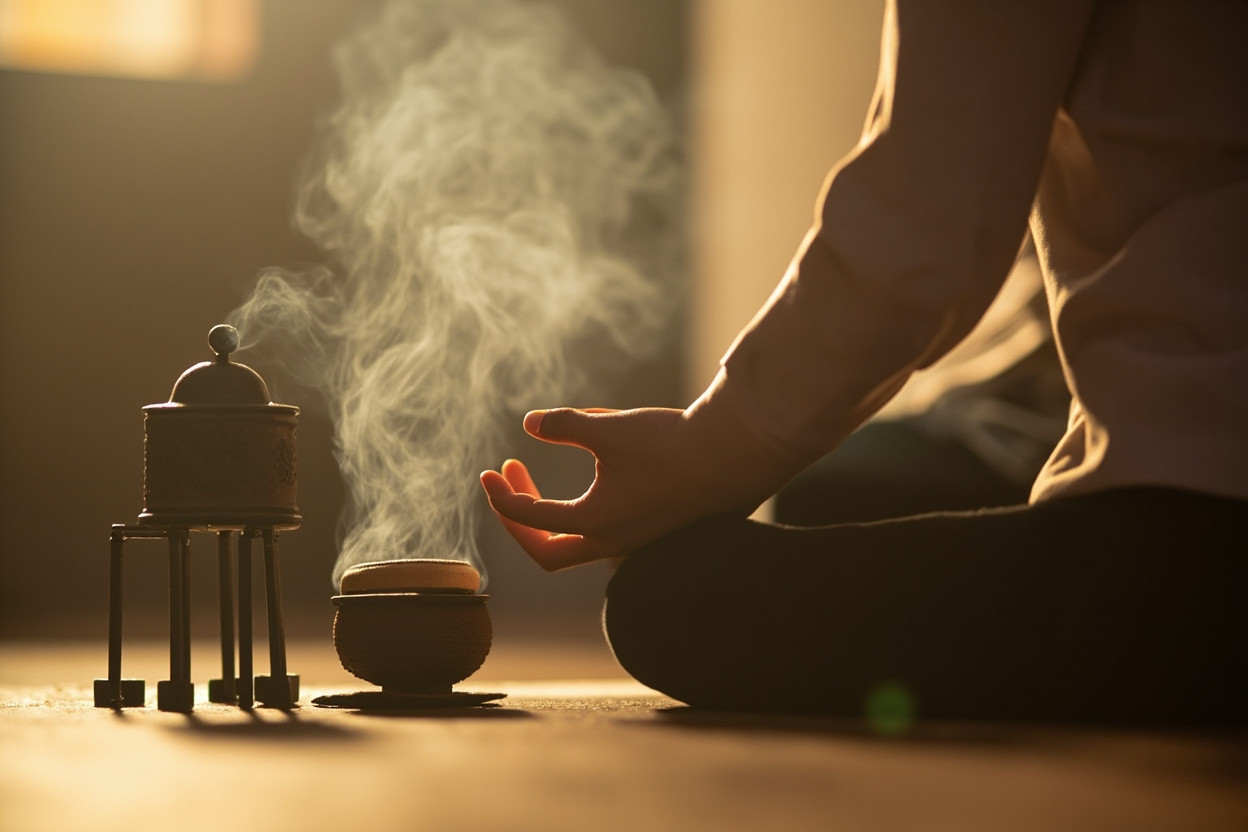
Guided meditation is different from unguided practice. When someone is telling you what to notice, what to feel, what to release, your mind has a structure to follow. The same is true for incense. Incense is not just ambient fragrance during meditation. It is a guide, a structure, a signal to your nervous system that this is the time for practice.
The combination of guided audio and the right incense creates conditions for deeper practice than either alone. This is not mysticism. This is about how the brain processes multiple sensory inputs simultaneously, and how the presence of familiar aromatic signals helps establish the mental context for contemplative work.
How Incense Functions as a Guide
Your nervous system responds to patterns. When you burn a specific incense during meditation consistently, your brain begins to associate that aromatic profile with the state you access during practice. This is not metaphor. This is classical conditioning applied to contemplative states.
The Bencao Gangmu describes sandalwood as entering the heart meridian, calming the spirit, and clarifying awareness. The mechanism described in these texts is the same mechanism you experience when lighting sandalwood before meditation: the aromatic compounds trigger a neurological shift toward parasympathetic dominance, which is the autonomic state necessary for contemplative practice.
When you combine this aromatic signal with guided meditation, you create multiple simultaneous signals pointing toward the same state. The words guide your attention. The incense prepares your nervous system. The result is a more efficient transition into contemplative practice than either alone.
The Incense for Guided Meditation
Sandalwood is the foundation. Use the same variety consistently for at least four weeks before evaluating effect. The consistency of aromatic signal is what builds the association. Switching between varieties prevents the conditioning from establishing.
Agarwood is the advanced choice. If sandalwood is the foundation, agarwood is the refinement. It produces a more complex aromatic profile that many practitioners find supports deeper states of absorption during guided practice. Use less: 0.2 grams of quality agarwood replaces 0.4 grams of sandalwood in effect.
The Practice Protocol
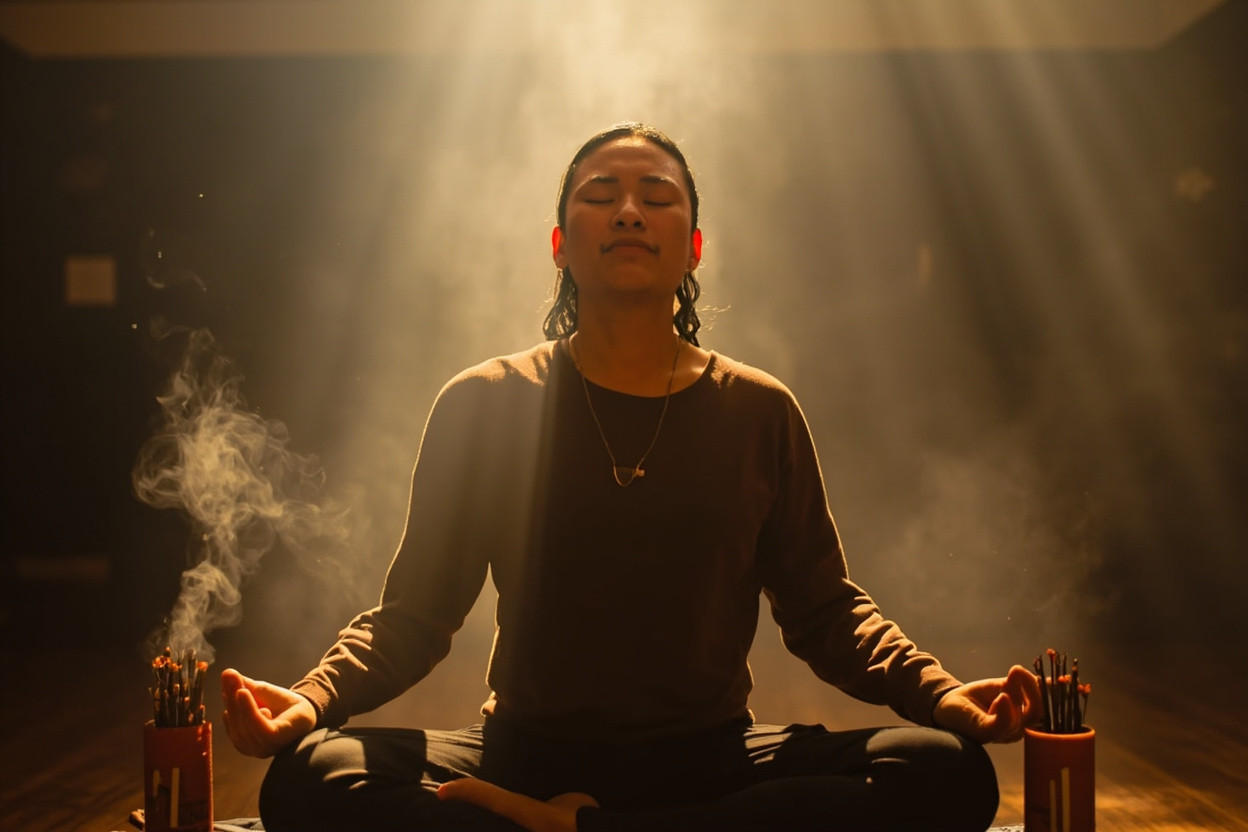
Before your guided meditation begins: light the incense. Step away. Let it burn for five to seven minutes until the flame extinguishes and the burn stabilizes. The incense should be burning when you begin your practice, but not so intensely that it overwhelms the space.
Begin your guided meditation. The instructions in the recording or app are directing your attention. The incense is supporting your nervous system capacity to follow those instructions without the usual background anxiety and distraction.
When the guided meditation ends, do not immediately extinguish the incense. Sit with the residual aromatic environment for five more minutes. This is the transition period, when the contemplative state begins to integrate. The incense continues working during this integration window.
Building the Association
The power of incense as a practice guide comes from consistency. For the first four weeks: use the same incense, the same burner, the same time of day, for the same guided meditation. Build the pattern. After the association is established, you will notice that lighting the incense alone begins to shift your nervous system toward practice readiness, even before you begin the guided session.
Frequently Asked Questions
Does the type of guided meditation matter?
No. Whether you use body scan, loving-kindness, breath awareness, or any other structured guided practice, the incense function is the same: nervous system preparation for contemplative work. The aromatic signal does not change based on the meditation style.
Can I use essential oils instead of burning incense?
Essential oil diffusers produce a different aromatic profile than burning incense. The combustion compounds in burned incense are different from cold diffusion. For the purposes of practice conditioning, burning produces a more complete aromatic experience. Diffusers are better than nothing, but burning is more effective.
What if I share a space and cannot burn incense?
An electric incense burner with minimal aromatic output, placed at distance, produces enough signal for personal practice without significantly affecting others in the space. Alternatively, apply a single drop of sandalwood essential oil to a cloth near your practice space. The effect is weaker but functional.
Related Articles
Begin Tonight
Tonight, when you have twenty minutes for guided meditation: light 0.3 grams of sandalwood. Wait seven minutes. Begin your guided session. Notice how the incense affects the depth of practice you access. After four weeks of consistent combined practice, evaluate whether this approach is working for you.