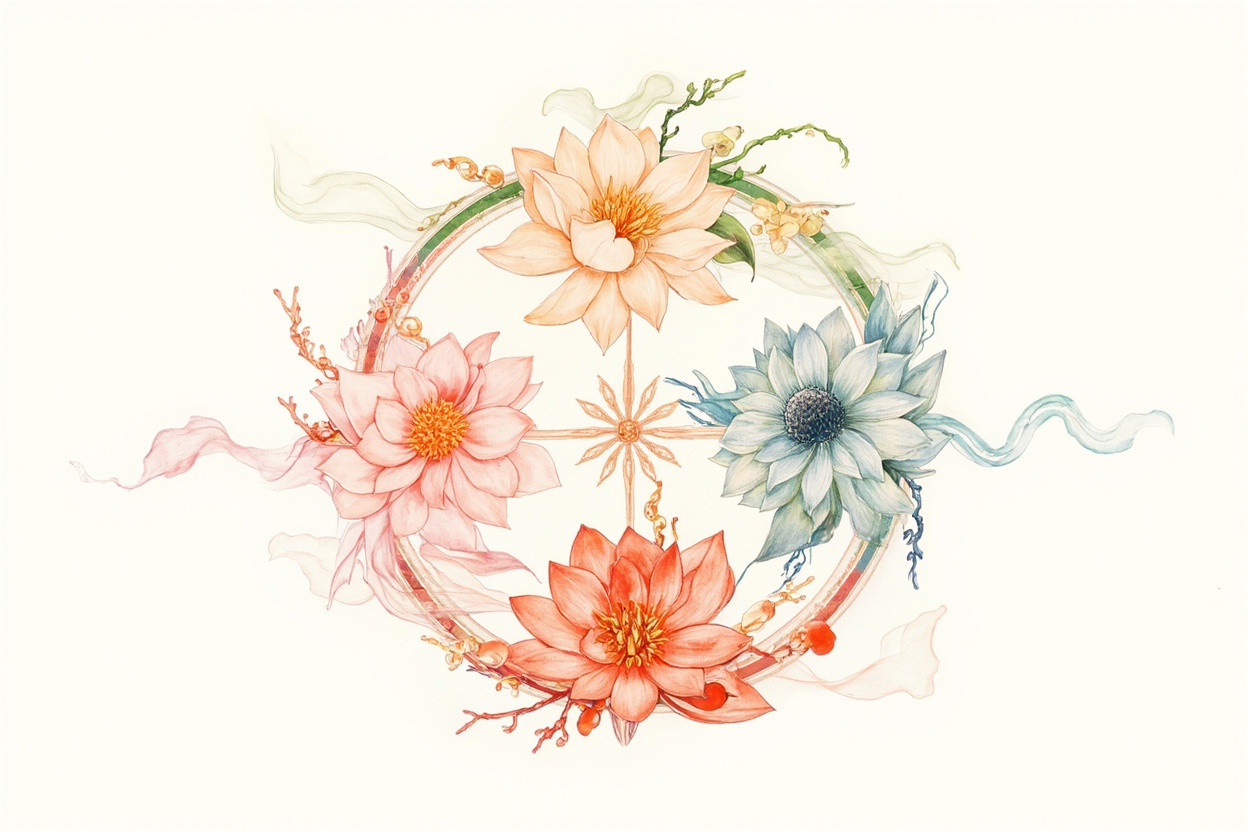
You change your wardrobe with the seasons. You change your diet with the seasons. But your incense collection? It is the same all year round. That is a mistake.
Traditional Chinese medicine has always understood that the human body responds to seasonal rhythms. Each season carries a distinct energetic character — rising yang in spring, maximum fire in summer, contracting metal in autumn, deep water in winter. Your incense practice should shift with these energies, not stay frozen in one mode.
This is what the ancient Chinese called 四季养生香 — four seasons wellness incense. And it is one of the most practical applications of 香道 (xiangdao) in daily life.
Spring: Wood Energy and Liver Renewal
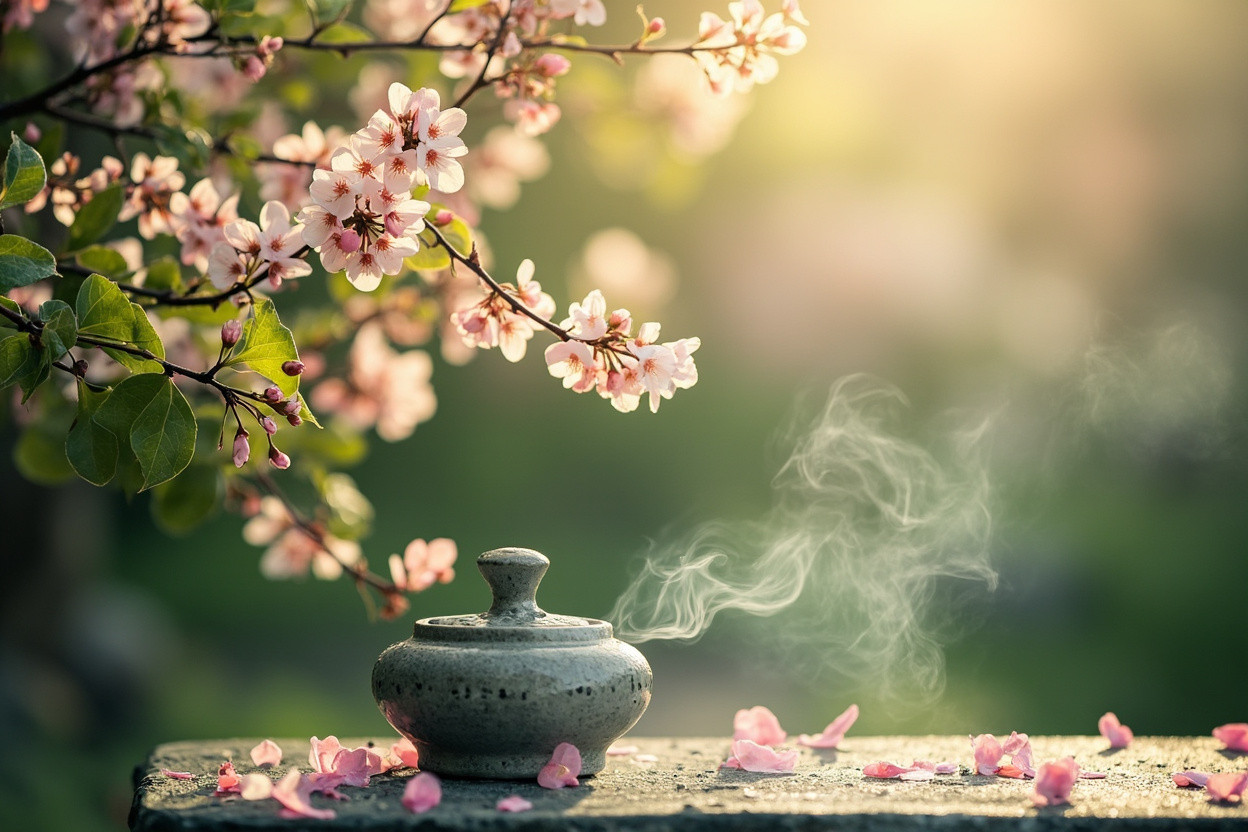
Spring is governed by the wood element. In TCM, wood corresponds to the liver — the organ responsible for the smooth flow of qi throughout the body. When liver qi moves smoothly, you feel energized, clear-headed, emotionally balanced. When it stagnates, you feel frustrated, stuck, angry for no reason.
The aromatics for spring support this liver qi movement. Light, dispersing scents that rise upward and outward — peppermint clears head fog and moves stagnant energy. Rose soothes liver fire and softens irritability. Chrysanthemum clears heat from the liver and eyes. These are not exotic materials. They are common herbs you can find in any TCM shop.
Burning time in spring should be short and light — 20 to 30 minutes in the morning, when liver energy is naturally most active. You want to support the natural upward movement of spring yang energy, not overwhelm it with heavy scents.
A basic spring wellness blend: 40% peppermint, 30% dried chrysanthemum, 30% dried rose petals. Burn on an indirect burner at low heat. The aroma should be fresh, clean, slightly floral — like morning air in a garden.
Summer: Fire Energy and Heart Care
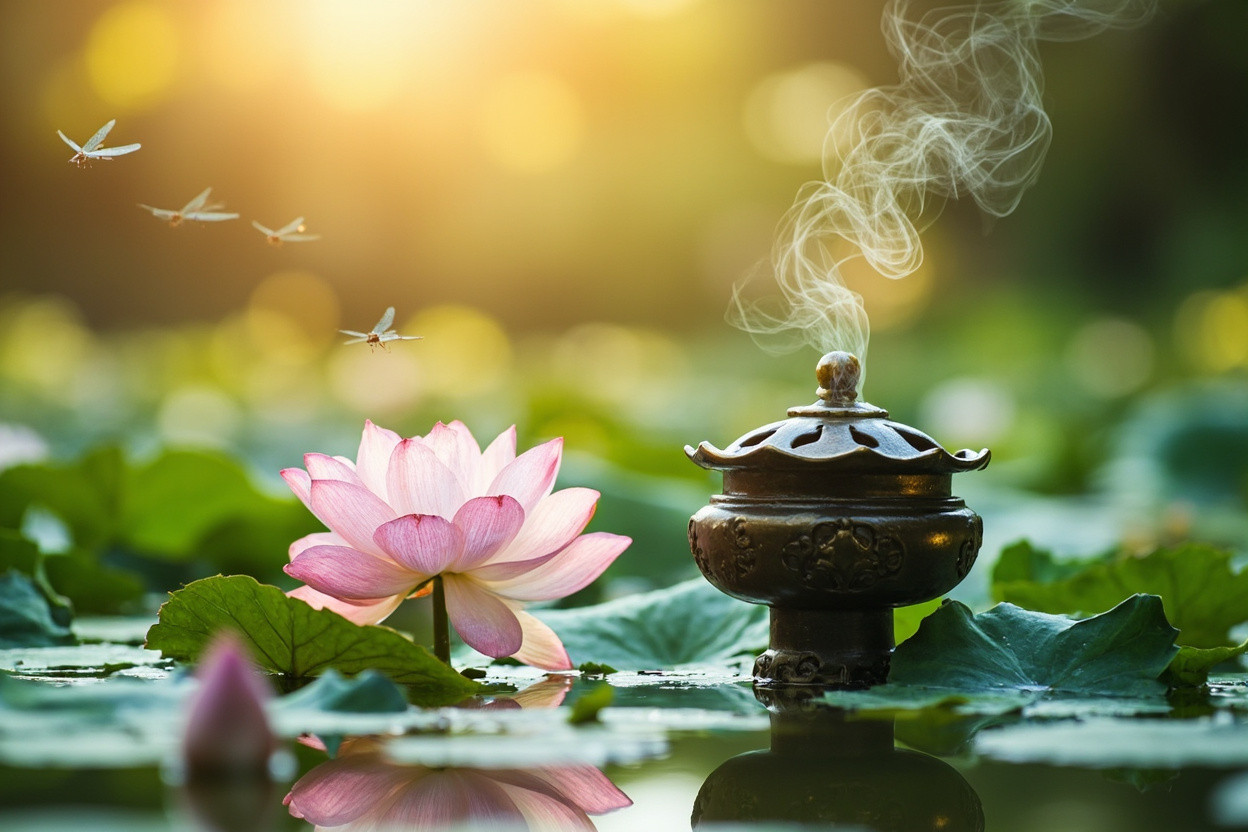
Summer is fire — maximum yang energy, expansion, outward movement. The heart, which houses the shen (spirit), is particularly active in summer. Too much heat in the heart creates agitation, insomnia, restlessness. The aromatics for summer should be cooling and calming, supporting heart energy without suppressing it.
Lotus is the classic summer incense flower. Its cooling, calming properties are well documented in classical texts. Jasmine, with its sweet floral energy, harmonizes heart qi and quiets the mind. White peony (bai shao) is particularly effective for calming agitation and regulating sleep. Light agarwood (not the heavy aged varieties) adds depth without creating excess heat.
「夏三月,此谓蕃秀,天地气交,万物华实。」The Huainanzi describes summer as the season of flowering and fruiting, when the qi of heaven and earth intermingles. Summer incense should capture this expansive, harmonious quality — light, florally, cooling.
Burning time: brief sessions, early morning or late evening. Avoid burning during the peak heat of midday unless you are specifically trying to cool the body. Evening burning helps prepare the heart for restful sleep.
Autumn: Metal Energy and Lung Health
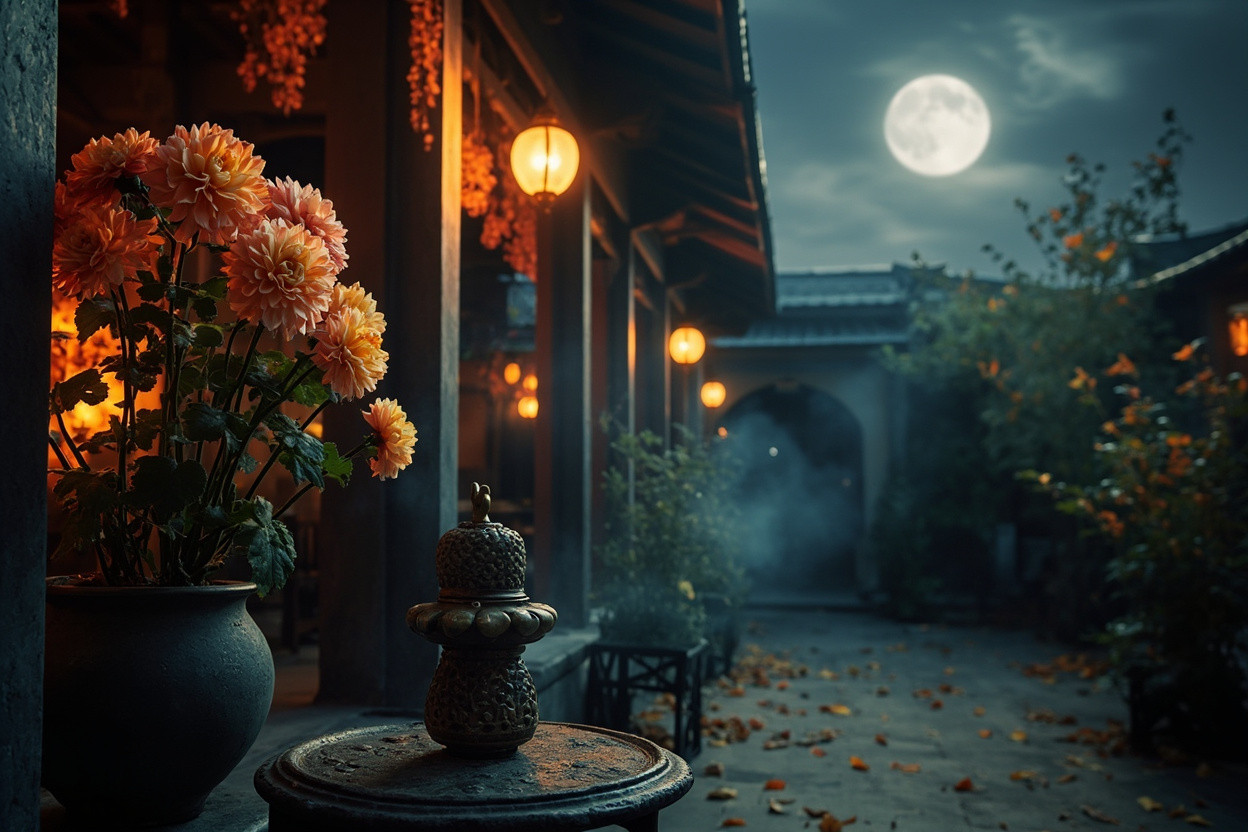
Autumn is metal — contraction, gathering, preparing for dormancy. The lung, associated with metal and autumn, governs the Wei Qi (defensive energy) and the skin. As the weather cools and the air dries, the lung comes under pressure. Aromatics for autumn should clear and descend, supporting the lung function of receiving and distributing qi while preparing the body for winter cold.
White peony (bai shao) continues to be valuable in autumn — it clears heat from the lung without being overly cold. Marigold (jin zhan) supports the descending quality of autumn energy. The Shi Jing (Classic of Poetry) contains early references to autumn incense ceremonies, when people burned fragrant herbs to honor the harvest and prepare spiritually for winter.
Autumn is also the season of letting go. The收敛 (contraction) energy of autumn mirrors the psychological work of releasing what no longer serves you. Incense practice in autumn should support this process — scents that help you breathe out, release, let go.
Burning time: 1 to 2 sessions daily, midday preferred when lung energy is strongest. If you are susceptible to autumn allergies or respiratory issues, increase to 3 sessions.
Winter: Water Energy and Kidney Conservation
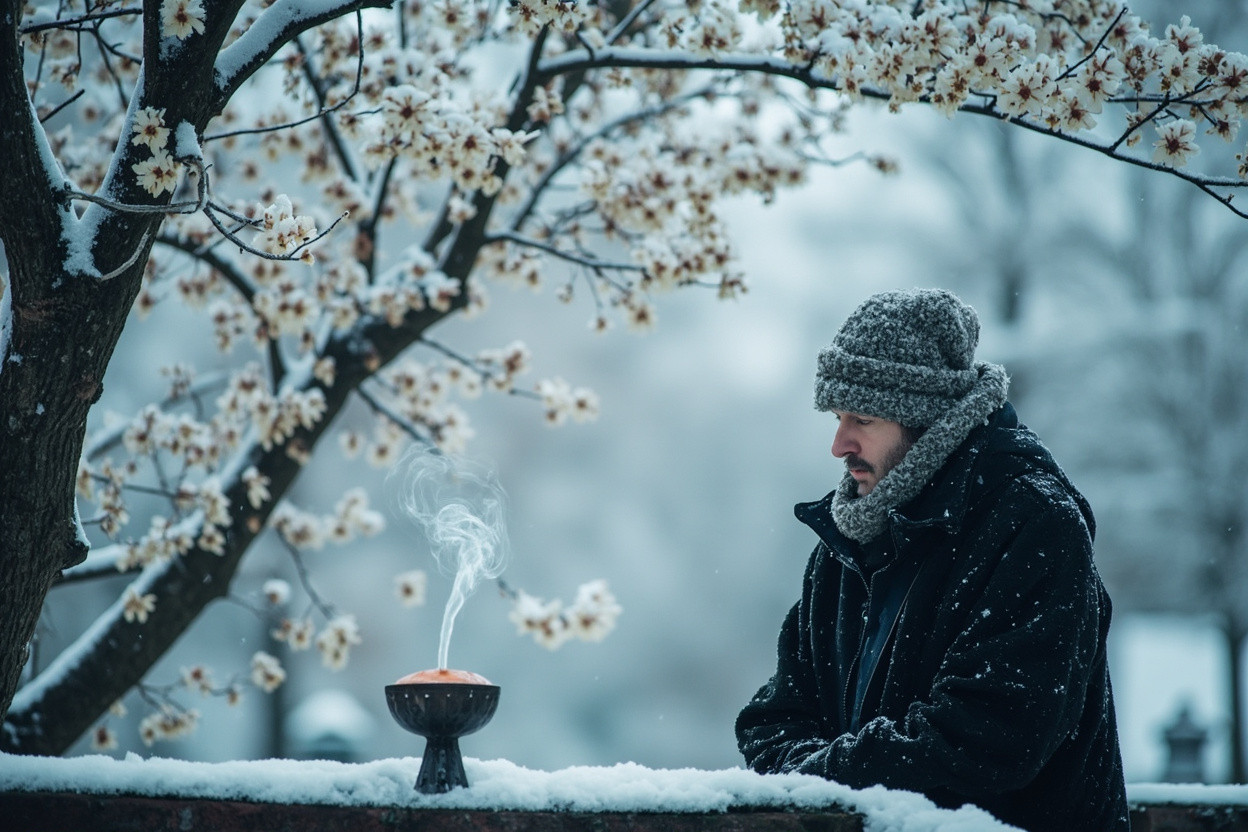
Winter is water — maximum yin, conservation, stillness. The kidneys, associated with water and winter, store essence (jing) and govern birth, growth, reproduction, and aging. Winter is the time for deep conservation — not the time for aggressive cleansing or intense stimulation.
「冬三月,此谓闭藏。」The Neijing describes winter as the season of closure and storage. Incense practice shifts to longer sessions with deeply warming, penetrating aromatics that support kidney yang without overstimulating. Aged agarwood (沉香) is the foundation — its deep, resinous warmth enters the kidney meridian and supports the fundamental yang of the body. Benzoin (安息香) amplifies this warming, penetrating quality. Small amounts of dragon blood resin (血竭) add penetrating power.
Winter incense should be experienced in longer sessions — 45 to 60 minutes in the evening, during meditation or quiet reading. The practice is one of turning inward, conserving, storing. Winter is not the time for productivity or outward achievement. It is the time for rest, reflection, and preparation.
A basic winter wellness blend: 50% aged agarwood powder, 30% benzoin, 20% dragon blood resin. Use a lower heat setting on your indirect burner. The aroma should be deep, warm, grounding — like sitting by a fire in a quiet room while snow falls outside.
How to Practice: The Four Seasons Wellness Rhythm
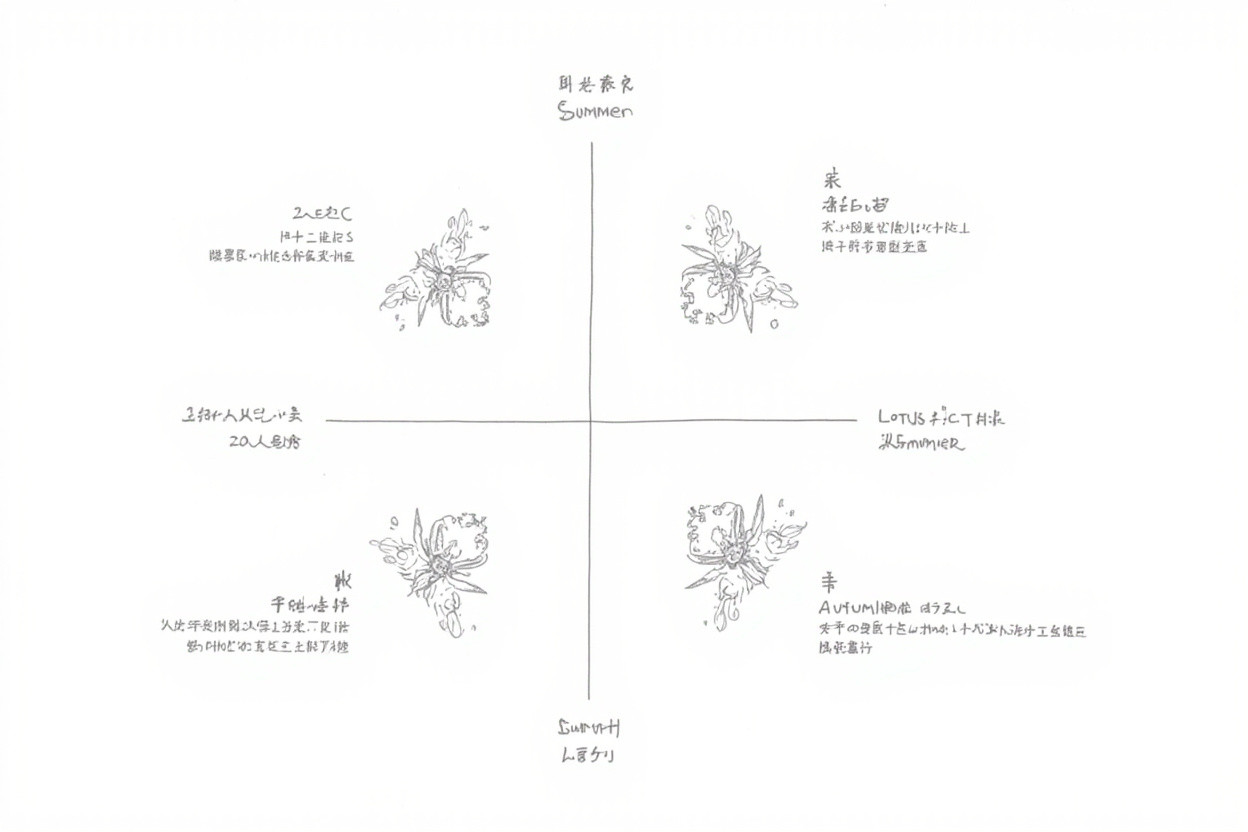
You do not need four separate incense collections. A practical four seasons rotation uses a smaller set of materials, shifted in proportion and emphasis with the seasons:
Spring base: peppermint, chrysanthemum, rose
Summer base: lotus, jasmine, white peony
Autumn base: white peony, marigold, light agarwood
Winter base: aged agarwood, benzoin, dragon blood resin
Change your incense with the solar terms (二十四节气), not just the calendar months. The eight solar terms that mark season transitions — Li Chun (立春, Start of Spring), Li Xia (立夏, Start of Summer), Li Qiu (立秋, Start of Autumn), Li Dong (立冬, Start of Winter) — are your transition points. Switch at these dates rather than waiting for calendar month changes.
Daily practice in each season:
Spring: 1 to 2 short sessions daily, morning preferred, supporting liver qi movement
Summer: 1 to 2 brief sessions, early morning or late evening, cooling rather than warming
Autumn: 1 to 2 sessions daily, midday preferred, supporting lung function
Winter: 1 long session daily, evening preferred, supporting kidney yang and deep rest
Frequently Asked Questions
Can I use the same incense year-round?
Technically yes, but you will not receive the full therapeutic benefit of four seasons wellness incense practice. The classical Chinese system specifically matches fragrance to seasonal energy. If you burn only one incense year-round, choose one that is moderately warm and balanced — aged agarwood works reasonably across seasons as a base. But for deeper benefit, seasonal rotation is more effective.
What if I live in a tropical climate without four distinct seasons?
In tropical regions, identify your own seasonal patterns — rainy season versus dry season, for example — and match incense to those energetic shifts. The principles remain the same: identify the dominant environmental energy and choose fragrances that harmonize with rather than fight against it.
How do I know when to switch my incense with the seasons?
Watch the solar terms. The eight solar terms that mark season transitions — Li Chun (Start of Spring), Li Xia (Start of Summer), Li Qiu (Start of Autumn), Li Dong (Start of Winter) — are the primary transition points. Switch fragrances at these eight dates rather than at calendar month changes. Your body will feel the shift before your calendar does. When you notice you are feeling more sluggish or more energized, that is your signal to begin transitioning.
Related Articles
- Seasonal Incense: Scenting Each Season of Your Life
- Dampness Dispelling Incense: Ancient TCM Formula
- Incense Wellness: 1000 Years of Eastern Health Wisdom
Your Body Knows the Season
You have been burning the same incense in January and July. That heavy winter blend you love in December? It is working against you in July. Your body is asking for something different. Give it what it needs. Change your incense with the seasons. It is a small adjustment that makes a surprising difference. Try it for one year. By next winter, you will understand why the ancient practitioners built their entire wellness system around seasonal rhythm.