Feng Shui and Incense: Balancing Your Home’s Energy
In the classical Chinese understanding of space, a room is not merely a physical enclosure — it is an energetic field, continuously shaped by the flow of qi (气) through and around it. Qi enters the home through doors and windows, travels through corridors and rooms, pools in corners and stagnates behind furniture, rises in some areas and descends in others. The quality of this qi flow — whether it moves freely, pools appropriately, or becomes stagnant — determines the energetic quality of the space and, by extension, the wellbeing of the people living in it.
Feng shui (风水), the art of arranging space to work with and enhance qi flow, has been applied to the Chinese home for over three thousand years. And incense — with its ability to move, transform, and harmonise qi — has been one of the primary tools of feng shui practice for just as long. In the classical feng shui tradition, burning the right incense in the right place is not a superstition or a folk practice. It is a precise technical intervention in the energetic field of the space.
The Fundamentals: Qi Flow in the Home
Before you can use incense effectively for feng shui, you need to understand the basic patterns of qi flow in a space.
The mouth of qi (气口): The primary entry point for qi into a space is the main door. In feng shui, the quality, direction, and condition of the main door determines the quality of qi that enters the home. A well-positioned main door — facing the appropriate direction for the inhabitants, free of obstruction, properly lit — brings good qi. A poorly positioned or obstructed door brings stagnant or harmful qi.
The flow path: Qi enters at the door, travels through the entrance hall or corridor, and distributes throughout the home. The flow path should be clear and unimpeded — blocked corridors, excessive furniture, and clutter all interrupt the flow.
Pooling and stagnation: Qi naturally pools in wide, open areas and in corners. It stagnates in dead-end spaces, behind large furniture, and in areas that are dark, dirty, or neglected.feng shui interventions aim to keep qi moving and to encourage it to pool in the appropriate places — typically the living area and the spaces where the family spends the most time.
Incense as a Feng Shui Tool
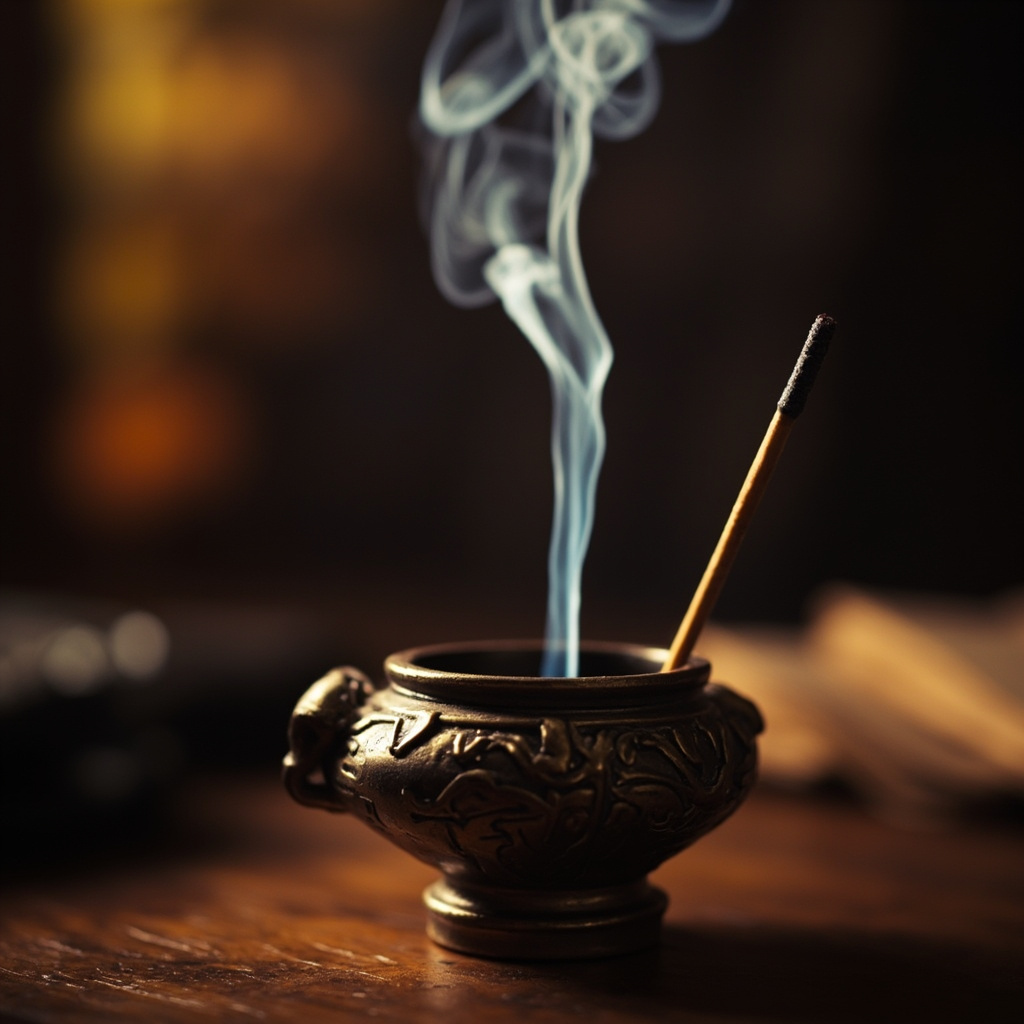
Incense affects qi in three primary ways:
Moving stagnant qi: The smoke and fragrance of incense actively move qi — dispersed, opening, upward-moving. Burning incense in a stagnant corner, a dead-end corridor, or a room that feels heavy and still is one of the most effective ways to reintroduce movement to stuck qi. The appropriate incense for this purpose is a warm, moving fragrance: cinnamon, clove, frankincense, or a warming blended formula.
Purifying contaminated qi: In the classical tradition, certain fragrances are understood to have a purifying effect on qi — they remove unwanted influences from a space. This is why incense was burned when someone was ill, after a death in the household, or when moving into a new space. The appropriate incenses for purification are sharp, clearing fragrances: calamus, certain resins, and formula designed for this purpose.
Harmonising conflicting qi: When two areas of a home have strongly conflicting energetic qualities — for example, a kitchen (fire) adjacent to a bathroom (water) — incense can be used to create a transitional zone of harmonised qi. A neutralising or harmonising blend, burned at the boundary between the two zones, helps ease the transition.
Feng Shui by Room
The Entrance (门厅, Men Ting)
The entrance is the mouth of qi — the most important area for feng shui intervention. Burning a small amount of welcoming incense at the entrance each morning sets the quality of qi for the entire home for the day. The appropriate fragrance is warm, inviting, and slightly spicy: a light cinnamon or clove, or a blended formula with sandalwood base and a touch of spice.
The Living Room (客厅, Ke Ting)
The living room is where family qi pools and interacts. It benefits from incense that harmonises and invites — warm, balanced fragrances that support conversation and togetherness. Avoid aggressive, overpowering incenses in the living room: the goal is to create a space where people want to gather, not to overwhelm them.
The Study (书房, Shu Fang)
The study is the space for focused mental work. Incense here should sharpen awareness and support concentration: calamus, a light citrus note, or a clear, wood-based fragrance. Avoid heavy, sedating incenses in the study — they will dull the mental clarity you are trying to cultivate.
The Bedroom (卧室, Wo Shi)
The bedroom requires calm, quiet, settling incense. The goal is to quiet the shen and support restful sleep. Warm, slightly sweet fragrances are appropriate: light sandalwood, benzoin, or a calming blended formula. Avoid anything stimulating — sharp spices, strong florals, or anything that activates the mind.
The Kitchen (厨房, Chu Fang)
The kitchen contains the stove — the most fire-intensive object in the home. Feng shui concerns about kitchen fire are addressed partly through incense: burning a small amount of cooling incense near the stove helps balance the fire energy. Chrysanthemum or a light cooling formula is appropriate here.
The Bathroom (浴室, Yu Shi)
The bathroom is considered an area of draining qi in classical feng shui — water energy that flushes away the home’s stored qi. Burning incense in the bathroom — particularly after use — helps restore the qi that has been flushed. A warm, grounding incense is appropriate here, burned in small amounts after bathing.
The Five Elements and Incense Selection
In the five-element (五行) feng shui system, each direction and each area of the home corresponds to a specific element: wood (east), fire (south), earth (southwest and northeast), metal (west and northwest), and water (north). Each element is associated with specific incense materials:
Wood element: Green, fresh, plant-based incenses — calamus, mint, certain green herbs. Use in the east areas of the home to support health and family.
Fire element: Warm, intense incenses — cinnamon, clove, borneol. Use in the south areas to support fame and recognition, but use sparingly and with awareness of fire excess.
Earth element: Mineral, grounded incenses — certain resins, some animal materials. Use in the southwest and northeast areas to support relationships and learning.
Metal element: Clean, cool, pure incenses — white sandalwood, certain cold resins. Use in the west and northwest areas to support children and helpful people.
Water element: Deep, flowing, cool incenses — deep agarwood, some aquatic-based materials. Use in the north areas to support career and water luck.
Common Feng Shui Problems and Incense Solutions
Dead-end corridor: A corridor that ends in a wall creates stagnant qi at the terminus. Place a burner at the end of the corridor and burn a moving incense (cinnamon, frankincense) for five minutes each day to keep qi flowing through.
Sharp corner pointing at the main door: A sharp corner (from furniture, a pillar, or an architectural feature) that points at the main door creates a “sharp weapon” (尖刀) pattern that can harm the qi entering the home. Burn a grounding, protective incense at the door to soften this effect.
Adjacent kitchen and bedroom: The fire of the kitchen can disturb the sleep of someone in an adjacent bedroom. Burn a calming incense in the bedroom before sleep to counter the kitchen’s fire energy.
Dark, unused room: An empty, dark room can become a pooling point for stagnant qi. Burn incense in such rooms regularly — even if they are unused — to keep the qi moving and prevent it from becoming heavy and stale.
Frequently Asked Questions
How long should I burn incense for feng shui purposes?
For active feng shui intervention — moving stagnant qi, purifying after illness — burn for 20–30 minutes in the affected area. For daily maintenance, 10–15 minutes at the entrance or in the living room is sufficient. You do not need to burn for hours; the effect of incense on qi is relatively rapid.
Can I use any incense for feng shui?
Different incenses have different effects on qi. For moving stagnant qi, use warm, moving fragrances. For calming and sleeping, use cool, settling fragrances. Using the wrong type of incense for the feng shui purpose is like using the wrong medicine for an illness — it may not help, and in some cases it may worsen the situation.
Is burning incense in the bathroom appropriate?
Yes — and it is specifically recommended in the classical tradition. The bathroom is an area of draining water qi; burning incense there after use helps restore the qi balance of the space. Use a small amount of warm, grounding incense (sandalwood is excellent), burned briefly after bathing.