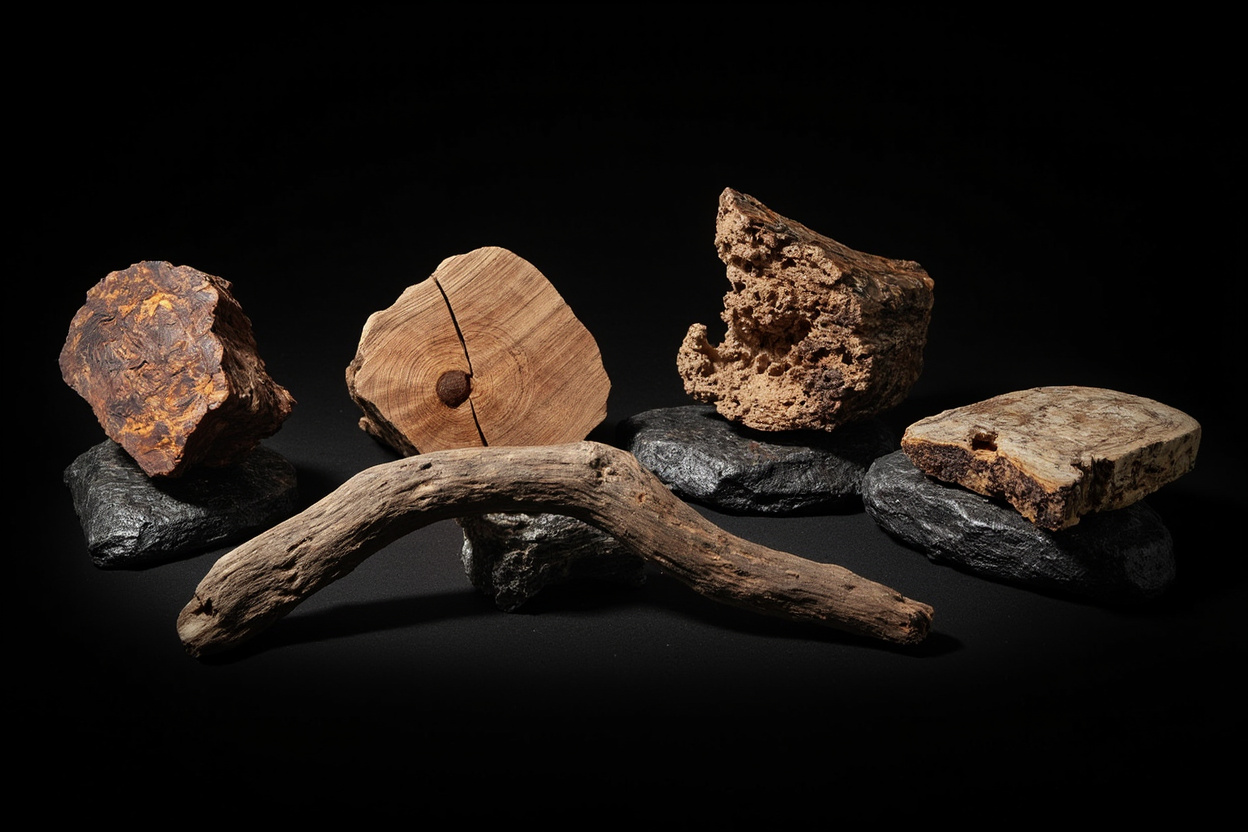
You spend $300 on a piece of “沉香”. Back home, you look closer. Something feels wrong. The weight. The smell. You can’t quite place it—but you suspect you got played.
You’re not alone. People have been getting played on agarwood for a thousand years. Which is why, around 1020 AD, a Chinese bureaucrat named Ding Wei sat down and wrote the first systematic guide to grading the stuff. It changed everything.
The Man Who Knew Agarwood
Ding Wei was no ordinary official. He passed the imperial examinations in 992 AD, rose to become Chancellor of China, and was known—as they said back then—for having one of the sharpest minds in the empire. Then he got caught up in court politics, was stripped of his titles, and exiled to Hainan.
Hainan. The place where agarwood comes from. Sometimes life hands you a lemons-to-lemonade situation.
While exiled in what was then considered the edge of the known world, Ding Wei had access to something precious: the actual production areas. He watched the harvest. He talked to the collectors. He learned what separated the real from the fake, the good from the worthless. And he wrote it all down in a text called Tian Xiang Zhuan — “Treatise on Heavenly Fragrance.”
This single text became the foundation for how Chinese speakers thought about agarwood for the next thousand years.
His Four Categories: The Foundation of Everything
Ding Wei divided all agarwood into four categories. Here’s what he wrote:
“沉香其品有四:曰熟结,乃膏脉凝结自朽出者;曰生结,乃刀斧伐皮,膏脉结者;曰脱落,乃因木朽而结者;曰虫漏,乃因虫伤而结者。”
Translation: Agarwood comes in four types: ripe结 (mature结), green结 (cut 结), shed结 (naturally shed), and wormhole (insect damage).
1. 熟结 (Shu Jie) — Ripe/Perfected Incense
This is what happens when a tree dies naturally—no human intervention, no insects, no斧砍. The tree falls, decays slowly in the forest floor, and over decades, the resin gradually accumulates in the heartwood. Then: you find it.
Ding Wei called this the best. And modern science agrees—the slowest formation creates the most complex aromatic compounds. When you see “aged” or “wild” agarwood, this is usually what you’re looking for.
2. 生结 (Sheng Jie) — Living Incense
This is where humans get involved. You cut the tree—斧砍, axe wounds, machete cuts. The tree bleeds resin to defend itself. You come back years later and harvest the wound site.
This is the most common type on the market today. It’s real agarwood. But it hasn’t had the decades to develop the complexity of熟结. Usually cheaper. Often more uniform in quality because the human deliberately targets high-resin areas.
3. 脱落 (Tuo Luo) — Shed Incense
A branch dies naturally and falls off the tree. The part that was connected to the living tree continues to resinify. Ding Wei considered this decent quality—better than生结 because it’s had some time on the forest floor, but not as complex as熟结.
You’ll see this described in modern markets as “fallen branch” grade.
4. 虫漏 (Chong Lou) — Wormhole Incense
Insects—termites, beetles—attack the tree. The tree’s defense response creates resin. Ding Wei noted this creates distinctive patterns: the resin follows the insect tunnels. In modern terms, this is often called “insect-resist” or “bug-bitten” agarwood.
The quality varies wildly. Some虫漏 is stunning—the insect damage creates concentrated resin pockets. Some is mediocre. It depends on the insect, the tree, and how long it sat.
What He Said About Grades
Ding Wei also established something most people get wrong today: the relationship between “沉水” (sinking in water) and “沉香” (agarwood).
“沉水香,曰沉香,曰栈香,曰黄熟香,曰速香,曰鸡骨香,曰青桂,曰马蹄,曰乌角,名称虽异,而性实同。今人相承以沉水为沉香,失之远矣。”
Translation: “Sinking-water incense includes沉香,栈香,黄熟香,速香,鸡骨香,青桂,马蹄,乌角—different names, same nature. People today equate沉水 with沉香, and they’re very wrong.”
In modern terms: not all沉香 sinks. Some is less dense. The ones that sink are premium—the high-resin content makes them heavier than water. But calling only the sinking ones “real”沉香? Ding Wei said that’s nonsense.
His Rankings of Origin
Ding Wei was clear about where the best came from:
“海南沈香,冠绝天下,一片万钱。占城所出,不如真腊,真腊不如海南黎母山黎人。”
He ranked the origins: Hainan first, then Champa (southern Vietnam), then Chenla (Cambodia), with special mention of the Li people of Hainan’s Limu Mountain as producing the absolute best.
A thousand years later, Hainan agarwood is still considered the benchmark. Vietnamese and Indonesian markets still use this hierarchy, even if they won’t admit it.
How to Use This Today
When you’re buying agarwood, here’s what Ding Wei’s framework tells you:
- Ask what category —熟结 (wild/natural) costs more than生结 (human-assisted). If someone’s vague about this, be suspicious.
- Ask about origin — Hainan?越南?印尼? Different price points, different flavor profiles.
- Forget the沉水 test — It’s a useful quality indicator but not a requirement. Some beautiful non-sinking agarwood exists.
- Smell for complexity — Ding Wei looked for “清淑” (clean and mellow) and “幽远” (profound and far-reaching). That’s still the standard. One-dimensional smells suggest young material.
Here’s a practical test: buy from someone who can tell you—specifically—which of the four categories they’re selling. If they can’t answer that question clearly, walk away. You’ve just avoided 80% of the scams out there.
Ding Wei figured this out a thousand years ago, sitting in exile on an island. We’ve had a thousand years to make this knowledge complicated again. Time to go back to the source.