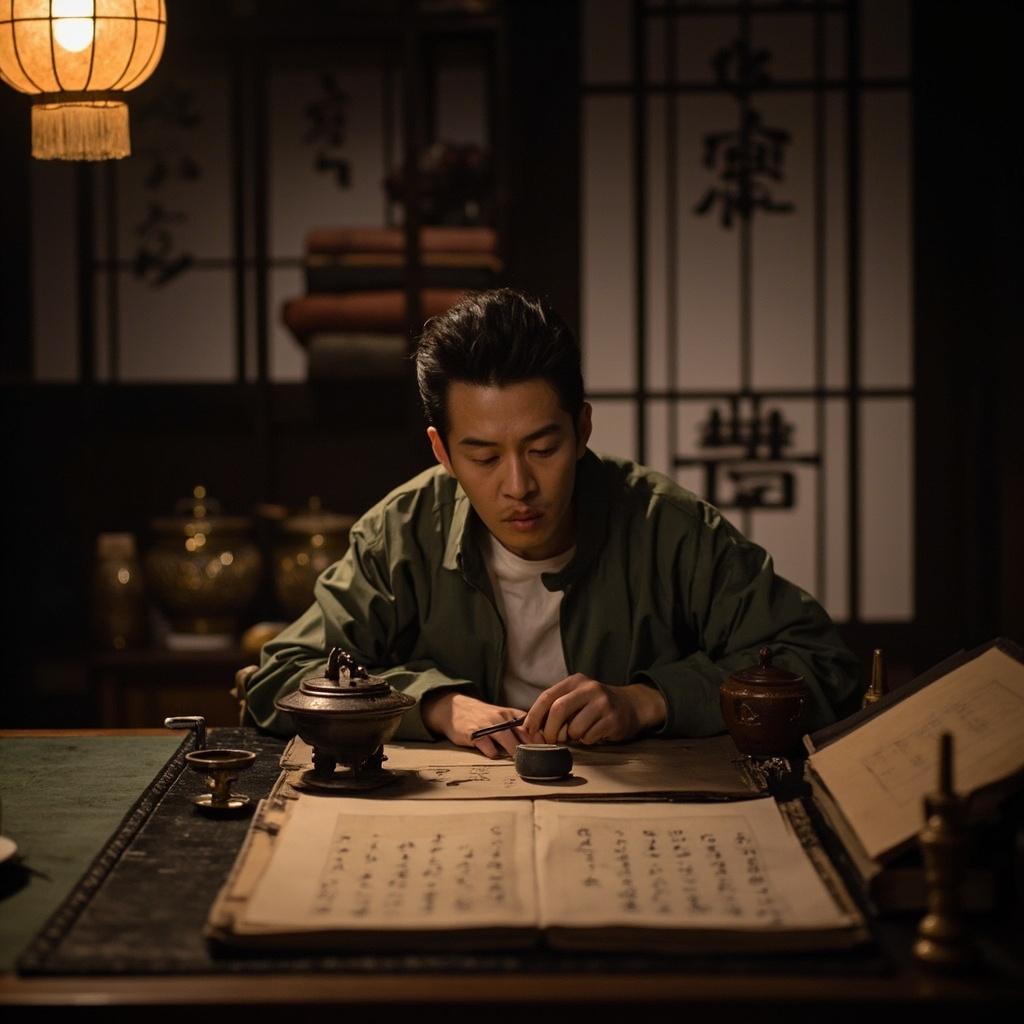
The Complete Guide to Hexiang (合香): The Ancient Art of Blended Incense
Here is what almost every English-language article about Chinese incense gets wrong: they treat it as a category of products, not as a discipline. “Chinese incense” becomes a catch-all phrase for anything burned in Asia, lumped together with Japanese devotional sticks and Indian masala cones under a single undifferentiated heading.
This misreading obscures the most interesting thing about Chinese incense: that the Chinese themselves don’t really use single-material scents. Their tradition is built on the explicit, deliberate practice of Hexiang (合香) — literally “combined fragrance” or “harmonized incense” — the art of blending multiple aromatic materials into formulas that are greater than the sum of their parts. In China, burning a single ingredient — straight sandalwood, straight agarwood — is considered crude. The sophistication lies in the formula.
This is not a casual preference. Hexiang is a philosophical practice rooted in the same cosmology that underpins Traditional Chinese Medicine: the idea that complex disorders require complex interventions, that individual herbs work best in combination, and that fragrance — like medicine — must be precisely calibrated to the person, the season, and the intention. A Hexiang master is not merely someone with a good nose. They are a formulator, a reader of constitutions, a keeper of classical knowledge. And for most of the past two thousand years, this was a court art — the exclusive domain of emperors, their physicians, and their alchemists.
What Most English Sources Get Wrong About Hexiang
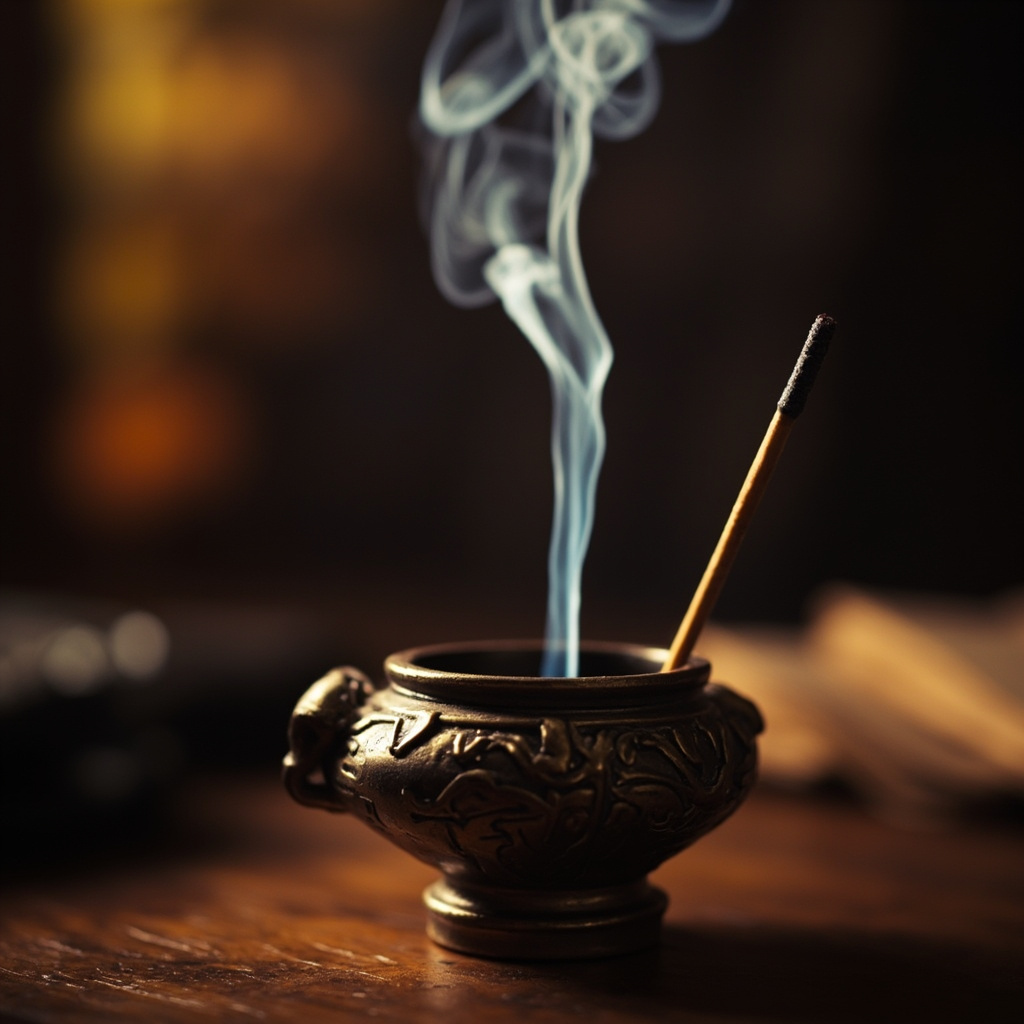
The standard English description of Chinese incense calls it “natural” or “herbal” — implying that Indian incense is somehow unnatural. This is wrong in every relevant dimension. Indian incense, particularly masala sticks, is made from natural materials: spices, resins, woods, flowers. What distinguishes Chinese Hexiang is not the materials but the theory: the idea that incense must be formulated according to systematic principles, calibrated to physiological and cosmological principles, and assembled according to a precise, documented formula.
The word hexiang appears in Chinese texts from at least the Han dynasty (206 BCE – 220 CE). In the Zhou Li (《周礼》), the Zhou dynasty ritual text, the office of xiangren (香人) — the incense officer — is listed among the court appointments, responsible for preparing aromatic materials for ritual use. By the Han, the theory of Xiangxing (香性) — the properties and interactions of aromatic substances — had been systematized. The foundational insight: each aromatic material has not just a scent, but a thermal property (warm or cool), a taste (sweet, bitter, pungent, etc.), and an associated meridian or organ system. Blending means balancing these properties, not just combining scents.
The Three-Layer Structure: 君臣佐
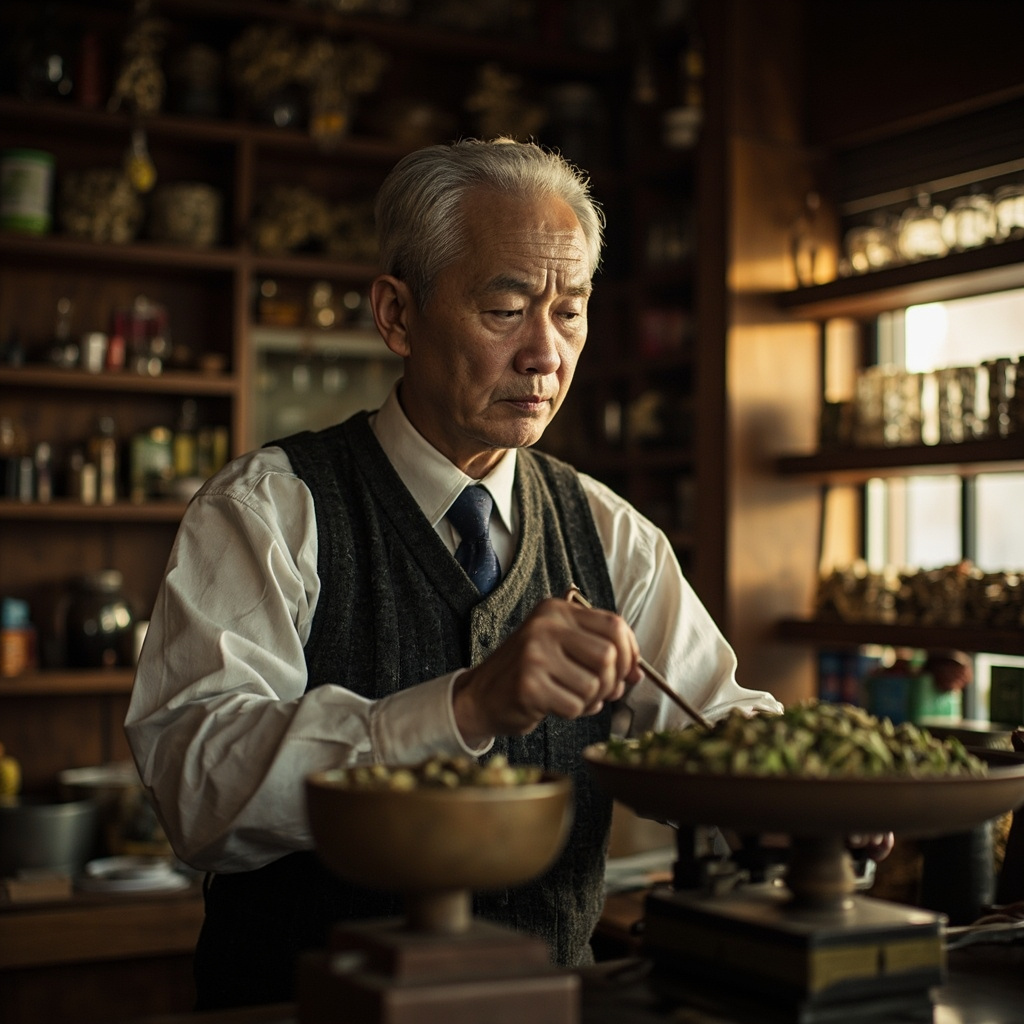
The organizing principle of every Hexiang formula is the Three-Role System (君臣佐): the ruler (君, jun), the minister (臣, chen), and the assistant (佐, zuo). This framework, borrowed from classical Chinese medicine where it organizes herbal formulas, structures how each ingredient in an incense blend functions.
The Ruler (君)
The ruler is the primary material — the fragrance you can most clearly identify in the blend. It sets the character and defines the category of the incense. In most classical formulas, the ruler constitutes roughly 50–60% of the blend. It is the reason the incense exists.
Common rulers: premium agarwood (沉香), water-soluble calculus (麝香), high-grade sandalwood (檀香), or in less expensive formulas, combinations of these in lower grades.
The Minister (臣)
The minister supports and enhances the ruler, adding body, depth, and complexity. Where the ruler defines, the minister enriches. A skilled minister does not merely replicate the ruler’s fragrance — it creates contrast and resonance that makes the ruler more interesting.
Common ministers: benzoin (安息香), dragon’s blood resin (血竭), frankincense (乳香), cistus resin (赖百当), or various woody materials that complement the ruler’s character.
The Assistant (佐)
The assistant modifies, balances, and refines — correcting imbalances, adding transitional notes, and providing the finishing character that makes the blend complete. This is often the most technically demanding role: the assistant must understand the overall intent of the formula and adjust accordingly.
Common assistants: osmanthus flowers (桂花) for sweetness, borneol (冰片) for brightness and clarity, aecks (沉香) in small amounts for depth, or various aromatic herbs that add specific effects (calming, clarifying, warming).
The Seven Emotions System (七情)
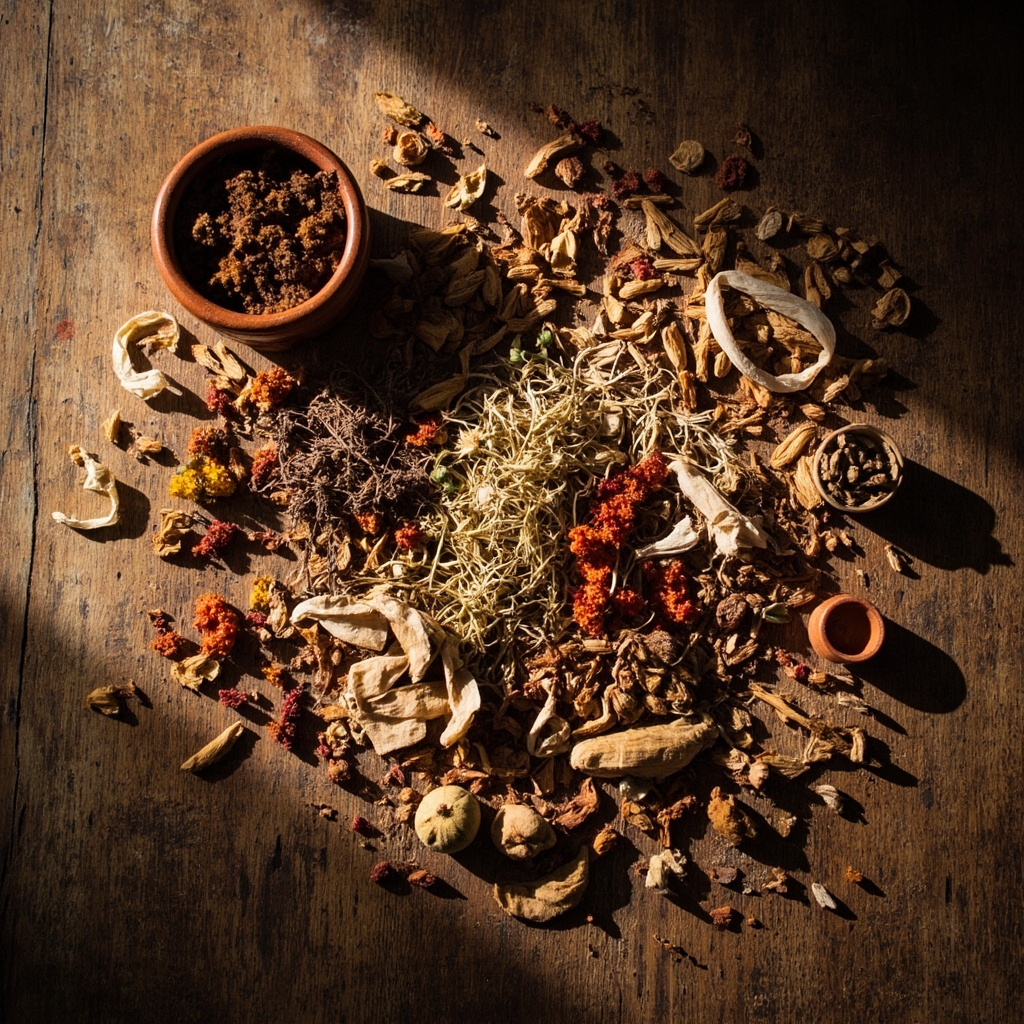
Beyond the Three Roles, Chinese incense theory draws on the Seven Emotions (七情) framework from TCM: joy (喜), anger (怒), worry (忧), grief (悲), fear (恐), fright (惊), and excessive thinking (思). Each emotion is associated with an organ system, a flavour, and a corresponding type of fragrance.
The classical insight: different emotional states call for different incenses. A person suffering from grief needs a different fragrance than one consumed by worry — not merely a different scent, but a fragrance with different thermal properties, different herbal actions, different meridian targets. This is what makes Hexiang a therapeutic discipline, not just an aesthetic one.
Ancient formulas were classified by their emotional indication. The Xi Shen Xiang (喜神香, “Joyful Spirit Incense”) was designed to lift the mood, using uplifting floral and citrus notes. The An Shen Xiang (安神香, “Calming Spirit Incense”) used heavy, grounding materials to quiet the shen — the spirit housed in the heart that agitation disturbs. The Tong Qiao Xiang (通窍香, “Orifice-Opening Incense”) used sharp, penetrating materials to clear mental obstruction.
The principle underlying all of this: fragrance is not merely pleasant. It acts on the body, the emotions, and the mind through the olfactory system and its direct connection to the limbic system. The right fragrance, in the right formula, for the right person, at the right time — this is what Hexiang aims to achieve.
The Classical Formulas: What History Actually Records
The most documented period of Hexiang development was the Song dynasty (960–1279 CE), particularly during the reign of Emperor Huizong (1100–1126), who was both a skilled formulator and a documented patron of the art. Huizong’s Xiang Fan (香方, “Incense Formula”) — a collection of his personal blends — is one of the few surviving classical Chinese incense manuscripts, listing seventeen formulas, each with named ingredients, precise ratios, and intended effects.
Among the most famous are:
1. Huo Xiang Zheng Qi San (藿香正气散) — “Fragrant Correct Qi Powder”
Originally a medicinal formula, this blend of patchouli (藿香), ageratum (佩兰), Magnolia officinalis (厚朴), and other herbs became a popular incense during the Ming and Qing dynasties. Its intended effect: to “transform dampness and harmonize the centre” — appropriate for the humid southern Chinese climate and for people of damp constitution.
2. Qing Xin Jing (清心经) — “Clear Heart Classic”
A meditation incense using calamus (石菖蒲), sandalwood (檀香), and dragon’s blood (血竭). The formula is designed to “clear the heart and calm the spirit” — to quiet the mental chatter that prevents deep meditative absorption. Calamus is the key active material: its sharp, clean fragrance is classified in TCM as “opening the orifices,” and it is specifically indicated for mental confusion and scattered attention.
3. Xun Yun Xiang (熏晕香) — “Scented Cloud Incense”
A sophisticated blend from the Ming dynasty using twenty-three ingredients, including ambergris (龙涎香), musk (麝香), and various resins and woods. Intended for use during scholarly work: the formula was designed to sharpen concentration and memory, using the warming, yang-tonifying properties of the animal materials to counteract the sedative effects of prolonged sedentary study.
How to Blend Your First Hexiang Formula: A Practical Guide
Before you blend, understand the constraint: Hexiang is not mixing fragrance oils. The materials must be compatible in their thermal properties and meridian actions, not just their scents. A warming material and a cooling material in the wrong ratio will cancel each other out. The beginner’s path is to start with harmonized pairs — two materials that share thermal properties and complementary scents — before attempting complex formulas.
First Formula: Simple Sandalwood-Benzoin Blend
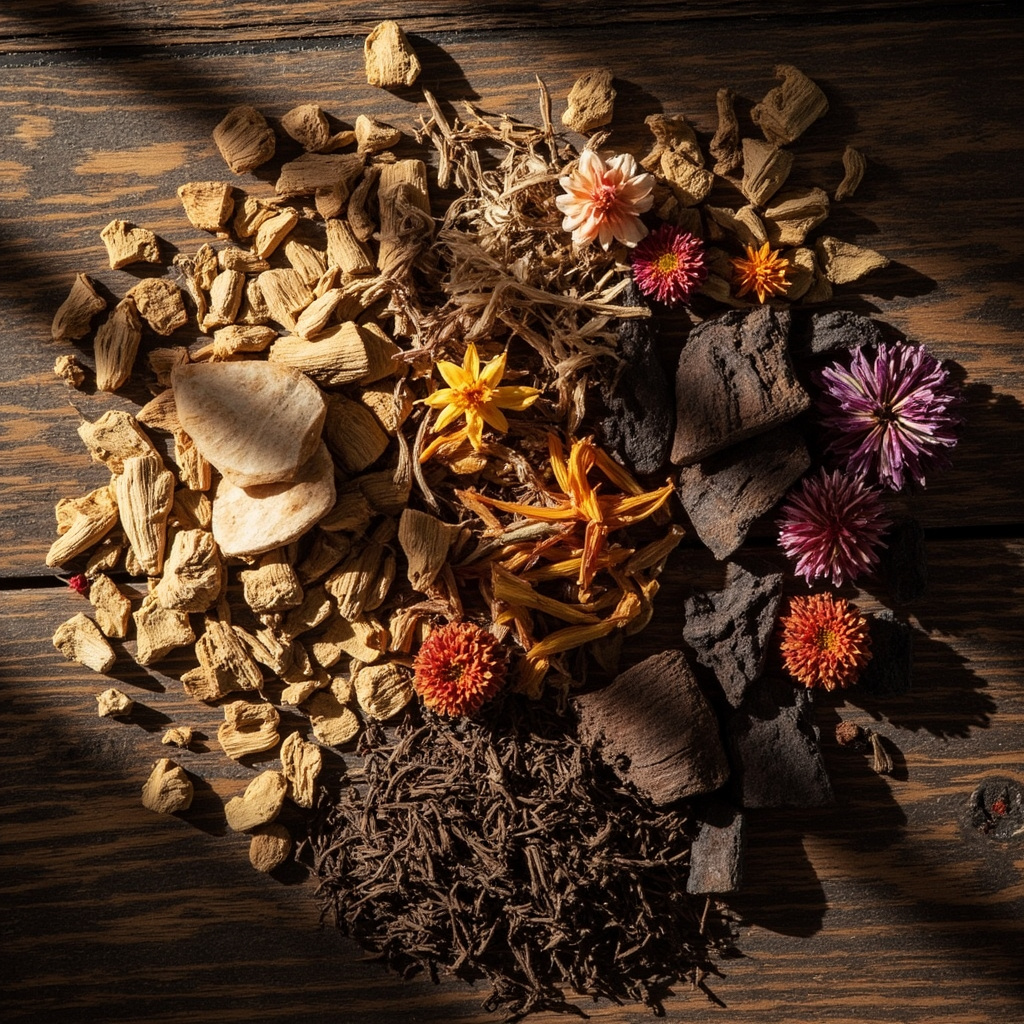
This formula uses two materials that are both warm, both sweet, and both deeply compatible. The ratio is 70% sandalwood (ruler) to 30% benzoin (minister). No assistant is needed at this level.
- 7g sandalwood powder (ruler)
- 3g benzoin resin powder (minister)
- 1g makko powder (binding agent)
- Water to bind
Blend the dry ingredients thoroughly, add makko, then add water drop by drop until the mixture holds together. Roll into thin sticks or small cones. Dry for 48–72 hours. The result should smell primarily of sandalwood — warm, creamy, slightly sweet — with the benzoin adding depth and body in the background.
Second Formula: Adding an Assistant — Sandalwood, Benzoin, and Osmanthus
This formula introduces the Three-Role structure properly: sandalwood as ruler, benzoin as minister, osmanthus as assistant. The osmanthus adds a floral sweetness that softens the blend and makes it more approachable.
- 6g sandalwood powder (ruler)
- 2g benzoin resin powder (minister)
- 1g dried osmanthus flowers (assistant)
- 1g makko powder
- Water to bind
Grind the osmanthus flowers to a coarse powder before mixing. The finer the powder, the more the floral note integrates into the blend. This formula can be burned as sticks or as loose powder on charcoal.
The Five Elements of Incense (五行香)
The most sophisticated application of Hexiang theory draws on the Five Elements (五行): wood, fire, earth, metal, and water. Each element is associated with specific organ systems, seasons, emotions, and — crucially for the incense formulator — fragrance profiles.
- Wood (木) — Sour flavour, associated with the liver and spring. Materials: acerbic woods, green herbs. Effect: dispersing, moving, asserting.
- Fire (火) — Bitter flavour, associated with the heart and summer. Materials: warming resins, animal products. Effect: heating, activating, yang-tonifying.
- Earth (土) — Sweet flavour, associated with the spleen and late summer. Materials: sweet woods, honey, benzoin. Effect: harmonizing, stabilizing, nourishing.
- Metal (金) — Pungent flavour, associated with the lung and autumn. Materials: sharp herbs, white woods, borneol. Effect: dispersing, clarifying, descending.
- Water (水) — Salty flavour, associated with the kidney and winter. Materials: deep, dark resins, salt-preserved materials. Effect: grounding, cooling, storing.
A balanced formula ideally incorporates all five elements, though in practice most formulas emphasise two or three. Seasonal formulas are the most common application of Five Element theory: spring blends emphasises wood materials, summer blends fire, and so on.
Why Hexiang Is Different From What You’re Burning Now
If you’ve been burning mass-produced incense — whether Indian masala sticks, Japanese devotional sticks, or Chinese-brand temple sticks — you have not experienced Hexiang. The difference is not subtle.
Mass-produced incense is a delivery mechanism for fragrance: a carrier (usually a bamboo stick) coated with a paste of fragrance compounds, synthetic or semi-synthetic, designed to smell good at the lowest possible cost. The fragrance is flat, consistent, and ephemeral — there for the moment of burning, gone within minutes.
Hexiang is different in every relevant dimension. The materials — real sandalwood, real agarwood, real resins and herbs — have thermal properties, meridian actions, and emotional effects that synthetic fragrance compounds cannot replicate. The fragrance evolves: a properly made Hexiang stick will smell different at the beginning (top notes), middle (body), and end (dry-down) as different aromatic compounds vaporize at different temperatures. The effect on the body and mind is calibrated by the formula. And the fragrance, properly stored, improves with age — like wine, the resin content oxidises and deepens over months and years.
This is why the Chinese Emperor’s incense room was one of the most carefully guarded chambers in the palace — and why the formulas themselves were sometimes coded, shared only within families or with the closest confidants. Hexiang was not just a pleasure. It was a technology of self-cultivation.
Frequently Asked Questions
Is Hexiang the same as blending incense?
Not exactly. Blending is a broader term — you can blend two fragrance oils in a bottle and call it blending. Hexiang specifically refers to the Chinese tradition of formulating incense according to systematic principles: the Three Roles (ruler-minister-assistant), the Seven Emotions, Five Elements, or the thermal properties framework. The materials are chosen for their therapeutic actions as well as their aromatic properties, and the ratios are often documented from classical sources.
Can I practice Hexiang without expensive materials?
Absolutely. The classical tradition distinguishes between贵香 (expensive, precious incense, using animal materials and premium woods) and simply香 (ordinary incense, using common herbs, woods, and resins). The principles are the same at every price point. A formula of sandalwood, benzoin, and osmanthus — all readily available and affordable — is a legitimate Hexiang formula, even if it shares no ingredients with an imperial court blend.
Do I need to follow classical formulas exactly?
No — classical formulas are guides, not sacred texts. They establish ratios and material combinations that are known to work. But Hexiang is ultimately a practice: you learn by making formulas, burning them, adjusting, and trying again. Start with classical ratios as a reference point, then modify based on your own responses. The fact that Emperor Huizong’s personal formulas were slightly different from his predecessor’s is evidence that the great practitioners themselves treated formulas as living documents.
How do I know if my Hexiang blend is balanced?
The ruler should be identifiable within the first 30 seconds of burning — that is the character of the incense. The minister should be detectable in the next 2–5 minutes, adding depth and complexity. If you cannot identify the ruler at all, the formula is out of balance. If the minister is absent, the blend will feel thin and one-dimensional. If the assistant is working, the final minutes of the burn should feel complete — not ending abruptly, but tapering naturally to a smooth finish.