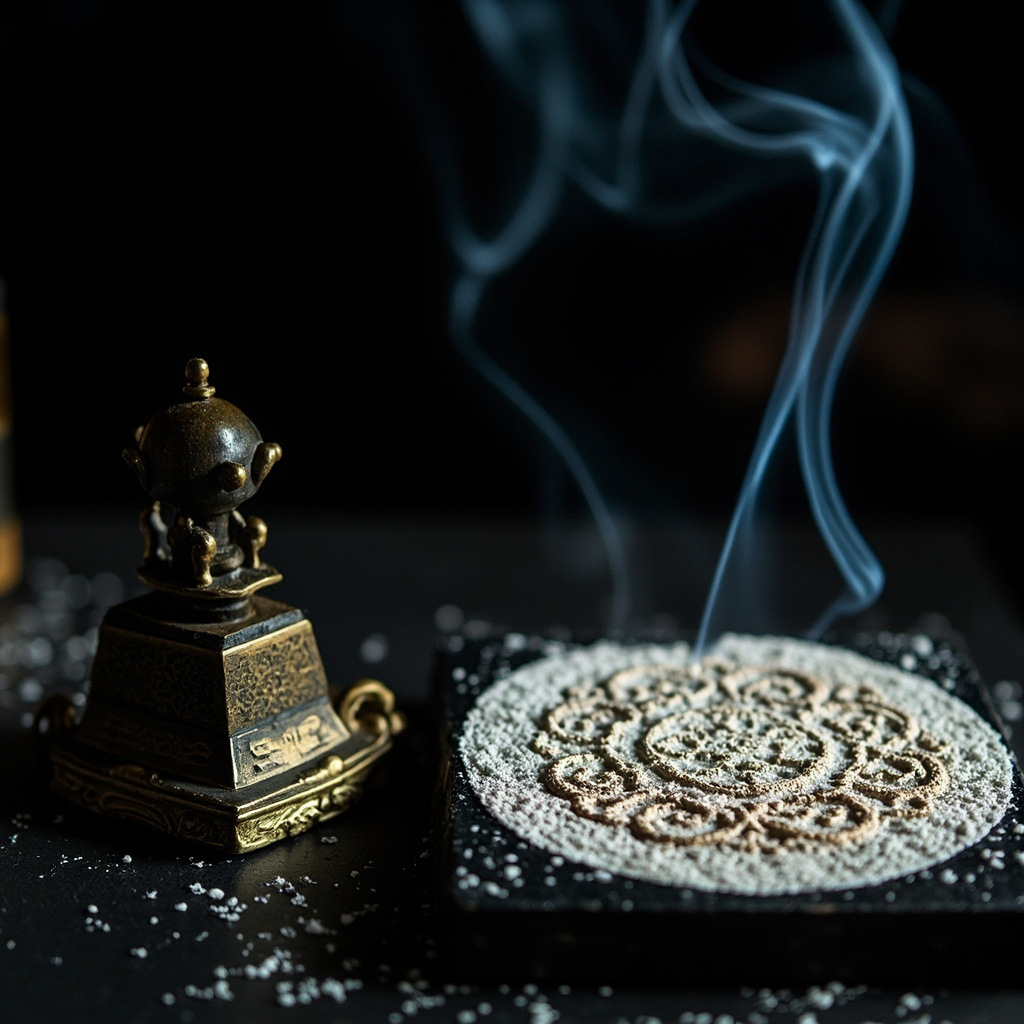
In Buddhist practice, incense is not optional. It is not decoration. It is not ambiance. It is a direct path to the five wisdom fields — and burning the wrong kind, or burning it incorrectly, is not just ineffective. It is considered spiritually counterproductive.
That is a different starting point from most incense traditions. In secular xiangdao, you burn what smells good. In Buddhist practice, you burn what serves the dharma. The fragrance is secondary to the intention. The ritual is secondary to the realization.
Here is what Buddhist incense practice actually means.
The Five Parts Dharma Body Incense (五分法身香)
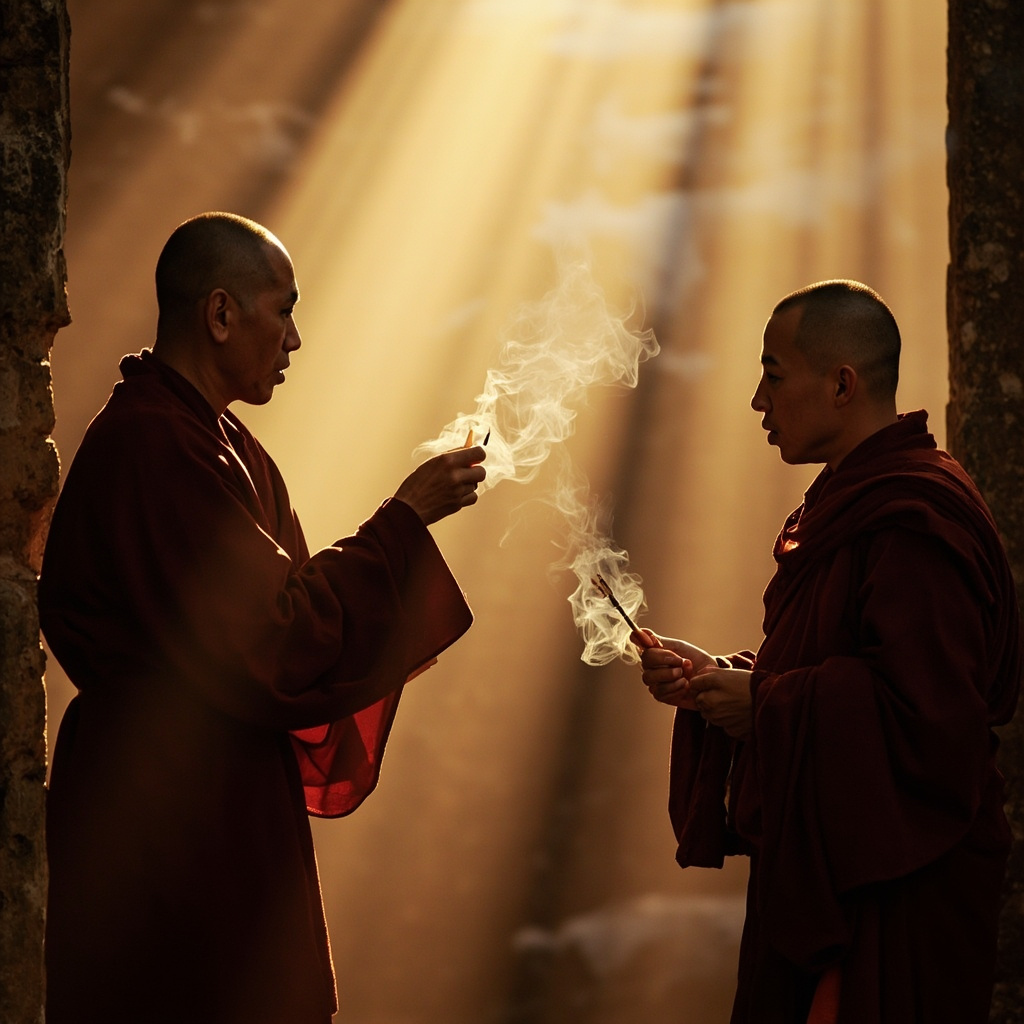
Before anything else, you need to understand what Buddhist incense actually is. This is not about fragrance appreciation. This is about burning as a practice.
Buddhist doctrine identifies five aspects of the awakened body — the 五分法身香, or Five Parts Dharma Body Incense. These are not five types of incense. They are five qualities the practitioner cultivates through the act of burning:
戒香 (Precept Incense) — The fragrance of keeping precepts pure. When you burn with right action behind it, the smoke carries the merit of moral discipline.
定香 (Meditation Incense) — The fragrance of stillness. Burning incense during seated meditation helps steady the mind. The smoke becomes a meditation object — you watch it, you breathe it, you rest in it.
慧香 (Wisdom Incense) — The fragrance of insight. This is not intellectual understanding. It is the wisdom that arises when the mind is clear enough to see things as they are.
解脱香 (Liberation Incense) — The fragrance of letting go. Burning with the intention to release attachment, the smoke carries that intention outward.
解脱知见香 (Liberation Knowledge Incense) — The fragrance of complete awakening. This is not something you do. It is what remains when everything else is burned away.
When a Buddhist approaches the incense burner, these are what they are offering — not wood and resin, but qualities of mind.
The Four Types of Buddhist Incense
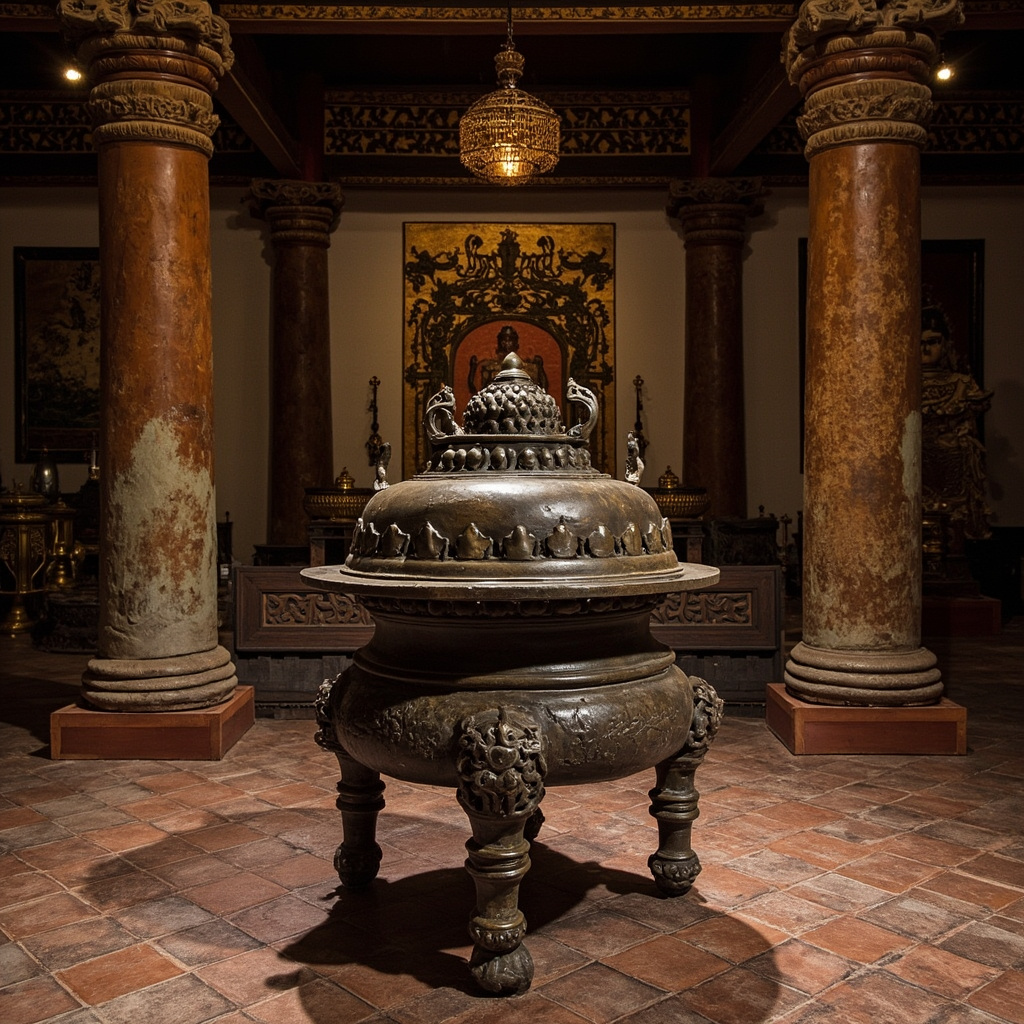
According to the「佛家香学」, Buddhist incense is divided into four types — each with a specific purpose and method:
涂香 (Anointing Incense) — Powder mixed with water or oil, applied to the body or to sacred objects. Used during initiation ceremonies (灌顶) and for daily offerings. The act of application is the practice — you apply mindfully, you do not simply smear.
烧香 (Burning Incense) — This is what most people think of: sticks, cones, and powders burned in braziers. But in Buddhist context, burning incense always carries intention. Burning without intention is just making smoke. The「佛家香学」distinguishes burning for offerings (供佛) from burning for meditation (禅修).
末香 (Powdered Incense) — Fine powder scattered on Buddhist statues, stupas, or mandalas. Used in temple construction and consecration. The powder burns slowly, releasing fragrance over extended periods during ceremonies. Tibetian Buddhist practice uses powdered incense extensively in sand mandala ceremonies.
浴香 (Bathing Incense) — Water infused with aromatic herbs, used to bathe Buddhist statues and sacred objects. This practice predates Buddhism in India and was adopted because of the symbolic meaning — cleansing the body to prepare the mind for practice.
The Offering Ritual: More Than Lighting a Stick
When you see monks or devotees offer incense at a Buddhist temple, the sequence of gestures is not random. The「佛家香学」records the proper offering procedure:
First: Clean hands — Physical purification before spiritual practice. You do not approach sacred objects with dirty hands.
Second: Select appropriate incense — Not all incense is appropriate for Buddhist offering. The material should be natural, without chemical additives. The fragrance should be subtle, not overwhelming — strong perfumes compete with the quietness needed for practice.
Third: Light with mindfulness — Do not rush the lighting. Hold the incense tip to the flame, breathe, notice the moment of ignition. This is the beginning of the practice.
Fourth: Hold at chest level — With both hands, hold the burning incense at the level of your heart. At this moment, you visualize — think of the five qualities, think of the Buddha, think of what you are offering.
Fifth: Bow with intention — The bow is not social courtesy. It is the external expression of internal reverence. While bowing, you visualize the smoke carrying your offering to all beings.
Sixth: Place in the censer — The final placement. Do not drop the incense. Place it carefully. The placement is a small death — you release your hold, you let go.
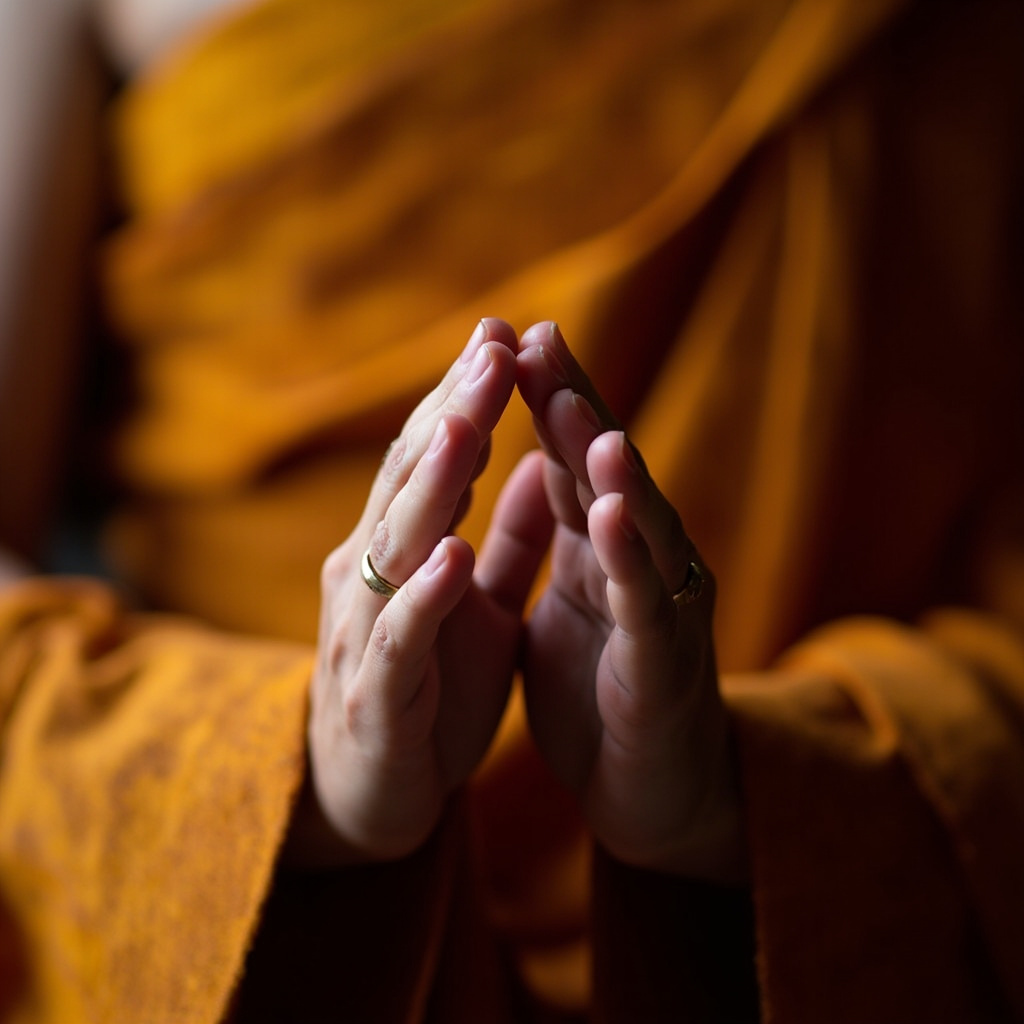
Seventh: Press palms together — The final seal. Palms together, eyes soft, breath quiet. This is the completion of the offering. What happens next is not your concern.
Mudra: The Hand Gestures Matter
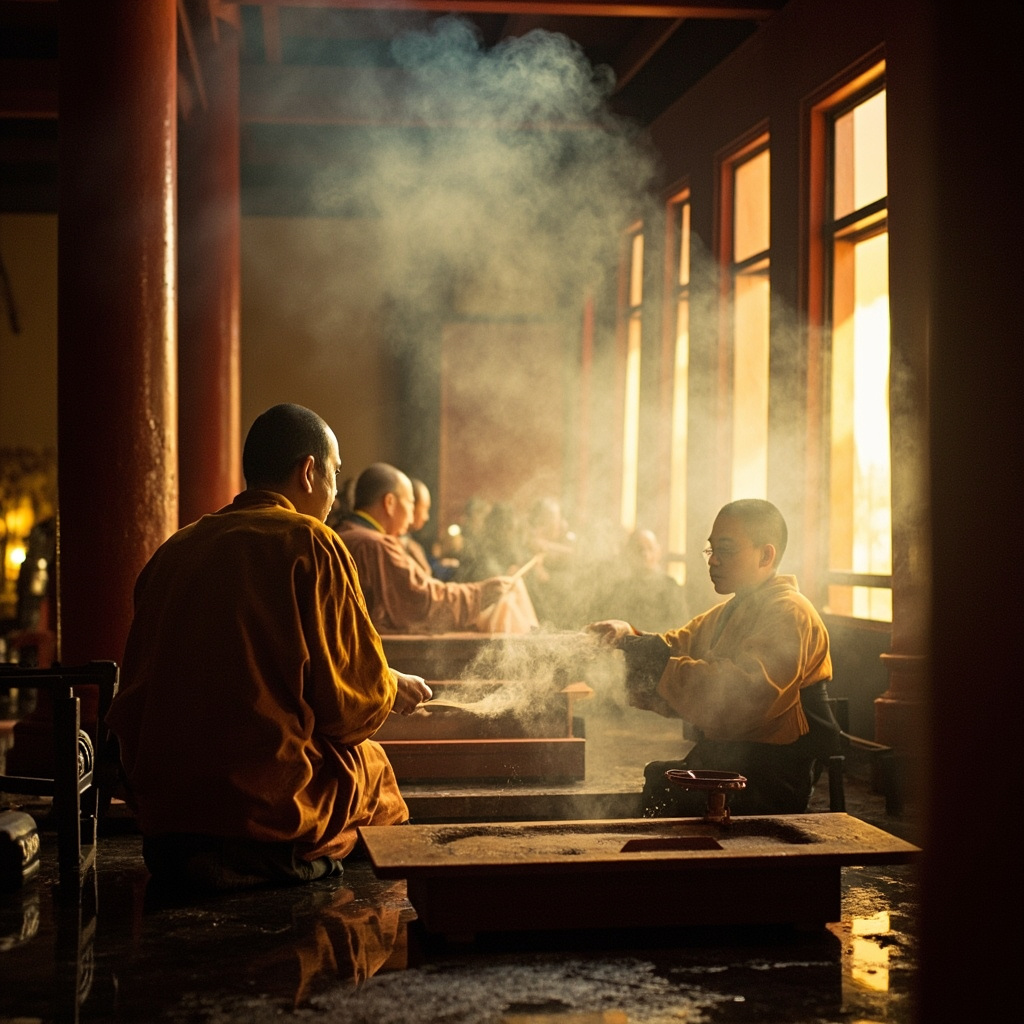
Different Buddhist traditions use different mudra — hand gestures — during incense offering. These are not decorative:
呼应印 (Response Mudra) — Used when responding to the Buddha. Palms together, thumbs against the chest, slight bow.
供养印 (Offering Mudra) — Used when making offerings. Both hands cupped together, incense held between palms, lifted toward the sacred object.
护法印 (Dharma Protection Mudra) — Used when requesting protection. Right hand raised, palm outward, fingers spread.
The choice of mudra shapes the intention. Choosing the wrong gesture is not fatal, but it scatteres the mind. The gesture focuses the intention. In Buddhist practice, scattered intention is the opposite of what you want.
Tibetan Buddhist Incense: A Different Tradition
The「佛家香学」records that Tibetan Buddhist incense traditions developed separately from Han Chinese traditions, with significant differences:
Tibetan incense (藏香) is based on Tibetan medicinal formulas — herbal combinations originally developed for healing. The sixth Panchen Lama contributed specific formulas. Tibetan incense is valued not only for spiritual benefit but for medicinal properties: clearing the mind, calming the nervous system, supporting respiratory health.
Tibetan Buddhist practice uses incense extensively during mandala offerings. The sand mandala — elaborate geometric designs created over days of meticulous work — is swept away after completion. The incense burned during the destruction ceremony symbolizes impermanence. The beautiful thing that took days to make is gone in minutes. That is the teaching.
Why This Matters for Your Practice
You do not need to be Buddhist to learn from Buddhist incense practice. The core teaching is attention:
Burning incense with full attention — knowing what you are burning, knowing why you are burning it, staying present through the entire sequence — is different from burning incense while watching television. The fragrance might be identical. The practice is not.
If you use incense for meditation, adopt one element of Buddhist practice: before you light the incense, pause. Know why you are lighting it. Set the intention. Then light it. Then watch it burn. This simple addition transforms the act from consumption to practice.
Related Articles
- The Complete History of Chinese Incense
- What Is Xiangdao? Understanding the Way of Fragrance
- Core Philosophy: Jing, Jing, Jing
Frequently Asked Questions
What is the Five Parts Dharma Body Incense in Buddhist practice?
The 五分法身香 (Five Parts Dharma Body Incense) refers not to five types of incense but to five spiritual qualities cultivated through burning practice:戒香 (precept purity), 定香 (meditation stillness), 慧香 (wisdom insight), 解脱香 (liberation from attachment), and 解脱知见香 (complete awakening). When Buddhists offer incense, they offer these qualities of mind, not merely aromatic materials.
Is Buddhist incense different from regular incense?
In material terms, Buddhist incense is similar to other natural incenses — wood, resin, herbs. What differs is the intention and the method. Buddhist practice requires natural materials without chemical additives, burning with specific intentions, following the proper offering sequence. Burning incense casually while distracted is not Buddhist practice, even if the incense is identical.
Can non-Buddhists practice Buddhist incense offering?
Yes. The attention practices underlying Buddhist incense offering — mindfulness, intention-setting, full presence during the ritual — are universal. You do not need to adopt Buddhist cosmology to benefit from the discipline of offering incense with full attention. The five qualities framework provides a structure for intention that anyone can use regardless of religious background.