Bo He (薄荷): Complete Guide to Field Mint in Chinese Incense Culture
Bo He (薄荷), commonly known as field mint or Mentha haplocalyx in botanical nomenclature, is one of the most widely recognised aromatic herbs in the world — and one of the oldest used in Chinese incense culture. In China, it carries the folk name “银丹草” (Silver Dan Grass), and its cooling, refreshing scent has been prized since the Western Han dynasty.
Unlike the heavy, resinous woods that dominate classical Chinese incense — agarwood, sandalwood, frankincense — Bo He is a light, volatile herb that delivers an immediate, piercing freshness. Its menthol-rich fragrance acts as an “opener” in blends, sharpening the senses and creating a clean, airy atmosphere. In the hot, humid climate of southern China, Bo He incense was historically prized as much for its cooling physiological effect as for its fragrance.
Historical Background: From the Han Dynasty to the Ming Courts
The earliest Chinese literary reference to Bo He appears in the Canon of the Han Imperial Sacrifices (《甘泉赋》) by the celebrated Western Han scholar Yang Xiong (53 BCE–18 BCE), written around 20 BCE. The passage describes Bo He among a list of aromatic plants gathered for court rituals, establishing its status as a recognised fragrance material over two thousand years ago.
By the Tang (618–907 CE) and Song (960–1279 CE) dynasties, Bo He had moved beyond court use into the broader literate class. The Compendium of Materia Medica (《本草纲目》) by Li Shizhen (1578, published 1596) documented Bo He extensively, listing its properties and prescribing it for “clearing the throat, benefitting the diaphragm, dispersing wind-heat.” Li Shizhen noted that the herb was prepared by steam-distilling the leaves and stems to produce pure menthol crystals — an early form of aromatic extraction.
The most significant expansion of Bo He’s use came during the Ming and Qing dynasties (1368–1912). As aromatic materials became more accessible through expanding trade networks, Bo He migrated from the herbal pharmacy into everyday household incense. Common people began crafting simple Bo He incense cones and sachets to fragrance their homes and repel insects during the summer months.
Botanical Profile: Understanding Authentic Bo He
True Chinese Bo He used in incense comes from Mentha haplocalyx, a species of true mint native to China, distinct from the Western peppermint (Mentha piperita) or spearmint (Mentha spicata) more common in European and American markets.
Physical characteristics:
- Square stems, 30–80 cm tall, with opposite leaves
- Leaves: 3–7 cm, ovate-lanceolate, serrated margins, bright green
- Flowers: Tiny, white-to-lilac, blooming July to October in terminal spikes
- Aroma: Pungent, cool, distinctly mentholated — the signature cooling sensation on skin and mucous membranes
Active compound: The characteristic cooling sensation comes from menthol (薄荷脑, CₕH₀O), comprising 70–90% of the essential oil distilled from Bo He leaves. Menthol triggers the cold-sensitive TRPM8 receptors in human skin, creating the sensation of coolness without actually lowering temperature.
Key distinction: Chinese field mint (Bo He, Mentha haplocalyx) differs from Japanese mintha and Western peppermint. Chinese Bo He tends to be slightly sweeter with less camphoraceous bite, making it preferred for incense use where a refined, non-medicinal character is desired.
Bo He in Chinese Incense: Applications and Blending
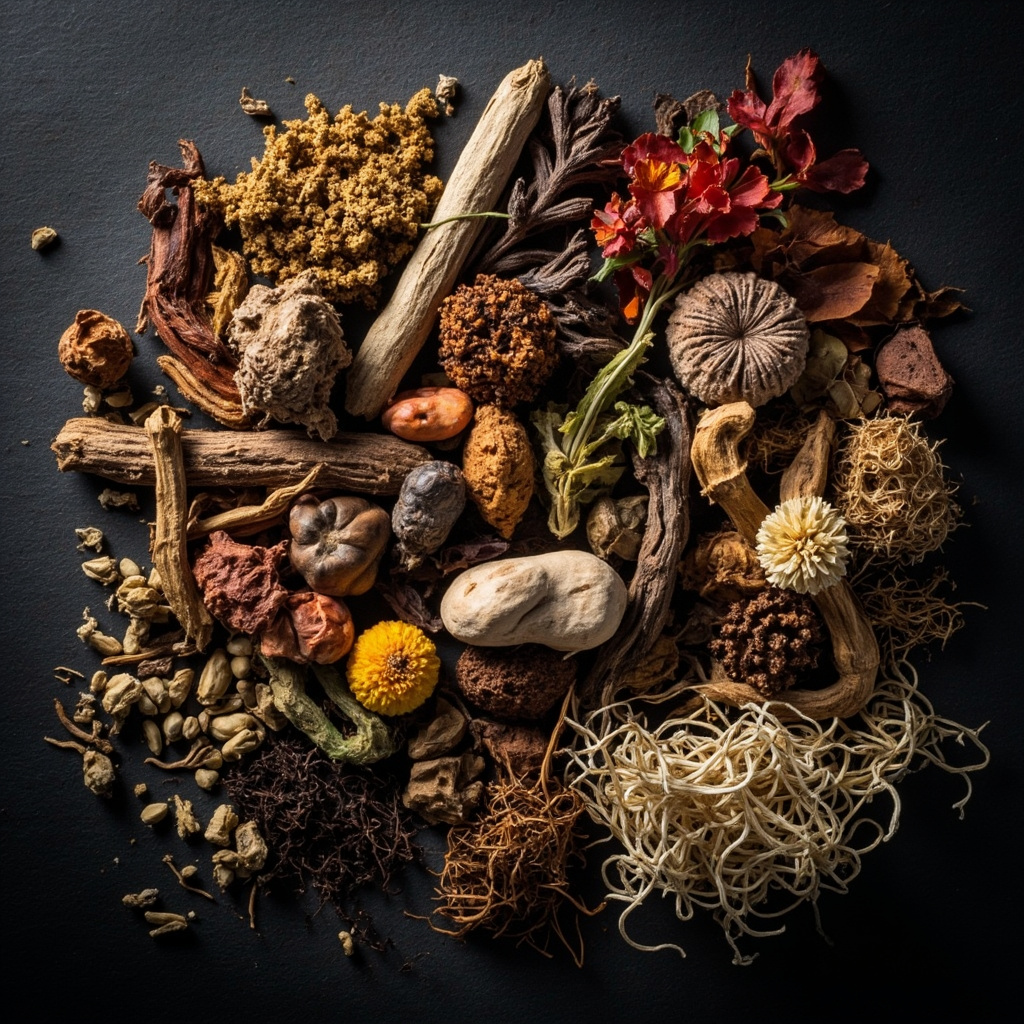
Bo He occupies a specific niche in Chinese hexiang (合香) — it functions as a high note or cooling modifier, rarely used as a standalone incense but essential in certain classical formulations.
Traditional applications:
1. “Cooling” summer incense blends: In TCM-influenced incense theory, Bo He is classified as a “cooling” material (寒凉性). Summer blends designed to counteract heat and humidity incorporate Bo He to create a perceptibly cooler, more refreshing burn. Classical formulas like “Summer Clarity Blend” (清暑香) featured Bo He alongside acorus calamus (石菖蒲) and white sandalwood.
2. Medicinal incense burners: Traditional Chinese medicine incorporated Bo He in inhalation therapies. Burning Bo He near the bedside during fever or respiratory discomfort was documented in Song dynasty medical treatises as a method of delivering aromatic therapeutic compounds through inhalation.
3. Mosquito and insect repellent: The strong menthol content makes Bo He naturally repellent to insects. Historical records from the Ming dynasty describe householders placing Bo He sachets near doorways and windows — a practice still common in rural China today.
4. Blending ratios: In most traditional formulations, Bo He constitutes 5–15% of the total blend by weight. Too much creates an overpowering menthol note that overwhelms the base woods and can irritate the respiratory tract.
5. Indirect heating preferred: Like other delicate herbs, Bo He releases its fragrance best at moderate temperatures (70–90°C). Direct flame on charcoal can vaporise the menthol too rapidly, producing harsh, sharp notes.
Traditional TCM Properties
In Traditional Chinese Medicine, Bo He is classified as pungent and aromatic. Its properties are considered slightly warm (not cold), entering the lung, liver, and gallbladder meridians.
Classical sources record its actions:
- “疏风散热” — disperses wind, releases heat
- “清咽利膈” — clears the throat, benefits the diaphragm
- “疏肝解郁” — courses the liver, resolves depression
- “散风热,利咽,清利头目” — disperses wind-heat, sharpens mental clarity
The Shennong Bencao Jing (《神农本草经》) lists Bo He among the “middle-grade” aromatic herbs, noting its ability to “dispel miasma and noxious vapours from the six channels.”
Modern research has identified the key mechanism: menthol’s action on cold-sensitive receptors creates a paradox — the sensation of coolness on warm skin — which TCM theory interprets as the herb’s ability to “drain fire” from the body.
Cautions: Not recommended during pregnancy or for individuals with delicate qi. Overuse can cause excessive drying. The menthol content may irritate sensitive skin in some individuals — patch test before topical use.
Menthol and the Global Mint Trade
China and Brazil dominate global production of natural menthol and mint oil, each producing 2,000–3,000 tonnes annually. Chinese Bo He cultivation centres include:
- Anhui province — particularly the Bozhou region, China’s largest mint production area
- Jiangsu province
- Sichuan province
Menthol extracted from Bo He is regulated as a food-grade flavouring in China, used in toothpaste, confectionery, beverages, and pharmaceutical preparations. For incense use, whole dried Bo He leaves are preferred over synthetic menthol, as the full herb contains a broader spectrum of aromatic compounds beyond pure menthol.
Frequently Asked Questions
What’s the difference between Bo He and Western peppermint?
Chinese Bo He (Mentha haplocalyx) and Western peppermint (Mentha piperita) both contain menthol, but Bo He typically has a sweeter, less camphoraceous profile. Peppermint is more medicinal and intense; Bo He is considered more refined for incense use.
Can I burn Bo He directly on charcoal?
Not recommended. Use indirect heating at 70–90°C. If you must use charcoal, place only 0.1–0.2g on the outer edge where temperatures are lower, and remove quickly when you detect the menthol volatilising.
Is Bo He safe in enclosed spaces?
Bo He incense in well-ventilated spaces is generally safe. However, individuals with asthma, COPD, or menthol sensitivity should avoid concentrated exposure. The menthol can trigger respiratory responses in susceptible individuals.
How does Bo He compare to Pei Lan (佩兰)?
Both are light, refreshing herbs used in Chinese incense, but they differ significantly. Bo He is volatile, menthol-rich, and delivers a sharp, cooling sensation. Pei Lan is subtler, more floral, and grounded. They are sometimes used together in yin-yang complementary blends — Bo He to open and clear, Pei Lan to ground and nourish.
What blends well with Bo He?
Bo He pairs well with white sandalwood (softens the menthol), agarwood chips (adds depth), osmanthus (sweet floral contrast), and acorus calamus (石菖蒲, amplifies the clearing effect). Avoid pairing with heavy resinous materials like dragon’s blood, which overwhelm the delicate menthol note.
Related Articles