You’ve read about Chinese Xiangdao. Then you stumble onto something called Kodo—the Japanese Way of Incense. They look similar. They share origins. But they’re not the same thing. Understanding the… Read more »
You light a stick. It falls over. The ash scatters. Your table gets a burn mark. This is not an uncommon first experience with incense, and it’s entirely avoidable. The… Read more »
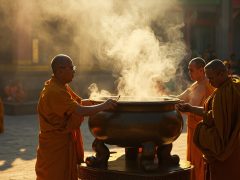
You walk into any Buddhist temple in Asia. The first thing that hits you isn’t the architecture, the statues, or the monks. It’s the smell. Incense has been inseparable from… Read more »
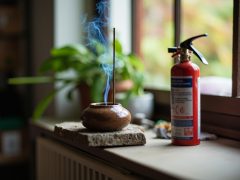
A charcoal starts to glow. You light your stick. Five minutes later you leave the room. The stick falls over unnoticed. Your apartment building has a fire alarm problem. Incense… Read more »
You buy a stick of pure sandalwood. It smells nice. Then you buy a blend that includes sandalwood, benzoin, and a trace of musk. Suddenly the sandalwood doesn’t just smell… Read more »
YouTube tutorials use words you don’t recognize. Vendor descriptions assume you already know everything. This is for everyone who’s confused by terms like “xiangfen” and “xunbao.” Here’s every term that… Read more »
There are hundreds of aromatic materials used in Chinese incense. But only four sit at the top. These are the ones collectors obsession over, the ones that cost serious money,… Read more »
You buy your first pack of incense. You light it. Something goes wrong. Three weeks later you give up and blame incense. Sound familiar? Almost everyone hits these same problems…. Read more »
Two brothers. One formula. A scent that outlived an empire. Su Shi (Su Dongpo) and his younger brother Su Zhe were not just famous poets—they were incense obsessives. While the… Read more »
You walk into a shop—or open a website—and there are 47 types of incense listed. Sandalwood from India, Agarwood from Hainan, something called “Dragon Spit” that costs $200 per stick…. Read more »