
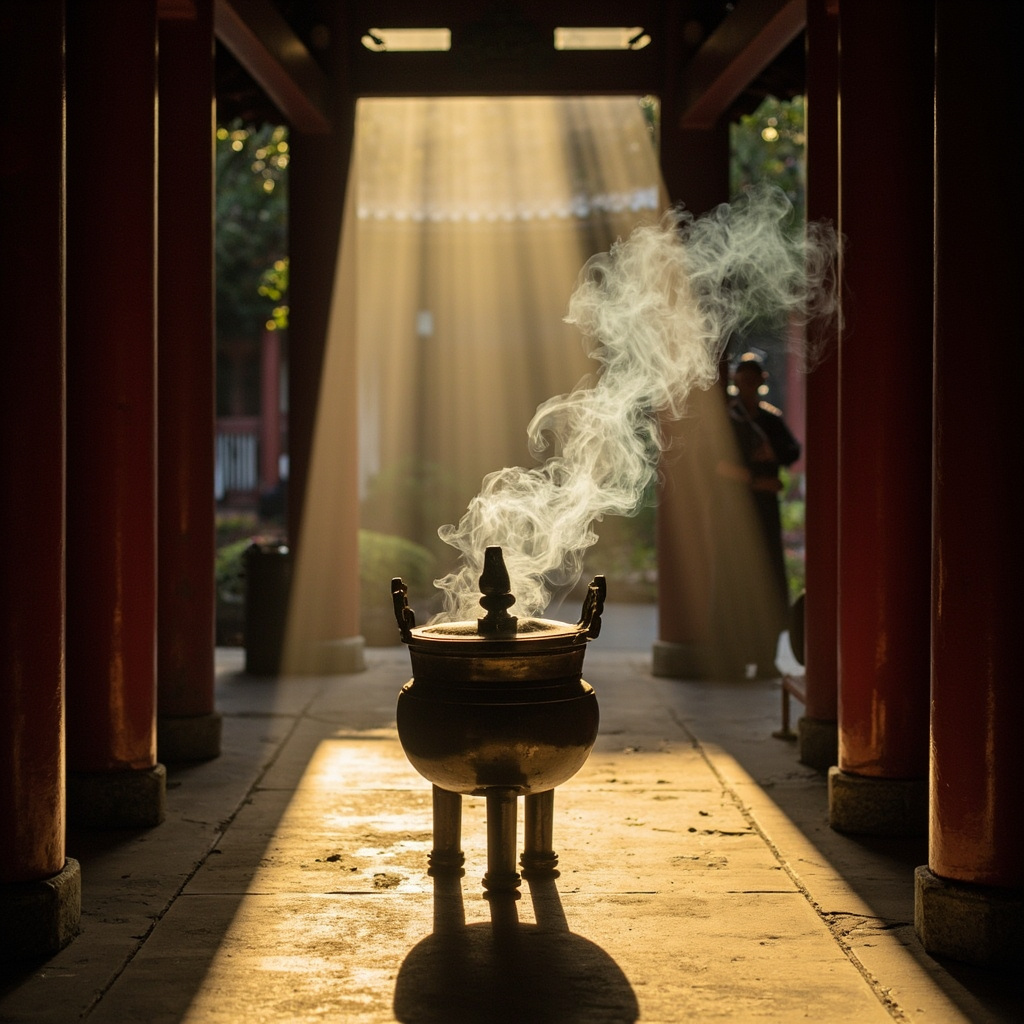
Buddhism arrived in China carrying incense. The odor of burning sandalwood preceded the dharma through丝绸之路 trade routes—merchants and monks moving together, spice and sutra traveling the same paths. By the time Chinese Buddhism developed its distinctive character, incense had become inseparable from practice: the first action upon entering a temple, the constant companion of meditation, the offering that communicated across the boundary between the mundane and the transcendent.
Incense as Offerer
The Buddhist use of incense as offering predates Chinese adaptation. Indian Buddhist texts describe fragrant smoke as food for deities—though Buddhist philosophy rejected the literal feeding of gods, the symbolic logic of offering persisted. Smoke rises toward heaven carrying the devotion of the offerer. This image appears across Buddhist literature: the practitioner who burns incense before a Buddha image sends their prayers upward on fragrant smoke.
The Six Dynasties period (220-589 CE) saw Buddhism establish itself in China through translation projects involving countless monks. Incense accompanied these activities systematically. The Shishuo Xinyu (《世说新语》) records Buddhist monks burning incense during translation sessions, the fragrance creating an atmosphere of concentration and sanctity. This integration of incense into scholarly Buddhist work set a pattern that would persist.
The Temple Incense Routine
Chinese Buddhist temples developed a daily incense routine that structures the practice day. Morning incense opens the meditation period. Evening incense marks the transition from study to rest. Special incense accompanies specific ceremonies: the offering of incense to the Buddha image upon entering, the incense burned during confession rituals, the fragrant smoke accompanying chanting of sutras.
This routine serves practical function beyond symbolism. The fragrance triggers conditioned responses in practitioners—the smell of incense signals the transition to practice mode, separating temple activities from ordinary life. The sensory cuing works whether or not the practitioner consciously notices it.
Incense in Meditation Practice
Chinese Chan (Zen) Buddhism developed distinctive approaches to incense in meditation. The practice of zuowei guanhxiang (坐香观想)—seated meditation observing incense smoke—appears in Chan texts from the Tang Dynasty onward. Practitioners would watch the smoke rise and disperse, using it as object of meditation.
The Platform Sutra of the Sixth Patriarch (《六祖坛经》), the foundational Chan text, makes a characteristic move: rather than condemning sensory practice, it transforms it. The sutra states that the Buddha nature exists in all beings and that incense, properly understood, reveals rather than obscures this nature. The fragrance becomes a vehicle for insight rather than a distraction from it.
Incense and Visual Culture
Buddhist painting and sculpture absorbed incense imagery systematically. The Buddhist paradise scenes painted on temple walls feature incense smoke as atmosphere. The Buddha images themselves are sometimes depicted with fragrant light emanating from their bodies—a visual translation of the incense metaphor into pure radiance. Temple murals from Dunhuang show incense smoke in virtually every scene set in aBuddhist context.
This visual tradition shaped Chinese aesthetics broadly. The Chinese association of fragrance with elevated spiritual states derives substantially from Buddhist visual culture—the beautiful always accompanied by incense smoke in representations of paradise.
Modern Buddhist Incense Practice
Contemporary Chinese Buddhist temples maintain incense practice while facing new pressures. Commercial incense production has distanced many practitioners from craft understanding. The incense burned in most temples today is manufactured industrially, optimized for low cost rather than traditional quality. Some temples have begun reviving traditional incense formulas, seeking to restore the connection between practice and authentic craft.
The environmental impact of mass-produced incense has also prompted reconsideration. Low-quality incense produces heavy smoke containing particulate matter harmful to respiratory health. Several progressive temples have started using electric incense burners or high-quality low-smoke alternatives, balancing traditional practice against health and environmental concerns.
FAQ
Is Buddhist incense different from other Chinese incense?
Buddhist incense refers to usage context rather than a distinct material category. Any quality incense can serve Buddhist practice. However, Buddhist temples historically preferred certain materials—sandalwood for its cooling properties, aloeswood for its depth—and developed formulas specific to practice needs.
What is the proper way to offer incense in a Buddhist temple?
Hold the incense stick with both hands at chest height. Bow three times while holding the incense. Place the stick in the incense burner, taking care that the flame is fully extinguished. Bow once more after placing. Throughout, maintain awareness of your posture and intention rather than performing the gestures mechanically.
Can incense help meditation practice?
Used properly, yes. The fragrance creates conditions conducive to concentration—the room smells different from ordinary space, signaling transition to practice. Additionally, the practice of observing incense smoke as meditation object has a long Chan tradition. Used improperly—as mere background fragrance with distracted attention—incense provides no particular benefit.
Why do Buddhist temples burn so much incense?
Tradition, symbolism, and community expectation. The heavy smoke visible in temple imagery represents the collective devotion of many practitioners over centuries. For individual practitioners, the amount matters less than the quality of attention brought to burning incense. A single stick burned with awareness surpasses a roomful burned distractedly.