
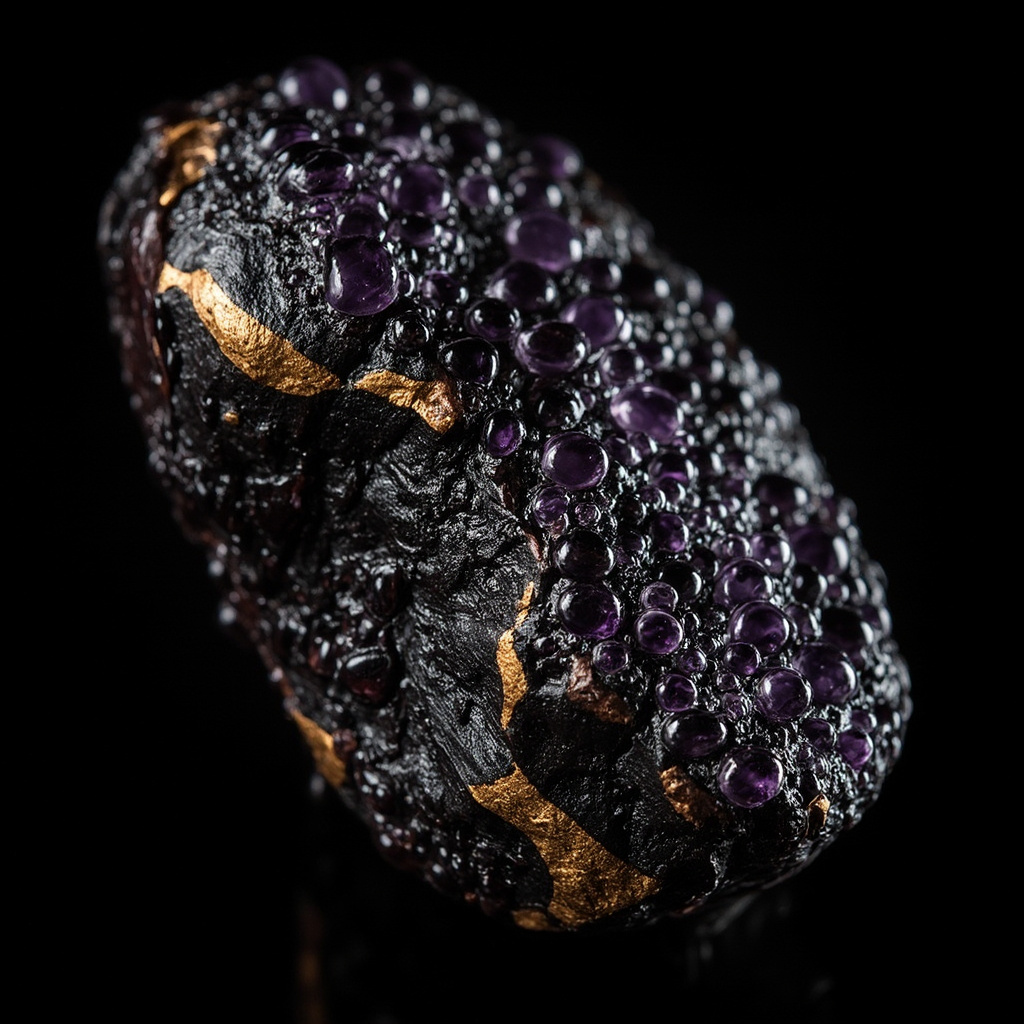
Among all agarwoods, qinan stands alone. The word itself—”strange fragrant”—was coined by Song Dynasty scholars who found existing vocabulary inadequate for this wood. Regular chenxiang smelled like wood that happened to produce fragrance. Qinan smelled like something from another category entirely: spice, sweetness, and depth that shifted over hours of burning. The scarcity is real. The price reflects it. But so does the experience.
What Defines Qinan
Botanically, qinan comes from the same Aquilaria species as ordinary agarwood. The difference lies in the resin composition—qinan produces substantially higher concentrations of the compound 2-phenylethyl acetate, along with unusual sesquiterpenes not found in standard varieties. These compounds produce the characteristic “numbing spice” sensation on the tongue when a chip is placed in the mouth, a test used by dealers for centuries.
The Xiangpu (《香谱》), Chen Ji-Yu’s 12th century treatise, distinguishes qinan from ordinary chenxiang with a single criterion: “奇楠入口,舌尖麻痹,辛甘交织,良久不散。”—When qinan enters the mouth, the tongue numbs. Spice and sweetness interweave, lingering long after. Ordinary agarwood produces no such sensation.
There are three recognized color classifications in the qinan category. Green qinan (绿奇楠) is considered the most refined, producing the most complex fragrance evolution. Purple qinan (紫奇楠) offers deeper sweetness and faster release. Yellow qinan (黄奇楠), while still exceptional, is generally considered more accessible—excellent quality without quite reaching the pinnacle.
The Harvesting Problem
Qinan forms under the same stress conditions as regular agarwood—fungal infection, physical wounding, water deprivation—but the tree must survive longer with the infection present to develop the deeper resin concentration. This means qinan harvesters face a brutal calculation: wait too long and the tree dies, destroying the wood. Cut too early and the resin concentration is insufficient for qinan grade.
Old-growth qinan comes almost exclusively from trees that survived infection for decades, sometimes centuries. The supply is finite and non-renewable on human timescales. When old-growth Vietnamese or Hainan qinan enters a collector’s hands, it represents an ecological miracle that occurred over lifetimes extending past multiple generations.
Plantation qinan exists but remains controversial. Trees stressed under controlled conditions can produce wood that earns the qinan classification by chemical analysis, but many practitioners argue the fragrance depth suffers—the patient centuries-long infection process cannot be replicated artificially. The debate continues without resolution.
The Fragrance Experience
Describing qinan fragrance is notoriously difficult—partly because it evolves so dramatically over time. A single chip heated slowly will pass through multiple fragrance phases: initial sweetness (often compared to brown sugar or molasses), developing spice notes (cinnamon, nutmeg), a deepening floral heart, and finally a woody base that persists for hours.
For meditation practice, qinan creates what Daoist texts call ruxin (入心)—entering the heart. The effect is immediate and grounding, suitable for seated practice or solitary reflection. The complexity gives the mind something to follow, engaging attention without demanding active focus. This passive engagement—fragrance as guide rather than object—is central to the xiangdao approach.
Market and Authentication
Qinan pricing follows no consistent logic. A single gram of verified old-growth Vietnamese green qinan can cost more than an entire kilogram of standard Vietnamese bulk agarwood. Yet buyers in the know consider this reasonable—the fragrance experience per gram vastly exceeds cheaper alternatives.
Authentication begins with the tongue test. Qinan should produce immediate, pronounced numbing. Secondary tests include the fragrance release speed (qinan begins releasing at room temperature, unlike most ordinary chenxiang) and the ash color (white to light grey, crumbling to powder). Any vendor who objects to these authentication methods should be avoided.
Documentation matters. Reputable dealers provide provenance—village or district of harvest, estimated tree age, the specific color classification. Price alone is insufficient; a high price for misidentified wood happens regularly enough that the qinan market has earned its skepticism.
Storage and Care
Qinan responds to the same storage principles as fine wine: consistent temperature, darkness, minimal air exchange. The fragrance compounds are volatile; exposure to air, heat, or light degrades them over months. A proper storage container—a sealed glass jar kept in a drawer—preserves quality for years. Without such care, even authentic qinan slowly loses its distinctive complexity.
FAQ
What is the difference between qinan and premium chenxiang?
The tongue test is the clearest indicator. Qinan produces pronounced numbing and spice; premium chenxiang does not. Fragrance complexity also differs measurably—qinan evolves through more distinct phases over a longer burn time. The distinction is real but subtle enough that experienced practitioners sometimes disagree on edge cases.
Is plantation qinan worth buying?
This depends on your purpose. For display, gifts, or casual appreciation, plantation qinan provides genuine qinan-character at accessible prices. For serious practice or collection, old-growth remains the standard. Be sure you know which you are buying—some dealers mix or mislabel, leaving buyers uncertain which they own.
How do I store qinan properly?
Airtight glass containers in darkness at room temperature. Avoid refrigerators (temperature fluctuations and odor absorption from food), direct sunlight, and plastic containers (some plastics interact with the oil). Under proper conditions, qinan improves slightly with six months to a year of storage as the oil evenly distributes through the wood.
Why is qinan so expensive?
The scarcity is ecological rather than speculative. Qinan requires trees to survive infection for decades or centuries—a combination of factors outside human control. Unlike gold or gems, which can be extracted faster with investment, qinan supply cannot be increased by throwing money at the problem. The price reflects genuine rarity.