How to Read a Classical Incense Formula: A Guide to Xiangfang
You have just acquired a reproduction of a Ming dynasty incense formula — say, the Xiang Dao Lun (《香道论》) or the Xi Lei (《稀笈》) — and you are looking at the first recipe. It lists twelve ingredients, in order of descending weight, with names you half-recognise and some that are entirely unfamiliar. And then there is a phrase — something about the yang rising and the yin descending, or a reference to the emperor’s summer palace, or a note about a particular festival — and you realise that you are not merely looking at a list of ingredients. You are looking at a document that encodes years of accumulated knowledge, cultural references, and technical precision in a format that is entirely opaque to the uninitiated.
Learning to read a classical incense formula — a xiangfang (香方), literally “fragrance formula” — is the single most important skill in the hexiang tradition. Without this skill, you cannot access the knowledge contained in the classical texts. With it, you can read, understand, adapt, and eventually create your own formulas. This guide teaches you how.
The Basic Structure of a Xiangfang
A classical incense formula has four components:
The name: Formulas are typically named for their intended effect, their primary ingredient, their creator, or a poetic reference. Qing Xin Xiang (清心香, Clear Heart Incense) tells you its intended use. Li Zhu Xiang (荔枝香, Lychee Incense) tells you its primary aromatic note. Wen Ruzhen Fang (温汝贞方) tells you who created it. Learning to decode the naming system is itself a study.
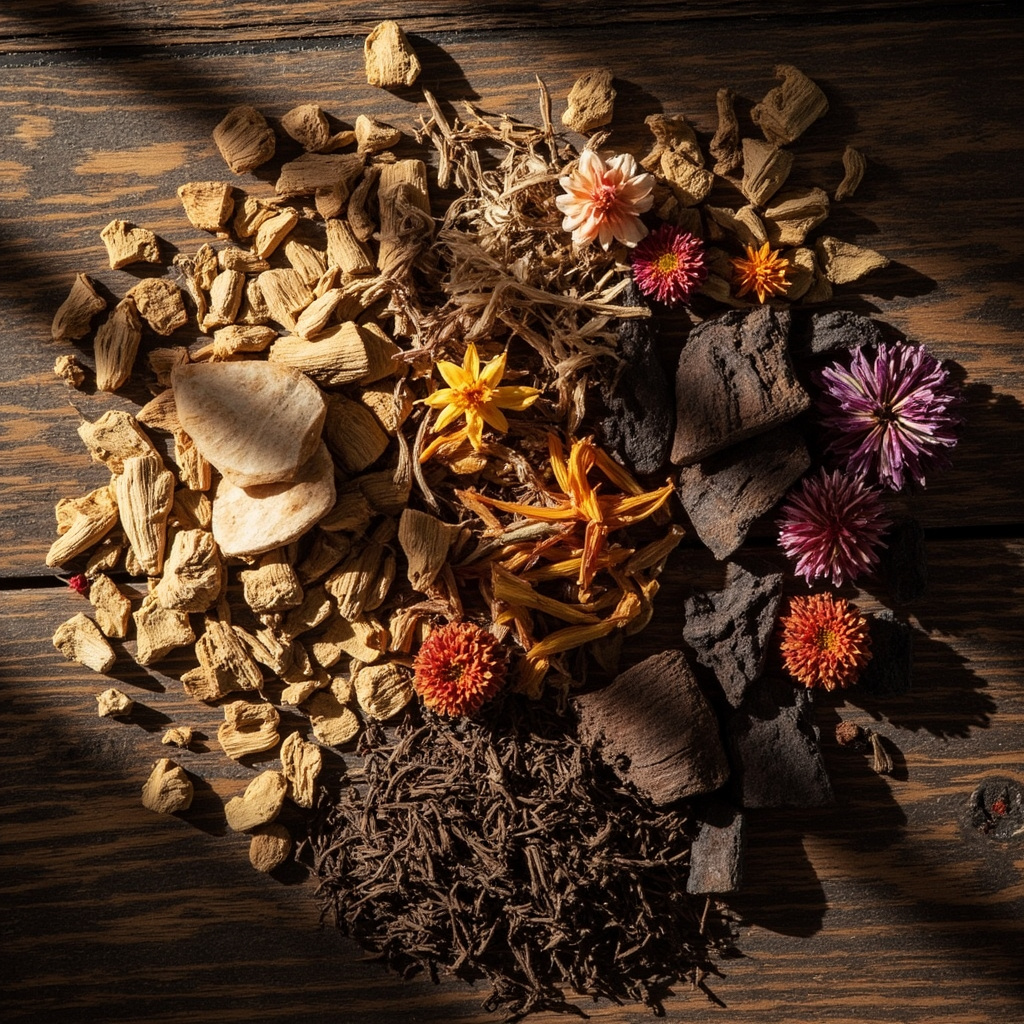
The ingredient list: The list of aromatic materials, typically ordered by weight — the heaviest material first, the lightest last. This is important: the order is not random, and it encodes information about the relative proportions and the role of each ingredient in the blend.
The preparation instructions: How the materials should be processed before blending — whether to grind fresh or use dried, whether to soak in wine or vinegar, whether to age before use, how finely to powder, and how to combine the materials.
The usage instructions: When and how to burn the formula — the appropriate season, time of day, occasion, and method of burning.
Decoding the Ingredient List
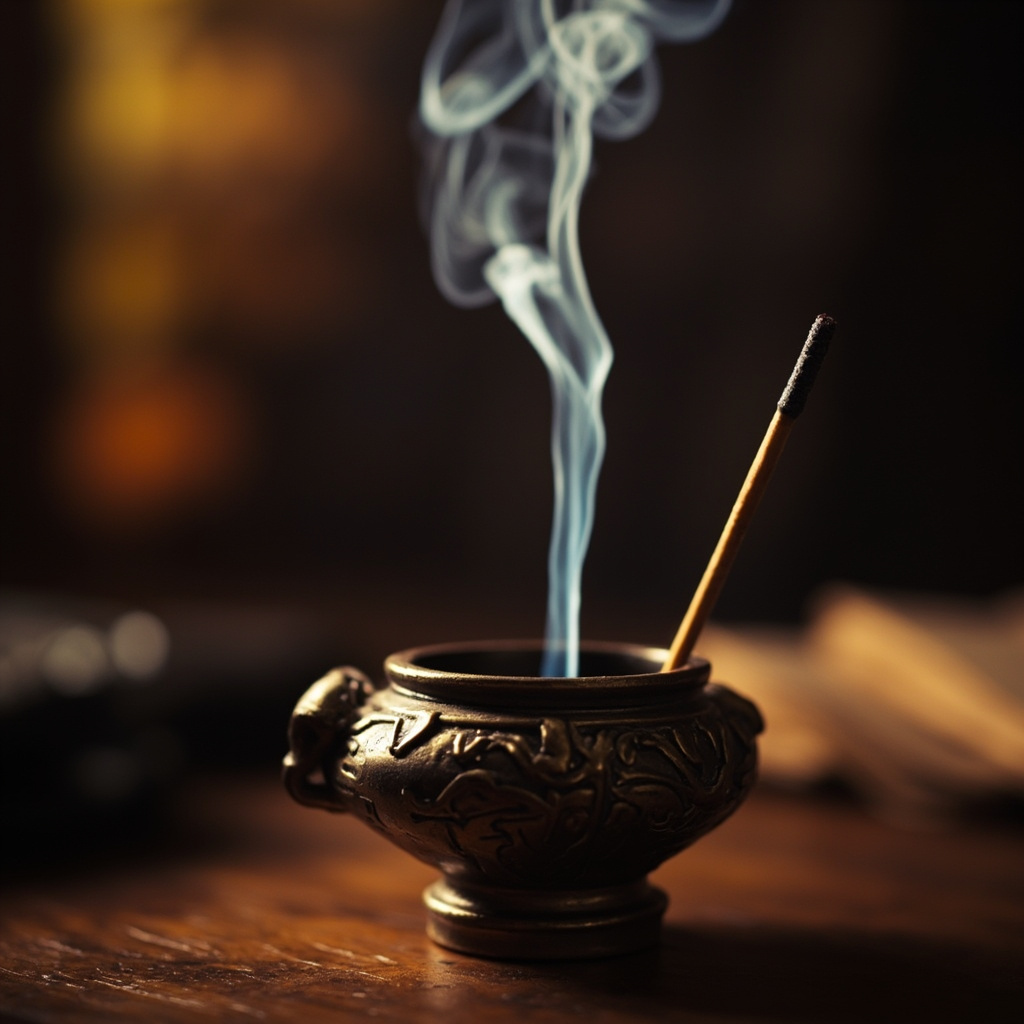
The ingredient list in a classical xiangfang uses a specific system of measurement and notation. Understanding this system is essential for accurate reproduction.
Weights: Classical formulas use the traditional Chinese weighing system — jin (斤, approximately 500 grams), liang (两, approximately 37 grams), qian (钱, approximately 3.7 grams), and fen (分, approximately 0.37 grams). The notation “二钱” means two qian, or approximately 7.4 grams.
The role of each ingredient: In classical formulas, ingredients are not all equal. Each has a specific role:
- Jun (君, sovereign): The primary material — the one that defines the formula’s character and is present in the largest quantity
- Chen (臣, minister): The secondary material — supports and enhances the sovereign, provides complementary qualities
- Zuo (佐, assistant): Modifies or moderates the effects of the jun and chen — addresses side effects or redirects the formula’s action
- Shi (使, messenger): Guides the formula’s action to specific meridians or areas of the body, and often provides the transitional notes that allow disparate materials to integrate
This four-role system (君臣佐使) is derived from the pharmaceutical tradition and is applied to incense formulas with the same precision.
Understanding the Classical Language
Classical xiangfang texts use a technical vocabulary that requires specific knowledge to interpret. Some key terms:
Shang / Zhong / Xia (上/中/下 — superior/middle/inferior): A quality classification. “上等沉香” (superior agarwood) indicates the highest grade. This classification appears in all classical texts and was standardised in different ways by different authors.
Pao / Zhi (炮/炙 — processing methods): Materials may be processed before use. Pao means roasting or parching — heating the material to modify its properties. Zhi means roasting with liquid (often wine or vinegar) — a technique that both modifies the material and introduces the flavour of the liquid. These processes are not optional; they are essential to the formula’s intended effect.
Fan / He (焚/和 — burning/harmonising): Some formulas specify whether the materials are to be burned together as a blend (he) or separately in sequence (fan). This distinction is significant — burning together produces a blended fragrance; burning in sequence produces a layered, evolving experience.
Reading the Preparation Instructions
The preparation instructions in a xiangfang are technical specifications that affect the final result as critically as the ingredients themselves. Common preparation methods:
Grinding (研): Materials should be ground to a specific fineness. Some formulas specify coarse grinding; others specify very fine powder. The fineness affects how quickly the material releases its fragrance when burned — finer = faster release and shorter duration; coarser = slower release and longer duration.
Soaking (浸): Materials soaked in wine, vinegar, or rose water before use. This adds moisture and a secondary flavour to the material, and — according to the classical theory — modifies the material’s thermal quality. Soaked materials burn differently than dry materials.
Aging (窨): Some formulas require the blended powder to be stored — sometimes for weeks or months — before use. During this time, the materials integrate and the fragrance matures. This is analogous to the aging of wine — the result is different in kind from the fresh blend.
Honey binding (蜜和): The blended powder mixed with honey to form a paste, which is then formed into pellets or sticks. The honey adds sweetness, acts as a binder, and contributes its own fragrance to the blend.
Interpreting the Usage Instructions
The usage instructions encode the formula’s intended context and therapeutic application. Phrases to look for:
Seasonal references: “春用” (for spring use) or “冬夜焚之” (burn on winter nights) indicate the appropriate season or time. These are not casual suggestions — they reflect the formula’s thermal quality and its alignment with the seasonal qi.
Therapeutic context: “清心” (clear the heart), “明目” (brighten the eyes), “祛寒” (dispel cold) — these indicate the formula’s intended therapeutic effect. When you see such phrases, the formula should be understood as a therapeutic tool, not merely an aesthetic experience.
Occasion: “祭祀用” (for sacrificial use), “书斋用” (for the study), “宾客来时用” (when guests arrive) — the occasion determines the social context and the psychological effect the formula is designed to produce.
A Sample Formula: “Qing Xin Xiang” from the Lei Gong Pao Zhi

Consider the following representative formula from the Lei Gong Pao Zhi (《雷公炮炙》):
沉香六錢 降真香四錢 乳香三錢 沒藥二錢 冰片一錢
右為細末,每以熱酒調服二分。
清心火,安神志。
Breaking this down: agarwood (jun — 6 qian), jiangzhenxiang (chen — 4 qian), frankincense (zuo — 3 qian), myrrh (zuo — 2 qian), borneol (shi — 1 qian). Ground fine, taken with warm wine. Clears heart fire, calms the shen.
The formula is structured: the jun is agarwood, warm and grounding, the primary fragrance. The chen is jiangzhenxiang, which moves qi and clears heat. The two zuo materials — frankincense and myrrh — both move blood and relieve pain, supporting the clearing of heart fire. The shi is borneol — a strong coolant that opens the orifices and guides the formula’s action upward to the head. The result is a formula that clears heart heat and calms the spirit — appropriate for insomnia, agitation, and excess heart fire patterns.
Frequently Asked Questions
Where can I find classical xiangfang texts?
The most important sources are the Lei Gong Pao Zhi (《雷公炮炙》, Han dynasty, expanded through Tang), the Ben Cao Gang Mu (《本草纲目》, 1596 by Li Shizhen), the Tian Xia Bin Gan Lu (《天咫槟榔录》, Ming dynasty, Wen Zhenheng), and the Xiang Lu (《香录》, Song dynasty). Modern annotated editions of the most important texts are available from specialised publishers in Taiwan and mainland China.
Can I directly reproduce a classical formula?
You can reproduce it as written, but the result may not match the original intent. Classical formulas assume materials of specific quality and processing — materials that may not be available today, or that are processed differently. Start by understanding what the formula is trying to achieve, then adapt the materials and proportions to what is available and appropriate for your context.
Do I need to read classical Chinese to study xiangfang?
Knowing classical Chinese is enormously helpful, but it is not strictly necessary. Many texts have been translated and annotated in modern Chinese, and some are available in English and other languages. Start with a translated text and a good commentary — this will give you the conceptual framework you need before attempting the original language.