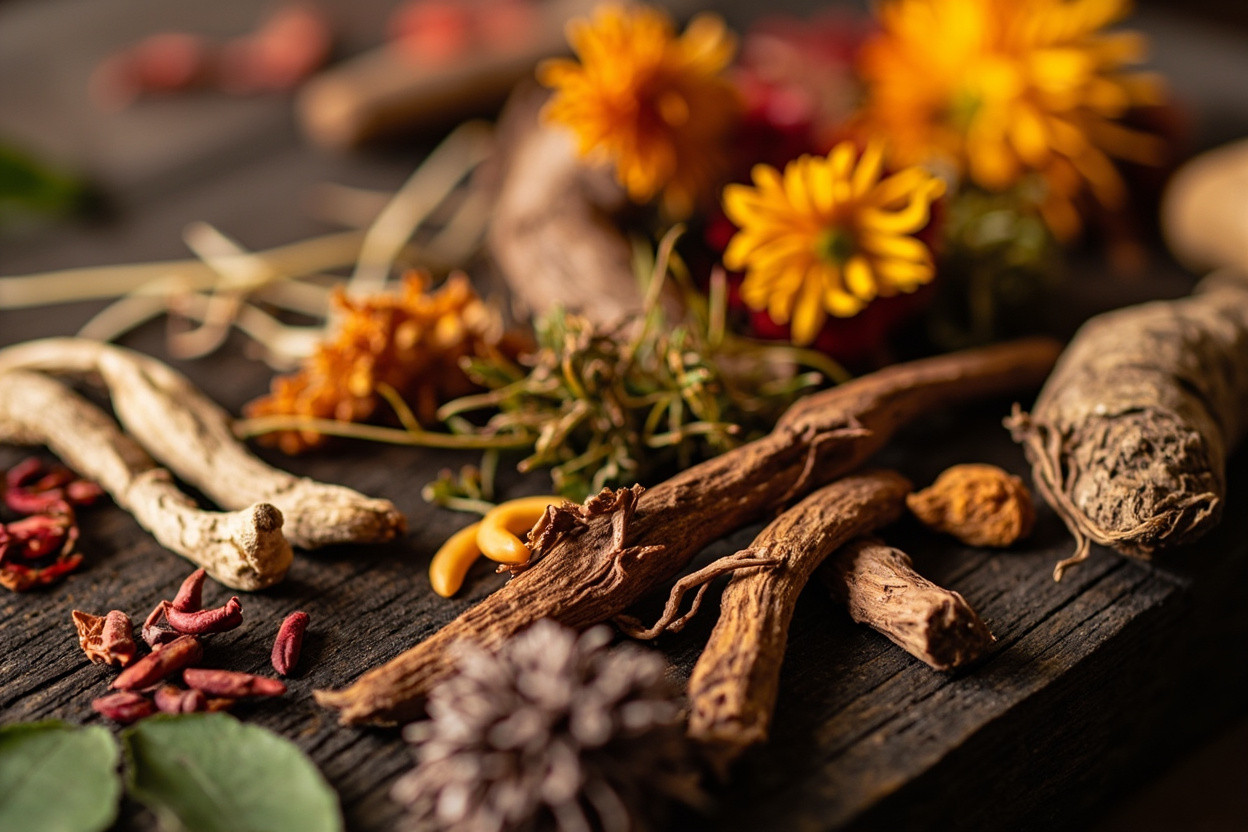
Eleuthero (Ci Wu Jia): Siberian Ginseng — The Adaptogen in Chinese Incense
In the mountain forests of northeastern China, Siberia, and Korea grows a plant that has fascinated herbalists and incense makers for centuries: Ci Wu Jia (刺五加, Eleutherococcus senticosus), commonly known as Siberian ginseng or eleuthero. Despite sharing the name “ginseng,” it is botanically distinct from Panax ginseng — but it shares a remarkable property: the ability to help the body adapt to stress, physical exertion, and environmental challenge. In Chinese medicine, it is classified as an adaptogen — a substance that normalises bodily functions regardless of the direction of deviation. In incense, it contributes a distinctive, slightly bitter fragrance and the properties of an adaptogen: supporting resilience, endurance, and sustained energy.
What Is Ci Wu Jia?
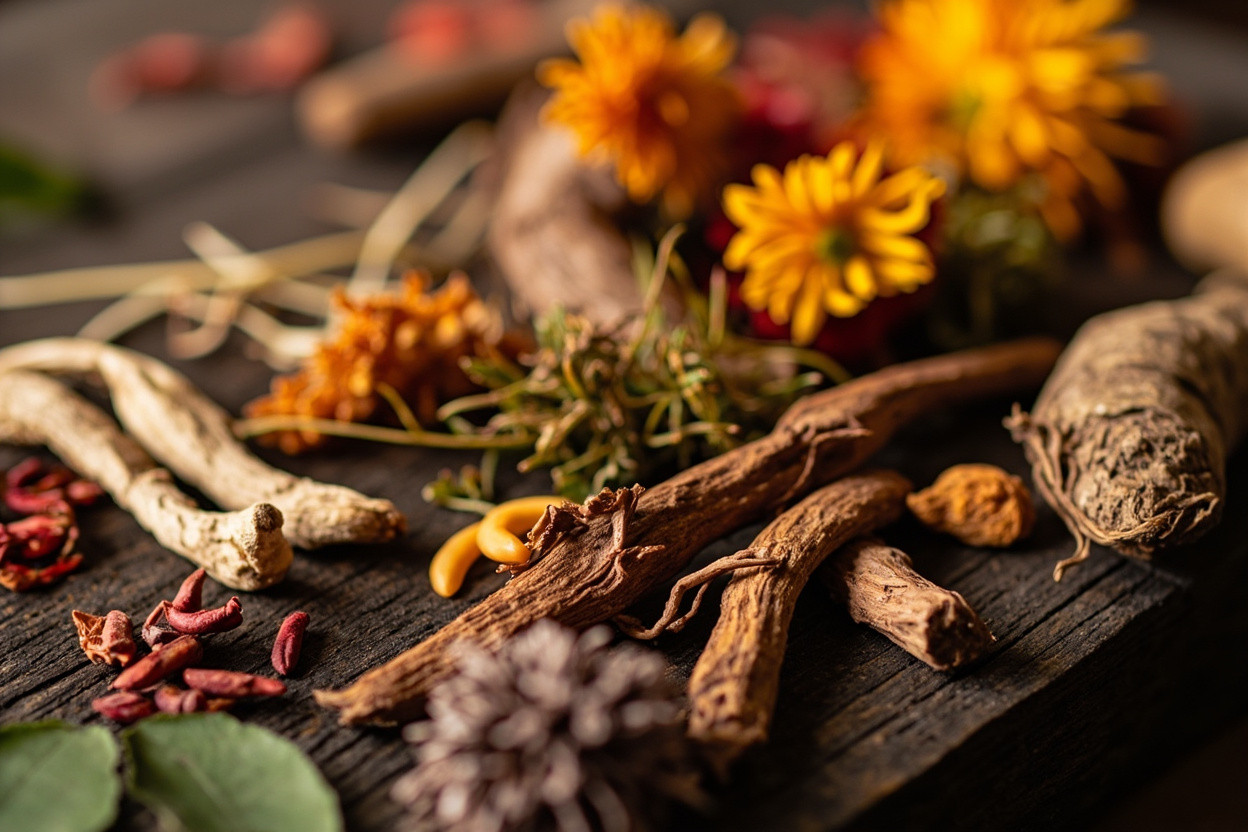
Ci Wu Jia is the dried root and rhizome of Eleutherococcus senticosus, a deciduous shrub in the Araliaceae family (the same family as Panax ginseng). It grows throughout northeastern China, Siberia, Korea, and northern Japan, typically in mountain forests at elevations of 200–2,200 metres. The plant is characterised by its woody stems covered in sharp spines — the Chinese name 刺五加 literally means “thorn five addendums,” referring to the five-leaflet palmate leaves.
The root is the part used in medicine and incense. It has a distinctive appearance: a gnarled, woody taproot with lateral branches, brownish exterior, and pale yellowish interior. The fragrance is unique: slightly bitter, earthy, with notes of resin and a characteristic “green” quality.
Historical Background

Ci Wu Jia has been used in traditional Chinese medicine for over two thousand years. The Shennong Bencao Jing (《神农本草经》) records it as an herb that “treats fatigue and deficiency, strengthens the sinews and bones, and increases the qi.” It was classified as a superior herb — one suitable for long-term use without toxicity.
In Russia and the Soviet Union, Ci Wu Jia received significant scientific attention during the mid-20th century. Russian herbalist Israel Brekhman studied it extensively and coined the term “adaptogen” to describe substances that increase the body’s “state of non-specific resistance” to stress. Eleutherococcus senticosus became one of the most researched adaptogenic herbs in the world, used by Soviet athletes, cosmonauts, and military personnel.
Eleuthero in Chinese Incense
In hexiang (合香) practice, eleuthero is classified as a supportive modifier — a material that contributes not just fragrance but the concept of resilience and sustained energy. It is used in blends designed for specific purposes:
Traditional applications:
1. “Sustained energy” blends: Formulas designed for those experiencing fatigue, burnout, or the depletion associated with long-term stress. Eleuthero’s adaptogenic properties are expressed in the incense as a supportive, sustaining fragrance.
2. Morning energising blends: In contrast to calming evening blends, morning incenses designed to activate and sustain energy throughout the day may incorporate eleuthero for its qi-boosting properties.
3. Blending ratios: Eleuthero is used at 10–20% of a blend — its fragrance is strong and slightly bitter, so moderate usage is appropriate. It pairs well with ginseng itself (if available), with warming materials like cinnamon and clove, and with grounding bases like sandalwood.
Modern Research: Adaptogens and Stress Response
Modern research on eleuthero has been extensive, with findings that support many traditional uses:
- Adaptogenic effects: Eleuthero contains eleutherosides (particularly eleutheroside B), which have been shown to modulate the hypothalamic-pituitary-adrenal (HPA) axis — the system’s that manages the stress response
- Physical performance: Multiple studies have shown improved endurance, faster recovery from exercise, and enhanced cognitive performance under stress conditions
- Immune function: Eleuthero has been shown to enhance immune function, particularly under conditions of physical or psychological stress
- Anti-fatigue effects: Animal studies show significantly reduced fatigue and improved swimming endurance time
TCM Properties
In Traditional Chinese Medicine, Ci Wu Jia is classified as sweet and bitter, slightly warm, entering the spleen, heart, and kidney meridians. Its primary actions:
- “补气安神” — Tonifies qi, calms the spirit
- “益智健脾” — Enhances wisdom, strengthens the spleen
- “活血通络” — Invigorates blood, unblocks the channels
Frequently Asked Questions
Is eleuthero the same as ginseng?
No. While both are adaptogens and share some properties, they come from different plant genera. Panax ginseng (人参) is “true ginseng”; Eleutherococcus senticosus (刺五加) is “Siberian ginseng.” They have different chemical compositions and slightly different action profiles. Panax ginseng is more warming; eleuthero is considered more neutral.
What does eleuthero incense smell like?
Eleuthero has an earthy, slightly bitter, green fragrance — not immediately pleasant like sandalwood, but complex and interesting. It has resinous and woody notes. In blends, it contributes body and depth rather than sweetness.
Is eleuthero incense safe?
Natural eleuthero root is considered safe for incense use. However, it may interact with certain medications (including blood pressure medications, diabetes medications, and anticoagulants). Consult a healthcare provider if using as a therapeutic tool.