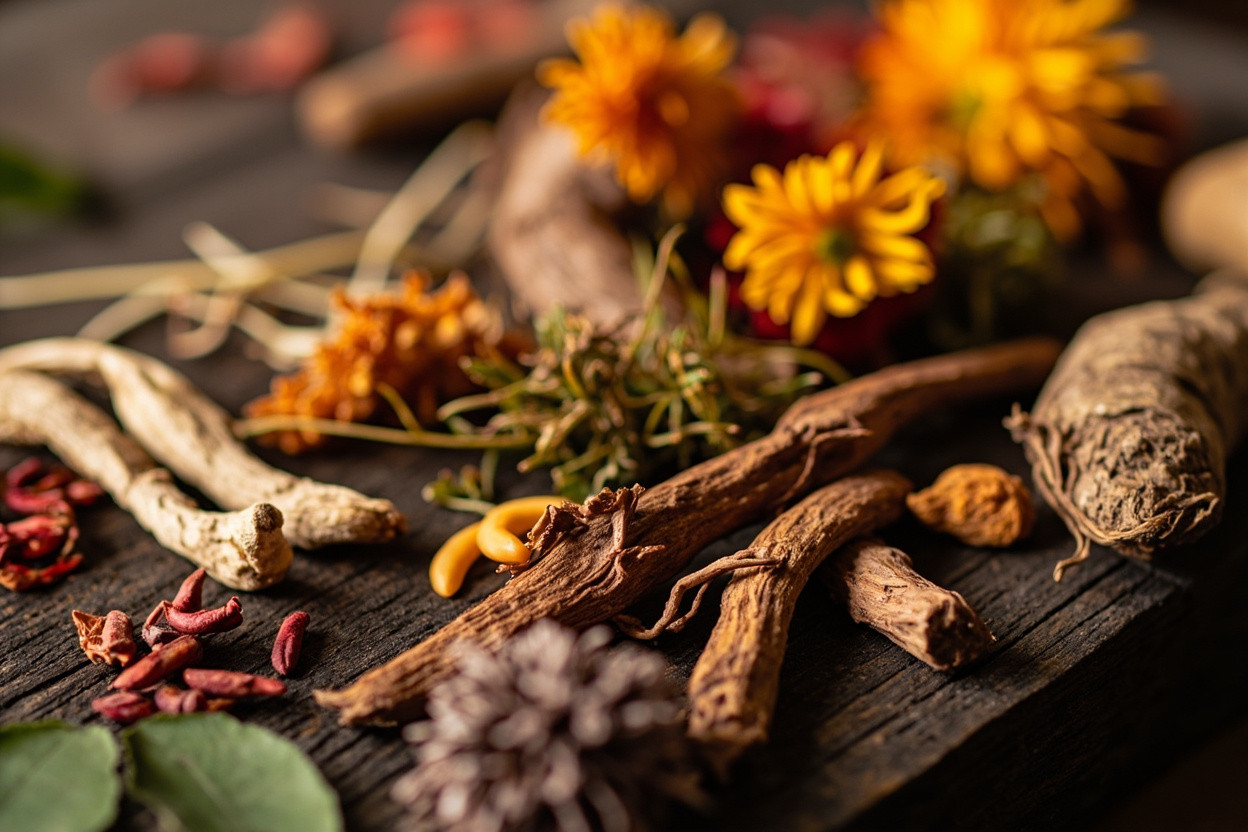
Chang Pu (菖蒲): The Ancient Herb for Clarity, Memory & Incense
In the entrance hall of almost every traditional Chinese home, you will find a pot of Chang Pu — not as decoration, but as medicine. The sword-like leaves rising from shallow water carry a fragrance that has been prized for over three thousand years: sharp, clean, slightly peppery, and immediately clarifying. Classical texts describe Chang Pu as “opening the orifices, awakening the spirit, and removing obstruction from the nine openings of the body.” In an age before coffee, before stimulants, before pharmaceutical cognition enhancers, Chang Pu was the tool of scholars preparing for imperial examinations — and it remains one of the most valued herbs in the Chinese pharmacopoeia today.
What Is Chang Pu?
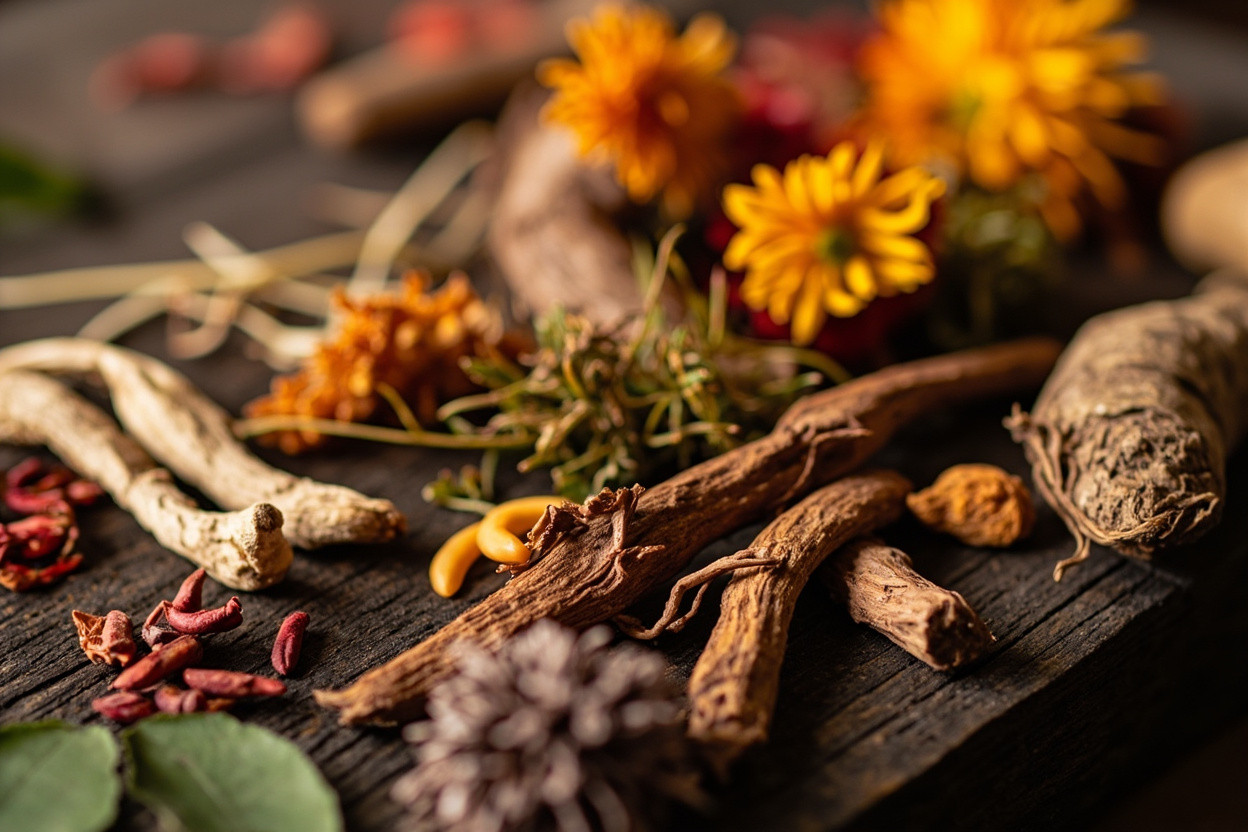
Chang Pu (菖蒲, Acorus calamus) — also known as sweet flag, sweet calamus, or by its Japanese name shōbu — is an aromatic semi-aquatic plant in the Acoraceae family. It grows wild across wetlands in China, India, Japan, and Southeast Asia, typically in shallow water or boggy soil. The plant is characterised by its distinctive fan-shaped leaves — long, sword-like, and bright green — that grow in dense clumps from a creeping rhizome.
What makes Chang Pu remarkable is not only its fragrance but the quality of that fragrance. The rhizome, when sliced or crushed, releases a complex aromatic oil containing asarone, beta-asarone, and calameone — compounds that have been studied extensively for their effects on the central nervous system. The scent is distinctive: sweet, slightly bitter, with notes of ginger and black pepper, and a persistent freshness that seems to linger in the air.
Two main varieties are used in Chinese medicine:
- Water Chang Pu (水菖蒲, Acorus calamus): The standard variety, grown in water. More commonly used for external applications and incense.
- Stone Chang Pu (石菖蒲, Acorus tatarinowii): A smaller, more compact variety that grows on rocks and in crevices. Considered more refined and potent for medicinal use. This is the variety most prized in classical incense formulas.
Historical Background: Chang Pu in Ancient Chinese Culture
Chang Pu’s history in China stretches back to the earliest recorded dynasties. The Shennong Bencao Jing (《神农本草经》), China’s oldest pharmacopoeia, compiled in the 2nd century BCE, lists Chang Pu as an herb that “opens the orifices, awakens the spirit, and brightens the five viscera.” It was prescribed for conditions we would today recognise as cognitive impairment, tinnitus, and forgetfulness.
During the Han dynasty (206 BCE – 220 CE), the court physician Hua Tuo described Chang Pu as capable of “removing phlegm from the heart and restoring clarity to the shen (spirit).” He reportedly used Chang Pu combined with other herbs in formulas for stroke patients, and the classical formula Chang Pu San (菖蒲散) survives in records from this period.
The use of Chang Pu in daily life extended beyond medicine. During the Warring States period and into the Han dynasty, scholars placed Chang Pu rhizomes in their books and clothing drawers — the fragrance repelled insects and, according to tradition, sharpened the intellect. The Zhou Li (《周礼》) lists Chang Pu among the “six aromatic herbs” designated for court ritual use.
In the Tang and Song dynasties, Chang Pu became associated specifically with the examination system. Students preparing for the gruelling imperial examinations would keep Chang Pu on their desks and soak their writing brushes in Chang Pu-infused water — a practice that continued through the Qing dynasty. The association between Chang Pu and scholarly achievement gave rise to the phrase “菖蒲伴读” — Chang Pu accompanying study.
Chang Pu in Chinese Incense Culture
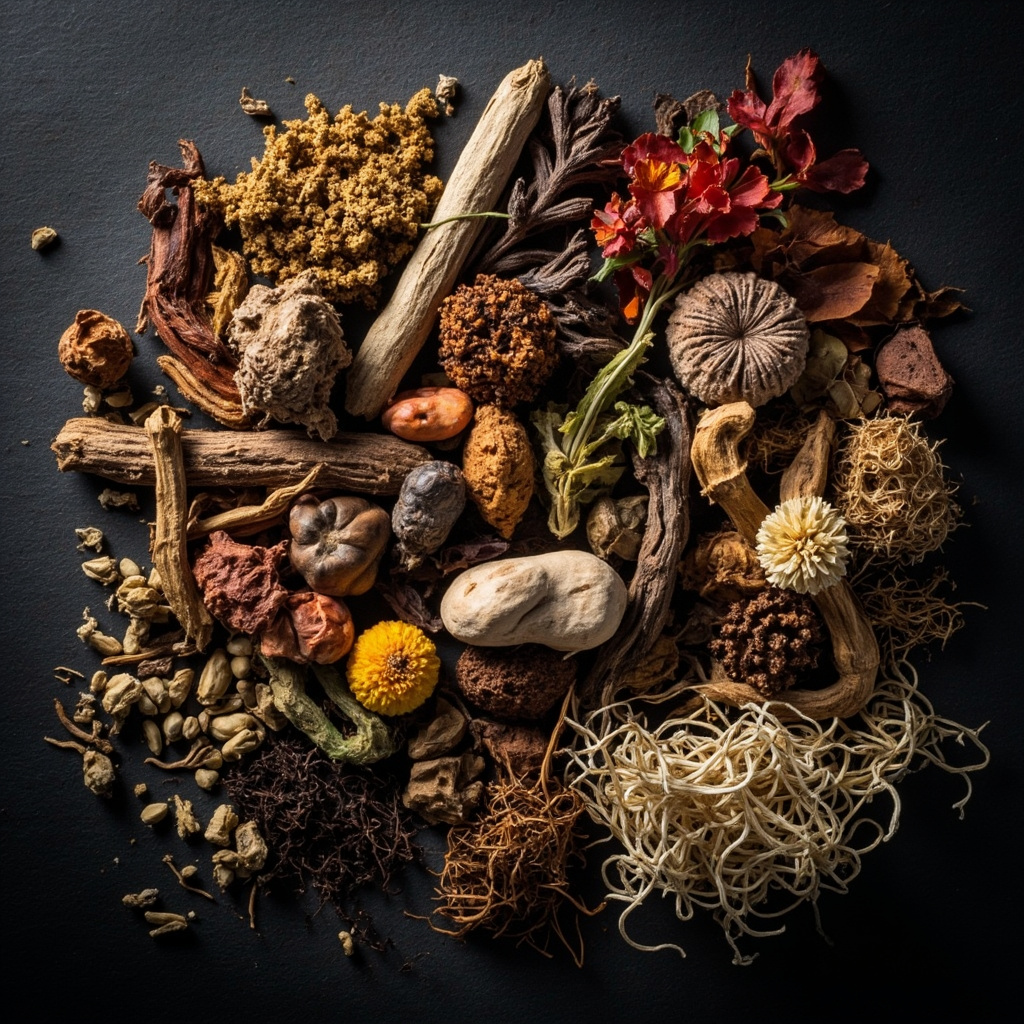
In the Chinese incense tradition, Chang Pu is classified as a clarifying aromatic — a material that sharpens awareness, clears mental fog, and supports concentration. It is used both alone and as a supporting material in complex hexiang (合香) blends.
Classical applications:
1. Scholar’s chamber incense: Chang Pu is burned during study or creative work, when mental clarity and focus are required. The aroma is said to “cut through confusion” and clarify thought. It is particularly recommended for students, writers, and anyone engaged in intensive intellectual work.
2. Meditation incense: In Buddhist and Daoist meditation practice, Chang Pu is valued for its ability to deepen concentration without stimulating excitement. It creates a clean, alert mental state — the opposite of drowsiness — which makes it useful for both morning practice and late-night study sessions that precede meditation.
3. Incense blends for mental clarity: Chang Pu combines well with sandalwood (which softens its sharpness), acorus (石菖蒲, with which it shares properties), and small amounts of borneol (which amplifies its opening effect). A classical formula called Qingxin Xiang (清心香, “Clear Heart Incense”) used Chang Pu as the primary material, combined with sandalwood and dragon’s blood resin.
4. Anti-drowsiness incense: In the classical tradition, Chang Pu was burned in the early morning to overcome drowsiness and prepare the mind for the day’s work — an ancient version of the morning coffee ritual.
Modern Research: What Science Says About Chang Pu
Modern research has begun to validate the classical uses of Chang Pu, identifying mechanisms that align surprisingly well with traditional claims.
Cognitive function and memory: Multiple studies on Acorus calamus extracts have demonstrated nootropic (cognitive-enhancing) effects. The primary active compounds — asarone and beta-asarone — appear to modulate acetylcholine levels in the prefrontal cortex, the brain region most associated with attention, working memory, and executive function. Animal studies have shown improved performance in maze-running and memory tasks following Acorus administration.
Anxiolytic and calming effects: Chang Pu extracts have demonstrated anti-anxiety effects in animal models, attributed to GABAergic modulation — the same mechanism used by benzodiazepine anti-anxiety medications, though through a different pathway.
Antioxidant activity: The aromatic compounds in Chang Pu show significant antioxidant activity, which TCM theory interprets as “clearing heat and resolving toxicity.”
Important safety note: Beta-asarone, a compound found in Acorus calamus, has been subject to safety scrutiny. Some studies in high doses in animal models have raised concerns. Regulatory agencies in several countries have restricted the use of Acorus calamus in food and supplements. For incense use — where the compounds are released in small amounts through combustion — the risk is significantly lower, but pregnant women and individuals with pre-existing liver conditions should exercise caution.
How to Use Chang Pu in Incense
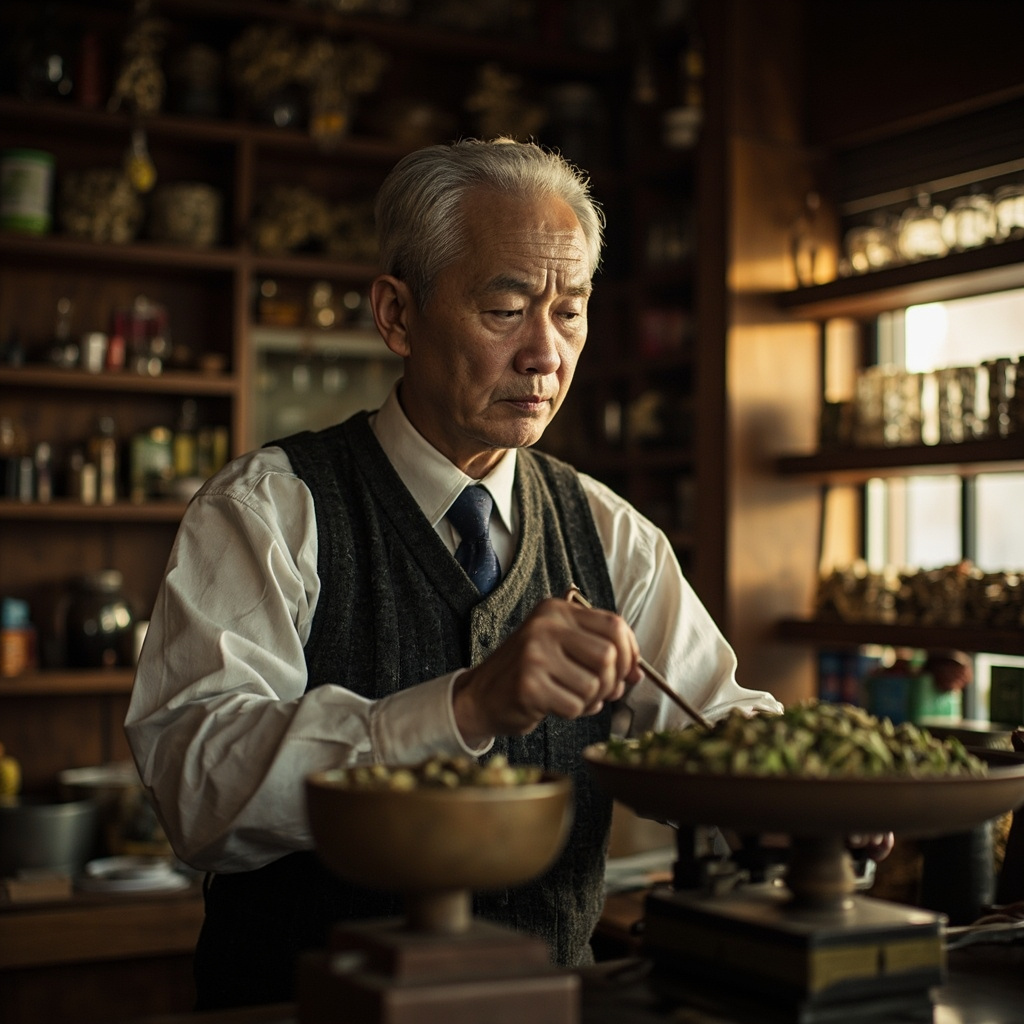
Indirect heating (recommended): Chang Pu’s active compounds are volatile and delicate — they are best released through gentle heating rather than direct flame. Use an electric incense heater at 70–90°C, or place small amounts (0.2–0.3g) on the outer edge of a lit moxa charcoal.
Blending ratios: In hexiang blends, Chang Pu typically constitutes 10–20% of the total — enough to contribute its clarifying effect without dominating the blend. It pairs particularly well with sandalwood, white cedarwood, and benzoin.
Chang Pu sachets: Dried rhizome pieces placed in small sachets near the desk or bed provide a gentle, continuous diffusion of the clarifying fragrance. Replace every 2–3 months as the aroma fades.
TCM Properties and Classical Applications
In Traditional Chinese Medicine, Chang Pu is classified as pungent and warm, entering the heart and liver meridians. Its primary actions:
- “开窍化湿” — Opens the orifices, transforms dampness
- “醒神益智” — Awakens the spirit, enhances wisdom
- “安神定志” — Calms the spirit, stabilises the will
- “通关开闭” — Opens the nine apertures
Classical indications include: forgetfulness, poor concentration, tinnitus, deafness (when attributed to phlegm obstructing the orifices), seizures, and mania — all conditions attributed in TCM to “phlegm obscuring the heart orifices.”
Frequently Asked Questions
What does Chang Pu smell like?
Chang Pu has a distinctive sharp, green fragrance — slightly sweet, slightly bitter, with notes of ginger, black pepper, and fresh earth. It is cooling rather than warm, and has an almost “clean” quality reminiscent of rain on stone. It is quite different from the creamy warmth of sandalwood or the dark depth of agarwood.
Can I burn Chang Pu directly on charcoal?
You can, but it requires care. Use a very small amount (0.1–0.2g) and place it on the outer, cooler edge of the charcoal where temperatures are lower. At high heat, Chang Pu’s volatile compounds can scorch and produce a bitter note. An electric incense heater at 70–90°C is strongly preferred.
What is the difference between Chang Pu and Acorus/Shi Chang Pu?
Chang Pu (菖蒲, Acorus calamus) and Shi Chang Pu (石菖蒲, Acorus tatarinowii) are related species. Shi Chang Pu is considered more refined and potent in TCM — it grows on rocks rather than in water, and its rhizome is more compact and aromatic. Both are used interchangeably in most incense applications, with Shi Chang Pu preferred for medicinal formulations.
Is Chang Pu safe for daily use?
For occasional incense use, Chang Pu is considered safe for most adults. However, due to the beta-asarone content, daily heavy use over extended periods is not recommended. Those who are pregnant, breastfeeding, or have liver conditions should avoid Chang Pu entirely.
How does Chang Pu compare to peppermint (Bo He) for mental clarity?
Both are used for mental clarity, but they work differently. Bo He (peppermint) is sharp, cooling, and activating — it increases alertness through sensory stimulation. Chang Pu is clarifying, grounding, and focused — it removes mental obstruction rather than adding stimulation. Chang Pu is preferred for contemplative practice; Bo He is preferred for physical drowsiness and fatigue.