How to Burn Incense: A Complete Guide to Stick, Cone, Powder & More
Burning incense is one of the oldest human practices still alive today. From the temples of ancient China to your living room, the act of lighting incense — watching the ember glow, smelling the first curl of smoke rise, feeling the atmosphere shift — carries a ritual weight that transcends any single tradition. But if you’ve never done it before, or if you’ve been burning incense casually without much thought, you might be wondering: what’s the right way to do this?
The honest answer is: there’s no single correct method. Different types of incense, different traditions, and different intentions call for different approaches. This guide covers every major form of incense — sticks, cones, powder, and more — and explains exactly how to burn each one safely and effectively.
Understanding Incense Forms
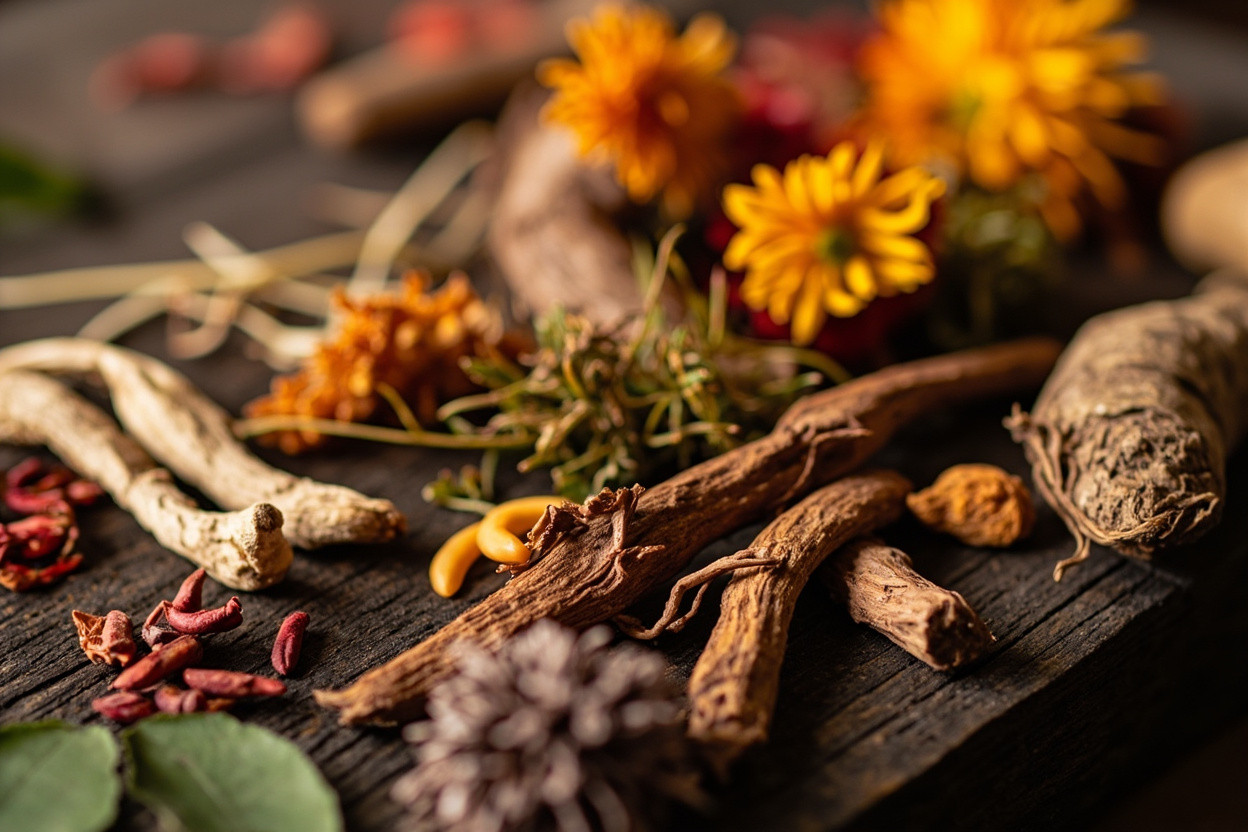
Before lighting anything, it helps to understand what you’re burning. Incense comes in four primary forms, each with different characteristics:
- Incense sticks (线香) — The most common form globally. A thin wooden or bamboo core coated with incense paste, or rolled entirely from powdered incense material. Burns from the tip downward.
- Incense cones (盘香/香锥) — Pyramid or cone-shaped. Placed on a holder; the entire surface burns slowly from the top down. Often stronger than sticks.
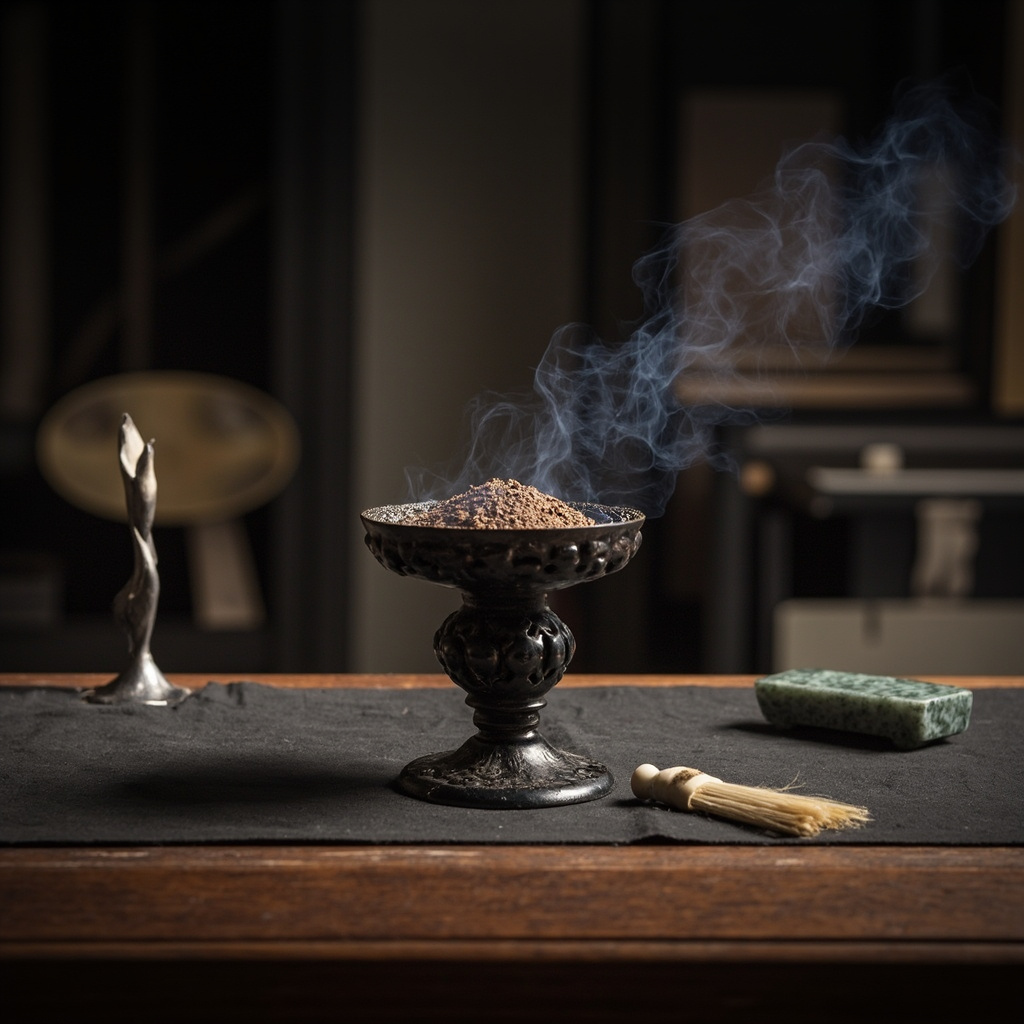
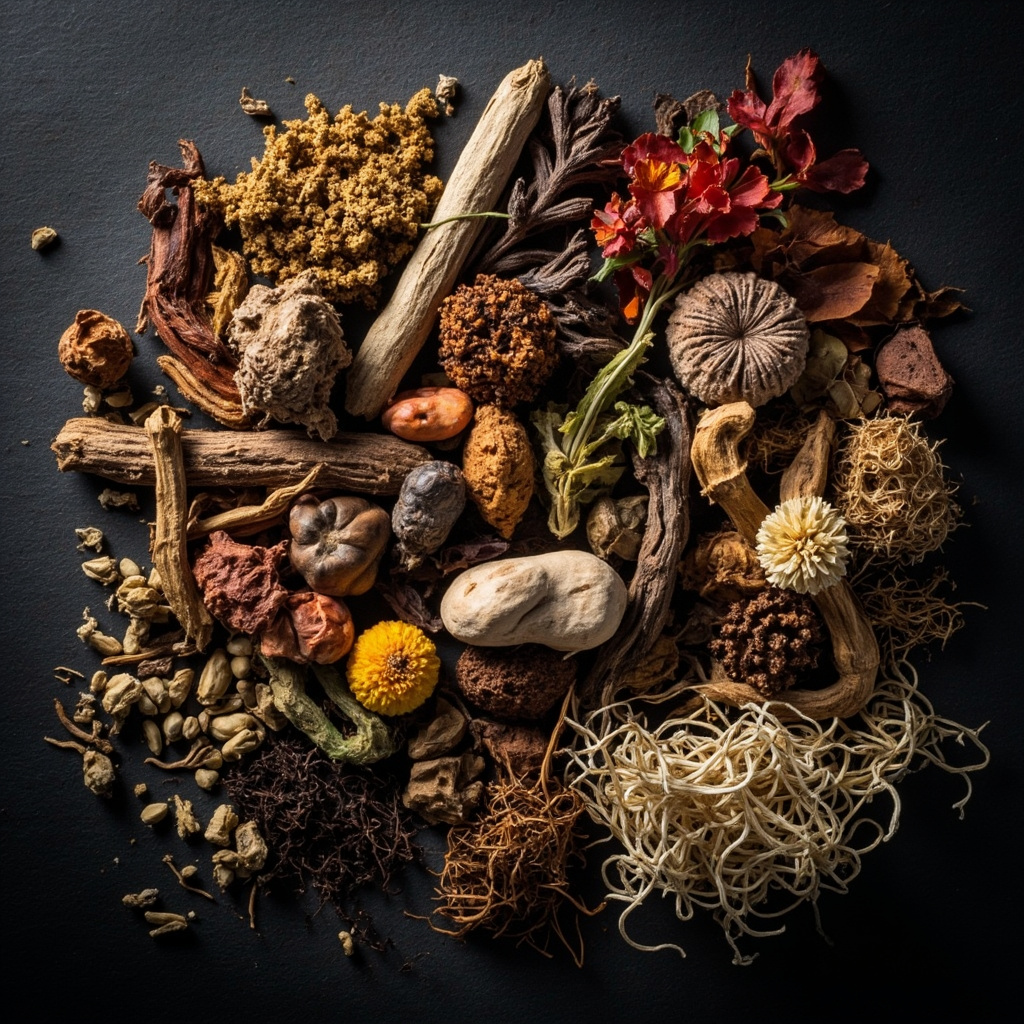
- Incense powder (香粉) — Loose powdered incense. The most traditional form in Chinese and Japanese practice. Can be burned on charcoal, in electric heaters, or pressed into cones/sticks at home.
- Incense coils (盘香) — Long, spiraling coils that burn for hours. Common in Buddhist temples. Placed on a dedicated coil holder.
- Direct-burning chips (块香) — Small pieces of aromatic wood or resin. Placed directly on a heat source rather than lit with a wick.
How to Burn Incense Sticks
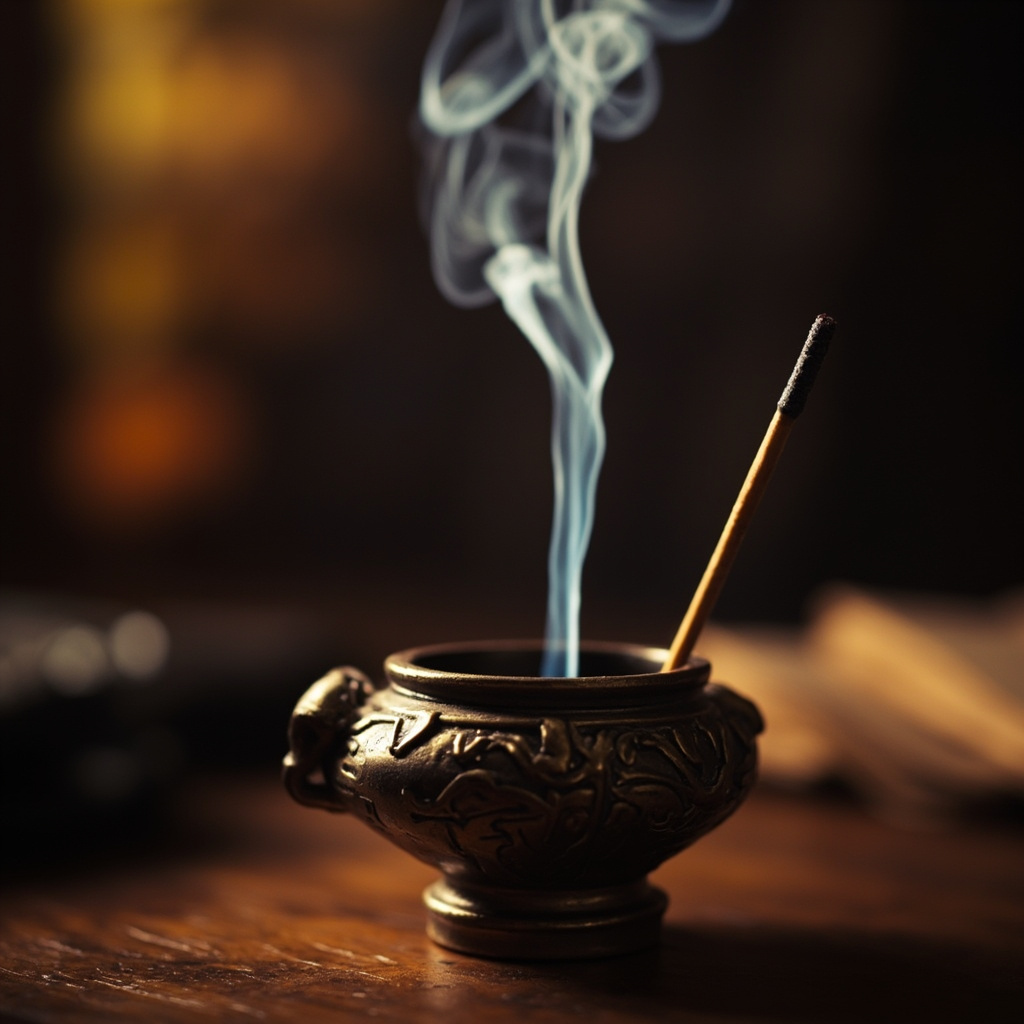
Standard Incense Sticks (Bamboo-Core)
- Prepare your space. Open a window slightly for ventilation. Place your incense holder on a stable, heat-resistant surface away from curtains, paper, or anything flammable. A wide-mouthed ceramic bowl or dedicated incense stand works best.
- Light the tip. Hold a lighter or match to the very tip of the incense stick — just the very end, not the full width. Hold for 3–5 seconds until you see a small, stable flame.
- Let the flame establish. Allow the flame to burn for 5–10 seconds. The tip should glow red and produce a small column of smoke.
- Blow out the flame. Gently blow on the tip — or wave it through the air — until the flame is extinguished but the ember remains glowing red.
- Place in holder. Set the stick in the holder. The ember at the tip should continue glowing and producing smoke. If the ember goes out completely, relight and try again with a slightly longer flame before blowing out.
- Enjoy. Leave the room or stay — the fragrance will build over 10–20 minutes and persist for 30–90 minutes depending on the stick’s composition and thickness.
Full-Tan Koh (Without Bamboo Core)
In Japanese Kodo and some Chinese incense traditions, sticks contain no bamboo — they’re made entirely of powdered incense material bound with a natural binder (typically makko powder). These burn differently:
- The burning tip requires a slightly longer pre-burn. Hold it in the flame for 8–10 seconds before waving out.
- These sticks burn more slowly and cleanly than bamboo-core sticks.
- The fragrance is typically more nuanced and natural.
- Ash is fragile and crumbles easily — use a wide holder.
How to Burn Incense Cones
- Prepare a cone-specific holder. Cones burn from the tip downward, so you need a holder with a concave surface or a fine mesh screen that allows air underneath. Some cone holders are shaped like small bowls; others have a raised platform.
- Place the cone. Set the cone upright on its base — point facing up. Do not lay it on its side.
- Light the tip. Use a lighter or match to ignite the very tip of the cone. Hold for 3–5 seconds until the tip glows.
- Let it self-sustain. After blowing out the flame, the cone should continue glowing at the tip. The burning zone moves slowly downward — this is intentional. A well-made cone will extinguish itself when all the aromatic material is consumed.
- Expect stronger initial smoke. Unlike sticks, cones often produce a burst of smoke in the first 30–60 seconds. Step away briefly if sensitive.
Tip: If the cone keeps extinguishing, the room may be too drafty, or the incense blend may have too little binder. Move to a less airy location or light in a sheltered corner first.
How to Burn Incense Powder
Method 1: Charcoal Burning (Most Traditional)
- Prepare the charcoal. Use natural moxa or “flower” charcoal tablets — the thin, disc-shaped kind. Avoid quick-light charcoals, which are soaked in accelerant and produce chemical odors that contaminate the fragrance.
- Light the charcoal. Hold the charcoal with tongs over a gas flame or lighter. The charcoal will take 2–3 minutes to ignite fully. The surface should glow evenly across the entire disc before you proceed.
- Set the charcoal in the burner. Place the glowing charcoal in your incense burner on a layer of ash or sand, which insulates the heat and prevents the ceramic from cracking.
- Wait for the surface temperature to stabilise. After 30–60 seconds, the flame will disappear and the charcoal will glow from radiant heat. The edges should glow red but not flame.
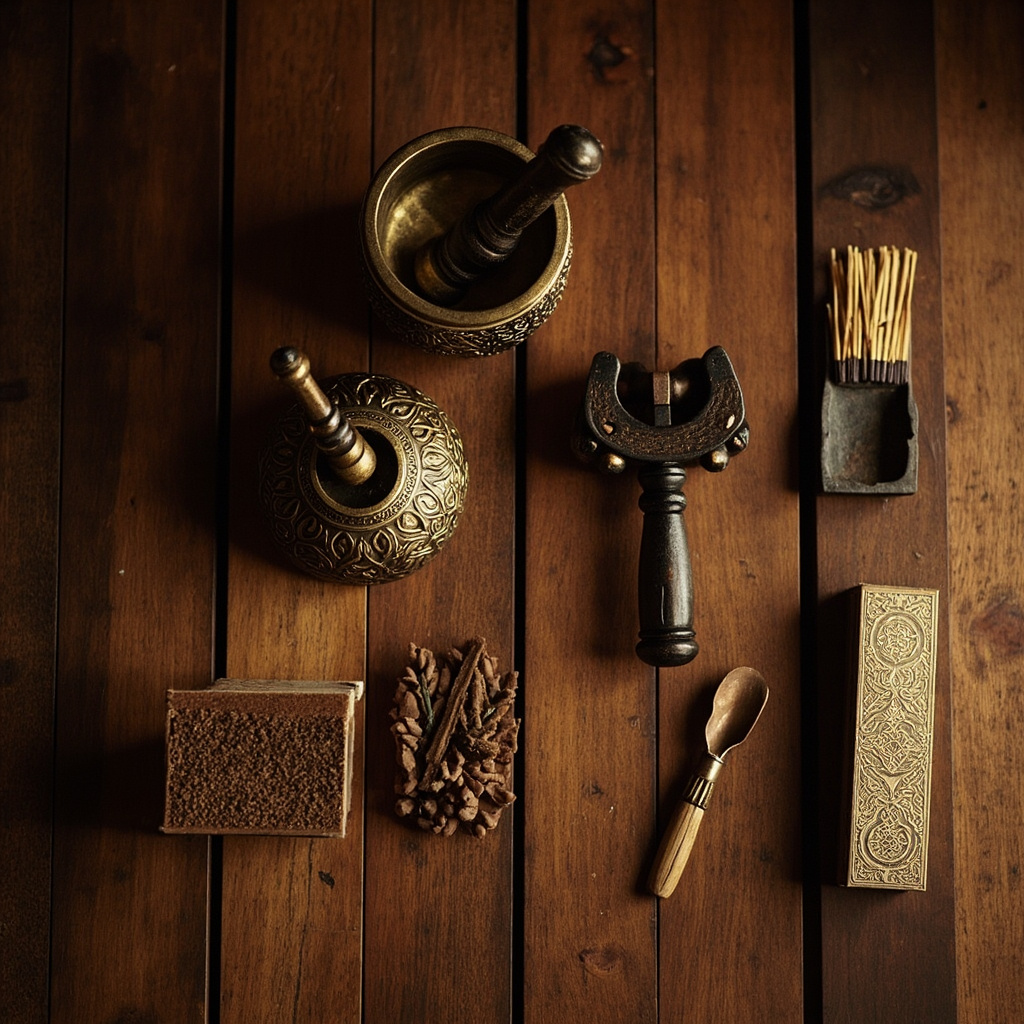
- Apply the powder. Use a small spoon or scoop to place 0.2–0.5g of incense powder in a small mound directly on the charcoal. Start small — you can always add more.
- Experience the fragrance. The powder will begin to smolder within seconds. You’ll first notice the charcoal’s own odor (brief, unavoidable), then the true incense fragrance emerges as the powder heats. Step back and let the scent build.
Method 2: Electric Incense Heater (Cleanest)
- Set your electric incense heater to the appropriate temperature:
– Low heat (60–80°C): Delicate materials like dried flowers, light herbs, some resins
– Medium heat (90–110°C): Sandalwood, most wood-based incenses
– High heat (120–150°C): Dense resins, agarwood chips, direct burning materials - Place a small amount of powder (0.2–0.5g) in the ceramic or metal dish on the heating element.
- Wait 1–2 minutes for the fragrance to develop. Adjust temperature up or down to find the sweet spot for the material you’re using.
Method 3: Make Your Own Incense Cones
- Mix incense powder with a natural binder (makko powder or bentonite clay) in roughly a 10:1 ratio (powder to binder).
- Add water slowly, drop by drop, until you have a workable paste — the consistency of modeling clay.
- Shape the paste into small cones by hand or using a cone mold.
- Allow to dry in a warm, dry place for 24–48 hours.
- Light and burn as described above.
How to Burn Incense Coils
Incense coils are designed for long-duration burning — a single coil can burn for 2–6 hours, making them popular in temples and for extended meditation sessions.
- Use the correct holder. Coils require a dedicated coil holder — typically a metal or ceramic stand with a raised horizontal pin or platform on which the coil rests.
- Ignite the starting point. Most coils have a clearly marked starting end (usually the outer end of the spiral). Light this end and allow it to catch for 10–15 seconds before blowing out the flame.
- Let it burn. The ember will travel slowly along the spiral path, burning for hours. You don’t need to do anything else.
- Extinguish safely. When you’re done, briefly press the still-glowing ember end against a damp surface or submerge it in sand to ensure it’s fully out. Do not leave any burning ember unattended.
Incense Burning Across Traditions
Chinese Xiangdao
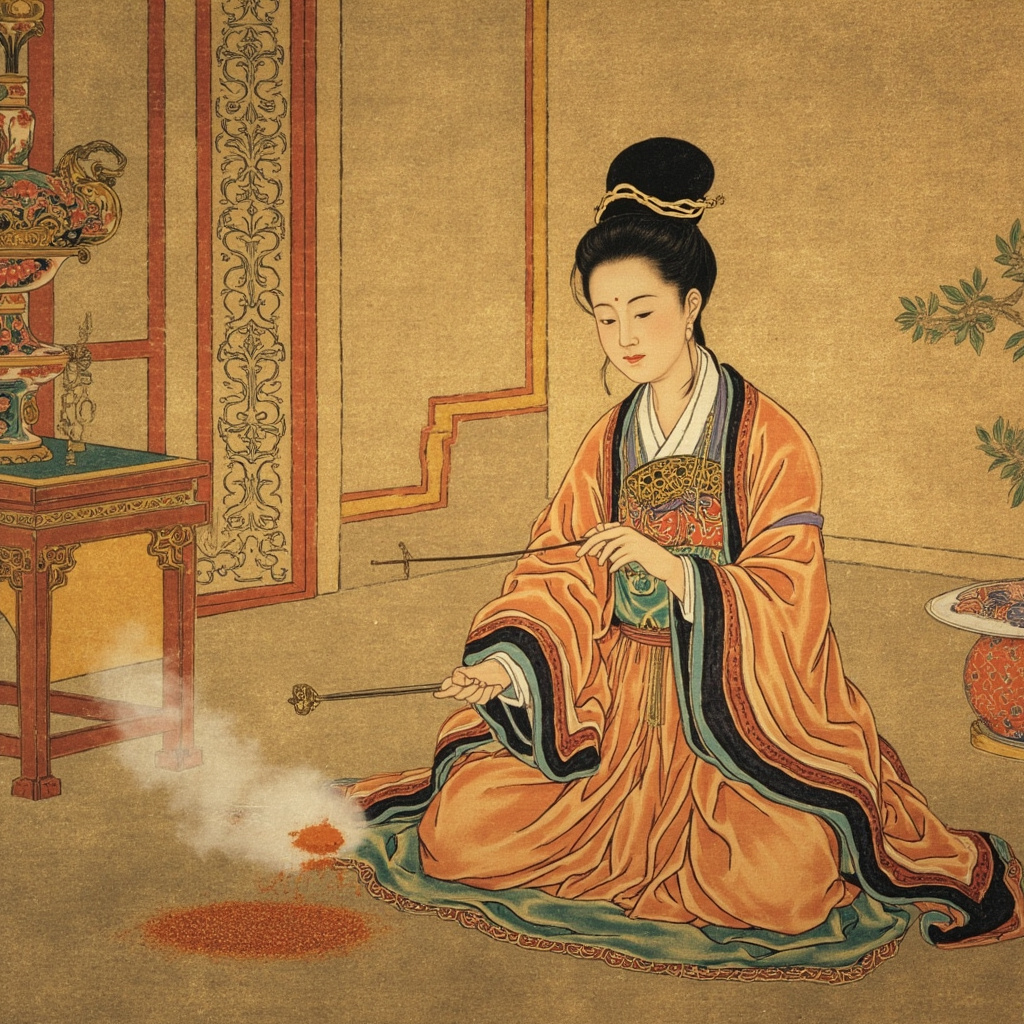
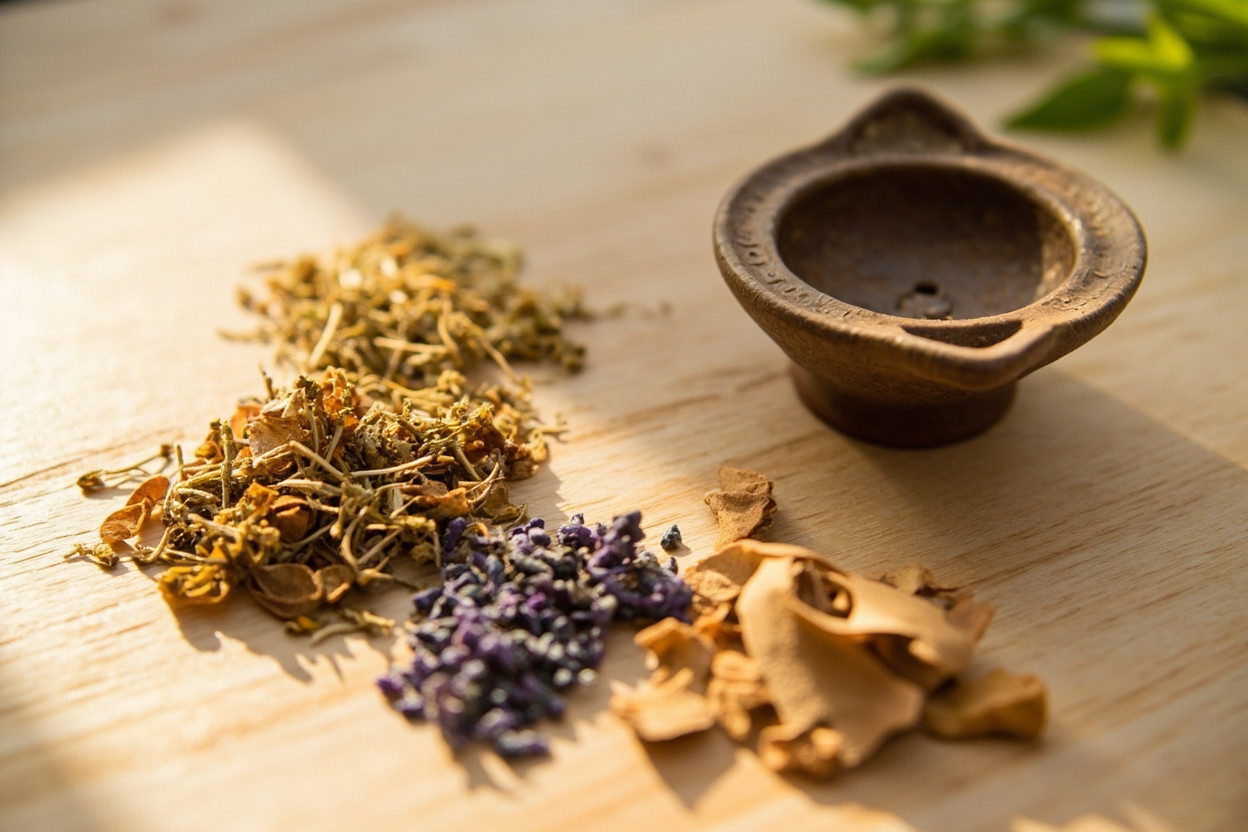
In Chinese incense tradition, the emphasis is on the fragrance as a pathway to stillness. Practitioners typically burn incense alone in a quiet room, using either sticks in a桌面 burner or powder on charcoal. The ritual is contemplative — you sit, you smell, you notice. A single stick might last an entire seated meditation session.
Japanese Kodo
In Japanese tradition, burning incense is a refined art of appreciation. The focus is on the sound of the burning — a faint crackle or whisper — and the evolution of the fragrance over time. Kodo practitioners often use full-stick incense without bamboo, burning tiny amounts in a traditional bronze censer called a yaruki.
Buddhist Temple Use
In Buddhist temples across Asia, incense is offered — placed before images of the Buddha, ancestral tablets, or sacred texts — as an act of devotion rather than personal enjoyment. Large numbers of sticks are lit simultaneously in temple burners, creating clouds of smoke. The spiritual intention is the key element; the type of incense is secondary.
Safety Guidelines
Never leave burning incense unattended. This cannot be stressed enough. A stick knocked over, a cone that collapses onto flammable material, a draft that blows ash onto paper — any of these can cause fire.
- Always burn on a stable, heat-resistant surface
- Keep away from curtains, paper, bedding, and clothing
- Ensure adequate ventilation — while the fragrance should build, the space should not become smoky
- Keep incense out of reach of children and pets
- Never burn incense in a bedroom while sleeping
- Extinguish fully before leaving the room
- Use a proper incense holder — never improvise with cups, plates, or unstable containers
Frequently Asked Questions
Why does my incense stick keep going out?
Several causes: the room may be too drafty; the ember may not have been properly established before blowing out the flame; the stick may have been stored in humid conditions, which prevents proper combustion. Try lighting in a less airy location and ensuring a full 8–10 second pre-burn before extinguishing the flame.
Is it okay to burn incense in a small room?
Yes, in a well-ventilated small room. Open a window slightly to allow fresh air exchange. Avoid burning multiple sticks simultaneously in a very small enclosed space — this can create excessive smoke and, with some materials, release problematic particulates. For small spaces, electric incense heaters at low temperature are preferable to charcoal.
What’s the best incense for beginners?
Pure sandalwood sticks are the most forgiving for beginners — the fragrance is consistent, not overpowering, and the combustion is stable. Avoid heavily fragrant synthetic sticks as a first experience; the chemical fragrance can be overwhelming and doesn’t reflect the quality of natural incense.
How should I dispose of incense ash?
Allow ash to cool completely (at least 30 minutes after the ember dies). Incense ash is generally safe to dispose of in regular household waste — it is sterile and non-toxic. Some practitioners add it to houseplant soil as a mild mineral supplement.
Can I burn different incenses at the same time?
You can, but you probably shouldn’t. Layering fragrances can produce muddled, competing odors that undercut the intentionality of either material. If you want to explore different scents, burn one at a time in sequence.
Related Articles