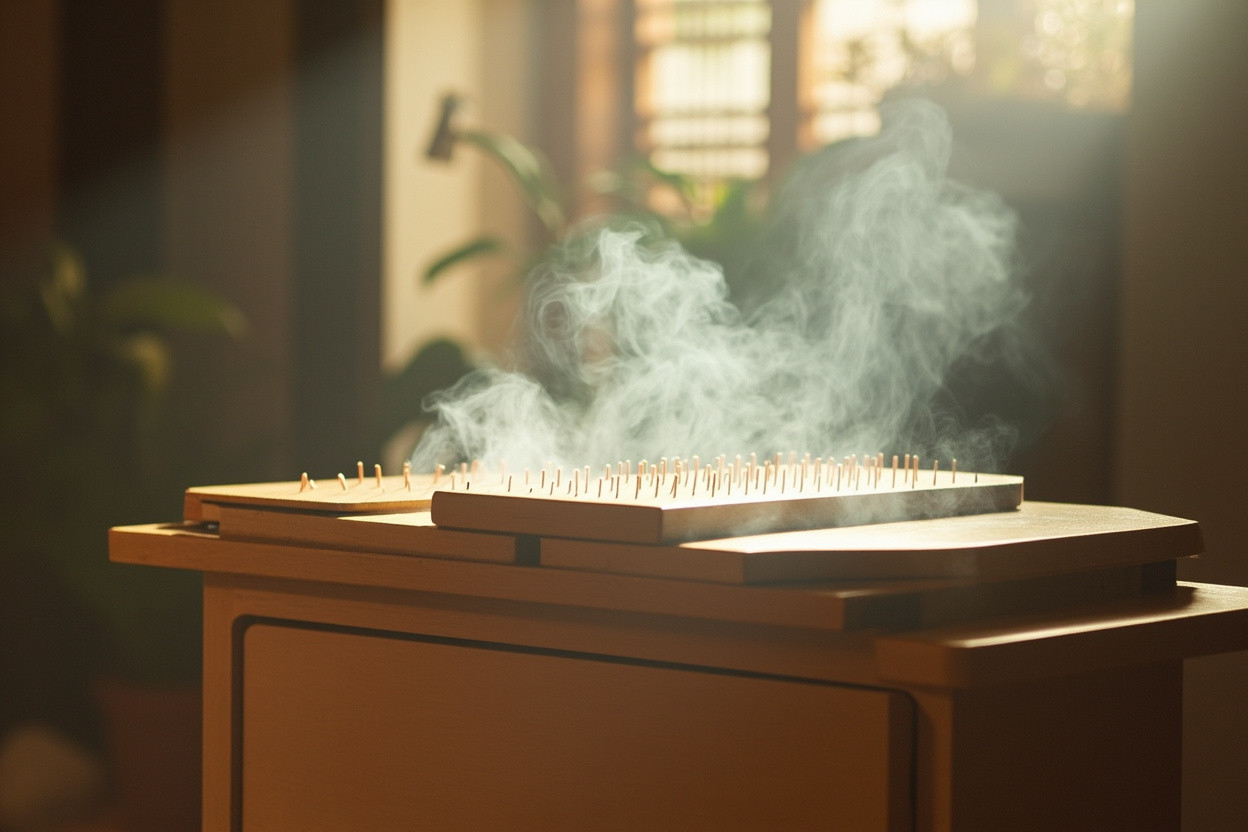
Traditional Chinese Medicine has never separated aromatic therapy from acupuncture. The classical texts describe moxibustion — burning mugwort near acupuncture points — as inseparable from needle therapy. Incense is simply another aromatic tool used in the same framework.
The Aromatic-Acupoint Connection
TCM theory holds that aromatic substances enter the meridians. The nose is considered an extension of the lung, which governs skin and wei qi — the defensive energy that protects against external pathogens. Aromatics applied near the face and head affect the lung meridian directly.
When you burn incense and breathe the aroma, you are not just smelling. You are delivering aromatic compounds through the respiratory system into the meridian network.
Supporting Your Acupuncture Treatment
If you receive acupuncture, ask your practitioner about aromatic support. Burning calming incense before and during your treatment can enhance the relaxation response that acupuncture is trying to elicit.
Before treatment: Burning sandalwood or chrysanthemum for 15 minutes prepares the nervous system. You arrive more relaxed, which means the needles encounter less resistance.
During treatment: Light, low-aroma incense in the treatment room. The effect is subtle but cumulative over a course of treatment.
Home Aromatic Practice
Between acupuncture visits, maintain the aromatic environment at home. Daily incense practice supports the work done in the treatment room by keeping the nervous system in a state of partial relaxation.
Frequently Asked Questions
Can incense replace acupuncture?
No. Incense supports acupuncture; it does not replace it. The mechanical stimulation of specific points with needles creates effects that aromatic therapy alone cannot produce.
What incense should I use with acupuncture?
Calming aromatics — sandalwood for general relaxation, chrysanthemum if there is liver heat component (stress, frustration, irritability). Avoid stimulating incenses like camphor before or during treatment.
Related Articles
Integrate Aromatic Support
Aromatic therapy and acupuncture work better together than either works alone. Ask your practitioner about incorporating incense into your treatment protocol.