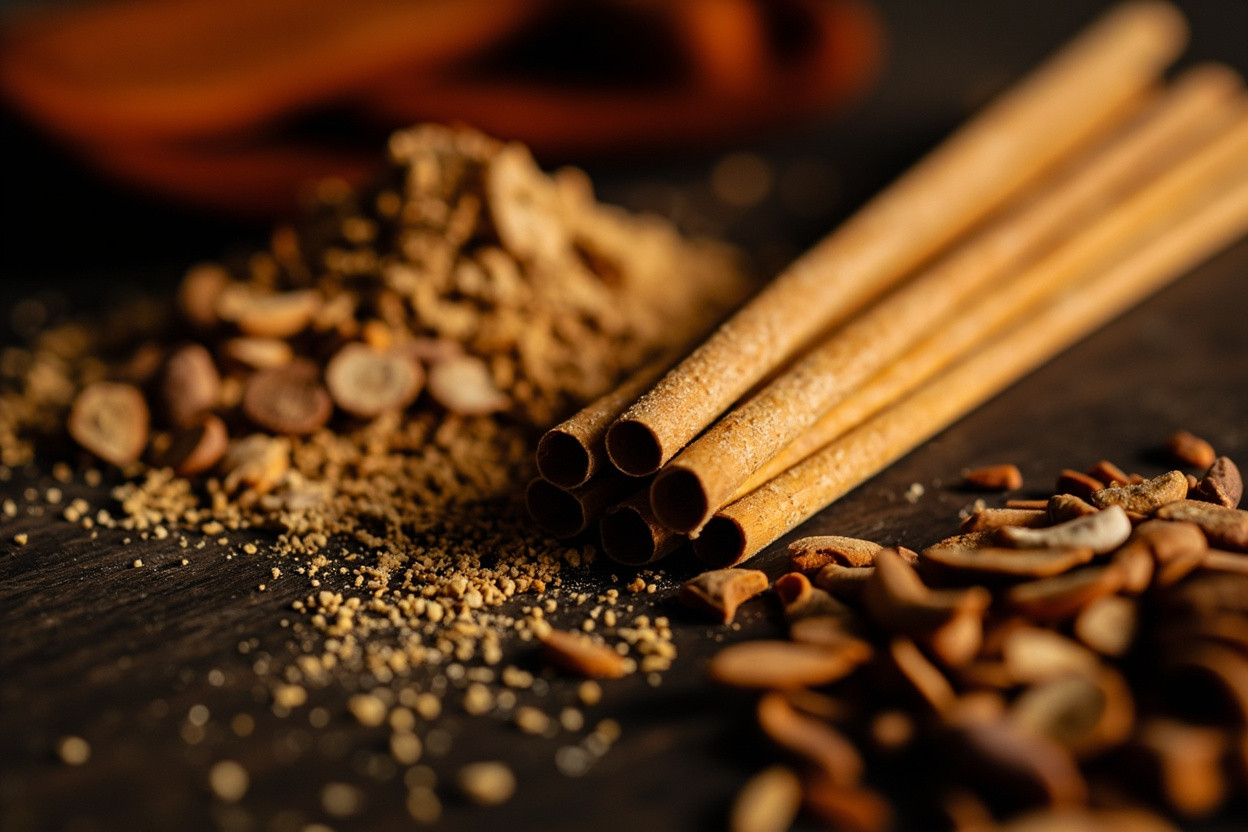
Sandalwood. Tanxiang in Chinese. The most studied incense material in the world, and the one that appears most consistently across every traditional pharmacopeia and incense manual for the past three thousand years.
The Scientific Evidence
Santalol, the primary active compound in sandalwood, has been documented in peer-reviewed research for its effects on the nervous system. It does not simply smell pleasant — it actively modulates autonomic nervous system function.
Studies show sandalwood aroma reduces heart rate, lowers cortisol levels, and improves sleep quality without causing the grogginess associated with pharmaceutical sleep aids.
The Classical Understanding
The Bencao Gangmu describes sandalwood as “entering the lung and spleen meridians, regulating qi, clearing heat, and calming the spirit.” This is not mystical language — it describes what practitioners observed: sandalwood affects respiration, digestion, and mental state simultaneously.
Uses and Applications
For sleep: Burn 0.3 grams, 30 minutes before bed. The compounds prepare the nervous system for rest without sedating.
For focus: Burn during work or study. The effect is subtle but measurable — scattered attention becomes more manageable.
For meditation: The classical use. Creates the aromatic environment that supports contemplative states.
Frequently Asked Questions
Is all sandalwood the same?
No. Indian sandalwood (Santalum album) is considered the premium grade. Hawaiian sandalwood is excellent. Synthetic sandalwood oil is not the same — it lacks the full aromatic complexity of natural wood.
How much should I use?
Less than you think. 0.2 to 0.4 grams per session. Natural sandalwood is concentrated; a little goes far.
Related Articles
Start with Quality
The difference between quality sandalwood and cheap alternatives is substantial. Invest in the best you can afford.