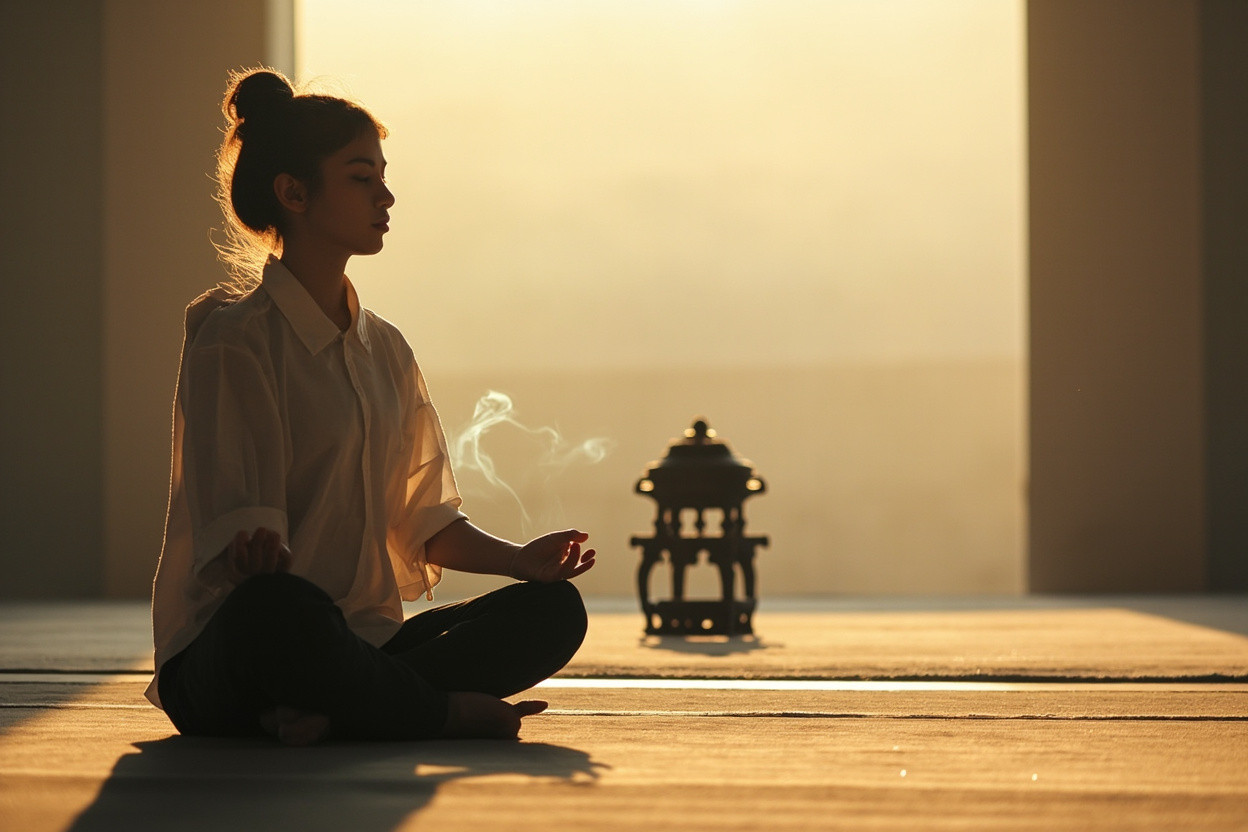
You have tried meditation apps. You have tried breathing exercises. You have tried just sitting there and telling yourself to think of nothing. What you have not tried: burning the right incense before you sit.
Incense and meditation are not separate practices in traditional Chinese culture. They are one practice. The aroma prepares the space. The space prepares the mind. The mind, once settled, allows the meditation to happen naturally.
The Classical Connection
In Chinese meditative traditions, burning incense served a specific functional purpose beyond symbolism. The aromatic compounds released during combustion have measurable effects on brain activity. Sandalwood, in particular, has been studied for its impact on the limbic system — the part of the brain that processes emotion and controls the autonomic nervous system.
When you burn sandalwood before meditation, you are not creating ambiance. You are chemically preparing your nervous system for the state you are trying to access.
The Preparation Ritual
Do not try to meditate while the incense is still in its initial burst phase. The first five minutes of burning are the most intense — the smoke is visible, the aroma is overwhelming. This is not the time to sit.
Light the incense. Step away. Let the initial combustion complete. The santalol and other compounds are released most intensely in the first few minutes, filling the room. After five to seven minutes, the burn stabilizes. The aroma becomes subtler, more layered. This is when you sit.
The window: seven to twenty minutes after lighting. This is when the aromatic environment is at its most effective for meditation support.
The Incense Types for Meditation
Sandalwood (檀香) — The benchmark. Settles the nervous system without suppressing cognitive function. Use for seated meditation, not for walking meditation.
Agarwood (沉香) — The advanced choice. Complex aromatic profile that reveals different notes as it burns. Particularly effective for longer meditation sessions (45 minutes or more). Less direct than sandalwood, more subtle.
Cedar (雪松) — For meditation that involves physical movement afterward. The aroma is more grounding, more earthy. Good for qigong or tai chi preceded by meditation.
Camphor (樟脑) — Not for beginners. Very stimulating, very clearing. In classical texts, used for specific advanced practices. Generally too sharp for standard meditation.
The Physical Setup
Place the burner at least three feet from where you will sit. The smoke should reach you indirectly. If you can smell it clearly without leaning toward the burner, you are at the right distance.
Ventilation: open a window. Not wide — just enough to prevent the room from becoming oxygen-depleted and over-aromatic. The combination of incense aroma and fresh air is the classical ideal.
Do not burn incense in a room that is completely sealed. The smoke particles, even from an electric burner, accumulate in ways that can cause irritation over extended periods.
Duration and Timing
Twenty to thirty minutes of burning before meditation is optimal. This allows time for the aromatic compounds to saturate the space and for your nervous system to begin transitioning.
If you meditate for thirty minutes, burn for twenty minutes first. If you meditate for an hour, burn for thirty minutes first. The incense should stop burning before you finish meditating — continuing to burn incense during the meditation itself is less effective than stopping at the transition point.
The transition moment — when you finish burning and begin sitting — is the key moment. This is the intentional boundary between the ordinary world and the meditative state.
Frequently Asked Questions
Can I burn incense during meditation?
You can, but it is less effective than burning before. The classical practice was always to burn first, then sit. The incense prepares the space. The prepared space supports the meditation. Burning during meditation changes the dynamic.
What if I do not have an electric burner?
Any incense burner works. The key is ventilation and distance. Charcoal burners produce more particulate — keep the window more open. Cone incense produces more smoke initially — wait longer before sitting.
How much incense should I burn?
0.3 to 0.5 grams. The goal is not to fill the room with smell. The goal is to create a subtle aromatic environment that your nervous system recognizes as the preparation for meditation.
Related Articles
Try It Tonight
Tonight, before your next meditation: light 0.4 grams of sandalwood on your electric burner. Step away. Wait seven minutes. Then sit. See what happens when you let the incense do the preparation your willpower cannot do alone.