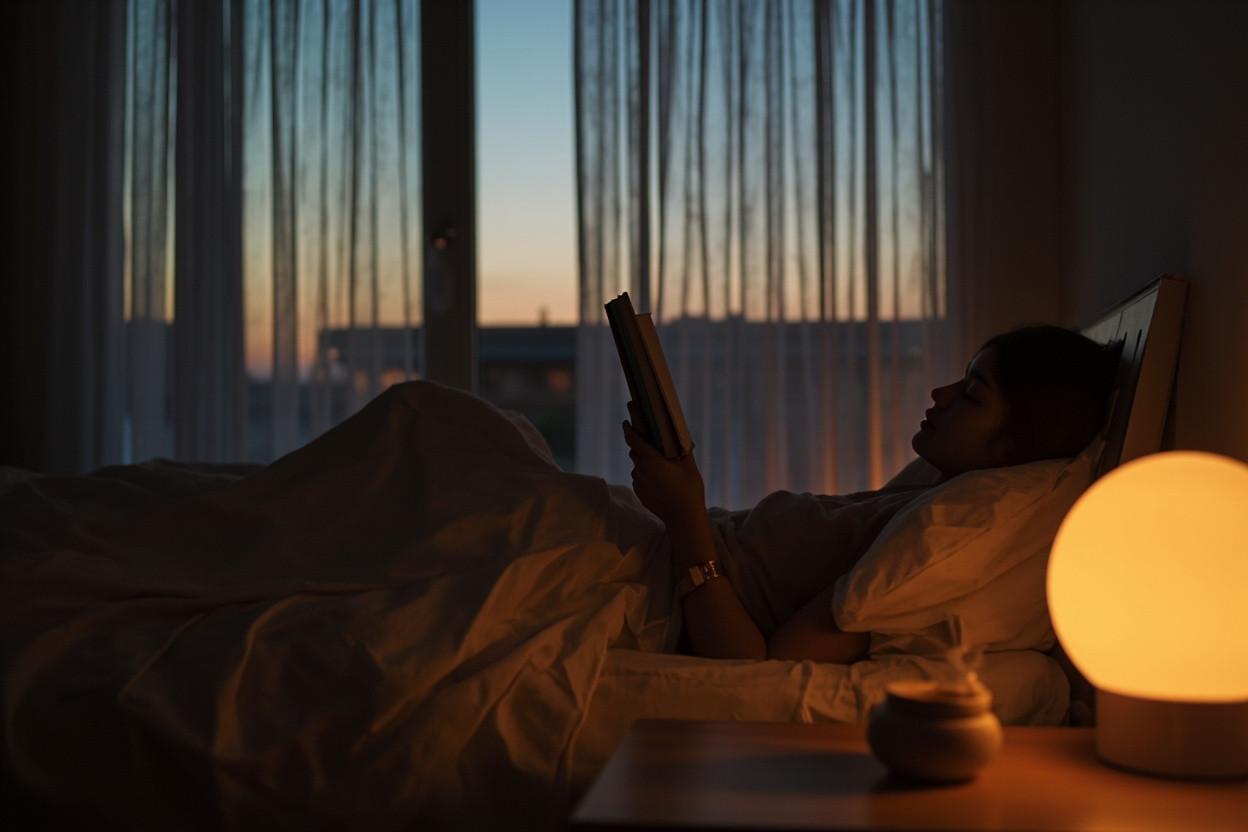
You have been lying in bed for an hour. Eyes closed. Mind racing. Tomorrow task list. That conversation from three days ago. Why you said that thing in the meeting. Sleep will not come. You tried everything — no screens, cool room, white noise. But you have not tried this: burning the right incense, at the right time, in the right way, for sleep.
Sleep incense is not new. It goes back centuries in traditional Chinese wellness practice. And it works — not because of aromatherapy magic, but because of how specific aromatic compounds interact with your nervous system, your circadian rhythm, and your body ability to transition from daytime tension to nighttime rest.
The Bedtime Incense Ritual: Timing Is Everything
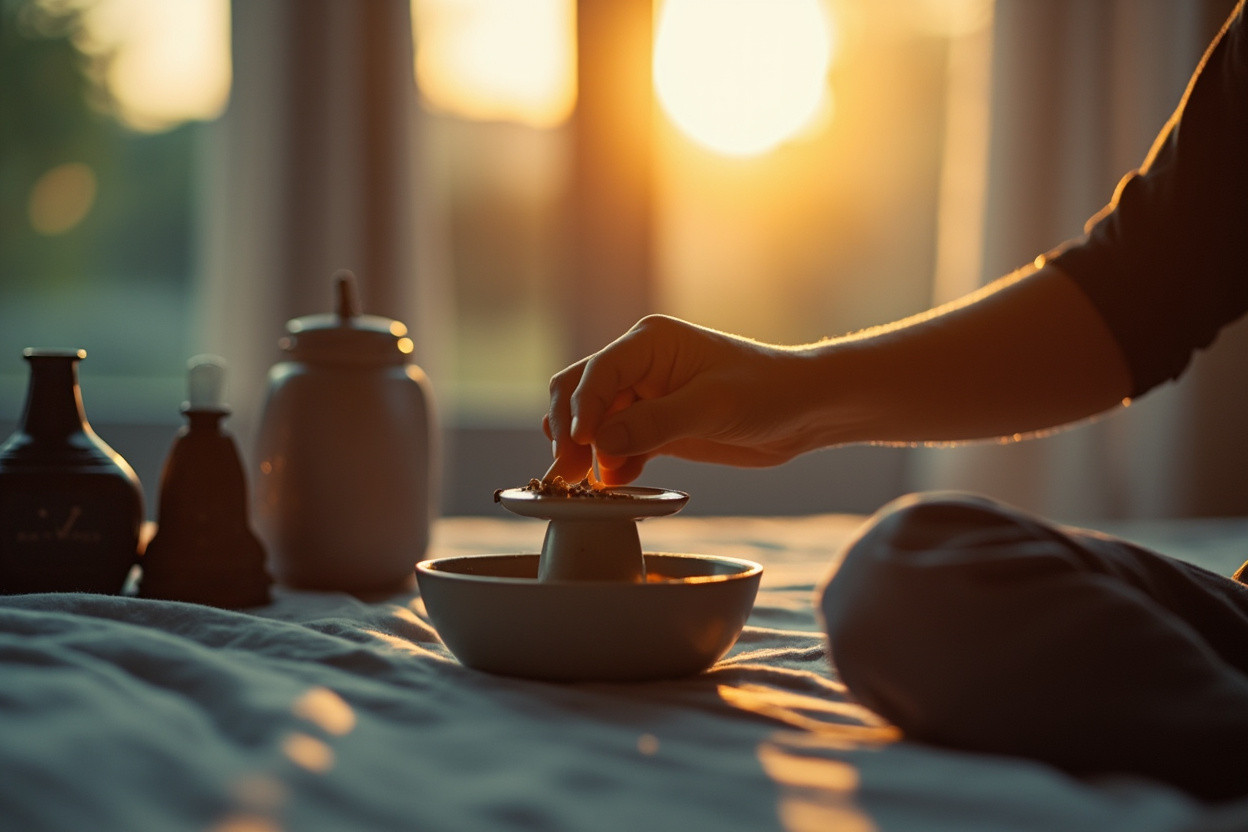
Here is the mistake most people make: they burn incense right before bed, while they are already lying down. This is backwards. The incense needs 30 to 45 minutes to shift your nervous system before you intend to sleep. Burn it, then do something calming — read a book, gentle stretching, skincare routine. By the time you lie down, your body is already transitioning toward rest.
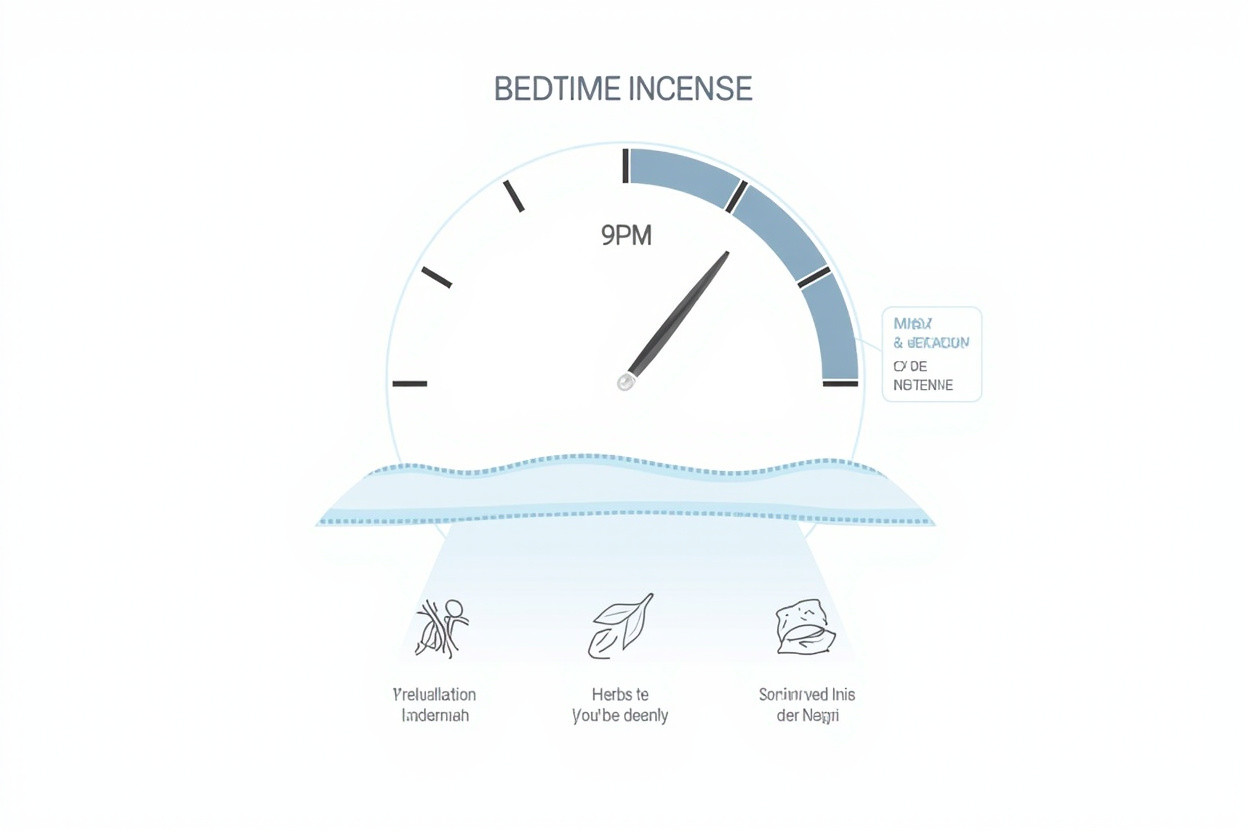
The optimal window: 9 to 10 PM. This is when your body begins producing melatonin naturally. Burning calming incense during this window amplifies what your body is already trying to do. Burning too early — before 8 PM — can make you drowsy at the wrong time. Burning too late — after 11 PM — means you missed the window.
The Best Herbs for Sleep: What the Classics Recommend
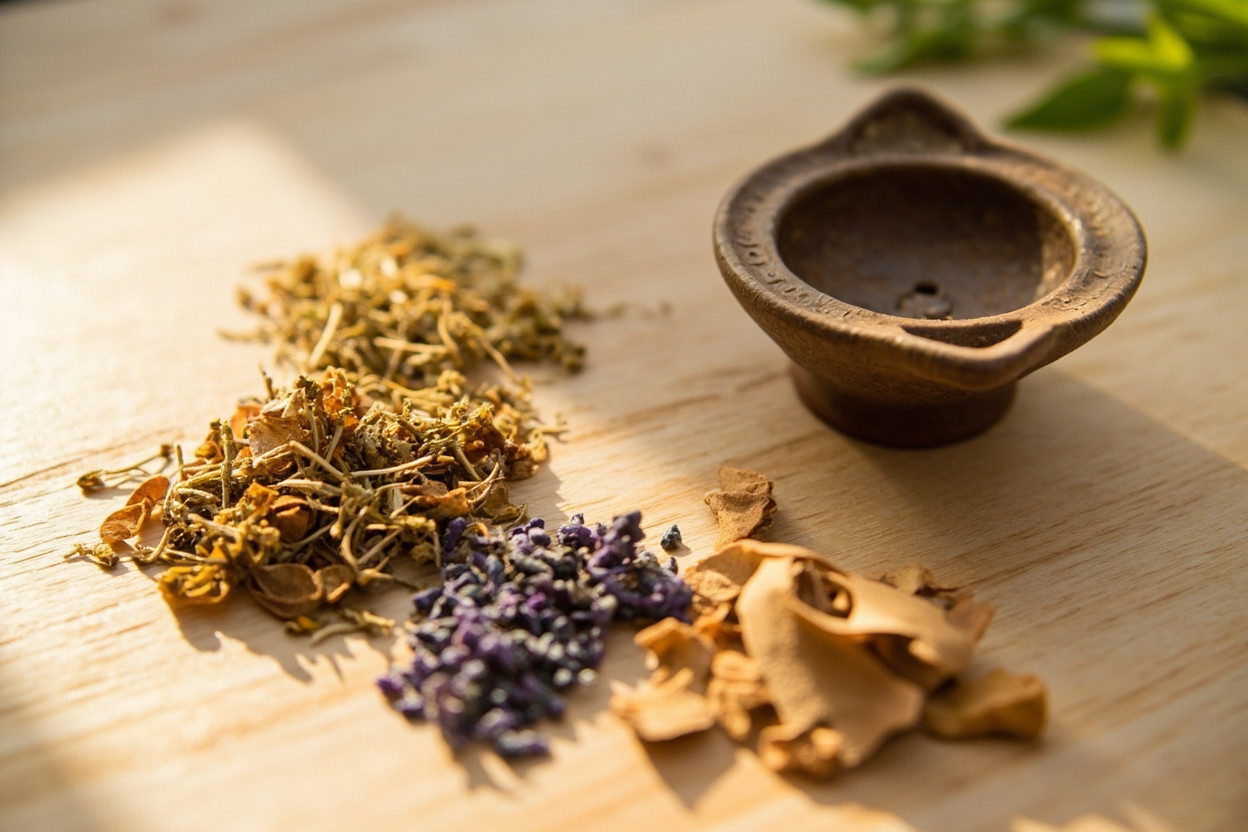
Not all incense is calming. Some is activating — meant for morning use, for meditation, for focus. For sleep, you want specific properties: sedating, grounding, calming without sedating. The Bencao Gangmu and other classical texts describe these clearly.
Chrysanthemum (菊花) — 「清肝明目,安神定魄」. Chrysanthemum clears liver heat and calms the spirit. It is particularly effective if your insomnia comes from mental agitation, screen overstimulation, or general tension. The white variety (白菊) is gentler; the yellow (黄菊) is more clearing.
Valerian Root (缬草) — Not native to China, but widely used in modern TCM sleep formulas. It has documented sedating properties that work synergistically with traditional Chinese herbs. A small amount — 10 to 15 percent of your blend — amplifies the overall sleep effect.
Sandalwood (檀香, tanxiang) — The classical texts describe sandalwood as particularly effective for calming an overactive mind. It is grounding, settling, and does not sedate. It brings scattered energy back down without making you drowsy.
Magnolia Flower (辛夷) — 「通鼻窍,安五脏」. Magnolia flower has a settling quality that calms the five脏 organs. It is particularly effective when insomnia comes from digestive issues or sinus congestion.
When to Burn: Reading Your Body Clock
Traditional Chinese medicine aligns sleep with the liver and gallbladder hours — 11 PM to 3 AM. During these hours, the liver is most active in its work of detoxification and blood purification. If you are consistently awake during this window, you disrupt this process.
The ideal bedtime incense session starts at 9 or 10 PM. Burn for 20 to 30 minutes. Then stop. Unplug the burner. The residual aroma continues for another 30 to 60 minutes. Your sleep window should begin by 11 PM at the latest.
If you are a night owl by nature — if your natural sleep cycle runs later — adjust accordingly. The principle remains the same: start 90 minutes before your intended sleep time, during the window when your body is beginning melatonin production.
A Modern Bedroom Practice
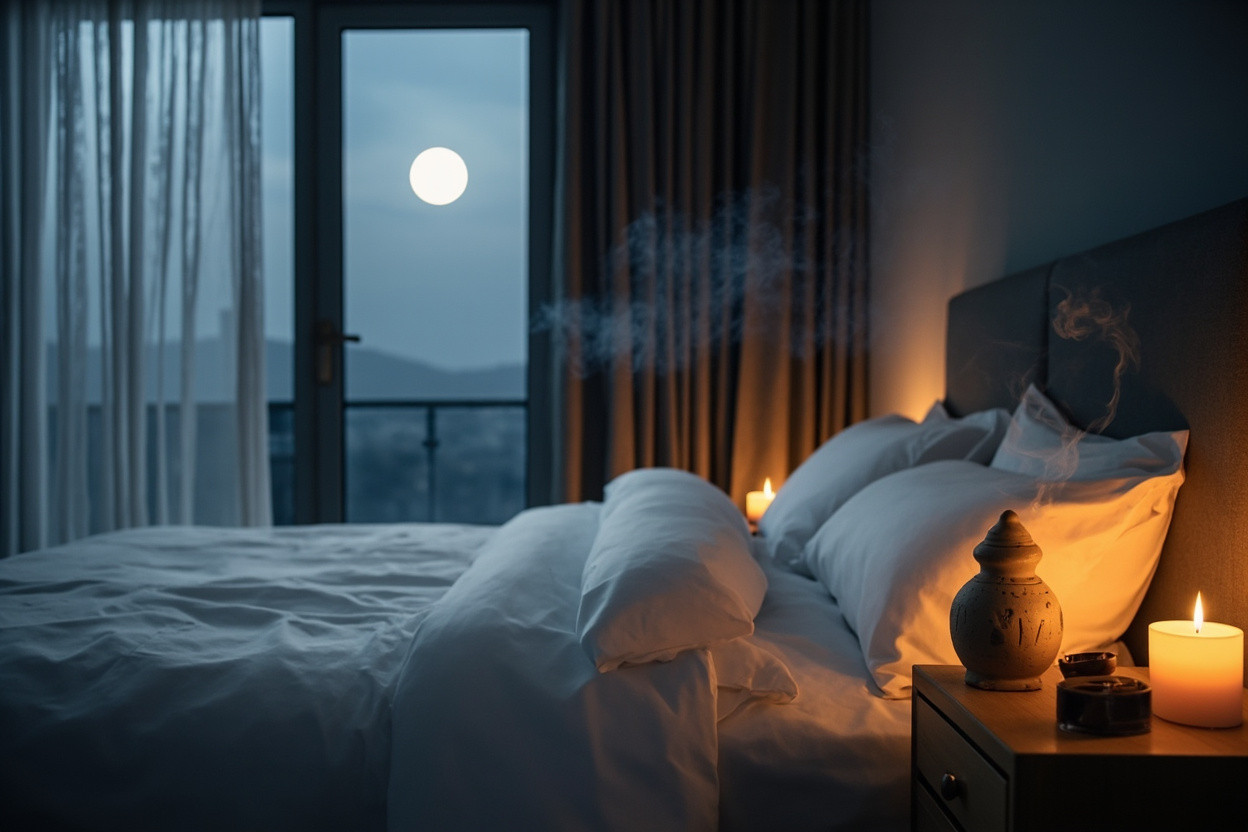
You do not need a traditional Chinese bedroom. Your studio apartment works. Your minimalist bedroom works. The practice adapts to your space, not the other way around.
The essentials: an electric indirect burner (no flame, no smoke alarm concerns), good ventilation (crack a window), and 0.3 to 0.5 grams of sleep blend. Place the burner at least three feet from your pillow, on a dresser or desk. Point it away from your face.
What does not work: burning incense with the door closed and the AC running. This concentrates the smoke and overwhelms your lungs. Open a window, even a small amount. Air flow is not optional — it is essential for respiratory safety.
Frequently Asked Questions
How is sleep incense different from regular incense?
Most incense is designed for ambiance or meditation. Sleep incense is designed specifically to calm the nervous system and support the sleep transition. The herbs used have different properties. Chamomile, valerian, and specific sandalwood varieties are sleep-supporting. Energizing herbs like peppermint or ginseng are not.
Can I burn incense while I sleep?
No. Burning incense while sleeping is not recommended for several reasons: respiratory irritation from prolonged smoke exposure, fire risk if you roll over, and the fact that the nervous system should not be processing incense compounds during deep sleep. Burn before bed, not during sleep. The aroma environment established before sleep continues to work through the night.
How long does it take to work?
Most people notice a difference within the first week of consistent practice. The herbs accumulate — consistent nightly burning is more effective than occasional use. If you do not notice any difference after three weeks, adjust your formula. Your body chemistry might respond better to different herbs.
Related Articles
- Seasonal Incense: Scenting Each Season of Your Life
- Dampness Dispelling Incense: Ancient TCM Formula
- Mood Incense: Ancient Chinese Formula for Emotional Balance
Tonight, Before You Lie Down
Tonight, 30 minutes before you plan to sleep: 0.4 grams of chrysanthemum and sandalwood on your electric burner, window cracked, burner on the dresser. Read something calming. Let the aroma work. See what happens when you work with your body instead of against it.