
Your home smells like nothing. Or worse — it smells like the synthetic lavender plug-in you bought at the grocery store. Either way, it is not yours. The Chinese tradition of home fragrance is different. It is about choosing scents that reflect your space, your season, and your state of mind. Not masking odor. Creating atmosphere.
「居家中而有香,非止悦人鼻观,实以香养性,以气养神。室有清香,人自安焉。」—— 清·李渔《闲情偶寄》
Why Chinese Home Fragrance Is Different
Western air fresheners aim to neutralize: they mask bad smells with synthetic alternatives. Chinese home fragrance operates on a different principle. Fragrance should influence your state — calming, uplifting, focusing, or relaxing — depending on what you need.
Fragrance by Room
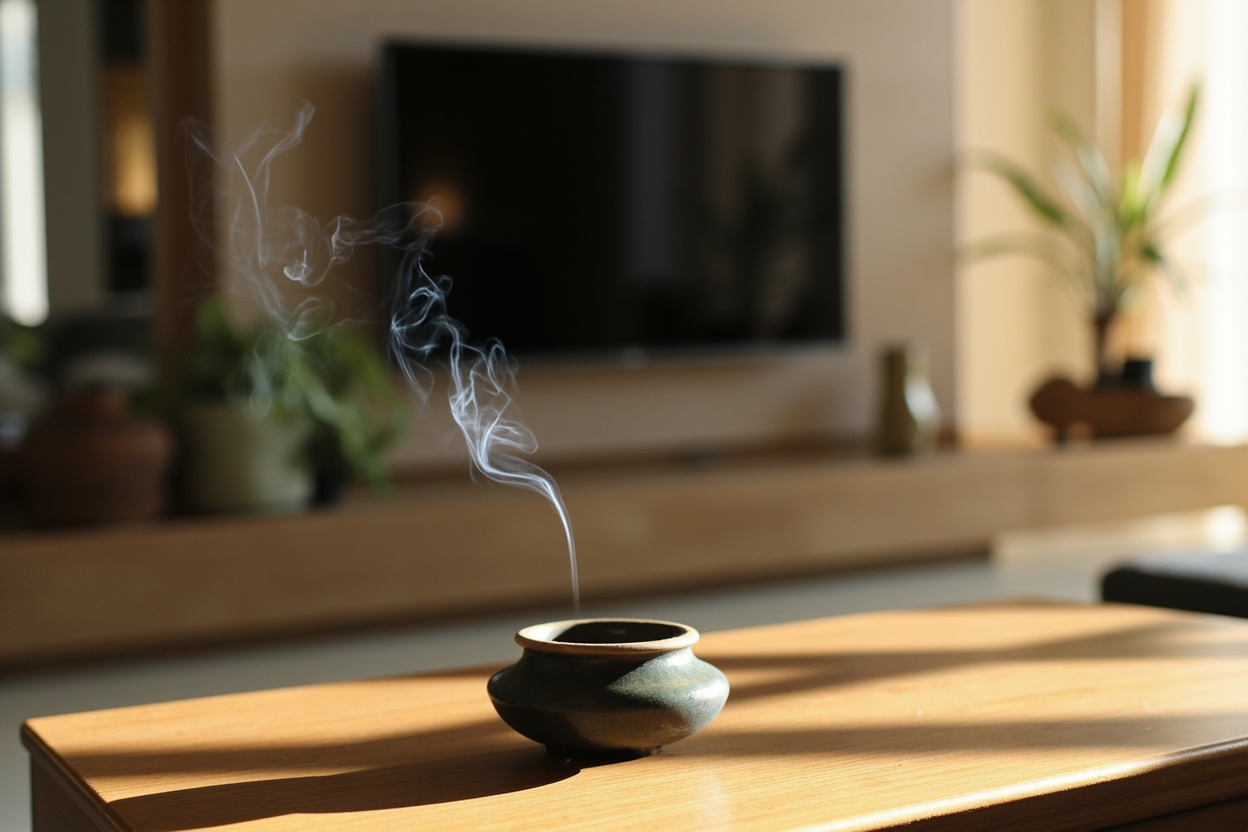
Living Room
The living room is for gathering and conversation. Warm, complex scents work well here: 沉香 (agarwood) blends or a light 檀香 (sandalwood). Avoid anything too sedative.
Study and Workspace
The mind needs support here. 沉香 (chenxiang) supports mental clarity without stimulation. Some practitioners prefer 艾草 (mugwort) for its sharp, clarifying quality.
Bedroom
Rest and intimacy. Soft, sweet scents: 檀香 (sandalwood), 薰衣草 (lavender), or 合香 blends. Burn for 20-30 minutes before sleep, then extinguish.
Tea Room
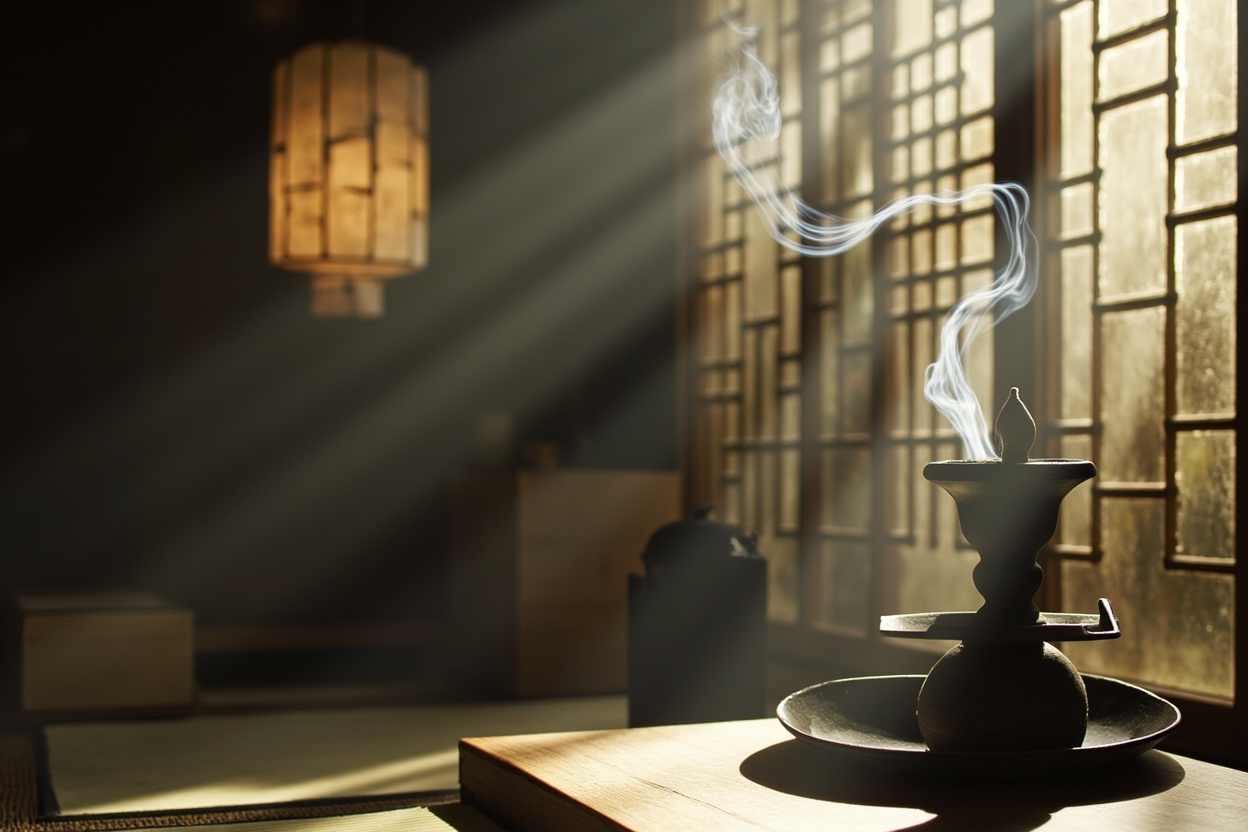
The tea room is where incense tradition and tea culture intersect most beautifully. A small炭炉 (charcoal burner) beside the tea table, with a single incense stick burning during the tea session, creates an atmosphere of contemplative calm.
Fragrance by Season
Chinese home fragrance tradition ties scent strongly to season. Change your home fragrance with the weather, just as you change diet and clothing.
- Spring: Light, floral scents — 茉莉 (jasmine), 桂花 (osmanthus)
- Summer: Cool, clearing scents — 白檀 (white sandalwood), 薄荷 (mint)
- Autumn: Complex, warming scents — 沉香 (agarwood) in its various forms
- Winter: Deep, warming scents — 乳香 (frankincense), 龙涎香 (ambergris)
How to Use Incense in Home Spaces
Less is more in home fragrance. A small stick in a corner burner produces sufficient fragrance for an average room.
- Timing: Burn for 20-40 minutes, then extinguish. The fragrance lingers for an hour or more.
- Placement: Elevated positions (shelves, tables) allow fragrance to circulate naturally.
- Ventilation: A cracked window improves circulation and prevents over-concentration.
Frequently Asked Questions
Is it safe to burn incense in a small apartment?
Yes, with basic precautions. Ensure ventilation — a cracked window is sufficient. Use a proper incense burner. Never leave burning incense unattended.
How long does incense smell last in a room?
Generally 1-3 hours depending on ventilation and incense type. After extinguishing, the aromatic impression fades over 30-60 minutes.
Can I use essential oils instead of burning incense?
Yes — but the effect differs. Burning incense produces both fragrance and subtle smoke that affects mood differently than oil diffusers. Both are valid within the Chinese tradition.
How do I choose a fragrance for a specific mood?
沉香 (agarwood) for calm and introspection. 檀香 (sandalwood) for focus and warmth. 茉莉 (jasmine) for uplifting energy. Start with these associations and adjust based on your own responses.
What about pets and incense?
Both cats and dogs have much more sensitive respiratory systems. If you have pets, burn incense in well-ventilated areas only. Consider non-burning alternatives if your pet shows sensitivity.