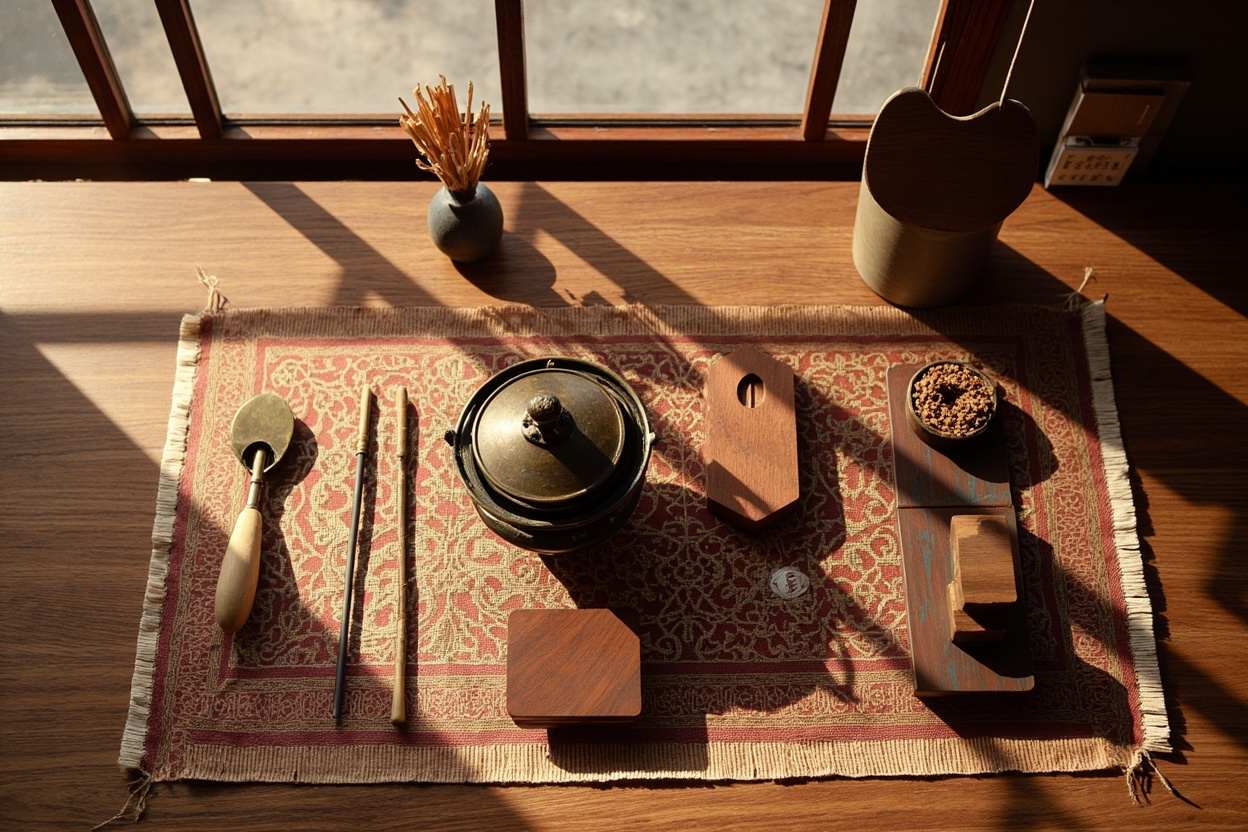
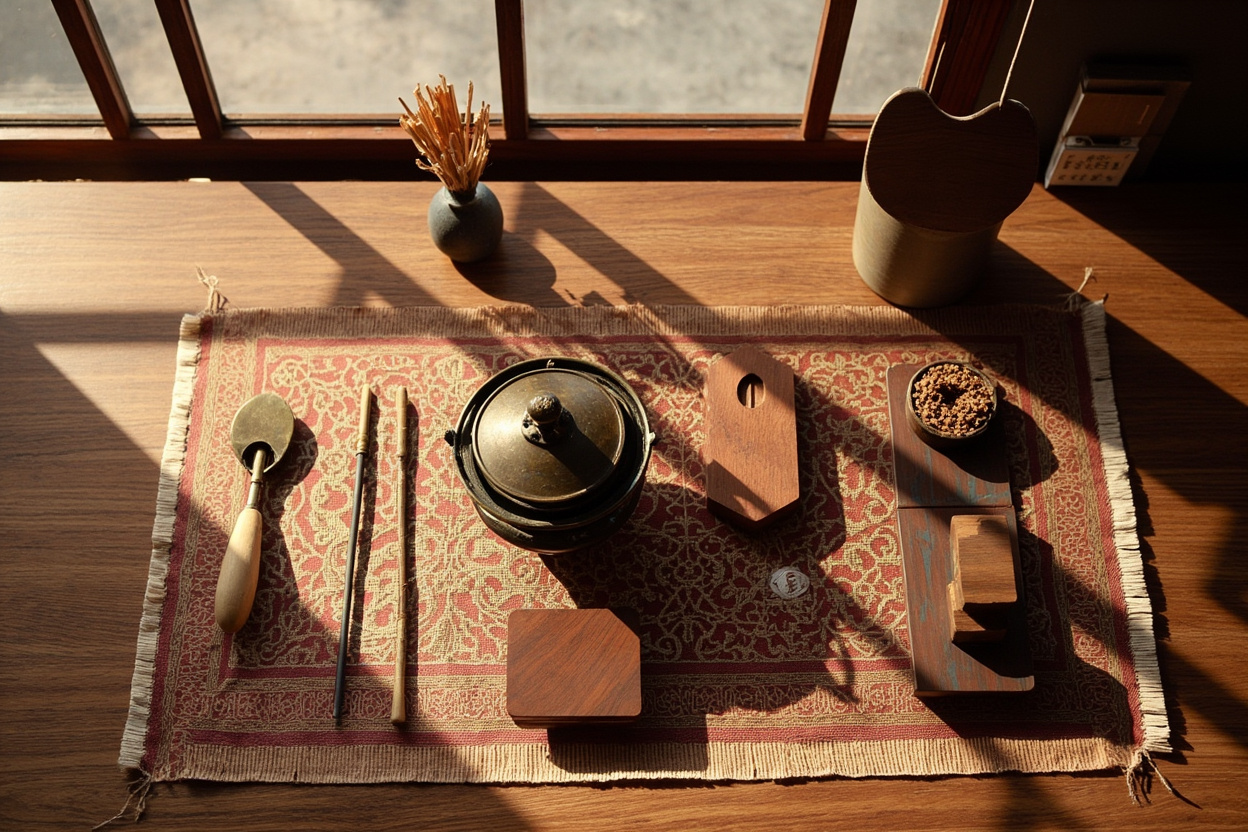
You have got your first incense sticks. Or maybe a small bag of raw agarwood chips. But now what? You need somewhere to burn it, something to hold the ash, tools to work with the materials. Chinese incense practice requires a modest toolkit — and buying the right things from the start saves money and frustration later.
This guide covers everything you actually need to start, organized by budget level. No fluff, no items you will never use.
What Tools Do You Actually Need?
Chinese incense tools can be elaborate — the imperial court had dozens of specialized items for different ceremonies. Your apartment does not need all of that. For a functional starter practice, you need fewer than ten items.
Think of your toolkit in three categories:
- Heat source — how you apply flame to the incense
- Vessel — something to contain the burn
- Accessories — tools for handling materials and ash
That is it. Everything else is optional for beginners.
The Essential Tools
Before buying anything, understand the three categories of tools you will encounter:
1. The Incense Burner (香炉 / Xianglu)
The burner is the centerpiece. Everything else serves it. For beginners, two styles work best:
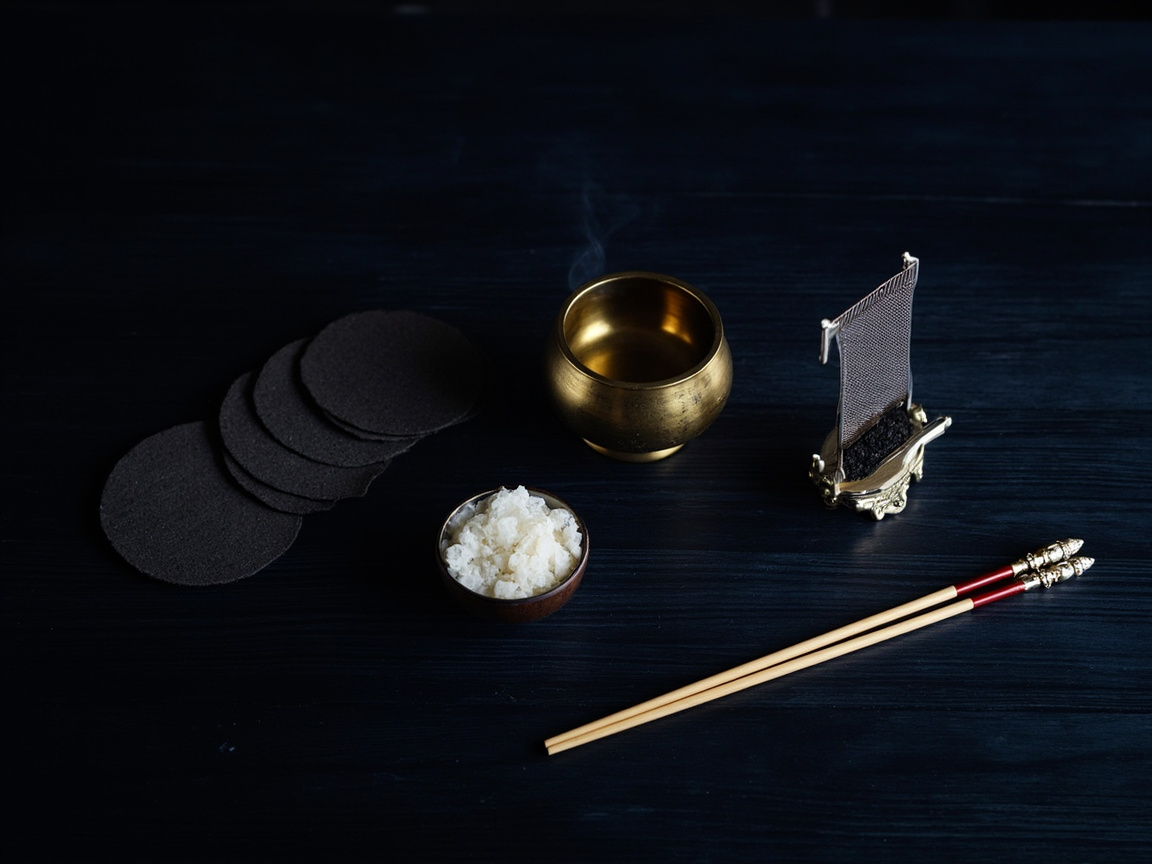
- Bowl burner (杯炉): A small hemispherical brass or ceramic bowl. Place a charcoal disk inside, rest a metal screen on top, put your incense on the screen. Simple, inexpensive (USD 15-40), and produces clean smoke. Best for beginners working with powdered or chip incense.
- Standing burner (立炉): A vertical cylinder or box-style burner with an opening near the top. More stable for burning stick and cone incense. Mid-range price (USD 30-80).
Avoid elaborate antique-style burners with intricate carvings as your first purchase. The crevices collect ash and are hard to clean. Start simple.
「焚香七要:香炉居首,次香盒、炉灰、香炭墼、隔火砂片、灵灰、匙箸,皆不可缺。」—— 明·高濂《遵生八笺》
2. Charcoal (炭 / Tan)
Unless you are burning prepared stick incense with a built-in bamboo core, you need charcoal. Not the barbecue kind — incense charcoal is small, thin, and burns at the right temperature.
Two types:
- Quick-light charcoal (速燃炭): Sparked with a lighter, burns in minutes. Convenient but produces a slight chemical smell at ignition. Fine once burning steadily.
- Wood charcoal (木炭): Requires a torch to light, burns longer and cleaner. Preferred by serious practitioners. More authentic experience but requires more setup.
3. Ash and Ash Tools
When charcoal burns, it produces ash. You need:
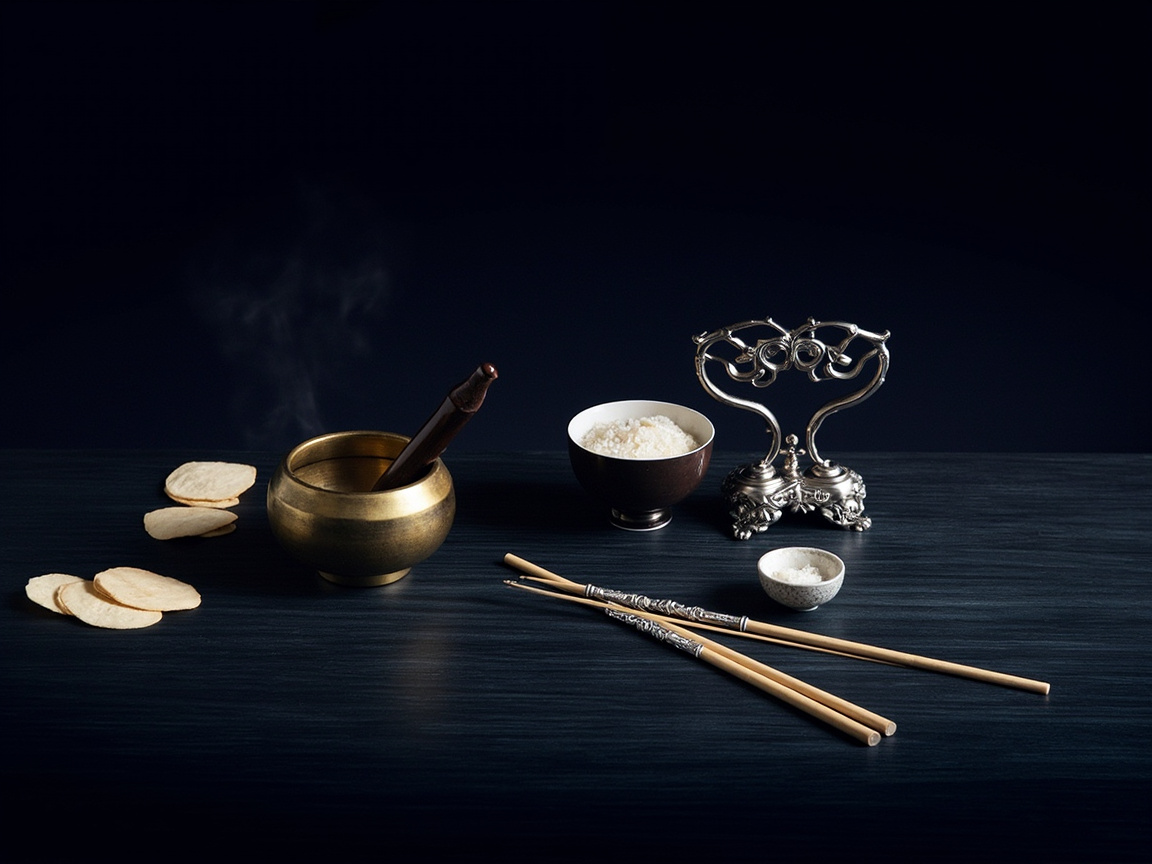
- Fine ash (香灰): Placed in the bottom of the burner to insulate the base and absorb heat. Use specifically prepared incense ash — not fireplace ash. Chinese ash (sourced from paulownia or cypress) is white, clean, and holds charcoal well.
- Ash screen (隔片): A thin metal (usually silver or stainless steel) disk placed between the ash and the incense. Keeps powder materials from falling into the ash bed.
- Ash rake / charcoal holder (香铲/炭钳): Small metal tools for moving hot charcoal without burning your fingers. A good 炭钳 (tong) is essential once you start working with open charcoal.
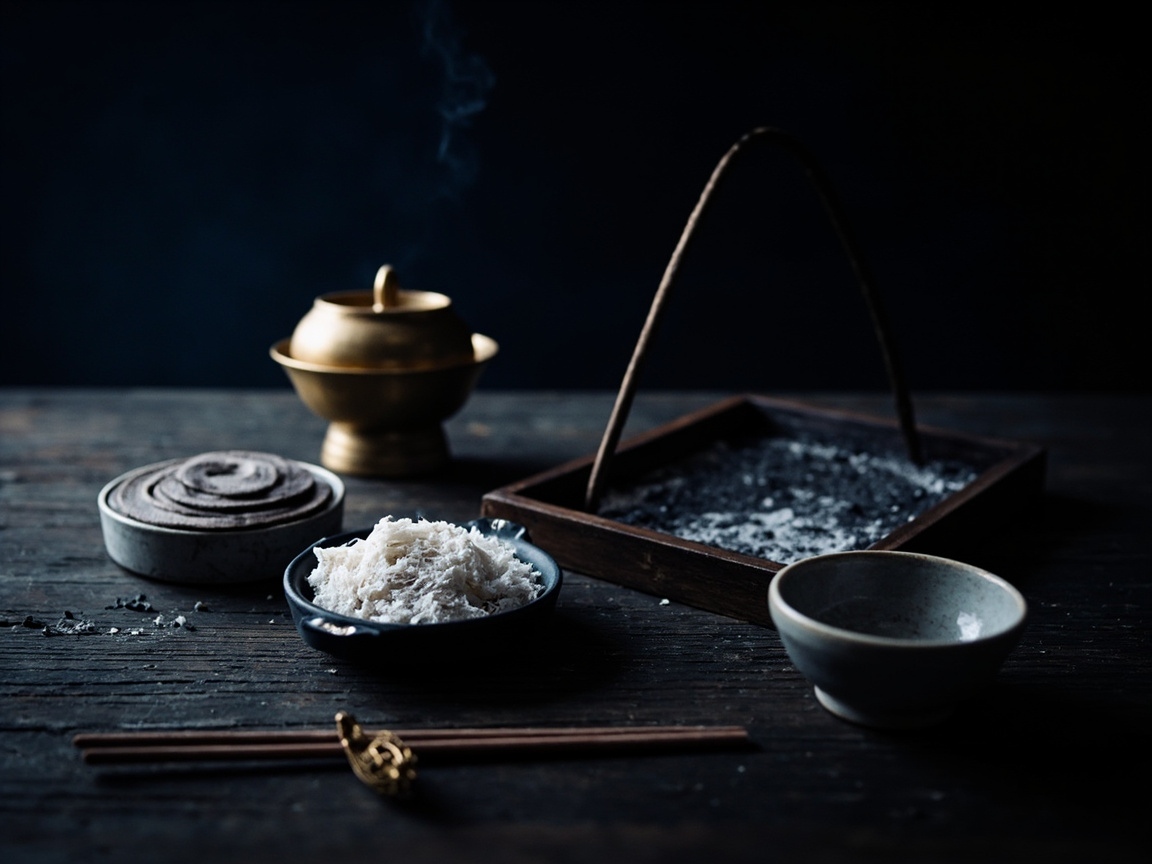
Budget Starter Kit: Under $50
For the complete beginner who wants to try the practice without major investment:
- Bowl burner: Brass or ceramic, 8-10cm diameter — USD 15-25
- Quick-light charcoal disks: 50 pieces — USD 8-12
- Incense ash: 500g bag — USD 5-8
- Basic ash screen: Stainless steel, 6cm — USD 3-5
- Small 炭钳 (tongs): USD 4-6
- Some incense sticks or chips to practice with: USD 10-15
Total: USD 45-71
Mid-Range Starter Kit: $50-$150
For the person who knows they enjoy the practice and wants tools that will last:
- Standing burner (ceramic or brass): USD 30-50
- Quality wood charcoal + torch lighter: USD 15-20
- Prepared incense ash (premium grade): USD 8-12
- Silver ash screen set (multiple sizes): USD 12-18
- 香箸 (incense tweezers/pencils): USD 5-8
- 香铲 (ash rake): USD 6-10
- 香席 (incense mat): A small woven or leather mat to protect your table surface — USD 8-15
- Good starter incense set (3-5 varieties): USD 20-35
Total: USD 96-168
Premium Starter Kit: $150+
For the committed practitioner who wants quality that holds value:
- Bronze or silver incense burner: USD 80-200
- Imported Japanese or Taiwanese charcoal: USD 20-30
- Handmade ash from a traditional maker: USD 15-25
- Full silver tool set (screen, rake, tongs, tweezers): USD 40-60
- Carved wooden or lacquer incense mat: USD 20-35
- Premium incense collection: USD 50-100
Total: USD 225-450
Where to Buy
The market is full of overpriced junk marketed to tourists. Here is where to actually buy:
- AliExpress / Taobao: Best prices for basic tools. Search in Chinese: 香炉, 炭钳, 香具套装. Buy from sellers with 4.8+ rating.
- Japanese retailers (Kikuchi, Shoyeido): Premium tools and charcoal. Worth the premium for charcoal especially.
- Amazon: Useful for English-language guides and some tool bundles, but quality is hit-or-miss.
Avoid airport gift shops, “Zen” themed boutiques, and anything marketed as “meditation kit” at over $100 for basic items.
Frequently Asked Questions
Can I burn incense without a special burner?
Yes — a heat-resistant bowl, plate, or dish works as a temporary vessel. Place a candle or tea light underneath to provide indirect heat, set a metal lid or screen on top, and rest your incense on that. It is not ideal, but it lets you practice before investing in tools.
How many tools do I really need to start?
Four items: a vessel (any heatproof bowl works), something to hold the ash, a way to apply heat (candle works in a pinch), and your incense. Everything else makes the practice smoother but is not required on day one.
Is it worth buying expensive tools as a beginner?
No. Buy the affordable set first. If you find yourself practicing daily for six months, then invest in better tools. Many beginners buy elaborate setups and lose interest — do not become one of them. Start modest, upgrade deliberately.
What is the most important tool?
The burner itself. A good burner — properly weighted, the right size for your space — makes the practice enjoyable. Everything else is secondary. Spend the most time choosing your burner and go affordable on accessories.