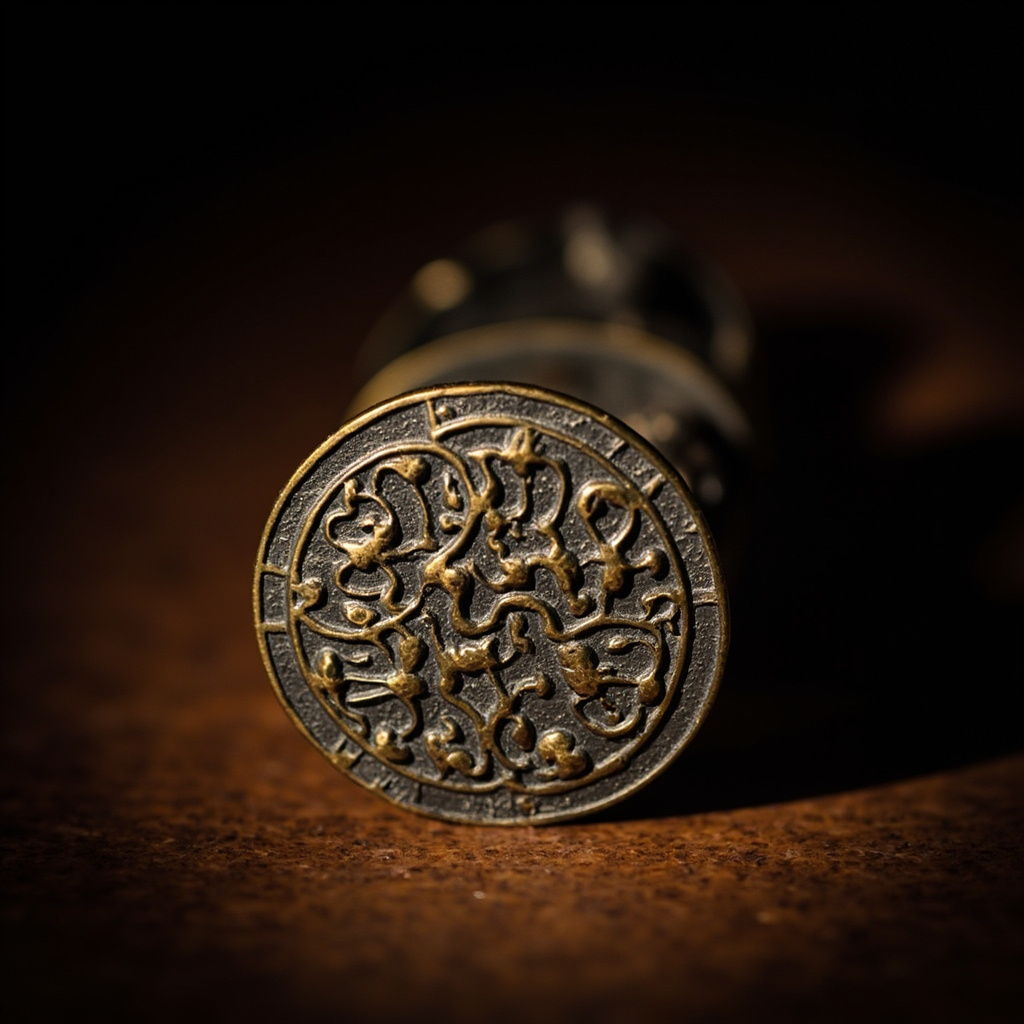
The first time I saw someone burn a 香篆 (xiangzhuān, seal incense), I did not understand what I was watching. A metal mold pressed into fine powder. A pattern emerged. Then fire. And the pattern slowly disappeared in smoke — but the smell was extraordinary.
I later learned that seal incense is one of the oldest forms of incense in China. It predates the stick. It predates the coil. It is, in many ways, the original Chinese incense art.
Here is what you need to know about it.
What Is Seal Incense (Xiangzhuan)?
Xiangzhuān literally means incense seal. It is incense powder pressed into decorative patterns using a metal or wood mold. The mold creates a precise design — clouds, flowers, characters, geometric patterns — that burns line by line when lit.
Unlike stick incense, where the entire stick burns at once, seal incense burns along the traced pattern. This makes it a contemplative practice. You watch the design disappear as you breathe the fragrance. The smoke traces your breath.
The「香乘」records that seal incense reached its peak during the Tang and Song Dynasties, when elaborate patterns became a status symbol among scholars and aristocrats. A beautiful seal incense set was as prized as a fine painting or a rare book.
The Design Element: Why Patterns Matter
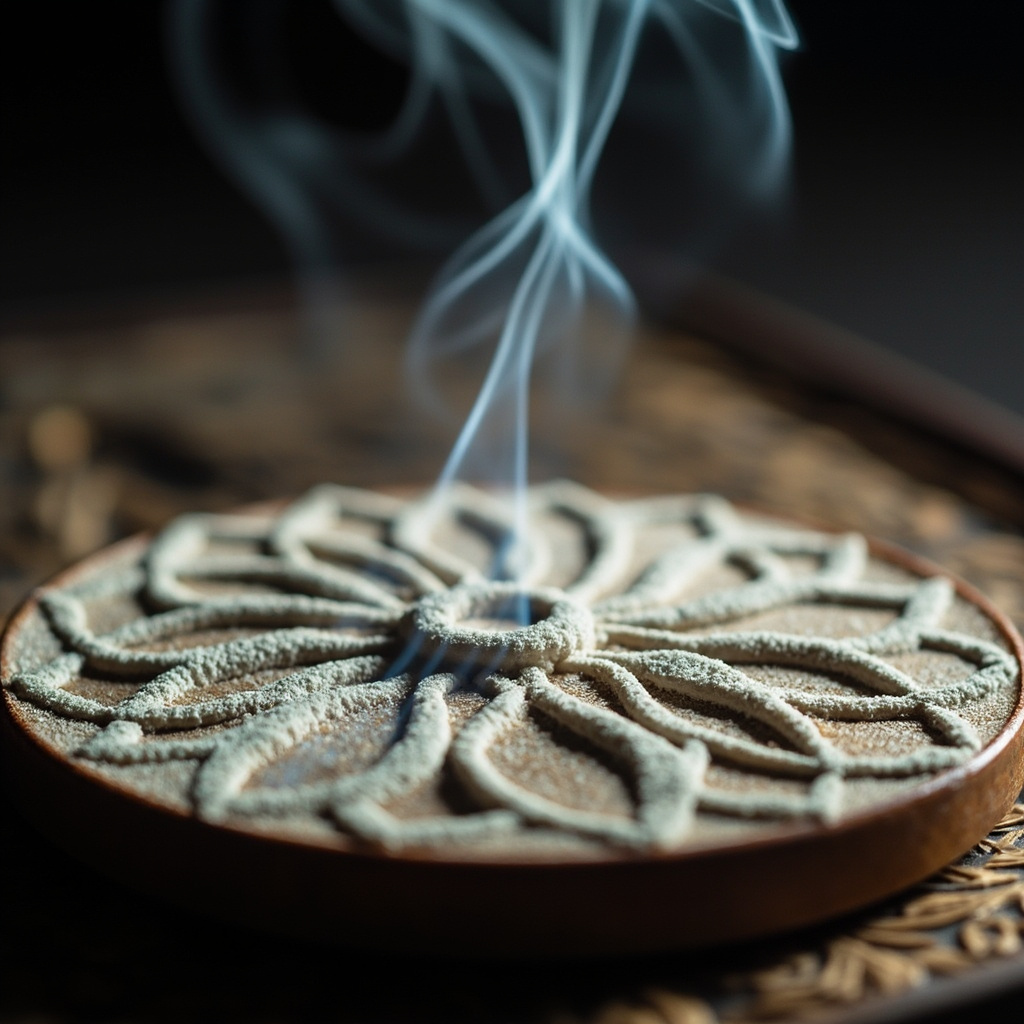
Not all seal patterns are equal. The complexity of the design signals the status and learning of the practitioner. Common patterns include:
Cloud patterns (云纹) — The most common. Represents heaven and the呼吸 of the cosmos.
Flower patterns (花纹) — Lotus, plum blossom, peony. Each flower carries different symbolism. Lotus for purity. Plum for winter perseverance. Peony for wealth.
Character patterns (字纹) — Auspicious characters like longevity (寿) or happiness (福). Burning a character pattern while reading or discussing its meaning adds layers to the practice.
Geometric patterns (几何纹) — Interlocking squares and circles. These patterns take longer to burn and are used for longer meditation sessions.
The choice of pattern is not arbitrary. It should match the occasion, the season, or the practitioners intention for the session.
How to Burn Seal Incense: The Process
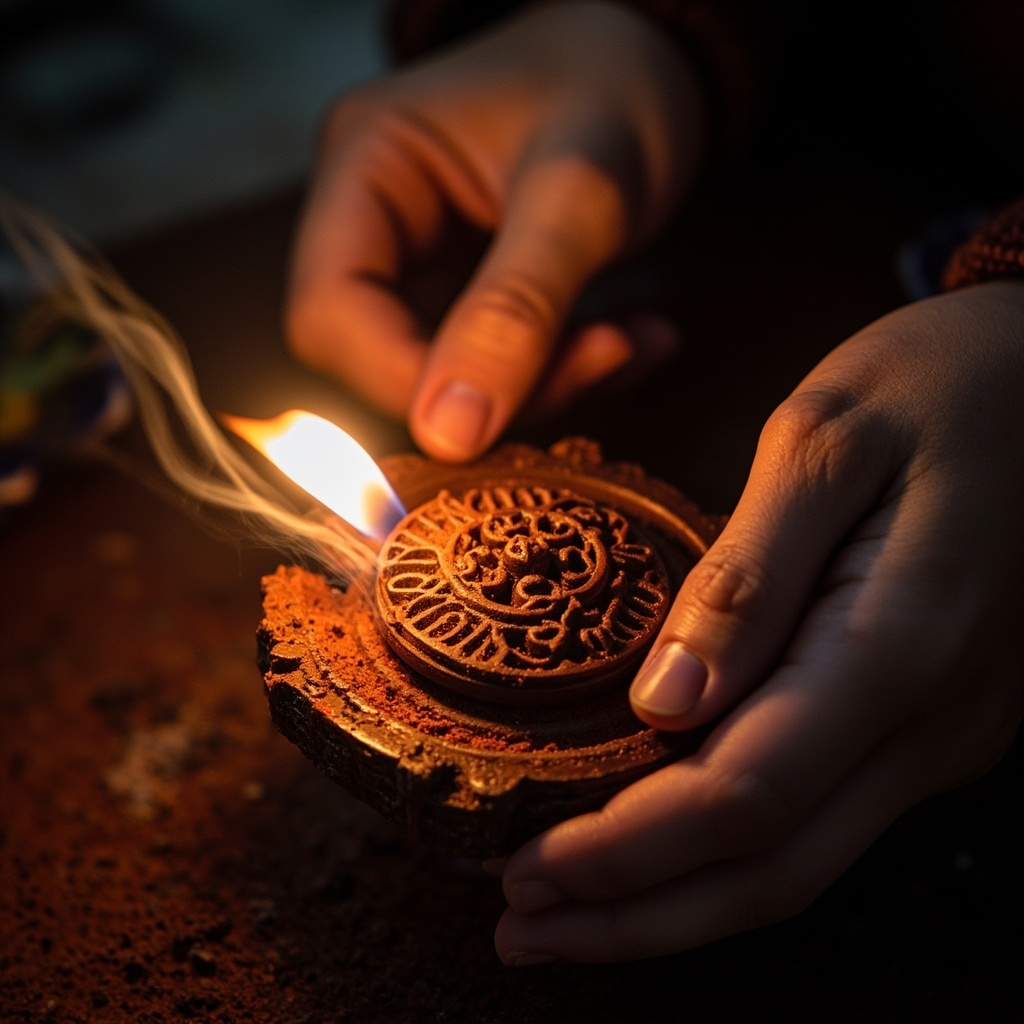
Burning seal incense is a practice in itself. Here is how it works:
Step 1: Prepare the surface. Place your seal mold on a heat-resistant surface — traditionally a ceramic or bronze plate. The surface should be clean and level.
Step 2: Fill the mold. Using a fine sieve, dust incense powder over the mold. Press gently to ensure powder fills every groove. Remove the mold carefully, leaving the pattern on the surface.
Step 3: Light the pattern. Use a thin incense stick or a piece of burning charcoal to ignite the starting point of the pattern. The flame will travel along the traced lines.
Step 4: Breathe. This is the practice. Watch the smoke follow the pattern. Smell how the fragrance develops as different sections burn. The entire process takes anywhere from ten minutes to an hour, depending on the complexity of the design.
Step 5: Let it finish. Do not blow out the dying embers. Let the pattern burn completely. The ash that remains is not waste — it is the finished form, a record of what was.
The Burning Experience
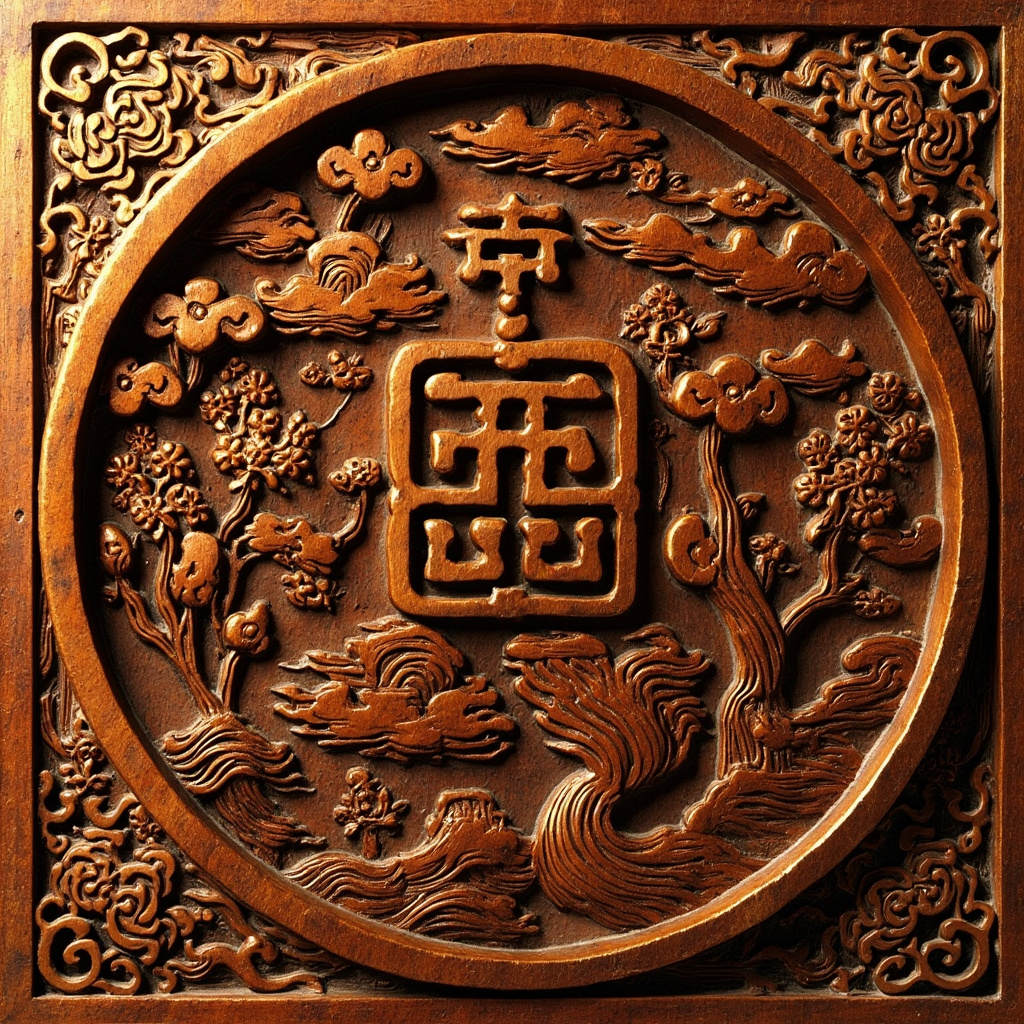
Seal incense burns differently from stick incense. The fragrance release is slower, more gradual. Because the powder burns in a traced line rather than all at once, you experience the full arc of the fragrance — from the first ignite through the peak to the final embers.
This is why serious practitioners prefer seal incense for meditation. The watching is the practice. You are not burning incense to create ambient fragrance. You are burning incense as a focal point.
The「香道器具图鉴」notes that the best seal incense burns with a clean, thin smoke that rises in a straight line. If the smoke curls or wanders, the powder was not evenly filled in the mold. If the burn speed is inconsistent, the powder moisture content was wrong. These details are not nitpicking — they are the art.
Traditional Uses and Ceremonial Context
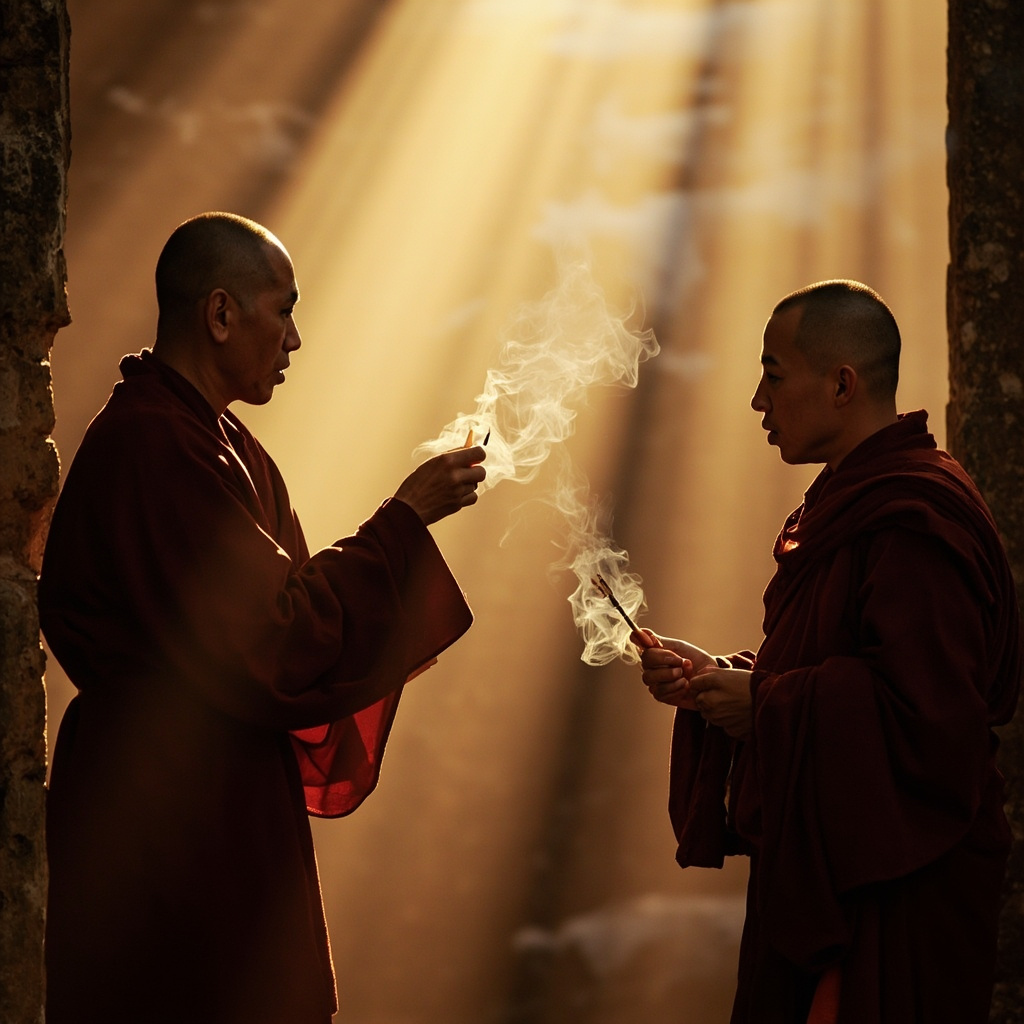
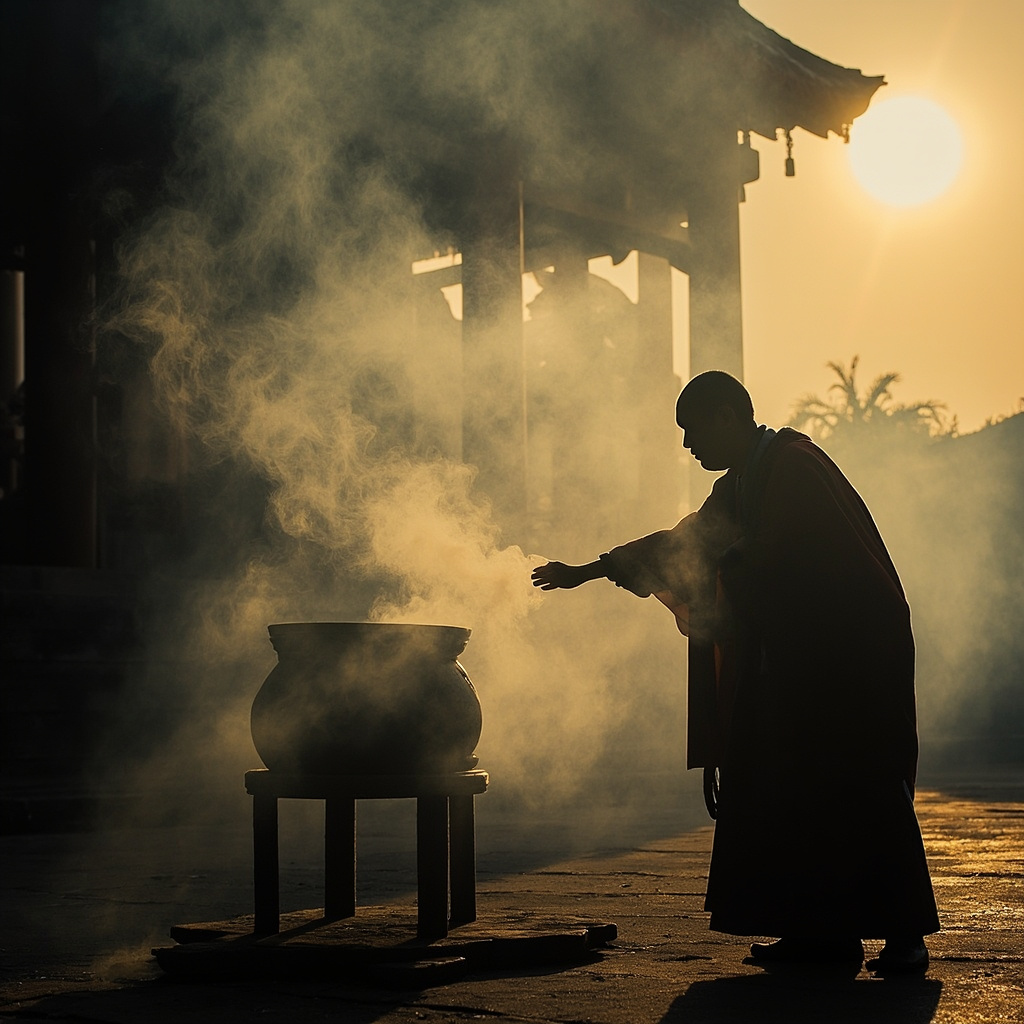
In Buddhist and Taoist contexts, seal incense serves a specific function. The pattern is not just decorative — it is a visualized intention. A monk might burn a longevity character during a longevity ritual. A Taoist might burn cloud patterns during a ceremony asking for rain.
This practice connects the physical act of burning with the mental intention. The pattern gives the mind something to focus on beyond just watching smoke. When the pattern is half-burned, the intention is halfway manifested. When the pattern is gone, the intention is complete.
In the scholar studio, seal incense was used differently. Scholars burned seal incense during calligraphy or painting sessions, believing the fragrance helped clear the mind. The pattern provided a natural time measure — a complex design might last through one scroll of writing. When the pattern was gone, the session was over.
Modern Practice: How to Start
You do not need a traditional setup to practice seal incense. Here is the minimum you need:
A mold. You can buy traditional bronze or copper molds, or simple wooden ones. Start with a basic cloud or flower pattern. As you develop skill, move to more complex designs.
Fine incense powder. Not all powders work for seal incense. The powder must be fine enough to fill the mold grooves cleanly. Too coarse and the pattern breaks apart. Too fine and it clumps. Test your powder by pressing a small amount in the mold and seeing if it holds the shape when the mold is removed.
A heat-resistant surface. A ceramic plate works fine. Some practitioners use a thin metal plate that conducts heat and helps the powder burn more evenly.
A way to ignite. A thin incense stick works. So does a heated pin or needle. Some practitioners use a small charcoal ember to start the burn.
The practice itself is simple. What makes it difficult is developing the patience to do it properly. Most beginners rush — they press too hard, they use too much powder, they ignite too many points at once. The result is a messy burn that does not follow the pattern.
Slow down. The pattern is the point. If you cannot watch the pattern disappear for twenty minutes without checking your phone, seal incense is not for you.
Related Articles
- Incense Powder (Xiang Fen): The Oldest Chinese Incense Form Explained
- How to Burn Incense Safely: A Practical Guide
- How Incense Is Actually Made (And Why Most of It Is Junk)
Frequently Asked Questions
What is the difference between seal incense and stick incense?
Stick incense burns along a single thin line (the stick) from tip to base. Seal incense burns along a traced pattern that can cover a wide surface. Seal incense burns slower and provides a visual meditation element that stick incense lacks. Stick incense is better for ambient scenting; seal incense is better for focused practice.
Can I use any incense powder for seal incense?
No. The powder must be fine enough to hold the mold pattern without crumbling when the mold is removed. Coarse powders work for sticks but not for seal burning. Test by pressing powder in the mold — if it holds the shape after the mold is removed, the powder works. If it collapses, the powder is too coarse or too dry.
How long does a seal incense session last?
Depending on the complexity of the pattern and the density of the powder, a single seal can burn from ten minutes to over an hour. Simple geometric patterns take 10-15 minutes. Elaborate character or flower patterns can burn for 30-60 minutes. The length is part of the practice — seal incense is meant to be watched, not background ambiance.