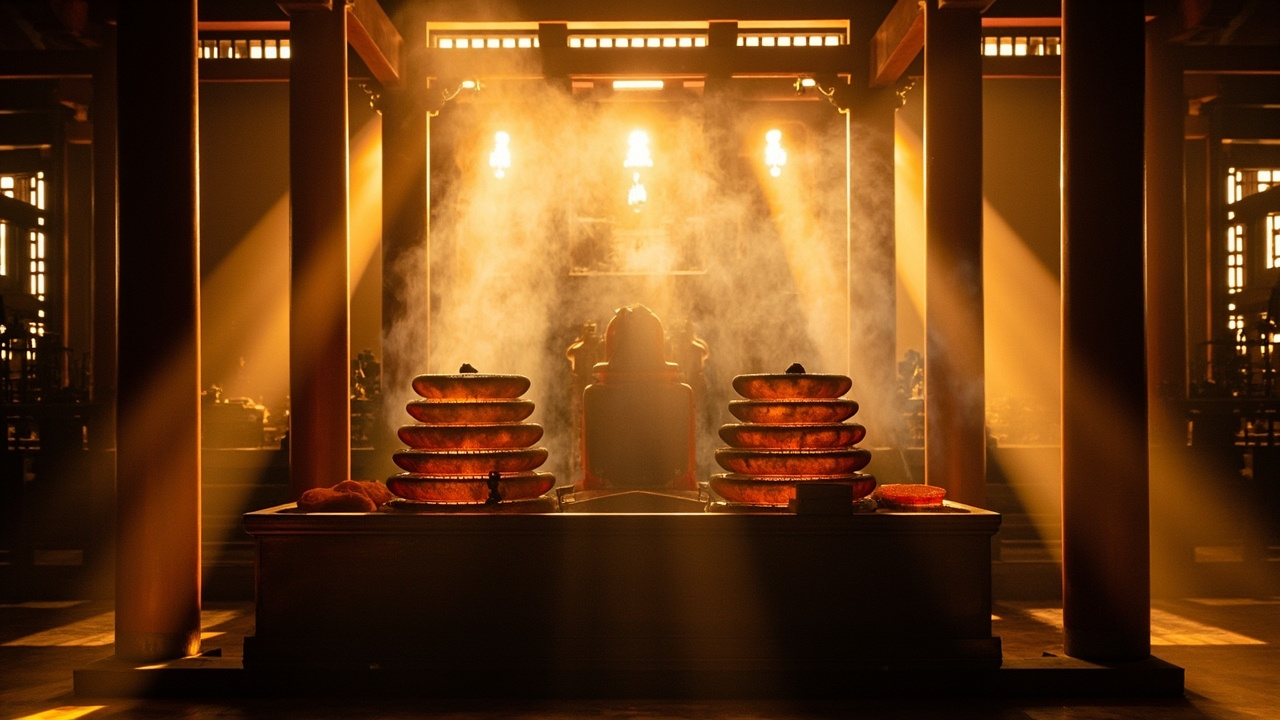
When most people think of incense, they think of sticks. But traditional Chinese incense comes in a remarkable variety of forms – including cones and towers. These formats are designed for specific contexts: large spaces, long burns, and ceremonial use. Here is what you need to know about cone and tower incense.
What Is Cone Incense?
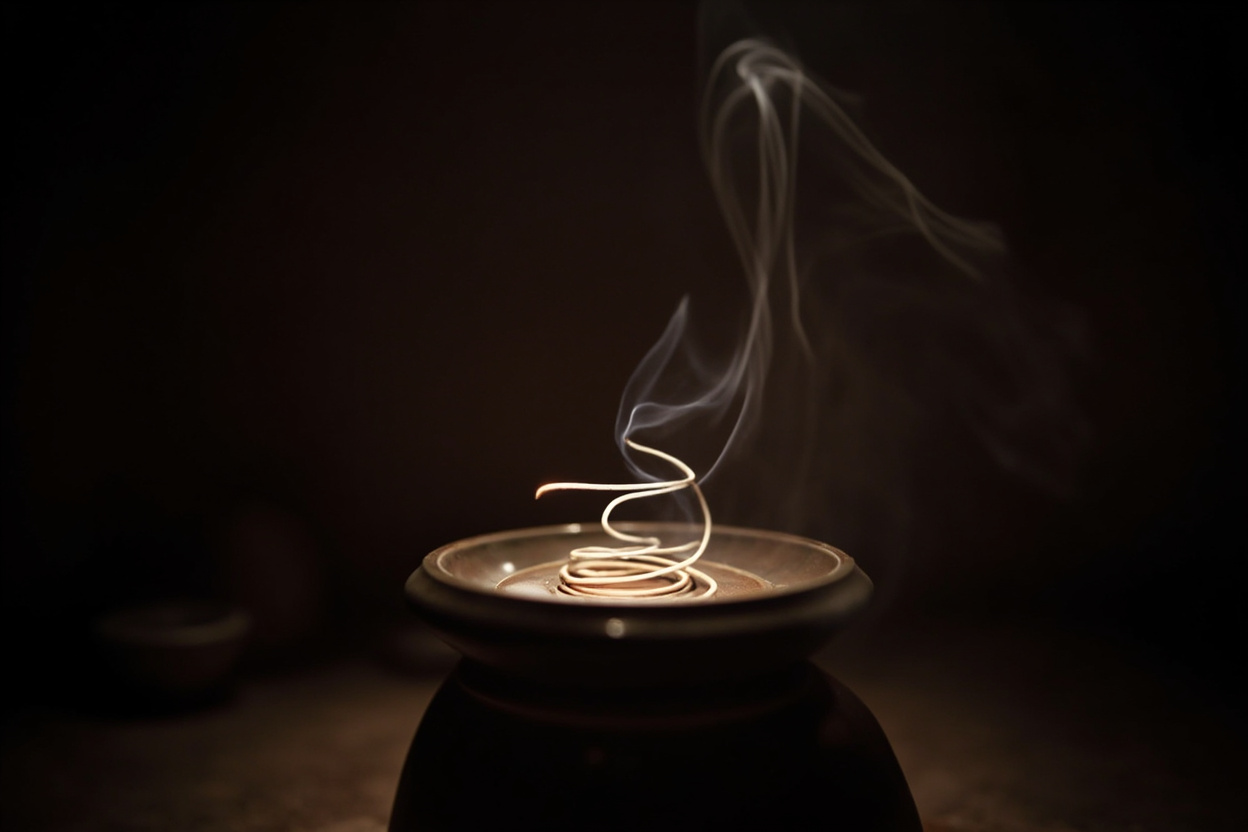
Cone incense is powdered incense compressed into a conical shape. The wider base provides stability, while the tapered form creates an even burn from the perimeter inward. Cones burn faster than sticks because more surface area is exposed to air, and the burn moves downward rather than along a thin line.
In China, cones are primarily associated with Buddhist temples and ancestral worship, where they are used on household altars and in outdoor shrine settings. They are less common in the literati xiangdao tradition, which preferred sticks and powders for their more controllable burning characteristics.
What Is Tower Incense?
Tower incense (塔香, taxiang) is a variant of cone incense designed to burn upward through a stacked tower shape. As the incense burns down, it reveals the tower form – creating a visual effect where the incense appears to consume itself while maintaining its architectural structure. The tower shape burns for many hours, sometimes an entire day.
Tower incense is primarily a decorative and ceremonial format. The visual effect of the slowly descending tower is the point, not the fragrance quality. Tower incense is often lower quality mass-produced material – the visual spectacle matters more than the olfactory experience.
Coil Incense: The Large Space Solution
The most common “large format” Chinese incense is coil incense (盘香, pan xiang). Coils are long spirals of incense that burn for extended periods – typically four to twelve hours depending on the diameter and material. Large coils are designed for:
Temples and Shrines – Continuous burning throughout the day in Buddhist and Taoist settings. Large coils in temple burners provide fragrance for the entire worship space.
Outdoor Ceremonies – Weddings, funerals, and festivals use coils to mark the duration of the event. The burning coil signals the ceremony is in progress.
Large Indoor Spaces – Some traditional Chinese households burn coil incense in the main hall or family shrine, particularly during holidays and anniversaries.
How to Burn Cone and Coil Incense Properly
Cone and coil incense require different equipment than sticks:
Wind Protection – Both cones and coils are more exposed than sticks. Even slight air movement can extinguish the ember or cause uneven burning. Outdoors, use a screen or shelter. Indoors, place away from vents and drafts.
Proper Holders – Cones need a concave holder to prevent rolling. Coils need a dedicated coil holder that cradles the spiral and catches ash as it falls. Standard stick holders do not work for coils.
Ash Management – Coils produce significant ash as they burn. Ensure your setup catches the ash and allows for cleanup without disturbing the burning coil. Some coil holders have a drawer for ash collection.
The Smoke Question

Large format incenses produce significantly more smoke than stick incense. This is not necessarily a problem in temple settings or large rooms with high ceilings, but in modern apartments with standard ceiling heights, it can create:
Smoke Staining – Prolonged burning of coils in enclosed spaces will eventually coat nearby surfaces with a thin oily residue. This is particularly problematic near ceiling fans or air vents.
Respiratory Irritation – Heavy smoke is unpleasant for many people and can trigger respiratory issues. Ventilation is even more critical with coils than with sticks.
Buying Guide: Quality and Price
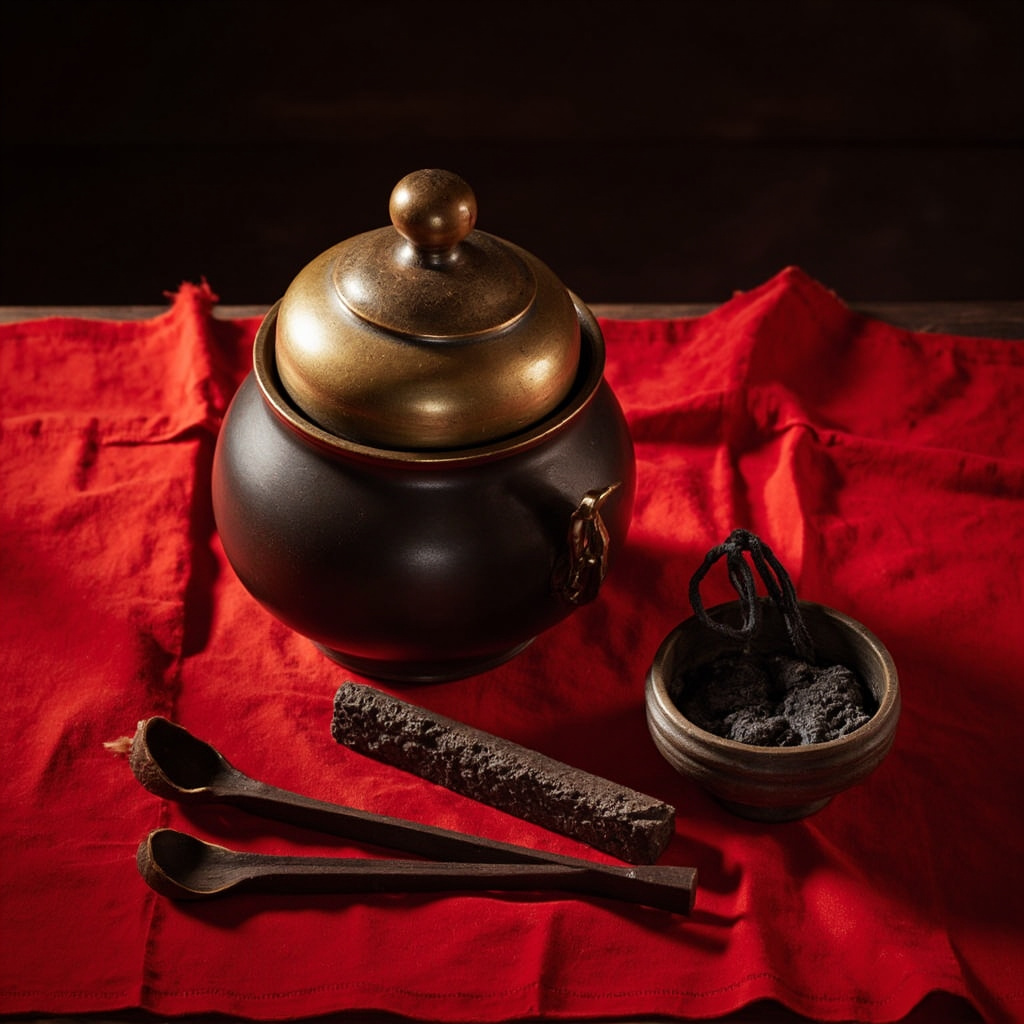
Most cone and coil incense sold commercially is low-quality material. The visual spectacle of tower incense or the practical utility of long-burning coils matters more to most buyers than fragrance quality. This does not mean good cone and coil incense does not exist – it simply requires more careful sourcing.
Look for vendors specializing in traditional temple incense. These vendors typically use natural materials rather than synthetic fragrances, even in mass-produced products. Prices range from $5-15 for a box of standard cones to $30-50 for premium natural coils. Tower incense rarely exceeds $20 regardless of quality because the format itself limits the premium market.
When to Use Large Format Incense
Large format incenses are appropriate when:
- You need continuous burning for several hours or more
- The space is large with high ceilings or open air
- You are using incense for a ceremony or ritual with symbolic duration markers
- You want the visual effect of a burning coil or tower as part of the atmosphere
For personal practice in small to medium rooms, sticks remain the best choice. The control, the nuance, and the manageability of sticks outweigh the convenience of long-burning coils for focused xiangdao practice.
Related Articles
- Stick vs Coil vs Powder Incense: Which Is Right for You?
- Incense Burner Guide: Types, Materials, and How to Choose
- Indirect Incense Burning (Ge Huo): Why Serious Practitioners Prefer This Method
Frequently Asked Questions
How long does cone incense burn?
A standard incense cone burns for 20-40 minutes depending on its size and the material density. Large cones designed for temple use can burn for an hour or more. By comparison, a standard line incense stick burns for 30-45 minutes, and a coil incense can burn for 4-12 hours.
Can I use cone incense indoors?
Yes, but choose a well-ventilated space and use a smaller cone than you would outdoors. Monitor the smoke level – if it begins to accumulate or irritate your eyes, extinguish and air out the room. For regular indoor use, cone incense is generally less practical than stick incense because it produces more smoke with less fragrance nuance.
What is the difference between Japanese and Chinese coil incense?
Chinese pan xiang (coil) and Japanese konnokode (香的) are visually similar spirals but differ in typical use and material quality. Chinese coils are primarily temple and ceremonial incenses, often lower quality but designed for long continuous burns. Japanese coils tend to use higher quality materials and are designed for home use with greater attention to fragrance quality. Both burn using the same spiral principle.