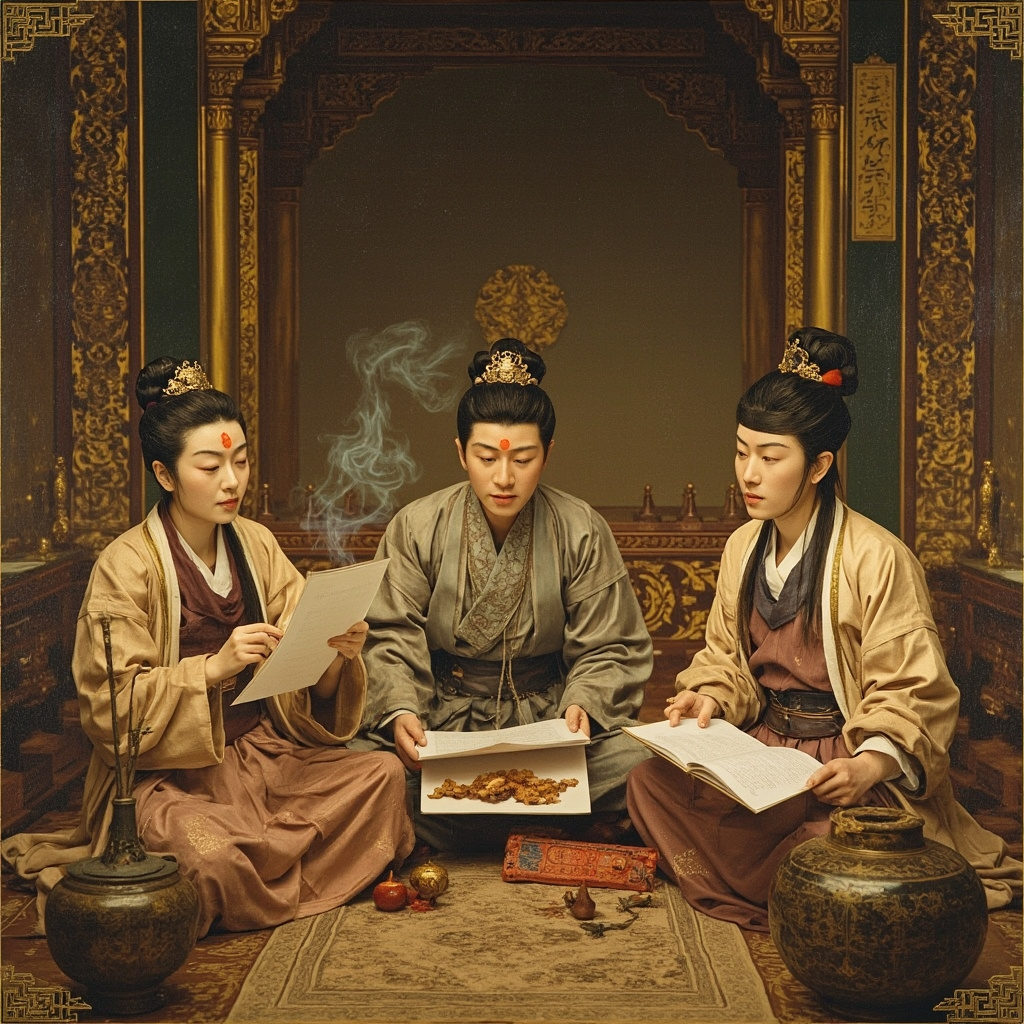
Chinese incense culture spans over five millennia — from ancient shamanic rituals to the refined art of the Song Dynasty literati. This is the complete story.
Origins: Prehistoric to Shang Dynasty (Before 1000 BCE)
Archaeological evidence suggests incense was used in China as early as the Neolithic period. Burnt offerings found in Shandong tombs date to 4000 BCE. During the Shang Dynasty (1600-1046 BCE), incense became integral to ancestor worship. The character for incense (香) first appeared in oracle bone inscriptions.
According to the Records of the Grand Historian, the royals of Zhou Dynasty (1046-256 BCE) maintained strict incense protocols. Emperor Wu of Han expanded these practices, importing frankincense and myrrh from Central Asia via the Silk Road.
Han Dynasty: The Golden Age Begins (206 BCE – 220 CE)
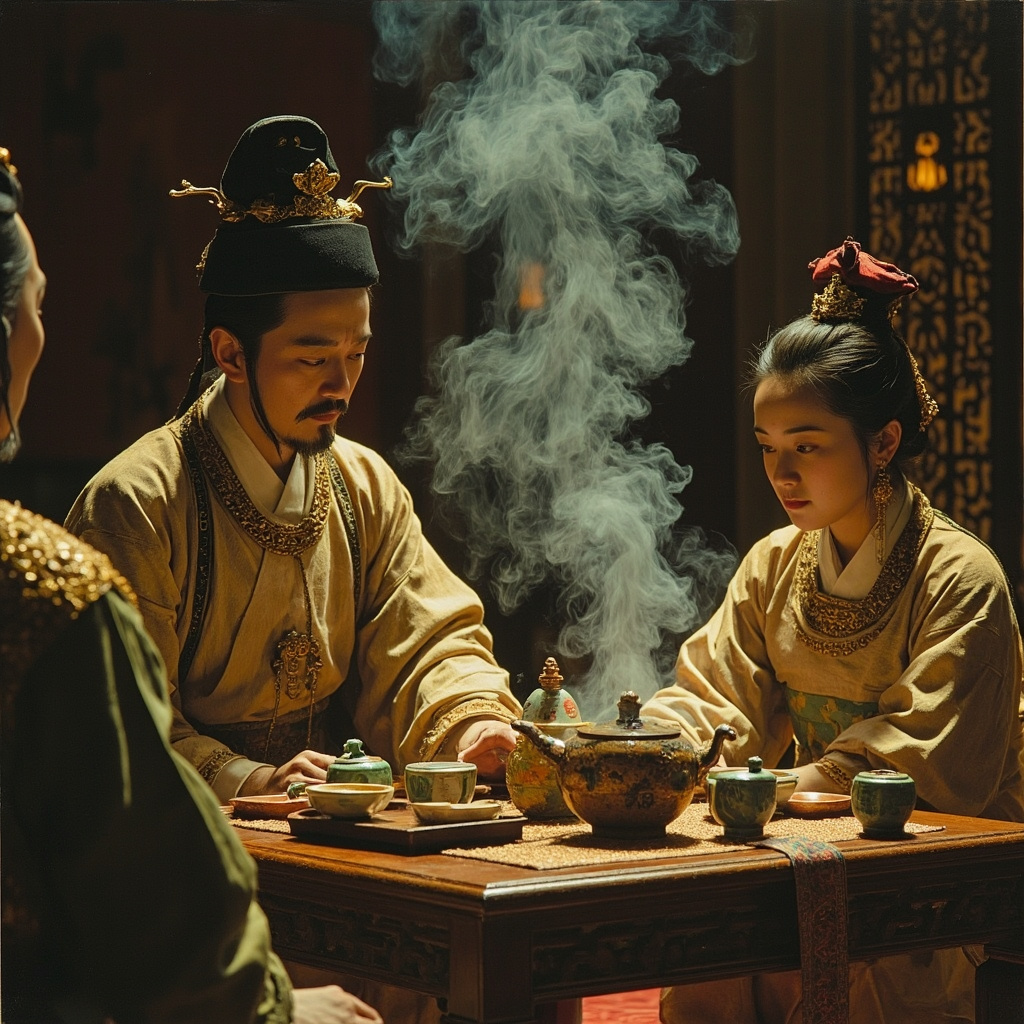
The Han Dynasty marked the true flourishing of Chinese incense culture. Emperor Wu of Han established dedicated incense chapels in the imperial palace. The famous “Four Great aromatics” —沉香 (agarwood), 檀香 (sandalwood), 龙涎香 (ambergris), and 麝香 (musk) — were formalized during this period.
Historical records from Mawangdui tomb reveal sophisticated incense containers and formulas. The Thousand Character Classic contains early references to incense in daily court life.
Six Dynasties to Tang: Peak of Elegance (220–907 CE)
The period between Han and Tang saw Buddhism spread incense practices throughout China. Buddhist temples became centers of incense culture, introducing new burning techniques and formulas.
Tang Dynasty (618-907 CE) represents the golden age of Chinese incense. Emperor Xuanzong maintained a personal incense room. The legendary “Snow in Spring” formula (雪中春信) emerged during this era. Foreign aromatics like benzoin entered China, expanding the incense palette.
The poet Li Bai wrote extensively about incense, capturing its role in court life and meditation.
Song Dynasty: Literati Perfection (960–1279 CE)
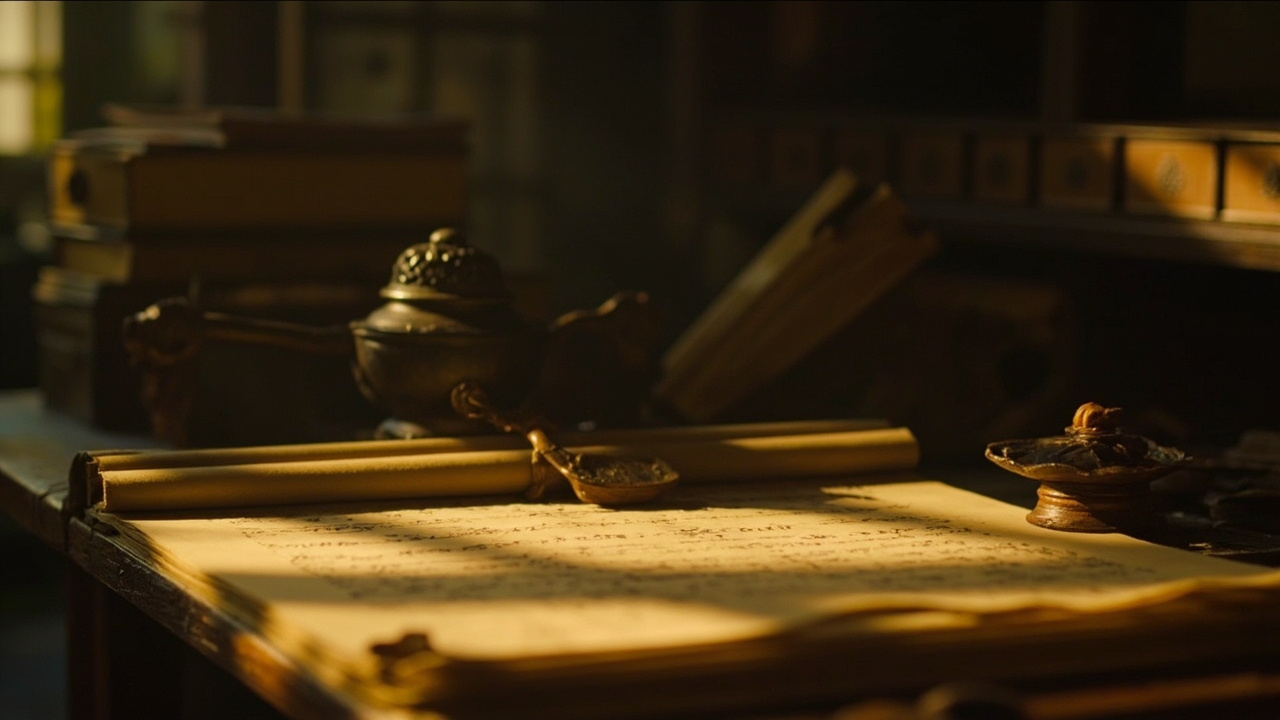
Song Dynasty scholars elevated incense to a philosophical art. The rise of the wenren (literati) class brought incense into private studies and gardens. Master perfumers like Huang Pigdog formalized classical formulas.
The Xu Yan Xin Pu and Chen Shi Xiang Pu documented hundreds of formulas. Incense ceremonies became as refined as tea ceremonies. Emperor Huizong personally composed incense formulas.
This era produced the pinnacle of Chinese incense theory — the concept of xiangdao (香道), the “Way of Fragrance,” as a path to self-cultivation.
Yuan, Ming, Qing: From Folk to Global (1279–1912)
The Mongol Yuan Dynasty brought Mongolian incense traditions. Ming Dynasty saw the compilation of the Xiang Cheng (香乘) by Zhou Jiazhou, a 28-volume encyclopedia of all incense knowledge. Qing Dynasty imported new materials from Southeast Asia and developed regional styles.
By the 19th century, Western trade brought synthetic alternatives, beginning a gradual decline of traditional craft.
Modern Revival (1949–Present)
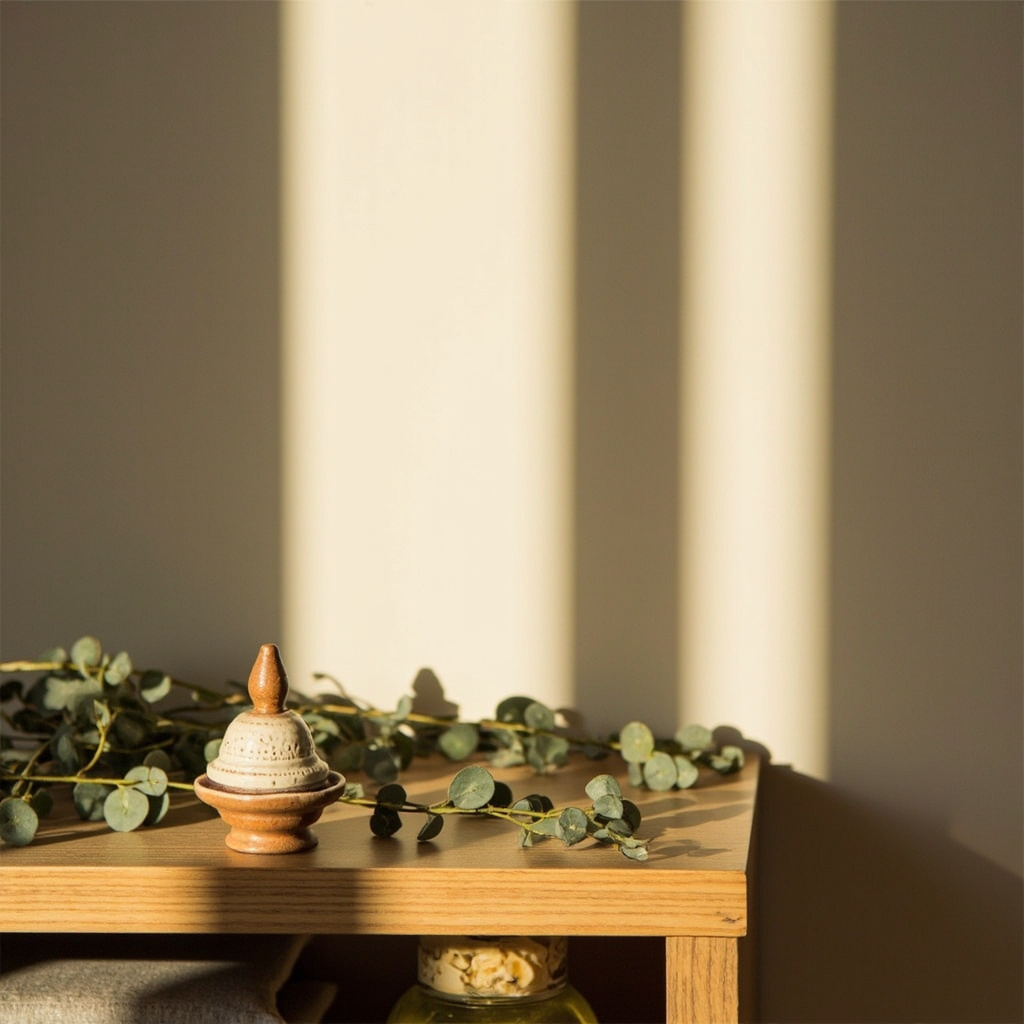
After decades of decline during war and revolution, Chinese incense culture is experiencing a renaissance. Traditional formulas are being revived. Modern practitioners blend ancient techniques with contemporary wellness practices.
Today, Chinese incense is experiencing renewed interest domestically and growing popularity internationally. The UNESCO Convention for the Safeguarding of Intangible Cultural Heritage has recognized several incense-related traditions.
Related Articles
- The Complete History of Chinese Incense: From Han Dynasty to Today
- Tang Dynasty Incense Culture: The Golden Age
- What Is Xiangdao? Understanding the Way of Fragrance
Frequently Asked Questions
How old is Chinese incense culture?
Chinese incense culture is at least 5,000 years old, with archaeological evidence of incense use dating to 4000 BCE in Shandong Province. By the Shang Dynasty (1600 BCE), incense was a established part of Chinese religious and court life.
What are the Four Great Aromatics in Chinese incense?
The Four Great Aromatics (四大名香) are: 沉香 (chenxiang/agarwood), 檀香 (tanxiang/sandalwood), 龙涎香 (longxianxiang/ambergris), and 麝香 (shexiang/musk). These have been prized in China since the Han Dynasty.
What is xiangdao?
Xiangdao (香道) literally means “the Way of Fragrance.” It is the Chinese art and philosophy of incense, developed primarily during the Song Dynasty by literati scholars. Unlike simple burning of incense, xiangdao involves careful selection, burning techniques, and meditation — similar to the Japanese kodo tradition but with distinctly Chinese philosophical roots in Confucian and Daoist thought.