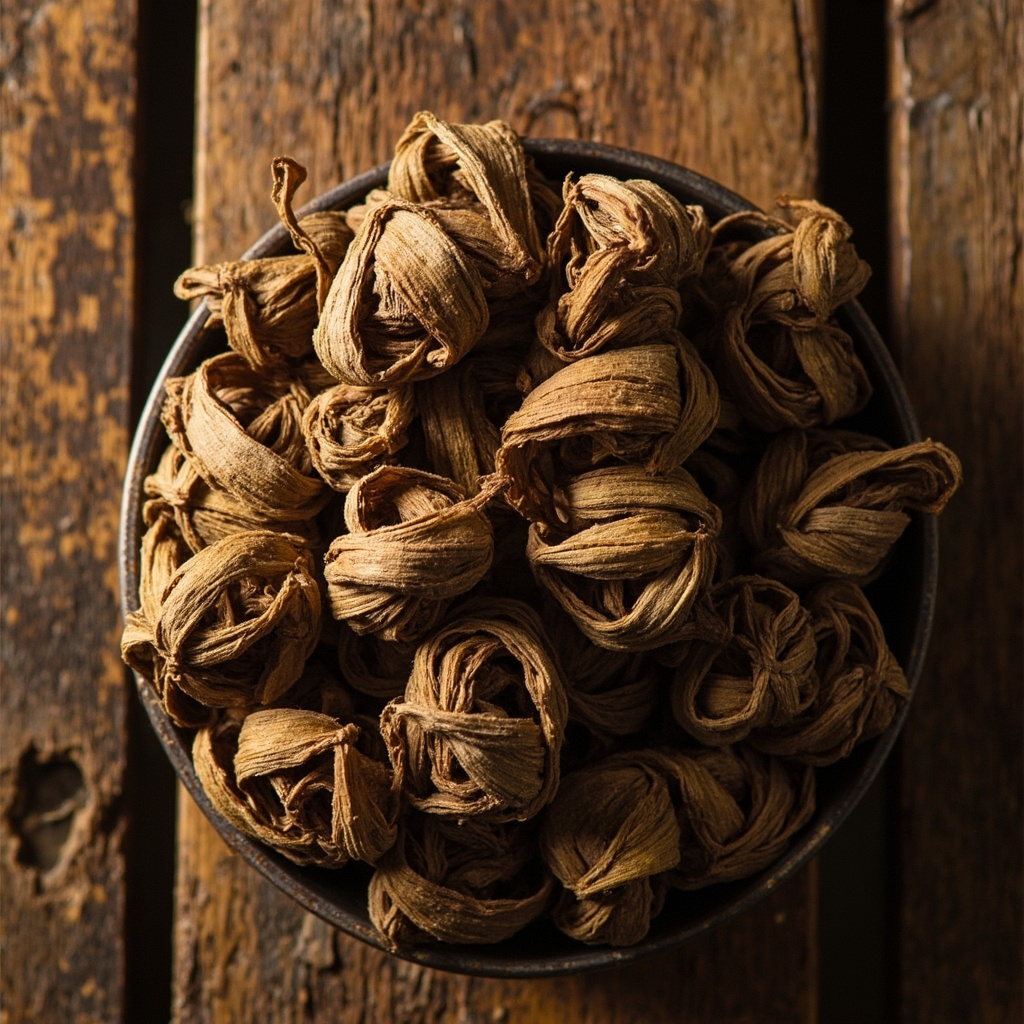
Open a bottle of almost any Western perfume and there is a good chance you will encounter patchouli. It is one of the most recognizable ingredients in modern perfumery – the scent associated with hippies, head shops, and the 1960s counterculture. But patchouli has a much longer history than its modern reputation suggests. In China, in Southeast Asia, and across the Indian subcontinent, patchouli has been used for thousands of years – not as a fashion statement, but as medicine, as preservative, and as incense.
What Is Patchouli?
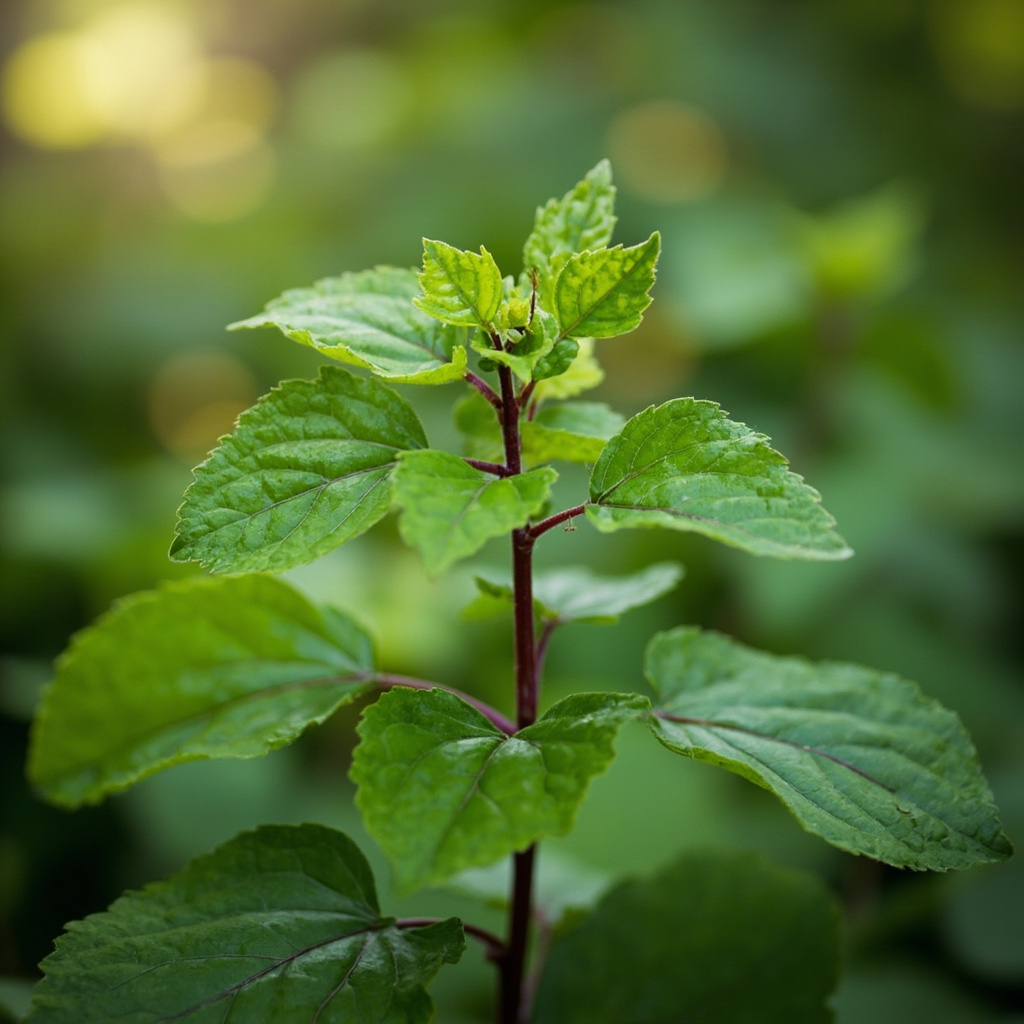
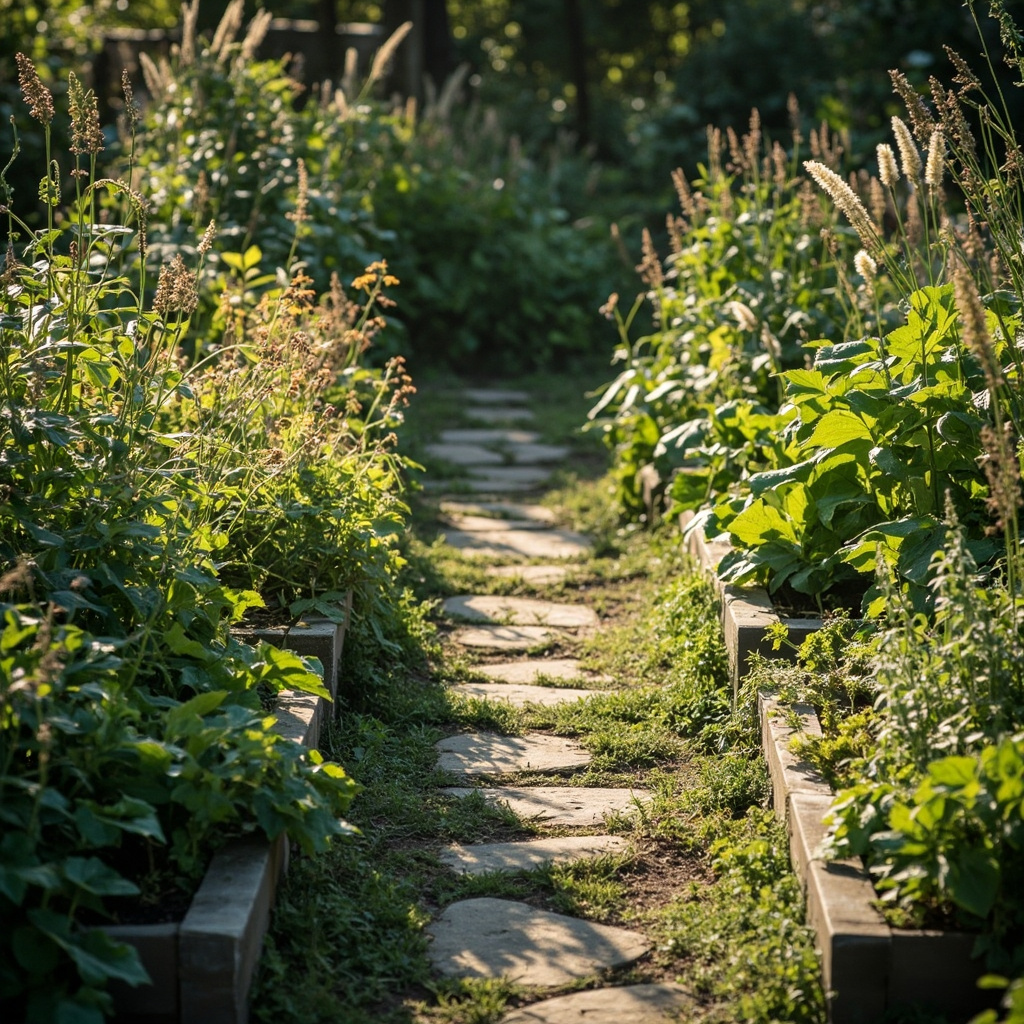
藿香 (huoxiang) is the Chinese name for Patchouli (Pogostemon cablin), a member of the mint family Lamiaceae. Despite being in the same family as mint, lavender, and rosemary, patchouli looks and smells nothing like its relatives. It is a bushy herb growing to about 60-90 centimeters in height, with large velvety leaves and small white to purplish flowers arranged in dense spikes.
The part used is the leaves – fresh or dried – which contain the characteristic aromatic compounds. The smell of fresh patchouli leaves is surprising: a strong, sweet, slightly camphoraceous aroma that becomes much richer and more complex when the leaves are dried and aged. The drying process is crucial – patchouli leaves are typically harvested and then dried in the shade for several days before use.
Patchouli in Chinese History
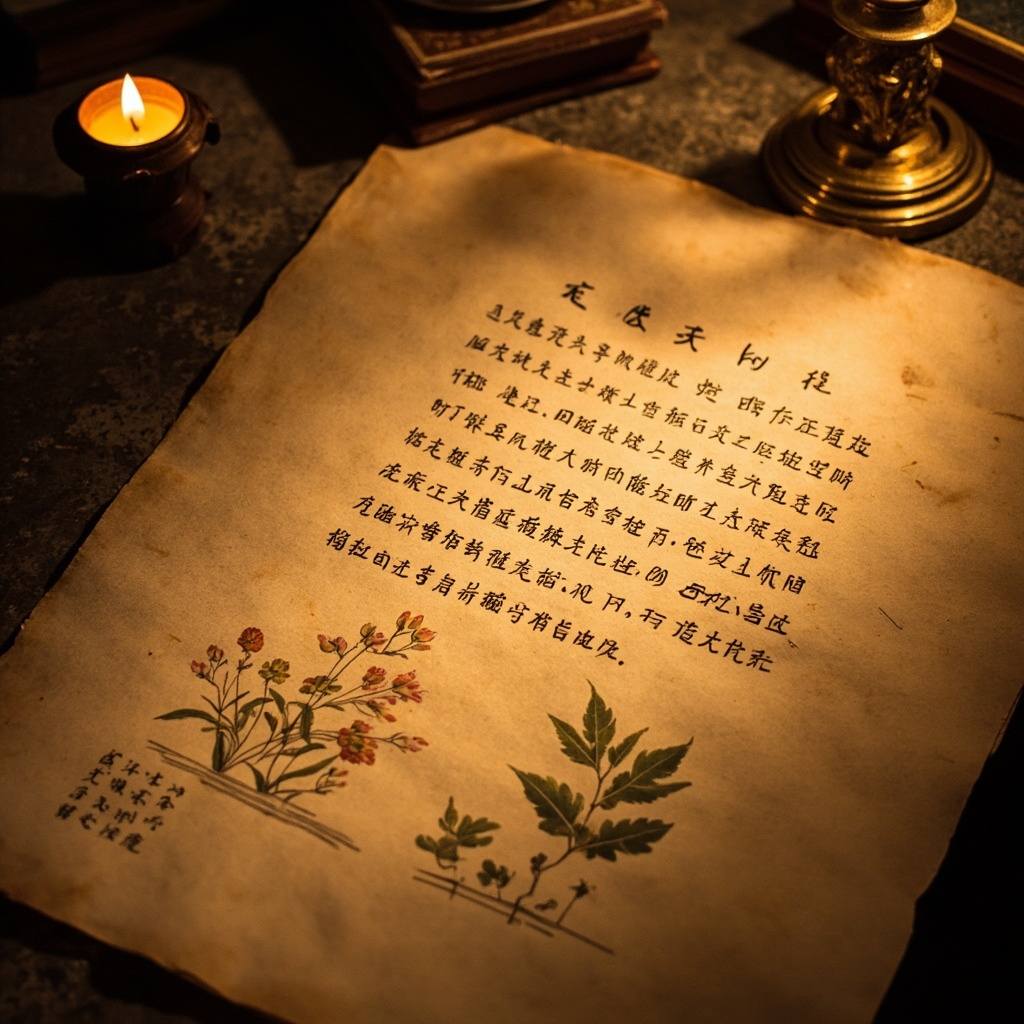
Patchouli has been used in China for at least 2,000 years. The earliest Chinese references describe it as a medicinal herb – used primarily for digestive complaints and to relieve summer heat. The name 藿香 (huoxiang) literally means “fragrant leaf” – the character 藿 referring to a type of grain leaf, and 香 meaning fragrant.
In the Tang Dynasty (618-907 CE), patchouli became established as an incense material in its own right – not just medicine. Court records describe patchouli being burned in combination with other aromatic materials, particularly sandalwood and camphor. The distinctive quality patchouli brought was its ability to add sweetness and depth to lighter materials.
The 香乘 (Xiang Cheng, “Records on Fragrance”), compiled in 1630, lists several formulas featuring patchouli. The text notes that the quality of patchouli depends significantly on where it is grown – with Indian Ocean island-grown patchouli generally considered superior, and mainland Asian varieties considered more medicinal in character.
The Fragrance of Patchouli
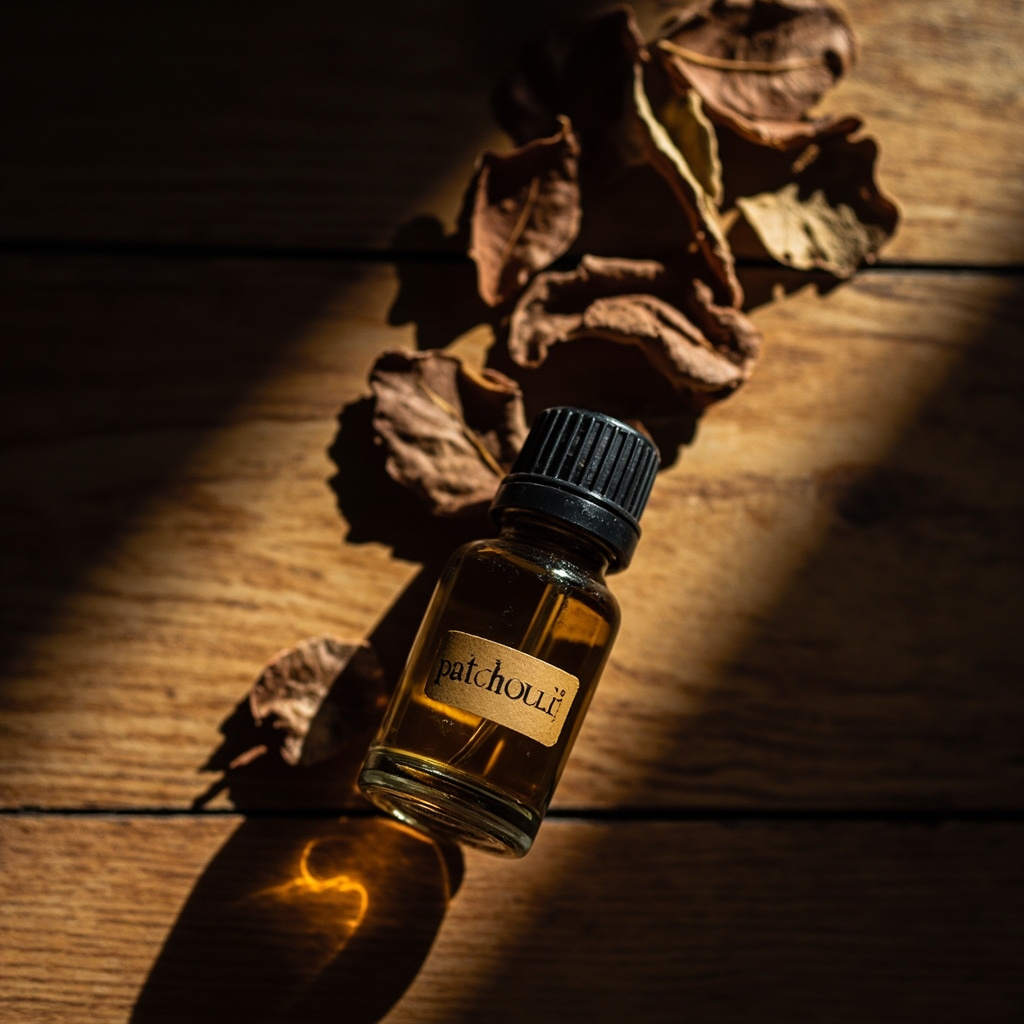
Patchouli is one of the most distinctive fragrances in the world of aromatics. Describing it requires acknowledging its complexity:
The initial impression: Earthy, sweet, slightly camphoraceous. Some people detect a note of damp wood or old books – this is actually the sesquiterpene content, which develops as the leaves age.
The dry-down: As the fragrance develops, patchouli reveals a rich, warm, slightly woody sweetness that is highly tenacious – patchouli is one of the few fragrance materials that actually improves with age. Aged patchouli (several years old) is significantly more valued than fresh-cut.
The base note: Deep, resinous, almost syrupy sweet. Patchouli is an excellent fixative – it slows the evaporation of lighter fragrance materials and adds lasting power to blends.
In Western perfumery, patchouli is best known as the base note in oriental fragrances – combined with sandalwood, vanilla, and various spices to create warm, sensual perfumes. In Chinese incense, patchouli plays a similar role: foundational, sweet, and connecting.
Patchouli in TCM
In Traditional Chinese Medicine, patchouli is classified as a warm, aromatic herb that transforms dampness and harmonizes the stomach. Its primary applications:
Summer dampness and heat: Patchouli is one of the most important herbs for treating summer damp-heat syndromes – nausea, vomiting, diarrhea, and abdominal discomfort that arise during hot, humid weather. The fragrance itself is considered therapeutic – burning patchouli in the room during hot weather is said to create a cooling, harmonizing effect.
Digestive complaints: Taken as a tea or burned as incense, patchouli is used to relieve nausea, bloating, and general digestive discomfort. The aromatic quality is considered to stimulate the spleen and stomach.
Morning sickness: Patchouli is sometimes used to relieve nausea during pregnancy – though this application should only be undertaken with guidance from a qualified TCM practitioner.
For incense purposes, these properties suggest patchouli is particularly suited for evening burning – when its warming, grounding quality can support digestive health and create a settled, comfortable feeling in the body.
Patchouli in Blending
Patchouli is an extremely versatile blending material – it combines well with a wide range of other fragrance materials. In Chinese incense tradition, it is used in several contexts:
With woods: Patchouli and sandalwood is a classic combination – the sweetness of patchouli amplifies the creamy character of sandalwood, while the sandalwood tempers patchoulis slightly sharp edges. Patchouli and agarwood is another well-established pairing.
With other herbs: Patchouli combines particularly well with other aromatic herbs in TCM formulations – cangzhu, angelica, and eupatorium are all traditional companions.
With resins: The earthy quality of patchouli makes it a natural partner for frankincense and myrrh – adding sweetness to the more austere resinous character.
Typical usage: In Chinese incense blends, patchouli is typically used at 5-15% of total material weight. More than 20% begins to dominate the blend in a way that may not be pleasant for most people – the camphoraceous quality becomes too pronounced.
Patchouli Around the World
While patchouli is Chinese in origin, its use spread across Asia and eventually to the rest of the world – and each culture adopted it differently:
In India: Patchouli is used in attars (traditional Indian essential oil perfumes) and in religious ceremonies. Indian patchouli is considered particularly fine – the best material comes from the Malay Peninsula.
In Southeast Asia: Patchouli leaves are traditionally used to protect fabrics and manuscripts from insects and mold – the dried leaves are placed between layers of cloth or paper. This preservative quality is reflected in the fragrance itself.
In the West: Patchouli arrived in Europe via the spice trade in the 19th century, but its major popularity came in the 1960s and 70s, where it became associated with the counterculture – partly genuine appreciation of its rich fragrance, partly the availability of inexpensive Indian patchouli oil.
In modern perfumery: Patchouli is ubiquitous – it appears in oriental fragrances, chypres, fougeres, and many womens perfumes. The patchouli oil market is substantial – Indonesia is now the largest producer, with significant production also in India, China, and Malaysia.
How to Use Patchouli
There are several ways to incorporate patchouli into a personal practice:
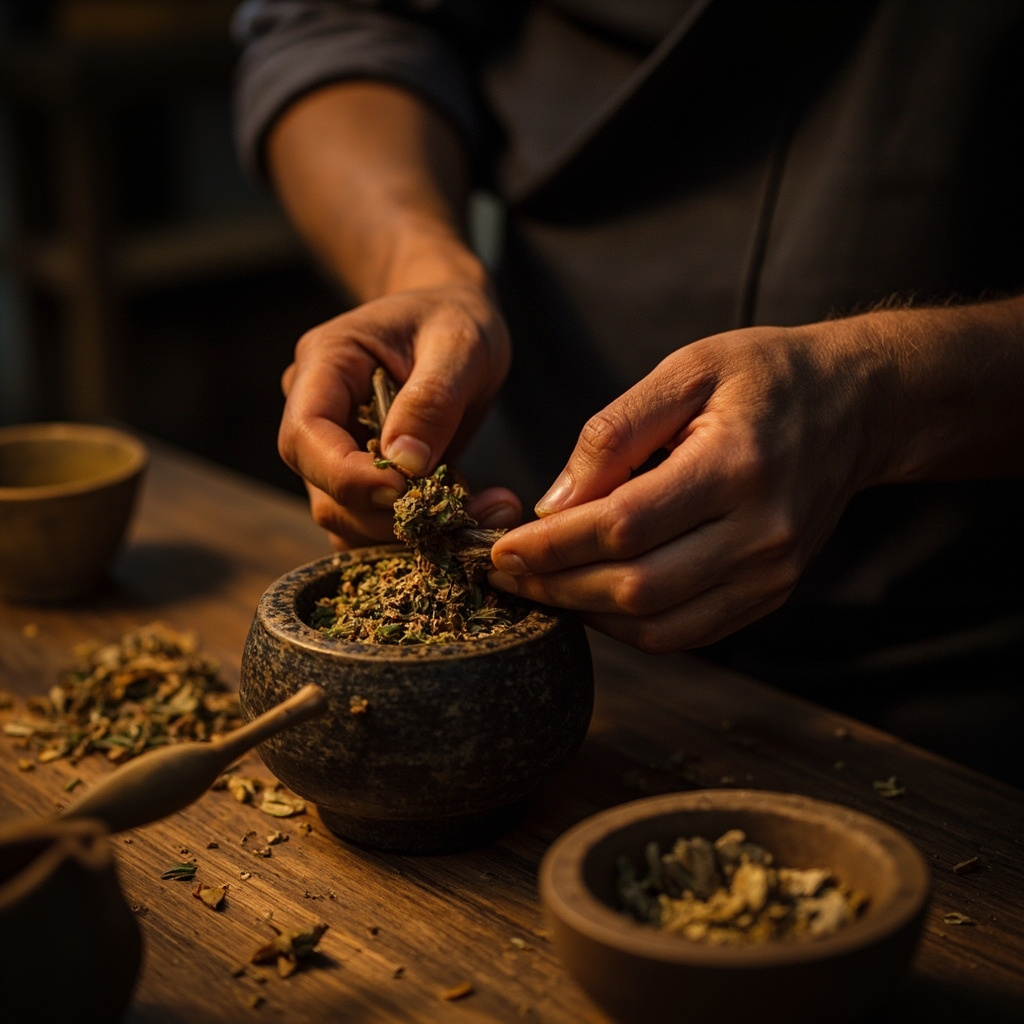
Burning dried leaves: Place a small amount of dried patchouli leaves in a censer with gentle heat. The fragrance develops slowly and lasts for a long time – patchouli is one of the most persistent incense materials. Use alone or as a base for a blend.
In a blended incense: Add 5-15% patchouli to a base of sandalwood or agarwood. The combination creates a rich, warm fragrance suitable for evening use.
As a room fragrance: Burning patchouli in a room diffuser or electric incense warmer can help create a settled, comfortable atmosphere. The fragrance is particularly suited to cooler weather.
Patchouli absolute: For a more concentrated approach, patchouli absolute can be added to a base material before burning. Use very small amounts – absolute is highly concentrated.
Patchouli FAQ
Why does patchouli smell different as it ages?
Patchoulis fragrance chemistry changes significantly during aging. Fresh patchouli leaves have a higher proportion of light, volatile compounds that dissipate quickly. As the leaves age, these light compounds evaporate and the heavier, sweeter, more complex sesquiterpenes become more prominent. Aged patchouli (2-5 years) has a significantly richer, more refined fragrance than fresh material. This is why many practitioners specifically seek out aged patchouli – it is essentially a different material.
Is patchouli oil safe to burn?
High-quality patchouli essential oil can be used in diffusers or electric incense warmers. However, essential oils should not be placed directly on charcoal – they can ignite. For burning purposes, it is safer to use the dried herb or to add a small amount of well-diluted absolute to a base material. Always use high-quality, pure essential oil from a reputable supplier.
What is the difference between Indonesian and Indian patchouli?
Indonesian patchouli (from Sumatra and Java) is generally considered the commercial standard – it has a strong, sweet, slightly woody fragrance and is widely available. Indian patchouli from the Malay Peninsula is considered premium – the fragrance is often described as more refined, with a sweeter, less camphoraceous character. Chinese patchouli is more medicinal in character and is often preferred for TCM applications. All three are genuine patchouli, but the fragrance profiles differ.