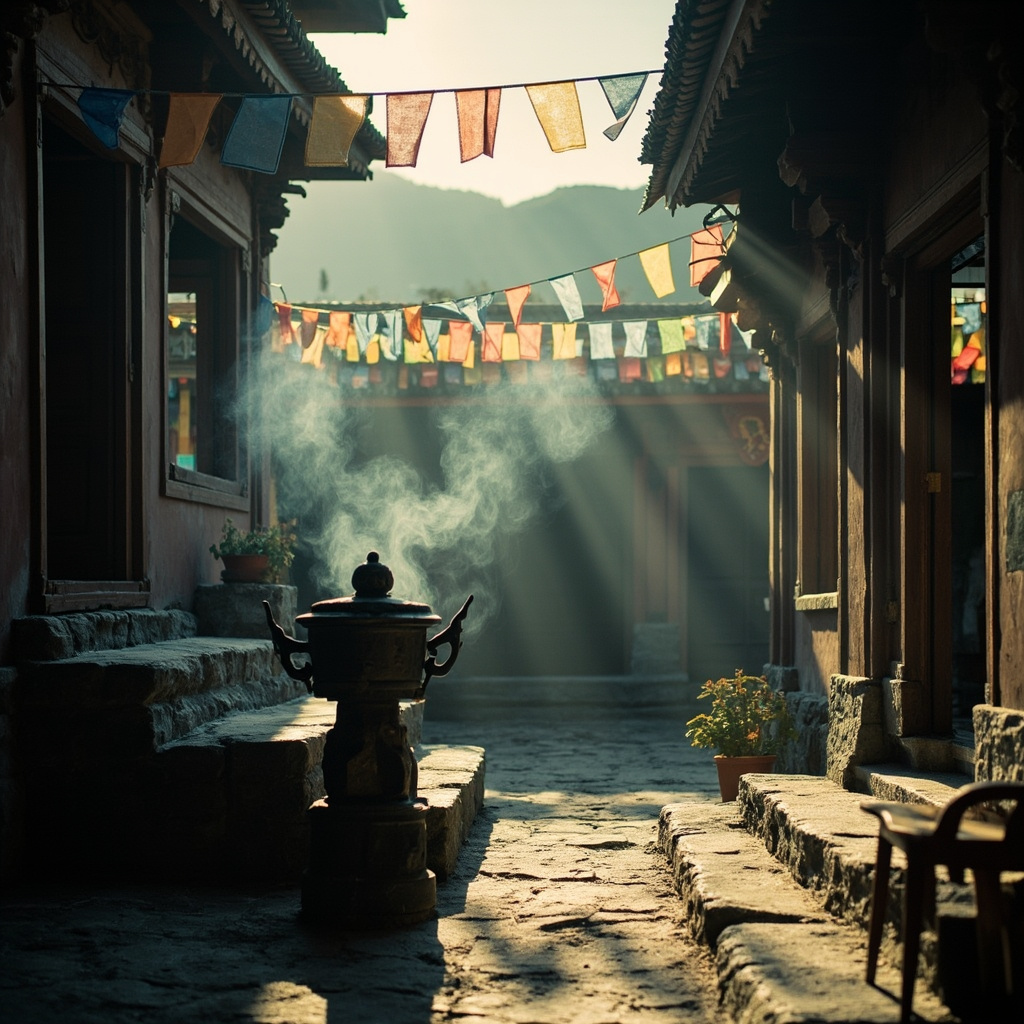
In the high Himalayas, above 3,000 meters, where the air is thin and the winters are long, there grows a small plant with gnarled, dark roots that smell like nothing else on earth. The Tibetan monks called it spra-sna, the fragrance that reaches the heavens. The Chinese called it 甘松 (gansong), sweet pine. And in the practice of hexiang – the art of blended incense – it became one of the most sought-after supporting materials in the classical tradition.
What Is Gansong?
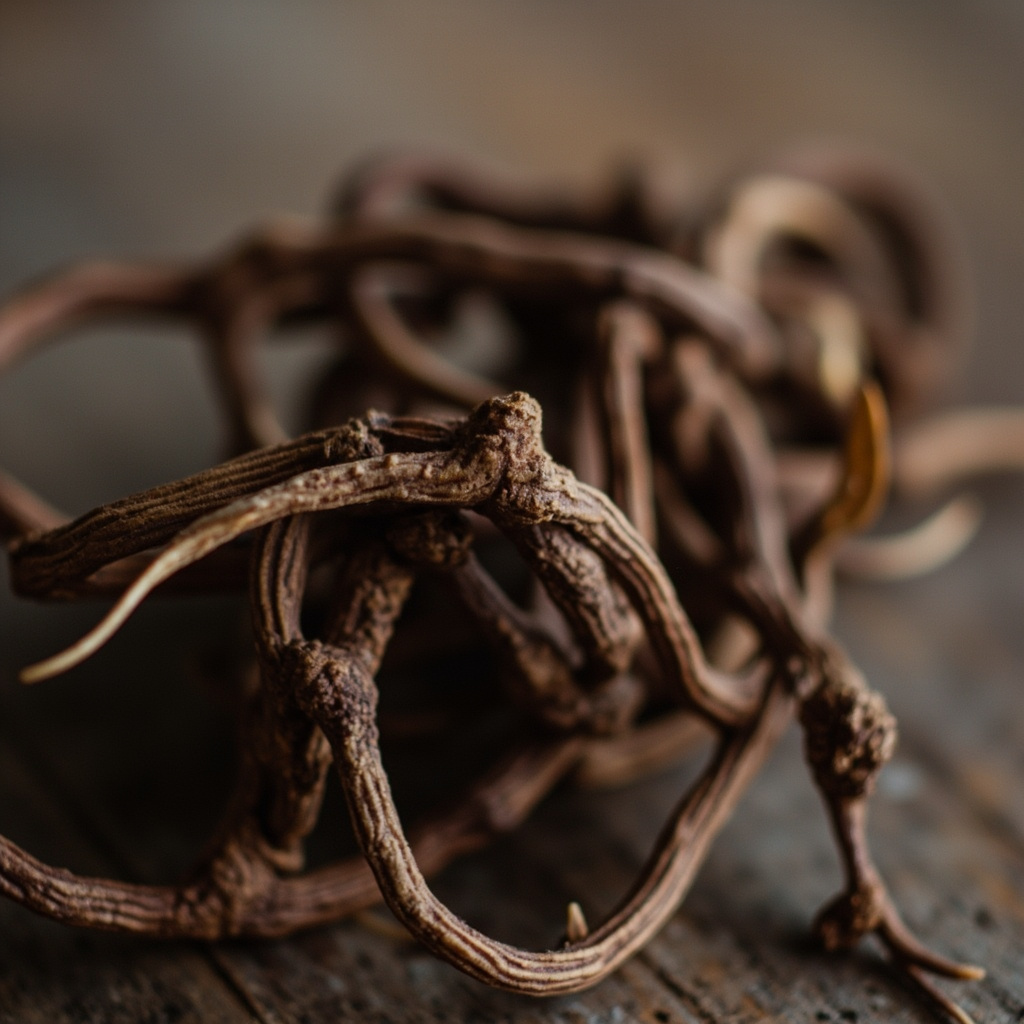
甘松 (gansong) is the common Chinese name for Nardostachys jatamansi, a flowering plant in the honeysuckle family Caprifoliaceae. Despite being in the same family as honeysuckle, it looks nothing like it – the plant produces clusters of pink bell-shaped flowers and long, gnarled rhizomes that grow horizontally just below the soil surface.
The part used in incense and medicine is the root – specifically the dark, gnarled rhizome that has a distinctive, persistent fragrance. When fresh, the roots have a strong, slightly medicinal smell. When dried and aged, they develop a complex, slightly sweet, pine-like aroma with undertones of earth and something almost animalic.
Nardostachys jatamansi grows natively in the high altitude regions of the Himalayas – primarily Tibet, Nepal, Bhutan, and the Indian states of Sikkim and Uttar Pradesh. It is considered a high-altitude species, growing between 3,000 and 5,000 meters elevation. The extreme growing conditions – thin air, intense UV, freezing winters – are believed to contribute to the concentration of aromatic compounds in the roots.
Gansong in Chinese Incense History
Gansong has been used in Chinese incense for at least a thousand years. The earliest documented appearances are in Tang Dynasty (618-907 CE) palace incense formulas, where it was used in small quantities as a supporting material – not the star of any formula, but always present in the background, providing what practitioners described as “continuity” and “depth.”
The classical text 香乘 (Xiang Cheng, “Records on Fragrance”) by Zhou Jiazhu, compiled in 1630, lists gansong in several formulas with detailed descriptions of its fragrance character and the effect it produces when combined with other materials. Zhou Jiazhu described gansong as having a “traveling” quality – the ability to make the fragrance of other materials more evident in the space around the censer.
In the Tibetan Buddhist tradition, gansong has a separate identity – here it is called spra-sna and is considered one of the most sacred aromatic materials, used in daily rituals and ceremonies. The Tibetan use of gansong is less about blending and more about its pure fragrance – burned directly on charcoal as an offering.
The Fragrance of Gansong
Describing the smell of gansong is challenging – it is not a single-note fragrance. The dominant impression is a deep, slightly sweet, resinous pine quality. But there are layers:
- Top notes: A sharp, slightly medicinal freshness – the first thing you notice when you open a container of dried gansong.
- Body: A rich, earthy, slightly sweet resinous quality – the core of the fragrance.
- Base: Something almost animalic, slightly musky – this is the element that makes gansong distinctive and makes it valuable as a blending agent.
The combination of these three elements – fresh top, rich body, musky base – makes gansong unusual among incense materials. Most materials tend to be predominantly one or two of these elements. Gansong has all three in balance, which is why it is so useful as a connecting agent in complex blends.
Gansong in TCM and Meditation
In Traditional Chinese Medicine, gansong is classified as a calming herb – it enters the liver and heart meridians and is used to soothe emotional distress, ease irritability, and support restful sleep. These properties are reflected in its use in incense: gansong-containing blends are often recommended for evening use and for meditation practice.
The Daoist use of gansong is particularly well-documented. Daoist meditation practitioners used gansong-heavy blends specifically to support the transition from active thinking to quiet awareness – the state required for effective meditation. The slight grounding quality of the animalic base notes was considered important for this transition.
How to Use Gansong in Blending
Gansong is almost always used as a supporting material – not the primary fragrance in a blend, but a supporting presence that enhances the overall effect. A small amount does a significant amount of work.
Typical usage: 3-8% of total blend weight. More than 10% begins to dominate the blend in a way that most practitioners find unpleasant – the animalic quality becomes too pronounced.
Best combinations:
- Gansong + agarwood: The earthiness of gansong amplifies the depth of agarwood.
- Gansong + sandalwood: The sweetness of sandalwood tempers the medicinal quality of gansong.
- Gansong + frankincense: Creates a complex, meditative quality suited for long burning sessions.
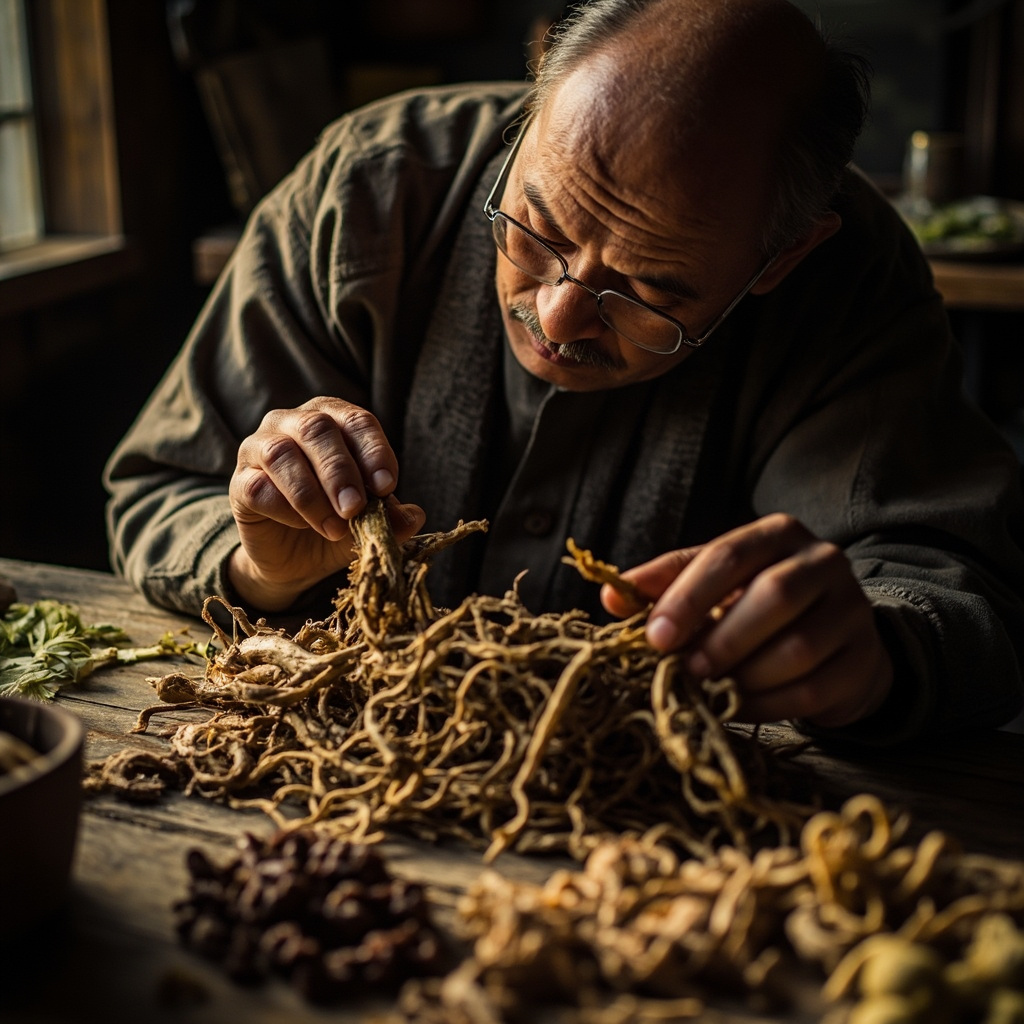
Preparation: Gansong roots should be ground before use – the dried rhizomes are too hard to burn evenly otherwise. A coffee grinder or mortar and pestle works well. The resulting powder should be stored in a sealed container away from light and moisture.

Modern Status of Gansong
Nardostachys jatamansi is now listed as vulnerable by the IUCN (International Union for Conservation of Nature) due to overharvesting in its native Himalayan range. The plant grows slowly and regenerates poorly after harvest – the roots take many years to reach usable size.
Ethical sourcing is a genuine concern for gansong. Practitioners committed to sustainability have several options:
- Cultivated gansong: Some specialty farms in China and Nepal now cultivate Nardostachys, though the fragrance quality of cultivated roots is generally considered inferior to wild-harvested.
- Nardostachys chinensis: A related species native to Sichuan and Yunnan provinces in China. More sustainably available, though the fragrance character is slightly different from Himalayan-sourced material.
- Gansong absolute: A concentrated extract – requires less material per blend, reducing pressure on wild populations.
Gansong FAQ
Is gansong similar to spikenard?
Yes, they are related. Spikenard (Nardostachys grandiflora) is a closely related species, also native to the Himalayas. Both were historically used in similar ways in Ayurvedic and ancient Mediterranean traditions. In the West, spikenard is better known from Biblical references – Mary Magdalene reportedly anointed Jesus with spikenard. The Chinese gansong (Nardostachys jatamansi) is the same genus but a different species.
Can I burn gansong alone?
You can, but most practitioners find it unpleasant in isolation – the raw, medicinal quality is overwhelming when not blended with other materials. Gansong is best experienced in combination, where its connecting and deepening qualities become apparent.
What is the difference between Tibetan and Chinese gansong?
Tibetan-sourced gansong (from Nepal, Bhutan, Sikkim) is generally considered the premium material – the high altitude growing conditions and traditional harvesting methods produce roots with the most complex fragrance profile. Chinese gansong (from Sichuan, Yunnan) is more available and more affordable, with a slightly sweeter, less medicinal character. For serious blending, Tibetan-sourced material is preferred.