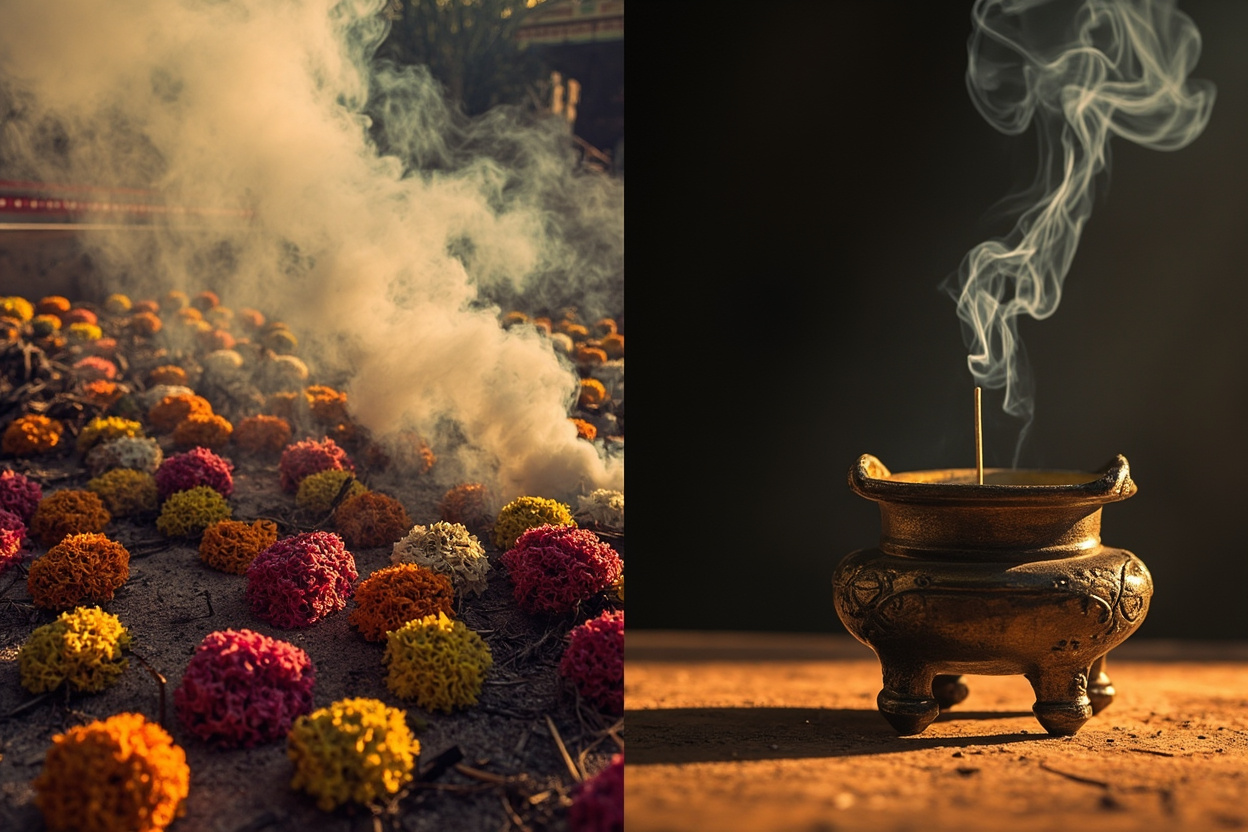
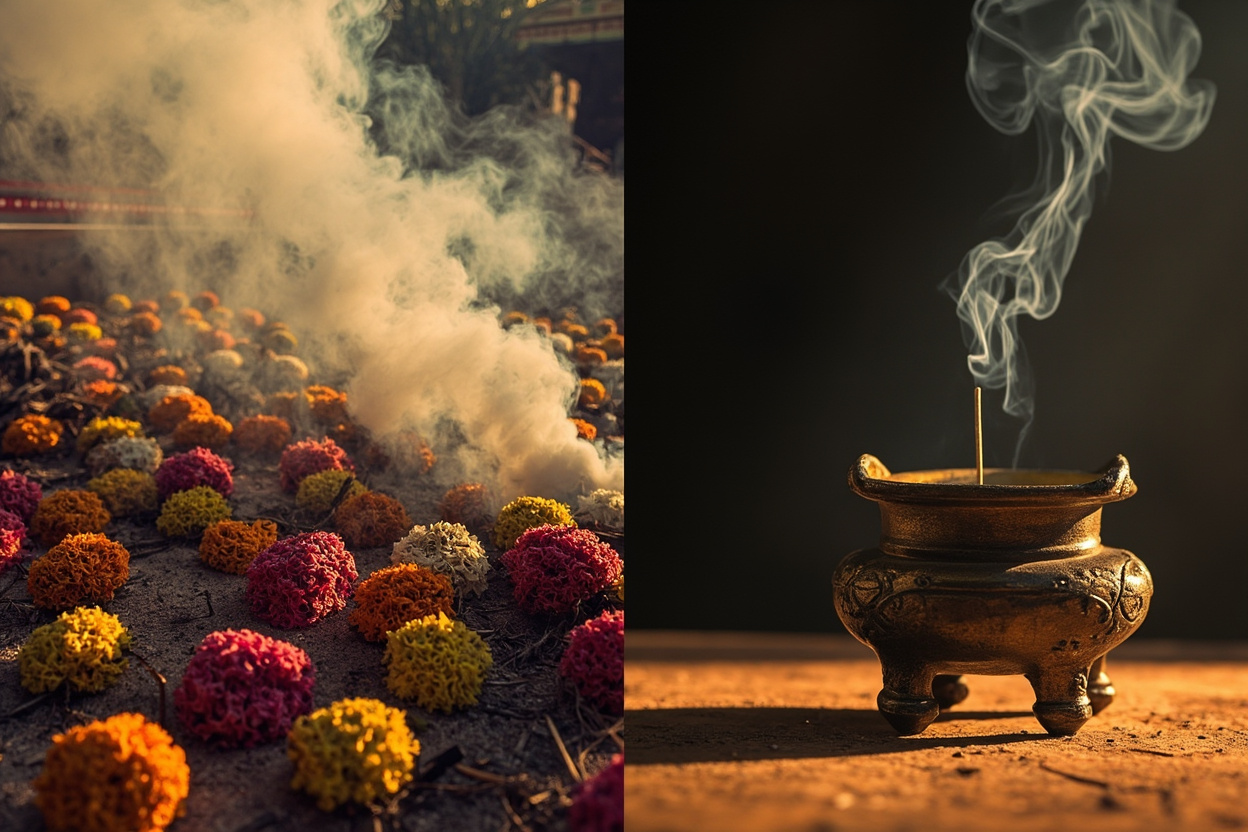
Two people. Two continents. One burns agarwood in a scholar study in Suzhou. The other burns masala blend in a temple in Mumbai. Both call it incense. Both are right. And the difference tells you something fundamental about how different cultures ended up using the same raw materials in completely different creative directions.
Chinese and Indian incense cultures are the two oldest and most sophisticated in the world. They have been developing in parallel for over 3,000 years.
Indian Incense Culture: Masala, Ayurveda & Daily Life
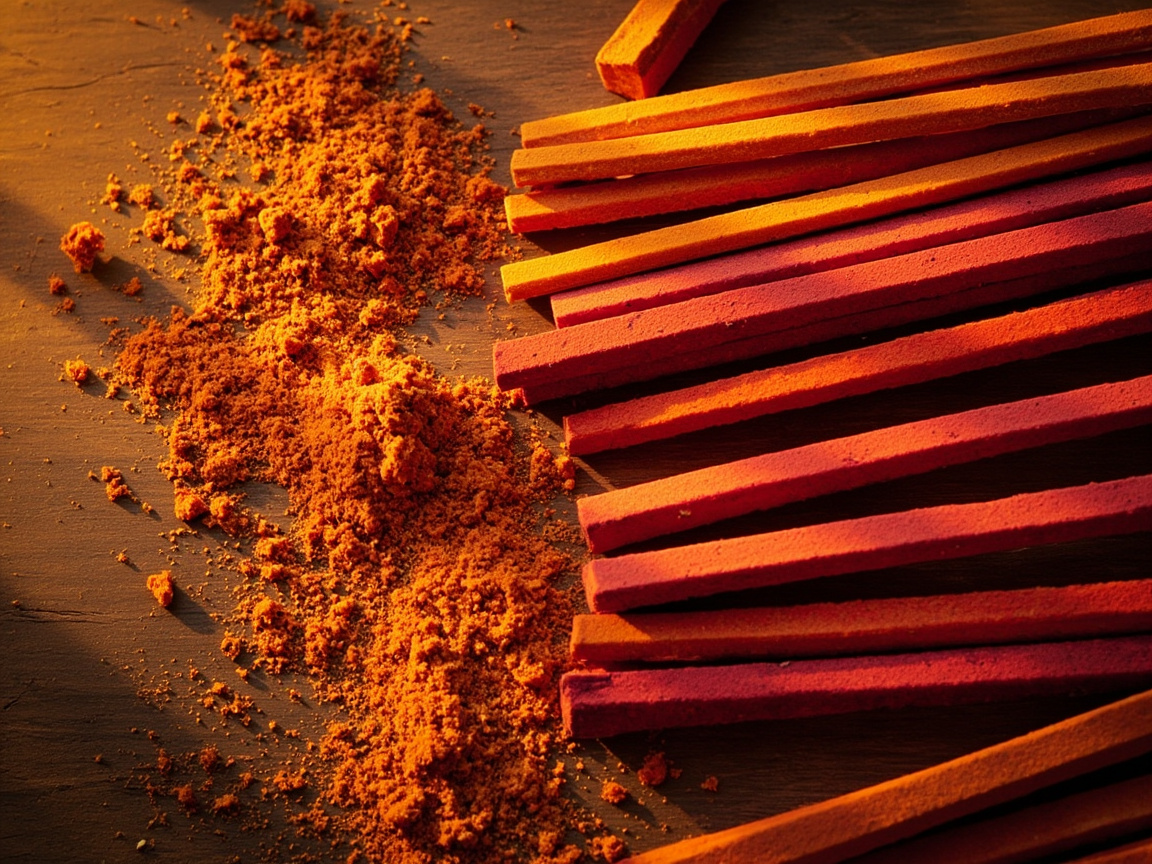
India is where the world incense trade began. The masala tradition is India dominant incense form: a combination of fine wood powder blended with spices, resins, and natural powders. The result is a fragrance that hits immediately, fills the space quickly, and announces itself without apology.
Ayurveda and fragrance are inseparable in Indian culture. Aromatic substances are categorized by their effect on the three doshas (Vata, Pitta, Kapha).
Chinese Incense Culture: Scholars, Court & TCM
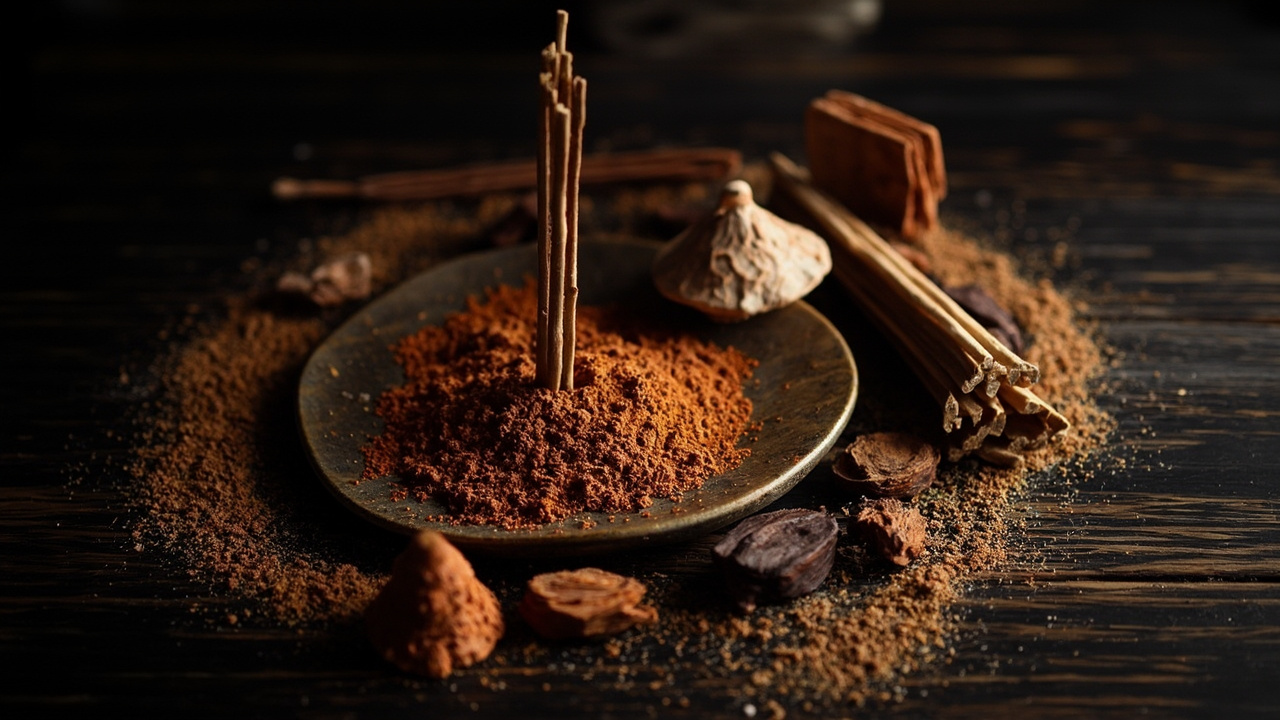
By the Tang and Song dynasties, Chinese literati had developed wenren xiang — “scholar incense.” This was not burning for gods or ancestors. It was burning for the pleasure of intellectual work.
TCM (Traditional Chinese Medicine) added another dimension: aromatic substances as medicine. The Bencao Gangmu systematically categorizes incense materials by their effects on the body.
5 Key Differences Between Chinese & Indian Incense
| Aspect | Indian Incense | Chinese Incense |
|---|---|---|
| Primary motivation | Emotional, devotional, daily life | Intellectual, therapeutic, contemplative |
| Typical form | Masala blends, strong, immediate | Single materials or hexiang, layered |
| Primary setting | Religious, social, household | Scholar studio, personal practice |
| Health framework | Ayurvedic doshas | TCM meridians and qi |
| Intensity preference | Strong, room-filling | Subtle, close-range, evolving |
Where Buddhism Connected Both Traditions
Buddhism traveled from India to China starting around the 1st century CE. Buddhist monks carried incense practices with them. The basic gesture — offering fragrance as communication beyond words — was the same.
Which Should You Try First?
If you want something immediately pleasant and social — try Indian first. If you want something that becomes more interesting the more you pay attention — try Chinese Xiangdao.
The best answer: try both. Notice what happens with each. That noticing is the actual point.
Chinese vs Indian Incense FAQ
Which is better for meditation?
Chinese incense — particularly sandalwood and agarwood — has more documented research supporting its effects on calm and focus. Try both and notice.
Can I mix both traditions?
Absolutely. Many modern practitioners blend Chinese and Indian materials freely. There is no incense police.