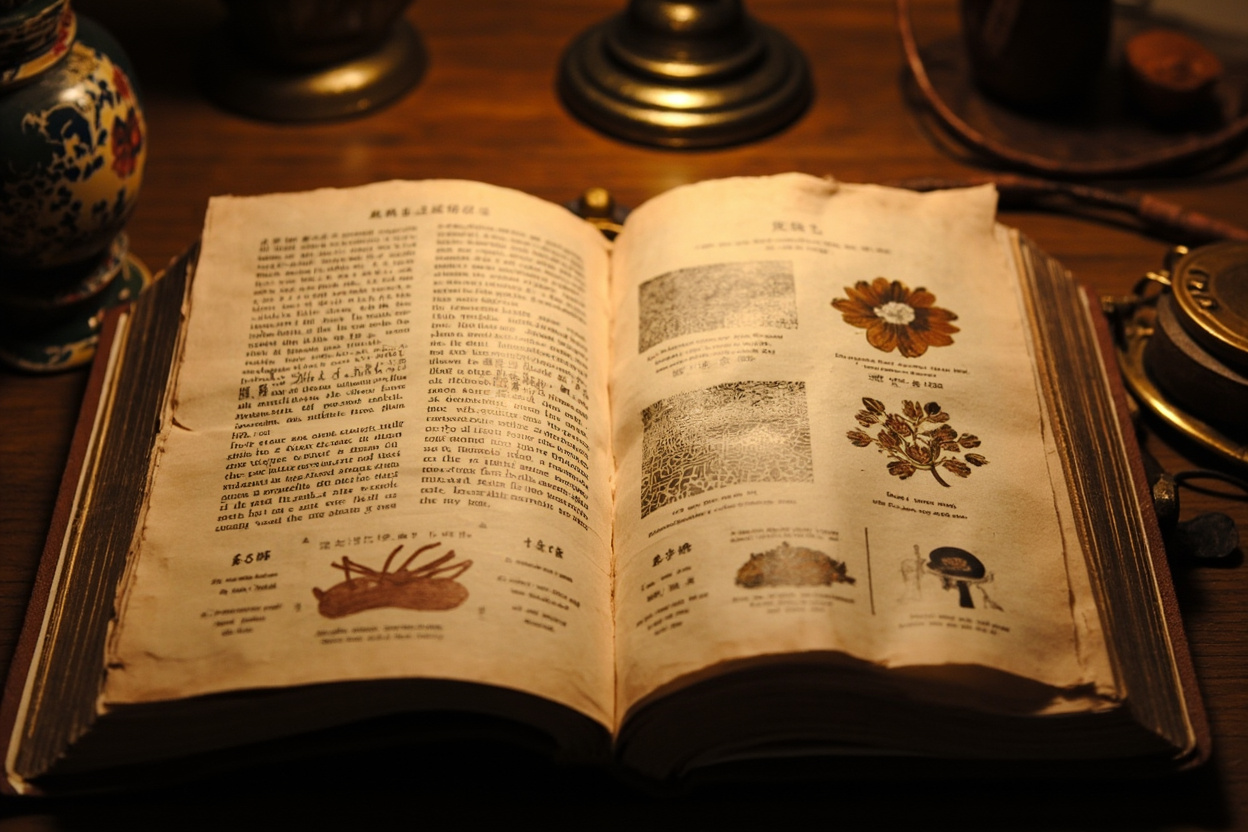
Twenty-eight volumes. Thirty years of work. One man who couldn’t sleep without incense burning next to his pillow.
That’s the story of Zhou Jiazhou, the Ming Dynasty scholar who compiled what’s still considered the most comprehensive work on Chinese incense ever written: Xiang Cheng (香乘), the “乘” meaning something like “comprehensive encyclopedia” or literally “vehicle of fragrance.”
The Man Who Couldn’t Sleep Without It
Zhou Jiazhou lived in Yangzhou, in Jiangsu Province, during the late Ming Dynasty (late 1600s). He wrote about himself:
“余好睡嗜香,性习成癖,有生之乐在兹。遁世之情弥笃,每谓霜里佩黄金者,不贵于枕上黑甜;马首拥红尘者,不乐于炉中碧篆。”
Translation: “I love sleep and I love incense—my nature has become addicted to it, and the joy of living is here. My desire to withdraw from the world grows deeper. Gold worn in frost is nobler than black sweetness on the pillow; horses covered in red dust find no joy equal to green incense spirals in the censer.”
This tells you everything about him. He chose incense over worldly success. He understood incense as a form of escape, a spiritual refuge. And he spent thirty years documenting everything he knew.
How He Wrote It
The compilation took over thirty years:
- First thirteen volumes completed in 1618
- Expanded to twenty-eight volumes in 1641
- Then the publisher’s shop caught fire. The printing blocks were destroyed.
- He rebuilt from scratch and finished again in 1643
The original printing blocks burned, the rebuilt printing blocks also apparently didn’t survive well, but the text itself survived because someone—Zhou never says who—kept a handwritten copy. This is how pre-Gutenberg texts survived in China: multiple copies, distributed, redundant.
What’s In Those 28 Volumes
Here’s what Zhou packed in:
Volumes 1-5: 香品 (Fragrant Materials)
Every incense material known at the time. Where it came from, what it smelled like, what it was used for. This includes沉香,檀香,龙脑香,乳香,安息香—everything from premium imports to common local materials. Each entry includes both practical information and any famous anecdotes from history.
Volume 6: 佛藏诸香 (Buddhist Incenses)
Every incense material mentioned in Buddhist sutras. The Buddhist connection was essential to incense culture—Zhou didn’t ignore it. He documented what the Buddha himself was said to have used, and the香礼仪 that grew from those origins.
Volume 7: 宫掖诸香 (Palace Incenses)
This is fascinating: records of what burned in the imperial palace. What occasion called for what incense. How the court maintained its香supply. The economics and logistics of keeping a large household in good incense.
Volumes 9-12: 香事分类 (Categorized Incense Events)
Four volumes of anecdotes. When Emperor Xuanzong burned this, who was there, what they said. When a famous poet wrote about incense, Zhou collected it. This is part of why the book is valuable—it preserves hundreds of quotes that don’t survive anywhere else.
Volumes 14-17: 法和众妙香 (Formulas for All Manner of Fine Incenses)
This is the part most people actually want: the formulas. Classical recipes for blended incense, organized by use—熏衣香 (clothes-fragrancing incense), 帐中香 (couch incense), 佛道用香 (Buddhist and Daoist incense). Zhou didn’t just list them—he traced their origins, noted variations, and commented on what worked.
Volume 18: 凝合花香 (Congealing Flower Fragrances)
How to capture the smell of flowers—jasmine, lotus, plum blossom—and incorporate them into incense. This is sophisticated chemistry: enfleurage, solvent extraction, maceration. Zhou documented methods that wouldn’t be called “scientific” for another three centuries but were clearly based on systematic experimentation.
Volume 19: 熏佩之香、涂傅之香 (Worn and Applied Incenses)
香囊 (sachets worn on the body) and香膏 (incense pastes applied to skin). The forerunner of modern固体香水 and body mists, basically. Zhou included both recipe and social context—who wore what, when, why.
Volumes 21-22: 印香方 and 印香图 (Seal Incense Formulas and Patterns)
香篆: the art of pressing incense powder into decorative patterns—often the character for longevity or fortune—and burning them. Zhou included the actual pattern diagrams. You could theoretically recreate them today.
The Quotes That Only Survive Here
Zhou was a serious scholar. When he encountered a story about incense in an old text, he copied it out completely. When he found a formula, he gave the original source. This makesXiang Cheng a preservation machine—it saved hundreds of texts that otherwise disappeared.
The scholar Li Xueqin later said of Zhou’s work:
“殚二十余年之力,为《香乘》一书,采摭极博,谈香事者必以是书称首焉。”
“He exhausted more than twenty years of effort on Xiang Cheng, collecting exhaustively. Those who discuss incense matters all call this book first.”
That’s not marketing copy. That’s scholars recognizing serious work.
What You Can Actually Use
Xiang Cheng is too long and too specialized to read straight through. But here’s how to use it:
- If you want classical formulas: Go straight to volumes 14-17. These are the blending formulas, organized by type. Try one—Zhou’s documentation is thorough enough that you can actually recreate them.
- If you want to understand incense history: Read volumes 9-12. The anecdotes put incense into social context—you see how people actually lived with it, not just how it was theoretically used.
- If you want香材 knowledge: Volumes 1-5 give you the classical Chinese understanding of each material. Combined withBencao Gangmu, you get a complete picture.
The book exists in modern editions if you know where to look. But even just knowing what it contains—and using it as a reference when questions come up—will elevate your understanding of Chinese incense significantly.
Zhou Jiazhou spent thirty years. A publisher burned down his blocks. He rebuilt them. He understood that what he was doing mattered. He was right. If you’re going to understand Chinese incense deeply, Xiang Cheng is where you end up.