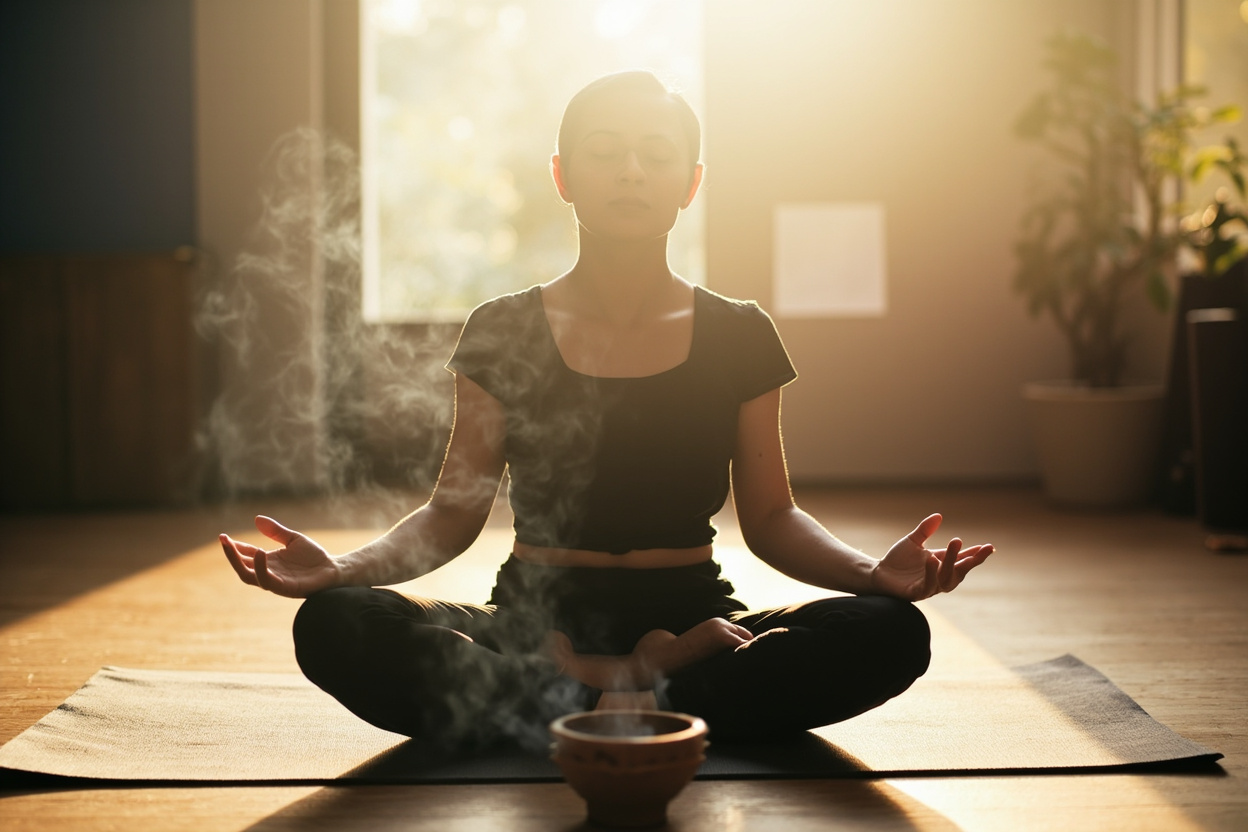
You sit down to meditate. Your mind won’t stop. You’ve tried breathing exercises, body scans, apps. Someone suggests: try burning incense first. You think it sounds like superstition. But here’s the thing — it actually works, and not for magical reasons.
Why Incense Helps Meditation
The connection between smell and emotion is neurological, not spiritual. Your olfactory system connects directly to the limbic system — the part of your brain that processes emotion, memory, and motivation. When you smell something, it reaches your brain faster than visual or auditory information, and it triggers emotional responses more directly.
This is why a particular scent can instantly change your state. The smell of your grandmother’s kitchen. The ocean at a specific beach. Your first apartment. Smell is the most emotional of the senses, and it works faster than thought.
When you incorporate incense into meditation:
- The scent becomes a cue — your brain learns to associate the specific smell with the meditative state
- Over time, burning that incense before meditation signals to your nervous system: it’s time to slow down
- The ritual of lighting it — the flame, the wait, the first wisps of smoke — is itself a transition from ordinary activity to practice
- The visual focus point (watching smoke rise) gives your wandering attention something to rest on
The Research
I’m not going to tell you incense cures diseases or has been “scientifically proven” to make you enlightened. But there’s real research on what burning certain materials does:
Sandalwood: Contains santalol compounds that preliminary studies suggest have mild sedative effects. A 2006 study in the journal Phytomedicine found santalol had anxiolytic effects in animal models. It’s not definitive, but it’s not nothing.
Agarwood: Studies on agarwood’s aromatic compounds suggest they interact with GABA receptors in the nervous system — the same receptors that anti-anxiety medications target. Again: preliminary, but the mechanism is plausible.
Frankincense: Contains boswellic acids that some research has linked to anti-inflammatory and mood-stabilizing effects. The research is early-stage.
The point isn’t that incense is medicine. It’s that there’s plausible biology behind why something as simple as a pleasant smell can shift your mental state. You don’t need to believe in Qi or spirits for this to work.
Choosing Incense for Meditation
Not all incense is equal for this purpose:
What to avoid: Strong, overpowering scents. Heavy perfumes. Anything that makes you want to notice it rather than forget it. Incense that’s 90% fragrance oil and 10% sawdust won’t give you the subtle, grounding experience you want.
What to look for: Natural, simple materials. Sandalwood. Agarwood. Clean-burning blends without heavy essential oil overlays. The smell should be present but not demanding attention.
For anxiety and racing thoughts: Sandalwood is the classic choice. Its sweetness and warmth seem to have a naturally calming effect. Agarwood works too, especially if your anxiety has a restless, “too much yang” quality.
For dullness and fatigue: A lighter scent — jasmine or osmanthus blends, or just a higher-quality sandalwood that has more energy in its fragrance profile.
For dullness with overthinking: This is the classic agarwood use case — it seems to both energize and calm at the same time.
Yoga and Incense
Yoga practice (the physical form, asana) is more active than seated meditation, and incense choice should reflect this:
- Before practice — Light, energizing scents to prepare the body: a blend with citrus notes, lighter woods
- During practice — Minimal incense, or none. The practice itself should be the focus. Burning during yoga is more about creating atmosphere than supporting practice.
- After practice — Calming scents to ease the transition from activity to rest: sandalwood, light agarwood
Many yoga studios burn incense before and after class — this is the traditional context, and it works well for the same reason: creating a sensory shift that signals to your body that something different is happening now.
The Practical Setup
For meditation incense, the practical details matter more than you might think:
Placement: Near you but not directly in front of your face. About 1-2 meters away is ideal. Close enough to smell clearly, far enough that the smoke isn’t in your eyes or making you cough.
Quantity: Less than you think. One thin stick is usually enough for a 20-30 minute session. More smoke is not better — it becomes distracting rather than supportive.
Airflow: A completely still room makes smoke accumulate too heavily. A little airflow (a cracked window) keeps the air fresh while allowing the scent to build. Avoid fans pointed at the incense.
Timing: Light it before you sit, not after. Let the room fill while you’re still in “doing mode,” then transition to practice as the initial burst fades into subtler presence.
The Incense Meditation Technique
Try this as a simple practice:
- Light one stick of natural sandalwood or light agarwood. Let it catch fully, then blow out the flame.
- Sit 2-3 feet from the holder. Close your eyes or soften your gaze.
- Watch the smoke for 2-3 minutes. Don’t try to do anything else. Just watch. When your mind wanders, bring it back to the smoke.
- After 2-3 minutes, close your eyes and continue with your regular meditation or just sitting.
- Notice: how did the incense change your ability to settle?
The smoke itself can be a meditation object — arising, changing, passing away. It’s one of the more accessible meditation subjects, and you always have it available.
Start tonight. One stick. Ten minutes of paying attention to smoke. See what you notice.