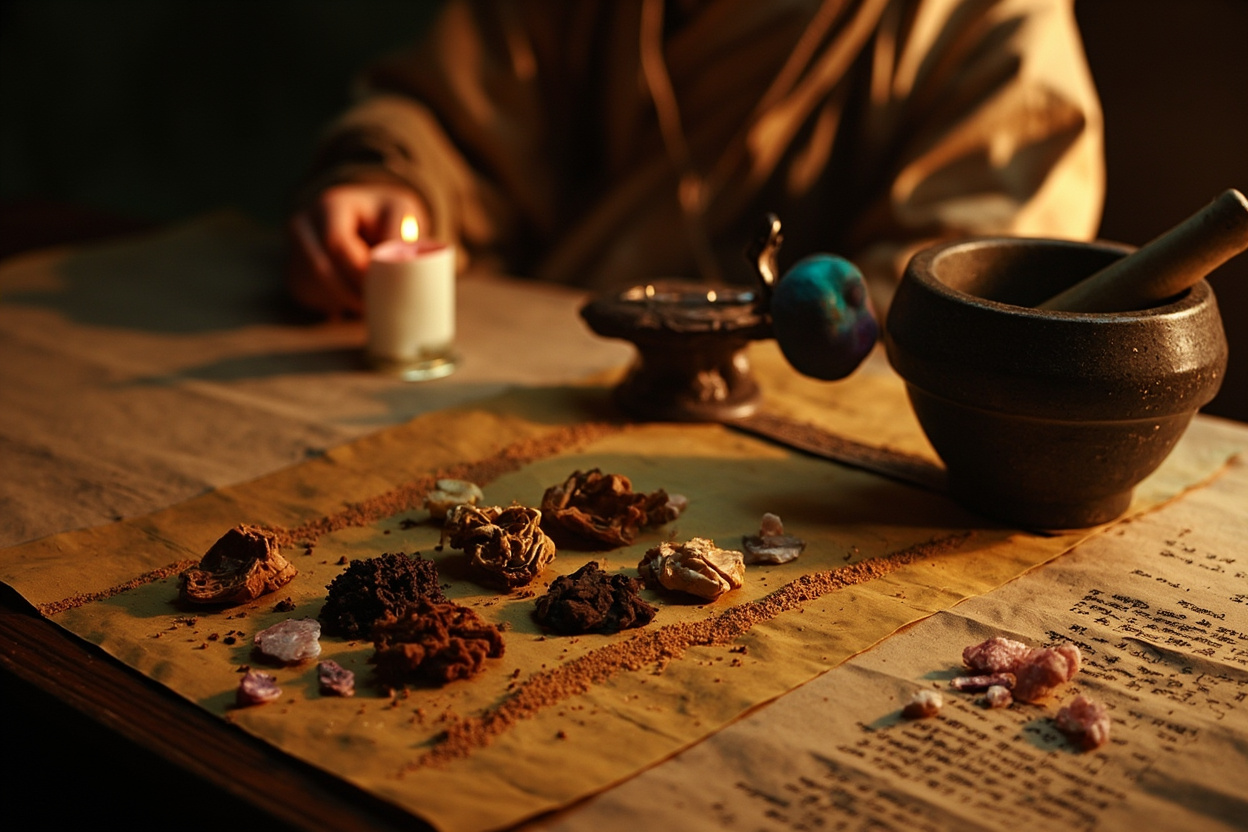
You buy a stick of pure sandalwood. It smells nice. Then you buy a blend that includes sandalwood, benzoin, and a trace of musk. Suddenly the sandalwood doesn’t just smell nice—it smells alive. That’s the difference between burning wood and practicing hexiang.
What Is Hexiang?
Hexiang (合香) literally means “combined fragrance.” It’s the Chinese art and science of blending multiple aromatic materials to create something greater than the sum of its parts.
This isn’t unique to China—aromatic blending appears in Egyptian, Indian, Mesopotamian, and Greek traditions going back thousands of years. But Chinese Xiangdao developed hexiang into a distinct discipline with its own theories, ratios, and aesthetics.
Where single-material incense (pure sandalwood, pure agarwood) focuses on experiencing one ingredient fully, hexiang creates a layered experience. The blend has a progression: top notes that hit first, body notes that emerge as it burns, base notes that linger.
The Philosophy Behind It
Chinese philosophy treats hexiang as a reflection of natural harmony. The classic text Xiang Pu (香谱, Records of Aromatics) by Hong Zun in the Song Dynasty systematized blending principles that had been passed down orally for centuries.
Key concepts:
- Jun (君) – The Ruler: One dominant material that sets the character. Usually the most expensive or most complex ingredient.
- Chen (臣) – The Minister: Supporting material that enhances or moderates the jun. If jun is sandalwood, chen might be a sweeter resin.
- Zuo (佐) – The Assistant: Materials that add specific effects—longer burn time, stronger sillage, or a particular mood.
- Shi (使) – The Messenger: Often a small amount of musk or borneol that acts as a bridge, connecting all the other notes.
The Most Famous Hexiang Recipes
Several classical blends survived in written records:
Er Su Jiu Ju (二苏旧局) — Su Shi and Su Zhe’s signature blend. Equal parts sandalwood and benzoin, with trace musk and borneol. Created for literary gatherings. Intimate and approachable.
E Li Zhang Zhong Xiang (鹅梨帐中香) — Qianlong’s favorite. Goose pear cored and filled with sandalwood powder, aged 3-7 days. Fruity sweetness meets warm wood. Designed for nighttime chamber use.
Xu Wen Yan (徐温香) — A cold-burning formula popular in the Ming Dynasty. Uses indirect heating (xunxiang) rather than direct flame. More meditative in application.
How to Start Blending
You don’t need ancient recipes to practice hexiang. Start with two materials:
- Pick a base: 70% sandalwood powder
- Add a connector: 25% benzoin or storax
- Add a pulse: 4-5% dried floral material (rose, osmanthus)
- Add a bridge: less than 1% borneol crystals
Mix thoroughly. Burn on charcoal. Notice the progression: what hits you first? What develops after 30 seconds? What remains after 5 minutes?
That’s hexiang. It’s not about getting the ratio perfect—it’s about understanding how materials interact and layering your experience intentionally.
Why Hexiang Matters Today
Modern incense culture often focuses on purity: single materials, premium grades, minimal processing. There’s nothing wrong with this. But hexiang represents something different: the creative, intentional side of Xiangdao.
When you blend your own incense, you learn materials in a deeper way. You stop just “smelling nice” and start understanding why certain combinations work. It’s the difference between drinking wine and understanding viticulture.
If you’re serious about Xiangdao, try one blended incense alongside one pure incense. Burn them on different days. Notice what you learn from each.