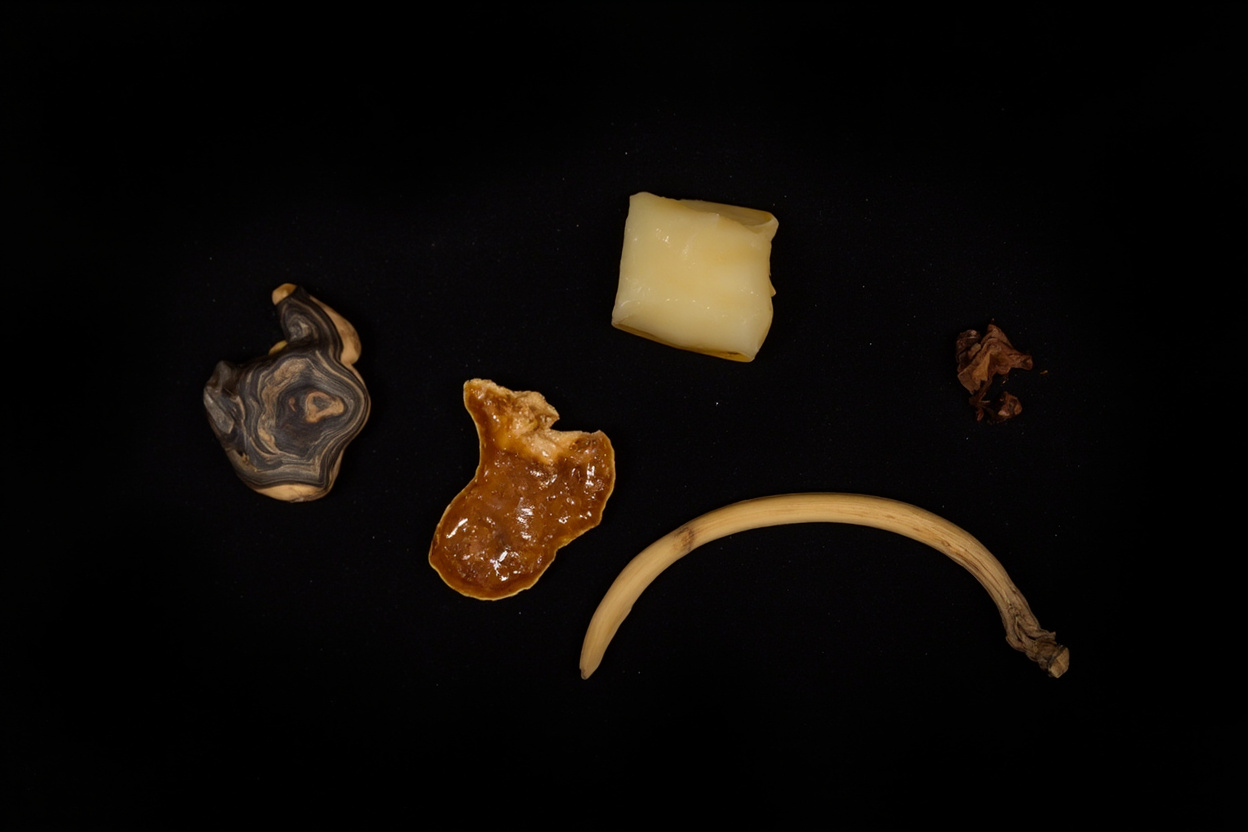
There are hundreds of aromatic materials used in Chinese incense. But only four sit at the top. These are the ones collectors obsession over, the ones that cost serious money, and the ones every incense enthusiast should know.
1. Agarwood (Chen Xiang) — The King
No incense conversation starts anywhere else. Agarwood comes from Aquilaria trees—but only when they’ve been wounded or infected. The tree’s defense response produces a dark, resin-soaked heartwood that smells extraordinary.
What it smells like: Depends on the grade. Low grade: woody, slightly sweet. High grade: layers—fruity, then woody, then something almost fermented, like aged wine. The longer you smell it, the more you find.
Why it’s expensive: Real agarwood takes decades to form. Most trees are cut before they produce any. Supply is genuinely limited. If you see “100% pure agarwood” for $5 per stick, it’s fake.
Best for: Everything. Meditation, sleep, focus, ritual. There’s no wrong time for agarwood.
2. Sandalwood (Tan Xiang) — The Foundation
If agarwood is the king, sandalwood is the queen. Where agarwood surprises and complexity, sandalwood comforts and settles.
Real sandalwood comes from Mysore, India (now restricted) and Hawaii. Australian sandalwood is more available but different in character—sharper, less creamy.
What it smells like: Creamy, warm, slightly sweet. Think of the smell of a wooden box that holds something precious. That’s sandalwood.
Why it matters: It’s the most consistent. Unlike agarwood which varies wildly between batches, quality sandalwood delivers reliably. Most beginner-friendly incense starts here.
Best for: Beginners. Sleep. Daily burning. Anyone who wants something pleasant without complexity.
3. Ambergris (Long Xian Xiang) — The Mysterious One
Ambergris is… complicated to explain. Officially: a waxy substance produced in the digestive system of sperm whales. Unofficially: one of the most complex scent materials in the world.
Yes, it’s unusual. And no, you won’t find it in cheap incense. But a tiny amount transforms a blend.
What it smells like: In its raw form: fecal, ocean, maritime. After aging and processing: sweet, warm, animalic, with a fixative quality that makes other scents last longer. Think: the difference between a perfume and that perfume with three drops of ambergris base.
Why it’s expensive: Finding floating ambergris at sea is luck. Processing it takes years. Modern synthetic alternatives exist but aren’t the same.
Best for:作为定香剂 in blends. A tiny amount (think: single drops of tincture) extends the life of your entire incense experience.
4. Musk (She Xiang) — The Heartbeat
Traditional musk comes from the musk deer (now endangered and trade-restricted). Modern versions are synthetic or botanical—cypriol, ambrette seed give similar effects without the ethical concerns.
What it smells like: Animalic, warm, slightly sour at first, then sweet. It gives incense a “living” quality—the difference between a painting of a forest and standing in one.
Why it matters: Musk acts as a bridge. It connects the other notes and makes them feel unified rather than layered. Most complex incense blends contain at least a trace of musk.
Best for: Blending. You rarely burn musk alone. But in a blend? It changes everything.
How to Use This Knowledge
Start with sandalwood. It’s accessible, reliable, and teaches your nose what “good” smells like.
Then try agarwood. Begin with low-grade (cheaper) to calibrate your palate, then work up to premium.
Ambergris and musk: look for them in blends. When you find a blend that smells particularly “complete”—like it has depth that lasts—check the ingredients. You’ll probably find one or both hiding in there.
These four materials have been at the center of Chinese incense culture for centuries. They’ll still be here centuries from now.