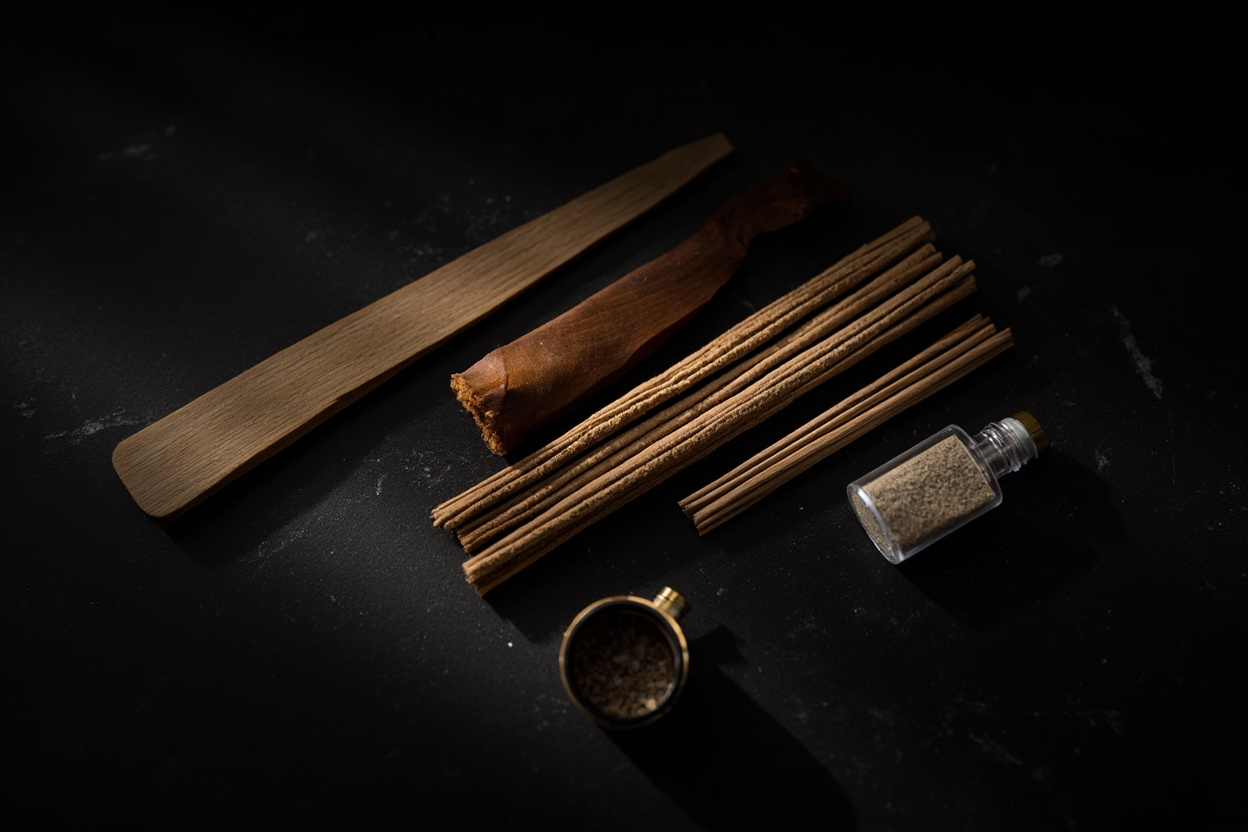
You walk into a shop—or open a website—and there are 47 types of incense listed. Sandalwood from India, Agarwood from Hainan, something called “Dragon Spit” that costs $200 per stick. Your brain freezes.
Take a breath. Choosing your first incense is actually simple if you know what to look for.
Start With Sandalwood
If you’re completely new, start with Indian sandalwood (or even better, Hawaiian). It’s consistent, pleasant, and hard to mess up. Most people’s first positive incense experience is with a quality sandalwood.
Avoid starting with agarwood unless you have a trusted source. The market is flooded with fake or low-quality agarwood. You won’t know what good smells like, so you can’t tell if you’re getting burned (pun intended).
What to Look For (and Avoid)
Look for:
- Ingredients listed clearly: “100% natural sandalwood” not “fragrance blend”
- A vendor that talks about sourcing—if they know where their wood comes from, they’re usually more serious
- Sticks that are uniform in color (no weird artificial dyes)
- Reviews that mention the actual smell, not just ” smells amazing
Red flags:
- Prices that are too cheap to be real (real sandalwood is expensive)
- No ingredient list
- Vague descriptions like “spiritual energy” without describing the actual scent
- “Black agarwood” that costs $5 per stick
The Four Main Types to Know
- Sandalwood — sweet, creamy, warm. The friendly introduction.
- Agarwood (Chen Xiang) — deep, complex, resinous. Can be fruity, woody, even fermented-smelling. The “premium” choice.
- Herbal blends — different herbs mixed. More medicinal, sharper. TCM practitioners often use these.
- Floral blends — jasmine, osmanthus, lotus. Lighter, sweeter. Good for beginners who find wood scents too heavy.
How Much Should You Pay?
A basic natural stick incense: $10-20 for a box of 30-40 sticks. Reasonable.
A mid-range option (good quality, single-ingredient): $25-50 for the same amount. Fine.
Premium artisan or rare materials: $50-200+. Not for beginners. You’ll waste money because you don’t yet know what you’re looking for.
Where to Buy
Online gives you more selection and transparency. Look for vendors who:
- List the incense type and origin clearly
- Have detailed scent descriptions (“woody with a hint of honey and leather” not just “woody”)
- Accept returns if you’re not satisfied
The One Rule
Never let anyone pressure you into buying expensive incense as your first purchase. This is a hobby you build into slowly. A $200 box of “aged Hainan agarwood” from a pushy vendor is a terrible way to start.
Get the $15 sampler. Try different things. Figure out what you actually like. That’s the real journey.
Your nose knows. Trust it to guide you.